Tag: Venus

  • Study Suggests Hidden Danger May Be Orbiting Alongside Venus

    Study Suggests Hidden Danger May Be Orbiting Alongside Venus

    Credit: Depositphotos

    Two decades ago, the U.S. Congress tasked NASA with identifying 90% of near-Earth asteroids that could pose a threat. Since then, the agency has made progress tracking objects that orbit the Sun and pass within 1.3 astronomical units of Earth.

    A New Threat Emerging Near Venus

    However, a new area of concern is emerging: astronomers are now detecting asteroids that co-orbit with Venus — and despite their distance, these objects might threaten Earth.

    Researchers have been exploring how many of these co-orbiting asteroids remain undiscovered and how we might detect them. The challenge lies in the fact that these bodies can remain hidden in the Sun’s glare, making detection difficult. Observing them depends on specific visibility windows and how their brightness fluctuates.

    The study, titled “The invisible threat: assessing the collisional hazard posed by the undiscovered Venus co-orbital asteroids”, has been submitted to Astronomy and Astrophysics and is available on arxiv.org. The lead author is Valerio Carruba, an assistant professor at São Paulo University in Brazil.

    Currently, 20 asteroids are known to share Venus’s orbit. Although their co-orbital configuration keeps them from getting too close to Venus itself, it doesn’t prevent them from crossing paths with Earth.

    What Makes an Asteroid a Potential Hazard?

    According to the researchers, these asteroids are classified as potentially hazardous (PHA) if they are at least 140 meters in diameter and come within 0.05 astronomical units of Earth’s orbit.

    The central question: do these objects pose a real collision risk to Earth?

    The study aims to evaluate the potential danger posed by undetected Venus co-orbitals and to assess whether they can be identified using Earth-based or space-based telescopes.

    Of the 20 known asteroids, only one has an orbital eccentricity below 0.38. This suggests an observational bias — objects with wider orbits approach Earth more closely and are easier to detect. Therefore, there could be many more with more circular orbits that have simply gone unnoticed.

    Most of the Solar System’s asteroids are in the main belt between Mars and Jupiter. However, others are co-orbital with planets, like the Jupiter Trojans, which form two groups: one behind and one ahead of Jupiter. Astronomers are finding more asteroids co-orbiting with Venus, posing a threat to Earth. (NASA/LPI)

    A key complication is the chaotic nature of these asteroids’ orbits. The authors explain that their orbits are highly unstable, with Lyapunov times — the point at which predictions become unreliable — of about 150 years.

    Using Simulations to Predict Collisions

    To overcome this, the researchers created statistical simulations using “clone” asteroids. They modeled a range of orbital inclinations and populated the grid with 26 clones with varying characteristics. These were then integrated with the orbits of the Solar System’s planets over 36,000 simulated years to check for close encounters with Earth.

    They found that there is a band of orbits, especially at lower inclinations and with eccentricities under 0.38, where Venus co-orbitals could indeed pose a collision hazard to Earth.

    The researchers also tested whether the upcoming Vera Rubin Observatory could observe these objects. Their findings showed that due to the Sun’s interference, these asteroids are only visible during limited times — mostly when near their closest approach to Earth.

    “The combination of elevation and solar elongation constraints restricts our ability to observe them to specific periods each year,” the authors wrote. (Solar elongation is the angular distance between the asteroid and the Sun as seen from Earth.)

    Proposing a Space-Based Solution

    Given how challenging it is to detect these potentially dangerous asteroids from Earth, the study suggests that sending a space-based observatory to Venus’s orbit — facing away from the Sun — might greatly improve detection capabilities. Scientists have already proposed several mission concepts, including placing observatories in Sun-Earth or Sun-Venus L1 or L2 halo orbits.

    It’s a known fact that some asteroids have enough energy to cause catastrophic damage. Some are large enough to destroy entire cities. Even a 150-meter-wide asteroid could strike with the force of hundreds of megatons of TNT — thousands of times more powerful than the atomic bombs dropped during World War II.

    The researchers emphasize that Venus co-orbitals with low eccentricity are particularly difficult to detect and track, making them a unique and worrisome challenge.

    While the Vera Rubin Observatory will likely discover many asteroids through its normal operations, locating the dangerous few that share Venus’s orbit may require a dedicated mission.

    In our view, although upcoming surveys like the Rubin Observatory may detect some of these asteroids, only a focused observational mission near Venus could successfully identify all the still ‘invisible’ potentially hazardous asteroids among Venus’s co-orbitals,” the authors conclude.


    Read the original article on: Science Alert

    Read more: Active Lava Flows on Venus Boost Urgency for Exploration
  • Active Lava Flows on Venus Boost Urgency for Exploration

    Active Lava Flows on Venus Boost Urgency for Exploration
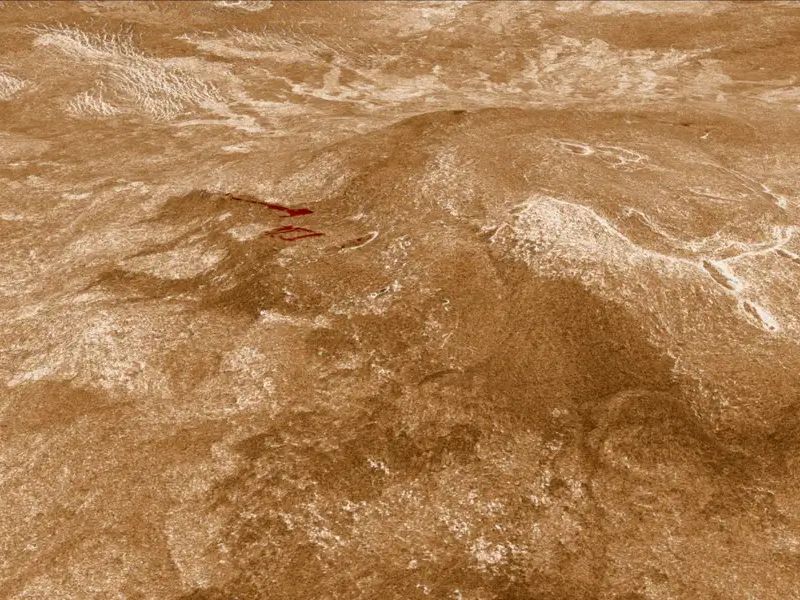
    Recent lava flows observed on Venus indicate that the planet may be significantly more geologically active than previously believed, potentially rivaling Earth's activity.
    The Sif Mons area with the active volcanic region highlighted in red

    Recent lava flows observed on Venus indicate that the planet may be significantly more geologically active than previously believed, potentially rivaling Earth’s activity.

    These geological processes, initially identified by the Magellan spacecraft in the 1990s, are likely still ongoing and will be crucial observation points for upcoming Venus missions.

    Venus was once considered a “dead” planet with no recent geological activity. However, recent reanalysis of Magellan data has revealed strong evidence of ongoing activity, such as a volcanic vent that changed shape over eight months. Despite this, the extent of such activity remained uncertain due to limited direct evidence.

    Reexamination of Magellan Radar Data

    Davide Sulcanese from D’Annunzio University in Chieti, Italy, and his colleagues have now reexamined Magellan radar data, focusing on two areas: the northern volcano Sif Mons and the eastern plain known as Niobe Planitia.

    They detected changes in brightness in the reflected radar signals over time, indicating areas where material likely expanded due to moving lava flows.

    To confirm their findings, Sulcanese and his team had to eliminate other possible explanations, such as atmospheric interference or unintended changes in the spacecraft’s observation angle, since Magellan captured the same area only once every eight months.

    After verifying the volcanic nature of the flows, the researchers calculated their properties, including the rate of lava production. Their lower estimates, 3.78 and 5.67 cubic kilometers per year for Sif Mons and Niobe Planitia respectively, are comparable to the average volcanic output on Earth.

    Sulcanese and his team used these figures to estimate the total volcanic activity on Venus.

    According to this estimate, Venus could be far more volcanically active than expected,” says Sulcanese, suggesting its activity level is similar to Earth’s.

    Key Targets for Future Venus Missions

    These areas will be key targets for upcoming missions to Venus, such as NASA’s VERITAS and the European Space Agency’s EnVision, both set to launch in the early 2030s. “It’s likely these areas will still be active in the early 2030s,” says Sulcanese. “Geologically speaking, 30 years is like a few seconds for volcanic fissures.”

    This paper does strengthen the case for current volcanic activity,” says Philippa Mason at Imperial College London, a member of the EnVision team.

    She notes that known sites of geological activity, like those identified by Sulcanese and his team, could be imaged at least three times during EnVision’s observation cycle, offering a much more detailed view of Venus’s interior and surface geological processes than Magellan provided.

    We still don’t know how these processes work,” says Sulcanese. “Do we have a single tectonic plate, microplates, or something entirely different from Earth’s plates? Studying this volcanic activity can help us better understand these mechanisms.”


    Read the original article on: NewScientist

    Read more: NASA’s Ingenuity Mars Helicopter Won’t Fly Again

  • New Experiments Suggest Life Could Endure Venus’ Sulfuric Acid Clouds

    New Experiments Suggest Life Could Endure Venus’ Sulfuric Acid Clouds

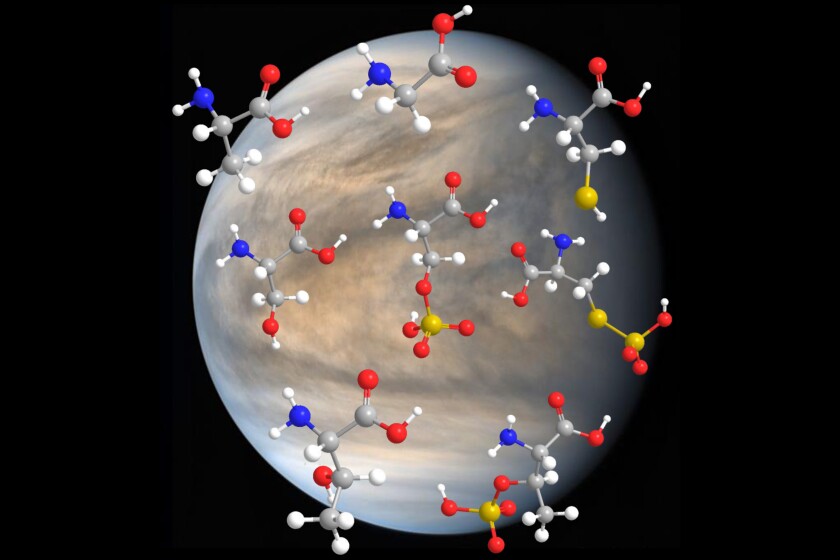
    While Venus may seem inhospitable to us, there's a possibility that certain life forms could adapt to its conditions. A recent investigation by MIT reveals that the essential components of life remain remarkably stable in highly concentrated sulfuric acid, which comprises Venus' clouds.
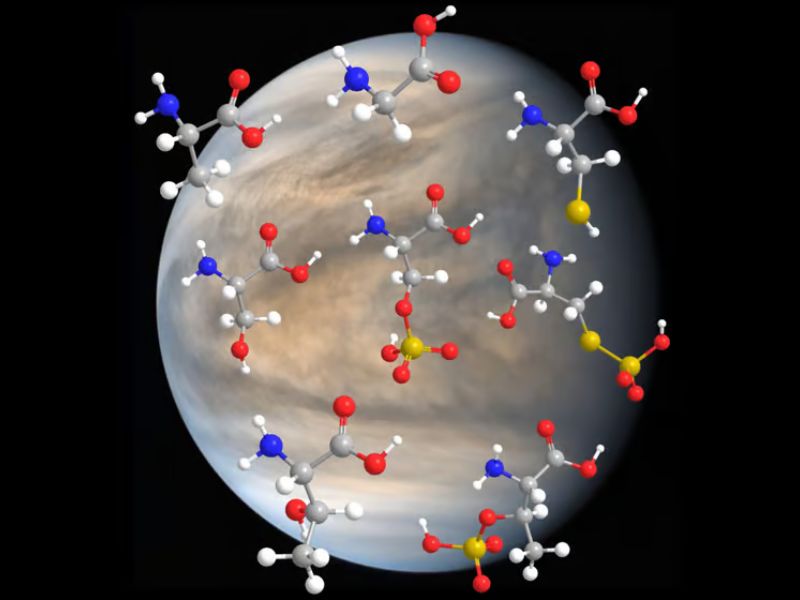
    Amino acids essential to life are surprisingly stable in Venus’ sulfuric acid clouds, suggests a new study
    JAXA/J. J. Petkowski

    While Venus may seem inhospitable to us, there’s a possibility that certain life forms could adapt to its conditions. A recent investigation by MIT reveals that the essential components of life remain remarkably stable in highly concentrated sulfuric acid, which comprises Venus’ clouds.

    Early science fiction authors were able to envision Venus as a paradise due to its thick cloud cover. However, advancements in technology soon revealed the harsh reality. Venus is a dry, scorching planet with surface temperatures reaching up to 464°C (867°F) – hot enough to liquefy lead. Its atmospheric pressure is akin to being 900 meters (3,000 feet) below sea level.

    Furthermore, the presence of sulfuric acid clouds and a suffocating atmosphere composed of 96% carbon dioxide make Venusian living conditions far from desirable.

    While many enthusiasts of extraterrestrial life may focus on celestial bodies like Mars or moons such as Europa, Enceladus, and Titan, Venus has regained attention in recent years.

    Scientists believe that conditions become more conducive at altitudes between approximately 48 to 60 km (30 to 37 miles) above the planet’s surface, where temperatures and pressures drop, and water becomes more abundant.

    Venus Clouds’ Dark Patches Resemble Earth Bacteria

    Curiously, these dark patches have been noticed floating within the Venusian clouds at the same altitude, displaying optical features akin to certain bacterial species identified on Earth.

    However, a significant obstacle life may encounter in this airborne refuge is the presence of sulfuric acid clouds. Previous studies have suggested that other airborne particles could shield these clouds, but a recent study indicates that microbes might not require such protection and could potentially thrive while floating within sulfuric acid.

    An MIT research team subjected all 20 “biogenic” amino acids, which are fundamental chemicals for life as we understand it, to sulfuric acid concentrations ranging from 81% to 98% – levels akin to those found in Venusian clouds.

    Surprisingly, 19 of these amino acids remained stable even at the highest concentrations, with their molecular structures remaining intact throughout the four-week experiment. The study concluded at this point as there were no further signs of chemical activity.

    Insights from Study Author Sara Seager on the Implications for Life in Venus’ Clouds

    We are discovering that the basic building blocks of life on Earth can endure sulfuric acid, which is highly intriguing for considering the possibility of life on Venus,” remarked Sara Seager, one of the study’s authors. “This doesn’t imply that life on Venus would resemble life on Earth. In fact, we know it cannot. However, this research suggests that Venus’ clouds might harbor complex chemicals necessary for life.”

    Amino acids are not the sole constituents of life that have exhibited resilience in sulfuric acid; the team has previously demonstrated that certain fatty acids and nucleic acids also display similar stability.

    Nevertheless, the researchers are cautious to distinguish between complex organic chemistry and actual life, stating that while the ingredients for life could survive in such environments, it remains uncertain whether they are actually present, let alone whether they have evolved into life forms.

    The researchers also acknowledge that they simulated less complex atmospheric chemistry in their lab tests compared to the actual conditions on Venus.

    Implications of Recent Research on Venusian Life Potential

    This research adds some support to the ongoing debate regarding the potential for life on Venus, but unfortunately, the evidence still seems to favor the opposing viewpoint.

    One of the most intriguing discoveries occurred in 2020 when astronomers detected phosphine in the Venusian atmosphere, a rare compound typically associated with anaerobic microbes on Earth.

    However, subsequent studies suggested that the detected signature was likely attributed to common sulfur dioxide. Furthermore, Venus appears to have limited water and lacks other expected biosignatures.

    Regardless, certainty may be on the horizon. The upcoming Venus Life Finder mission aims to dispatch a spacecraft to investigate the acidic clouds for signs of life and is scheduled for launch by the end of 2024.


    Read the original article on: New Atlas

    Read more: NASA’s Webb Offers Stunning View of Exploded Star

  • A Breakthrough Discovery: Oxygen Atoms Unveiled in Venus’ Dayside Atmosphere

    A Breakthrough Discovery: Oxygen Atoms Unveiled in Venus’ Dayside Atmosphere

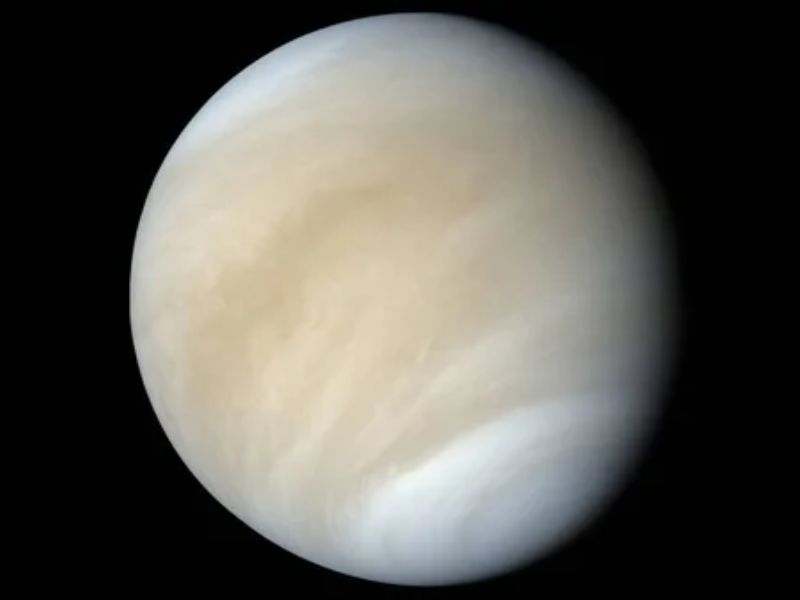
    Planet Venus. Credit: Unsplash.

    For the first time, oxygen atoms have been identified in the dayside atmosphere of Venus, free from being part of larger molecules. This revelation not only marks a significant advancement in our understanding of Venus but also paves the way for future missions to the enigmatic planet.

    Revised Text

    For the first time in history, the presence of oxygen atoms in Venus’ dayside atmosphere, independently existing without being bonded to larger molecules, has been confirmed. 

    Previous observations had detected oxygen on Venus’ night side, but this latest study has unveiled a far more widespread distribution than ever before.

    These findings represent a crucial step forward for the future exploration of Venus, now gaining increased attention from space agencies worldwide.

    Oxygen’s Expected Presence

    The abundance of oxygen in Venus’ atmosphere is not disputed. As the third most common element in the universe, its presence on Venus was expected even before the first spacecraft ventured near the planet.

     These early missions revealed an atmosphere saturated with carbon dioxide and carbon monoxide (CO2 and CO), clearly indicating the role of oxygen in chemical reactions.

    However, in planetary atmospheres, oxygen tends to form compounds by binding with other elements in the crust or atmosphere due to its highly reactive nature. Therefore, the existence of free atomic oxygen is by no means guaranteed. 

    Yet, prior observations by the Venus Express satellite had already unveiled hints of atomic oxygen radiating on the planet’s night side. The most recent research not only confirms the prevalence of atomic oxygen but also provides valuable insights into the mechanisms responsible for its creation and distribution.

    A Pioneering Study

    Professor Heinz-Wilhelm Hübers and his colleagues from the German Aerospace Center employed the Stratospheric Observatory for Infrared Astronomy (SOFIA) to conduct a thorough examination of Venus’ upper atmosphere at 17 different locations. Astonishingly, they found atomic oxygen present in every location.

    This free oxygen is produced through the action of sunlight on carbon dioxide (CO2) and carbon monoxide (CO) molecules. Venus’ formidable winds transport these oxygen atoms to the night side, where they combine to form molecular oxygen (O2), similar to the oxygen found in Earth’s atmosphere. 

    These oxygen molecules then interact with other elements, contributing to the complex chemistry of Venus’ atmosphere. Despite this redistribution, the densities of atomic oxygen on the dayside exceed those on the night side by up to fivefold.

    A Vital Role in Venus’ Atmosphere

    The research team emphasizes that atomic oxygen plays a significant role in Venus’ atmospheric processes. When an oxygen atom collides with a carbon dioxide molecule, it imparts energy to the molecule, which is subsequently emitted as radiation at a wavelength of 15 micrometers. 

    This radiative cooling mechanism is dominant in the upper layers of Venus’ atmosphere and is crucial in preventing the planet from becoming even hotter. Venus is already the hottest planet in the Solar System, and without this cooling process, its temperatures would be even more extreme.

    The Concentration of Atomic Oxygen

    Atomic oxygen is most concentrated at approximately 100 kilometers (60 miles) in Venus’ atmosphere. On Earth, this altitude is considered the boundary between the upper atmosphere and outer space due to the thinning of the atmosphere. However, Venus has a much denser atmosphere that extends much higher.

    The highest concentrations of atomic oxygen are located between the two dominant atmospheric circulation patterns on Venus. One of these patterns occurs below 70 kilometers (43.5 miles), while the other is situated above 120 kilometers (74.6 miles). 

    The peculiar rotation of Venus, where its day is longer than its year, results in high-altitude winds that move faster than the planet’s rotation. These unique atmospheric dynamics contribute to the distribution of atomic oxygen within the Venusian atmosphere.


    Read the original article on Nature Communications

    Read more: Kepler Discovers a New System of 7 Planets.

  • How Detailed, Venus’s- Flower-Baskets Manipulate the Flow of Seawater

    How Detailed, Venus’s- Flower-Baskets Manipulate the Flow of Seawater

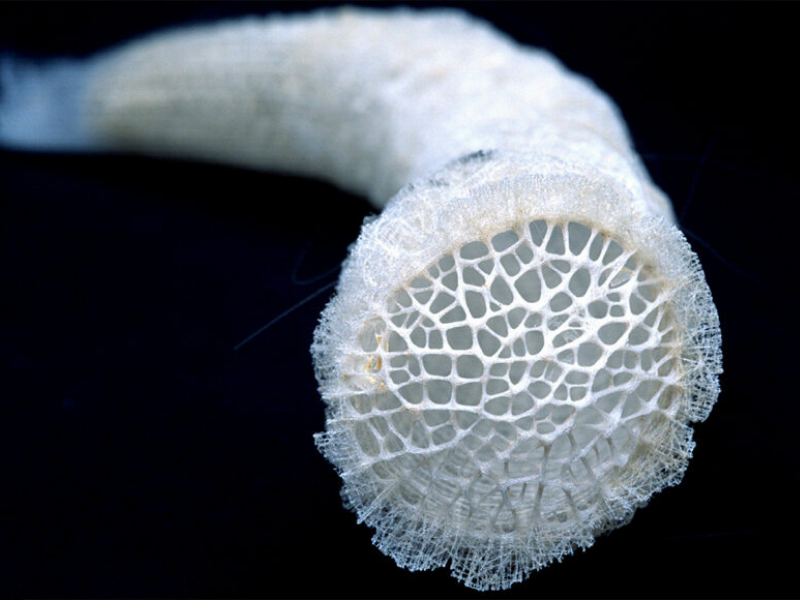
    The Venus’s-flower-basket is a sea sponge found at depths of 100 to 1,000 meters in the Pacific Ocean near the Philippines. A new study shows how the creature’s porous, glassy skeleton alters the flow of seawater.

    Simulations reveal that this deep-sea glass sponge’s skeleton is more than simply pretty

    A Venus’s flower basket is not all just beautiful. This spectacular deep-sea sponge can also change the circulation of seawater in unusual ways.

    The sponge’s glassy skeleton is formed by a lacy, barrel-shaped chamber. Flow simulations show how this complex structure changes the way water moves around and inside the sponge, assisting it in enduring unrelenting sea currents and perhaps feeding and reproducing, scientists reported online on July 21 in Nature.

    Previous studies found that Venus’s flower basket’s gridlike construction (Euplectella aspergillum) is solid and adaptable. “However, nobody has ever attempted to see if these stunning structures have fluid-dynamic properties,” states mechanical engineer Giacomo Falcucci of the Tor Vergata University of Rome.

    Taking advantage of supercomputers, Falcucci and colleagues simulated exactly how water streams around and inside the sponge’s body, with and without different skeletal components such as the sponge’s myriad pores. If the sponge were a solid cylinder, water moving past would undoubtedly create a turbulent wake immediately downstream that might jolt the creature, Falcucci says. Instead, water moves through and around the highly porous Venus’s flower basket and creates a gentle area of water that flanks the sponge and displaces disturbance downstream, the team discovered. By doing this, the sponge’s body sustains less stress.

    The simulations showed ridges that spiral around the outside of the sponge’s skeleton somehow lead water to slow down and swirl inside the structure. Consequently, food and reproductive cells that drift right into the sponge would undoubtedly end up being trapped for approximately twice as long as in the very same sponge without ridges. That lingering around could assist the filter feeders in capturing more plankton. Moreover, since Venus’s flower-baskets can reproduce sexually, the scientists say it can also improve the chances that free-floating sperm encounter eggs.

    It is outstanding that such beauty could be so functional, Falcucci states. He states that the sponge’s flow-altering abilities might help inspire taller, more wind-resistant skyscrapers.

    This simulation shows how water flows around and through a Venus’s-flower-basket (gray). Ridges that spiral across the outside of the sponge cause water inside to somehow slow and swirl, forming particle-trapping vortices. And the sponge’s shape creates a gentle zone of slower water that forms immediately downstream, buffering the creature against turbulence. Vertical cross-sections contrast the flow activity of the calm zone (nearer the sponge) and the turbulent zone (downstream).

    Originally published on Science News. Read the original article.

    Reference: G. Falcucci et alExtreme flow simulations reveal skeletal adaptations of deep-sea spongesNature. Published online July 21, 2021. doi: 10.1038/s41586-021-03658-1.