Tag: Wildlife

  • Controlled Burns Endanger The Survival Of Skinks and Other Wildlife

    Controlled Burns Endanger The Survival Of Skinks and Other Wildlife

    As Australia and the world face the challenges of global warming and rising bushfire threats, ecologists at the University of South Australia are focusing on how prescribed burns affect native wildlife.
    Image Credits: Pixabay

    As Australia and the world face the challenges of global warming and rising bushfire threats, ecologists at the University of South Australia are focusing on how prescribed burns affect native wildlife.

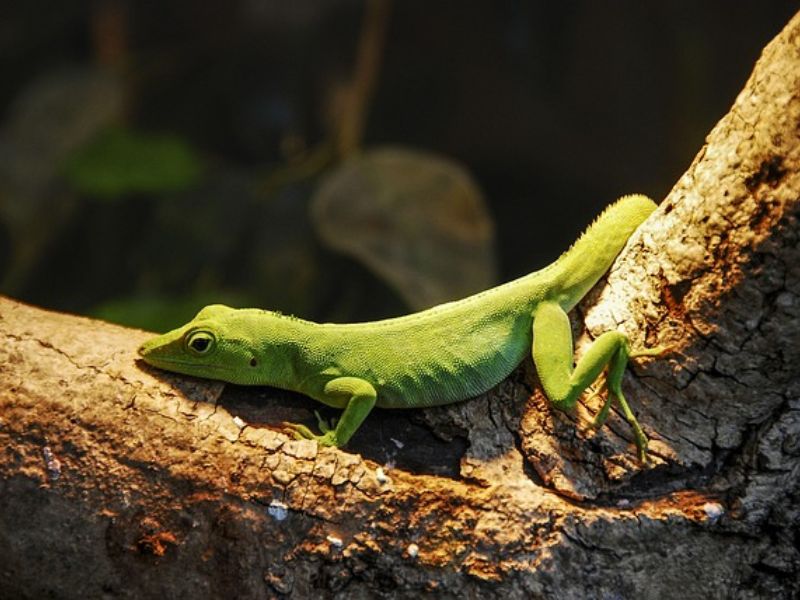
    In a recent study published in the International Journal of Wildland Fire, researchers examined the peak temperatures lizards may encounter during prescribed (controlled) burns in South Australia’s Mount Lofty Ranges, comparing these with the reptiles’ maximum tolerable heat levels.

    Studying Skink Survival in the Fire-Prone Mount Lofty Ranges

    The Mount Lofty Ranges—both a biodiversity hotspot and a fire-prone area—undergo extensive prescribed burning each spring and autumn. To assess the impact, scientists recorded surface and shelter temperatures during four separate burns and compared them with laboratory-determined “critical thermal limits” for three skink species.

    Results showed that average temperatures beneath common shelters, such as logs and rocks, reached 108°C and 53°C, far exceeding the skinks’ survivable heat range of 37.5°C to 43.0°C.

    Although the study focused on reptiles, lead researcher and UniSA Ph.D. candidate Shawn Scott emphasized that such extreme heat levels likely pose risks to many other native animals, suggesting the findings have wider ecological implications.

    “These conditions far surpass the 60°C limit tolerated by most terrestrial vertebrates,” says Scott. “In our study, logs and rocks provided the best protection against extreme heat during prescribed burns.”

    “Still, if prescribed burns occur under conditions that intensify fire severity, the extreme temperatures and their duration could be deadly for small vertebrates,” the researchers warn.

    Higher Ambient Temperatures Intensify Fire Impact on Skink Shelters

    They also found that higher ambient temperatures on burn days led to increased peak temperatures beneath shelters and prolonged periods of dangerously high heat.

    “Our analysis revealed that fire temperatures rose by as much as 700°C when ambient temperatures increased from 17°C to 22°C,” Scott explains.

    “The hotter the fire, the more intense the heat becomes inside or beneath the shelters used by small animals, significantly reducing their chances of survival—especially with prolonged exposure.”

    Co-researcher and UniSA wildlife ecologist Associate Professor Sophie (Topa) Petit adds, “In terms of thermal protection, rocks and logs retained the lowest temperatures, highlighting their vital role as shelters for small wildlife.”

    “Still, many of those areas recorded temperatures well beyond what reptiles can tolerate. Not all logs and rocks offer sufficient protection,” the researchers note.

    Climate Change Likely to Increase Prescribed Burns in Fire-Prone Regions

    With climate change driving up bushfire risks, the frequency of prescribed burns is likely to rise—particularly in fire-prone Mediterranean climates such as the Mount Lofty Ranges, other regions of Australia, as well as Greece, Italy, Spain, and California.

    Scott emphasizes that protecting wildlife and preserving biodiversity should be central to prescribed burning practices, and he believes his team’s findings can guide strategies both in Australia and internationally.

    “To achieve lower-intensity burns, these fires should be carried out on cooler days when ambient temperatures are below 17°C,” he explains.

    “In Australia, prescribed burns are often conducted on so-called mild days—ranging from 17°C to 22°C—but our study shows that even under these conditions, peak temperatures and their duration can still pose serious risks to small animals seeking refuge under logs or rocks.”

    He adds that conducting pre-burn surveys to assess the availability and quality of shelter sites is crucial to improving animal survival during fire events.

    The researchers also recommend future studies focus on larger and subsurface shelters—such as soil, tree hollows, and burrows—as well as monitoring wildlife movement and mortality during and after burns.


    Read the original article on: Phys.Org

    Read more: A Daily Boost Of Leafy Greens Might Reduce The Risk Of Death From Heart Disease
  • Wildlife Forensics Team Unveils Method to Spot Elephant Ivory Masquerading as Mammoth Ivory

    Wildlife Forensics Team Unveils Method to Spot Elephant Ivory Masquerading as Mammoth Ivory

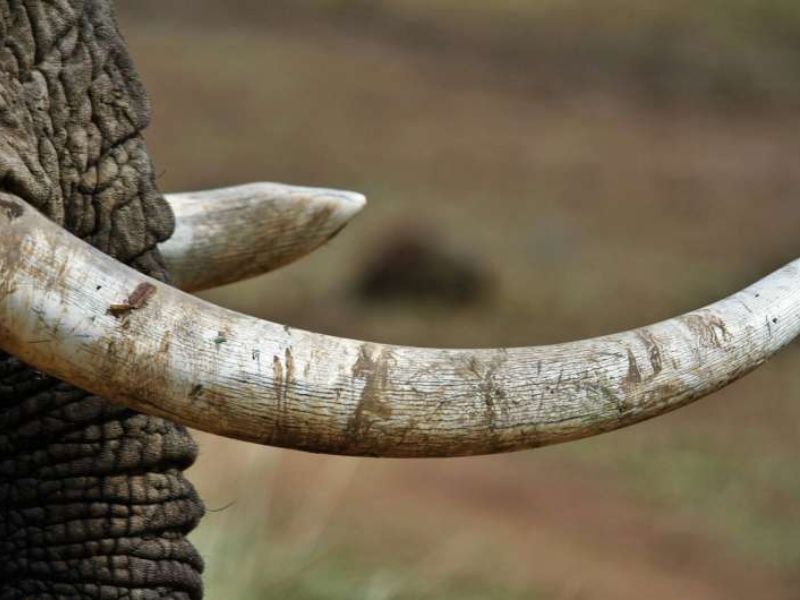
    In an effort to protect elephants from extinction, the global community banned the trade of elephant ivory. However, mammoth ivory remains legal to sell, and the two types are hard to distinguish—particularly for those without expertise. This creates a potential loophole that illegal ivory traders can take advantage of.
    Credit: Unsplash/CC0 Public Domain

    In an effort to protect elephants from extinction, the global community banned the trade of elephant ivory. However, mammoth ivory remains legal to sell, and the two types are hard to distinguish—particularly for those without expertise. This creates a potential loophole that illegal ivory traders can take advantage of.

    Stable isotope analysis may now offer a fast and affordable way to screen ivory samples and help prevent the illegal sale of elephant ivory.

    Scientists Aim to Close Ivory Loophole with Fast, Affordable Detection Tool

    Smugglers often hide banned wildlife products among legal ones that look similar to avoid detection,” explained Dr. Pavel Toropov of the University of Hong Kong, a co-author of the study published in Frontiers in Ecology and Evolution. “There’s growing concern that this tactic is being used to disguise elephant ivory as mammoth ivory. Our goal was to create a tool that can quickly and cost-effectively tell the difference.”

    Dr. Maria Santos, the study’s lead author, added, “Our findings show that stable isotope analysis of hydrogen and oxygen is a reliable method for distinguishing between elephant and mammoth ivory.”

    She explained that the difference comes down to water sources: mammoths, which lived in colder regions like Siberia, consumed water with isotope signatures that are distinct from those found in water drunk by elephants in tropical climates.

    Ivory Ban Aims to Save Elephants as Trade Shifts to Ancient Mammoth Tusk

    Poachers kill elephants for their tusks, and the ongoing demand for ivory has driven African elephant populations down by over 80% in the past century. This crisis has led to global bans on the trade and sale of elephant ivory. In contrast, mammoth ivory comes from long-dead animals preserved in permafrost, often found in high-latitude areas like Siberia.

    Mammoth ivory sells for far less than elephant ivory, but the two are viewed as entirely different materials by experts and artisans,” said Dr. Pavel Toropov. “Mammoth ivory tends to lack the rich, creamy white tone that makes elephant ivory so prized. One trader even likened the difference to that between a ‘Lamborghini and a Ford.’ While mammoth ivory isn’t a true substitute, its real value may be in masking illegal elephant ivory.”

    Dr. Maria Santos explained that although the best current methods to tell the two apart—molecular analysis and radiocarbon dating—are reliable, they are costly and slow, especially for polished or carved pieces where visual cues are unclear.

    Researchers Turn to Stable Isotope Analysis to Distinguish Mammoth and Elephant Ivory

    To address this, the researchers explored stable isotope analysis. Isotopes—variants of elements that exist in differing ratios depending on the environment—offer a promising alternative. Because mammoths lived in cold, tundra regions and elephants in warm, tropical areas, the isotopic makeup of their tusks differs. These distinctions can be used to identify whether ivory came from a mammoth or an elephant more quickly and affordably.

    The researchers analyzed 79 ivory samples—44 identified as elephant ivory and 35 as mammoth ivory. Some were confiscated by Hong Kong authorities, while others were purchased from local markets and carvers in Hong Kong and Shanghai. The team measured stable isotope ratios for five elements—carbon, hydrogen, nitrogen, oxygen, and sulfur—to determine which best distinguished between the two ivory types.

    They discovered that hydrogen and oxygen isotopes provided the clearest separation between elephant and mammoth ivory. There was no overlap in hydrogen ratios and minimal overlap in oxygen ratios, both reflecting the different water sources consumed by each species. In contrast, carbon, nitrogen, and sulfur ratios showed significant overlap, making them less useful for differentiation.

    Although more research is needed—particularly on how factors like tusk location or animal age might affect isotope readings—this method shows promise as a fast, affordable initial screening tool to flag suspicious ivory.

    “We hope the approach outlined in our study will be used to quickly screen large quantities of supposed mammoth ivory,” said Santos. “Samples that appear to match elephant ivory profiles can then undergo more thorough testing, like radiocarbon dating. This layered approach could help close loopholes in the ivory trade and strengthen efforts to stop illegal sales.”


    Read the original article on: Science Alert

    Read more: Study Shows Elephants use Names for each Other, Like Humans

  • The Lions Most Interesting  Facts

    The Lions Most Interesting Facts

    The fresher the meat the better.
    Credit: Unsplash.

    Throughout history, the lion has always been a representation of strength, authority, and fierceness. While on WWF tours to Africa, getting the chance to witness this majestic species up close is bound to be an awe-inspiring and exhilarating encounter.

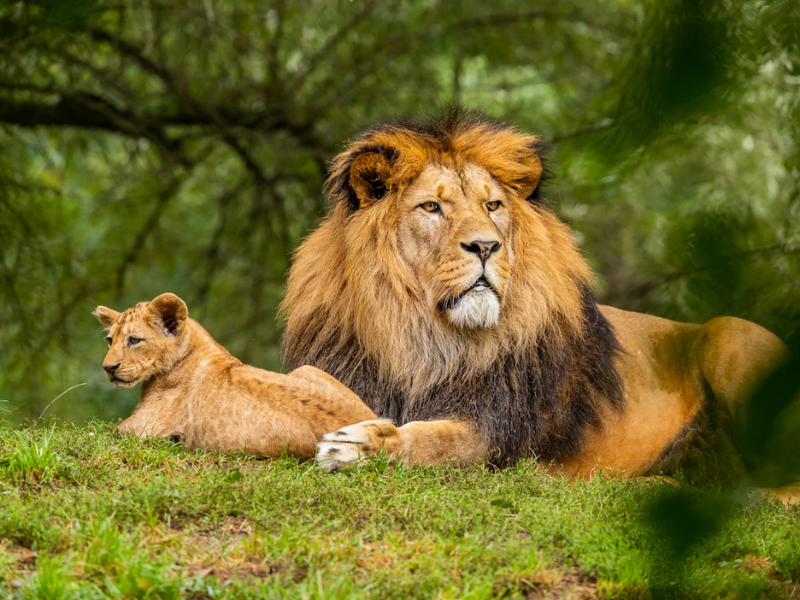
    Among all large feline species, African lions are the most sociable, and they form groups known as “pride.” Typically, a pride comprises approximately 15 lions.

    Male lions are responsible for protecting the pride’s territory, while females take on the primary role of hunting. However, even though the females do the hunting, the males get to eat their share of the prey first.

    As we can see they are not the king of the Jungle.
    As we can see they are not the king of the Jungle.

    The majestic cats are in danger due to the loss of their habitat. The lion is classified as “vulnerable” on the IUCN Red List of Threatened Species.

    At one time, lions used to inhabit Africa, Asia, and Europe, but today, they are found only in Africa, except for a single exception. The last surviving Asiatic lions now reside in Sasan-Gir National Park, India, which was established mainly to safeguard this species. Currently, the park is home to around 350-400 lions.

    The mighty roar of a lion is audible from a distance of up to 5 miles.

    A lion is capable of sprinting short distances at speeds of 50 mph and can leap up to a distance of 36 feet.

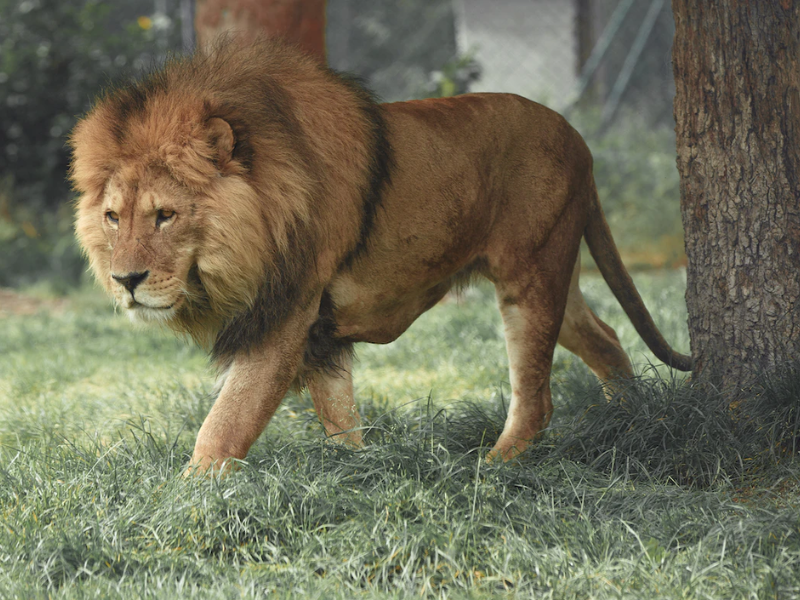
    Despite being called the “king of the jungle,” lions predominantly inhabit grasslands and plains rather than dense jungles. The origin of this expression might be due to a mistaken connection between Africa and jungles, or it could be based on a more symbolic interpretation of the term “jungle.”

    A pride resting.
    A pride resting.

    You can estimate a male lion’s age by observing the darkness of his mane. The darker the mane, the older the lion is likely to be.

    When a lion walks, its heels do not make contact with the ground.

    A lion has the ability to rest for as long as 20 hours each day.


    Read the Original Article on WorldWildLife.

    Read more: Researchers Find the Evolutionary Secret Behind Different Animal Life Cycles.

  • Human Activities Impose Wildlife Impact in Protected Zones, Study Finds

    Human Activities Impose Wildlife Impact in Protected Zones, Study Finds

    These areas are intended to preserve biodiversity and mitigate the effects of climate change.
    Credit: Unsplash.

    If the (30 by 30) initiative, which has garnered support from over 100 countries, achieves its goals, approximately 30% of both land and ocean ecosystems will be designated as protected areas by 2030. These areas are intended to preserve biodiversity and mitigate the effects of climate change.

    However, a groundbreaking study conducted by Rice University ecologist Lydia Beaudrot and her colleagues has revealed that even within protected areas, tropical mammals are not immune to the impacts of human activity occurring outside the boundaries of these protected zones.

    This study, which involved the largest camera-trap wildlife survey to date, provides valuable insights into the effects of anthropogenic stressors such as human population density and habitat fragmentation on 159 mammal species across 16 protected areas in three biogeographic regions. The research, published in Nature Ecology & Evolution, has the potential to inform decision-making regarding biodiversity policies for participants of the “30 by 30” initiative.

    A Collaborative Endeavor

    The study relied on millions of images captured over several years from over 1,000 camera-trap sites. These images were collected through a collaborative effort between Conservation International, the Wildlife Conservation Society, and the Smithsonian Institution, involving a network of research stations that adhered to a consistent data-collection protocol.

    According to Beaudrot, the assistant professor of biosciences at Rice University, the dataset compiled for this study is remarkable and represents an unprecedented and monumental endeavor.

    The findings of the research indicate that specialist species, which are restricted to specific habitats, thrive when habitat fragmentation is minimal. However, they are more susceptible to the adverse impacts of human activities like hunting and land use compared to generalist species, which can adapt to various habitats.

    Therefore, specialist species such as the white-bellied pangolin in Uganda’s Bwindi Impenetrable National Park are more likely to fare better if they inhabit areas closer to the center of the protected zone, as specialists tend to be more resilient farther away from the edge of a protected area.

    Asunción Semper-Pascual, the lead author of the study and a postdoctoral researcher at the Norwegian University for Life Sciences, explains that the edge of a protected area typically exhibits a greater diversity of habitats, with variations between forest cover and open landscapes used for agriculture, among other purposes.

    Generalists and Resource Access

    Generalist species thrive in these diverse settings as they provide access to a range of resources. For instance, the tayra, an omnivorous species in the weasel family, can inhabit both forested areas and grasslands or croplands, but their success near the edge of protected areas depends on low human population density in those regions.

    Understanding how different species respond to various anthropogenic stressors can aid in setting conservation priorities and guiding the management of protected areas. This knowledge can inform local initiatives by focusing on the most vulnerable species within a particular region and contribute to global efforts by highlighting how landscape-scale factors affect biodiversity beyond the boundaries of protected areas.

    Beaudrot emphasizes the importance of taking a holistic approach to conservation and working in collaboration with local communities to achieve mutually beneficial outcomes for both people and wildlife.

    Semper-Pascual concludes that as the establishment of protected areas continues, it is crucial to consider the factors that influence biodiversity both within and outside these areas.


    Read The Original Article on PHYS.

    Read more: Not All Wildlife Recovered In Lockdowns, Recent Research Finds.