


Depositphotos
A new immune-modulating therapy has demonstrated encouraging outcomes in treating moderate to severe eczema, offering rapid itch relief and clearer skin for many participants in a clinical trial—without the typical side effects linked to existing treatments.
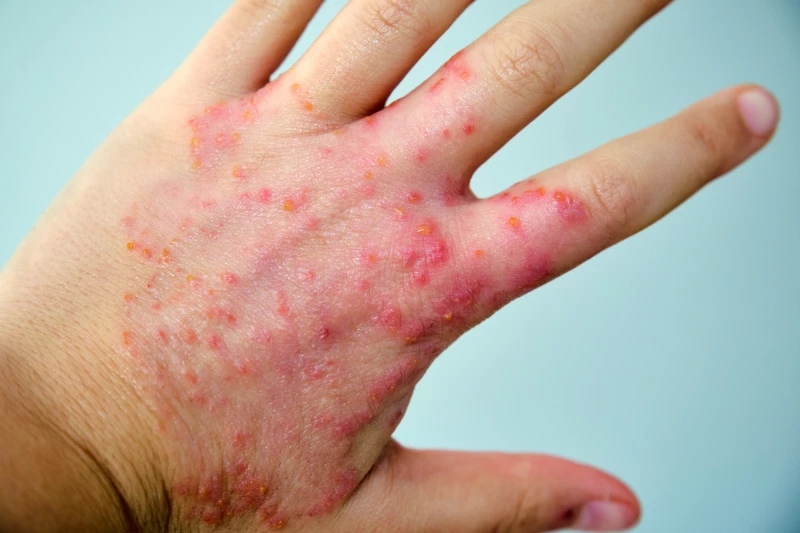
For some individuals, managing atopic dermatitis—the most prevalent and widely recognized form of eczema—can be difficult, particularly when it stems from uncontrollable factors like genetics. Many end up relying on a mix of topical creams and ointments to ease the dryness and itching that define the condition.
Relief may be on the horizon with rezpegaldesleukin, an immunotherapy developed by Nektar Therapeutics that works from within to ease eczema symptoms. The treatment has shown encouraging results in a recent clinical trial.

Depositphotos
Fortunately, rezpegaldesleukin also goes by a simpler name—Rezpeg (or NKTR-358). This therapy is designed to restore immune balance by enhancing the activity of regulatory T cells (Tregs), which play a key role in reducing inflammation. Administered as an under-the-skin injection, Rezpeg targets receptors on specific immune cells that interact with interleukin-2 (IL-2), a protein vital to immune regulation. The treatment boosts Treg levels and lowers important inflammatory markers.
How the Rezpeg Trial Was Designed and Measured
In the clinical trial, 393 participants aged 12 and older with moderate-to-severe atopic dermatitis were recruited from Europe, the U.S., Canada, and Australia. They were randomly assigned to receive either a placebo or one of three Rezpeg dosing regimens: a high dose (24 µg/kg every two weeks), a medium dose (18 µg/kg every two weeks), or a low dose (24 µg/kg every four weeks). Researchers assessed the treatment’s impact over a 16-week period using several evaluation methods.
The Eczema Area and Severity Index (EASI) is the leading tool for assessing the overall severity of eczema. It evaluates symptoms like redness, skin thickness, scratching, and damage across four regions of the body. The index combines intensity and surface area scores to produce a total score between 0 (no eczema) and 72 (most severe). Terms like EASI-50, EASI-75, and EASI-90 indicate patients who have experienced at least a 50%, 75%, or 90% improvement from their initial score.
The Validated Investigator’s Global Assessment for Atopic Dermatitis (vIGA-AD) is a clinician-assessed scale that rates eczema severity from 0 (clear skin) to 4 (severe disease). The treatment goal is typically a score of 0 or 1, indicating “clear” or “almost clear” skin. The Itch Numerical Rating Scale (NRS) is a patient-reported measure of itch severity, ranging from 0 (no itch) to 10 (worst possible itch), with a reduction of four points or more considered clinically meaningful. Body Surface Area (BSA) measures the percentage of skin affected by eczema, helping gauge how widespread the condition is.
Strong Results Across All Doses
By week 16 of the trial, Rezpeg outperformed the placebo across all dose levels, with the highest and middle doses showing the most notable benefits. EASI scores improved by 61% in the high-dose group, 58% in the middle-dose group, and 53% in the low-dose group—compared to a 31% improvement with placebo. Up to 46% of participants reached EASI-75, versus 17% in the placebo group. Additionally, as many as 42% of participants experienced a clinically meaningful reduction of four or more points on the Itch NRS, compared to 17% with placebo. Meanwhile, up to 26% achieved the target vIGA-AD score of clear or nearly clear skin, compared to just 8% in the placebo group. The treatment showed consistent effectiveness for both moderate and severe forms of eczema.
Depositphotos
Most patients tolerated the treatment well, and clinicians classified most side effects as mild to moderate. The most frequently reported issue was injection site reactions, affecting 70% of participants, though these were mostly mild and temporary. Other common side effects among those receiving Rezpeg included eosinophilia (an elevated count of inflammation-regulating white blood cells) in 7.8% of patients compared to 2.7% in the placebo group, as well as fever (6.3%), headaches (6.3%), and joint pain (5.0%). Serious adverse events were uncommon (about 1.6%) and resolved without lasting problems. Notably, Rezpeg did not increase the risk of side effects often linked to other eczema treatments, such as conjunctivitis, mouth ulcers, or herpes infections—marking a key advantage.
Expert Highlights Rapid Relief and Safety Advantages of Rezpeg in Eczema Treatment
“These REZOLVE-AD trial results demonstrate a rapid onset of both EASI improvement and itch relief after just a few doses of rezpegaldesleukin—crucial indicators for clinicians considering treatment options,” said Dr. Jonathan Silverberg, Professor of Dermatology at George Washington University School of Medicine and Health Sciences. “This underscores the benefits of Rezpeg’s broad Treg-based mechanism compared to other immunomodulatory approaches currently in development. Importantly, it avoids side effects like conjunctivitis and oral herpes that are common with other therapies.”
In February 2025, the U.S. FDA granted Fast Track status to Rezpeg for use in adolescents and adults (12 and older) with moderate-to-severe eczema not adequately managed with topical therapies or for whom such treatments are unsuitable. This designation will help speed up the drug’s development due to its potential to meet an important unmet medical need.
The long-term outcomes of Rezpeg from the 52-week follow-up study are anticipated in early 2026. Meanwhile, Nektar is also conducting a separate trial testing rezpegaldesleukin for alopecia areata, an autoimmune disorder that leads to hair loss, with results expected later this year.
Read the original article on: New Atlas
Read more: Researchers Discover New Blood Type, The Rarest Ever Found


