

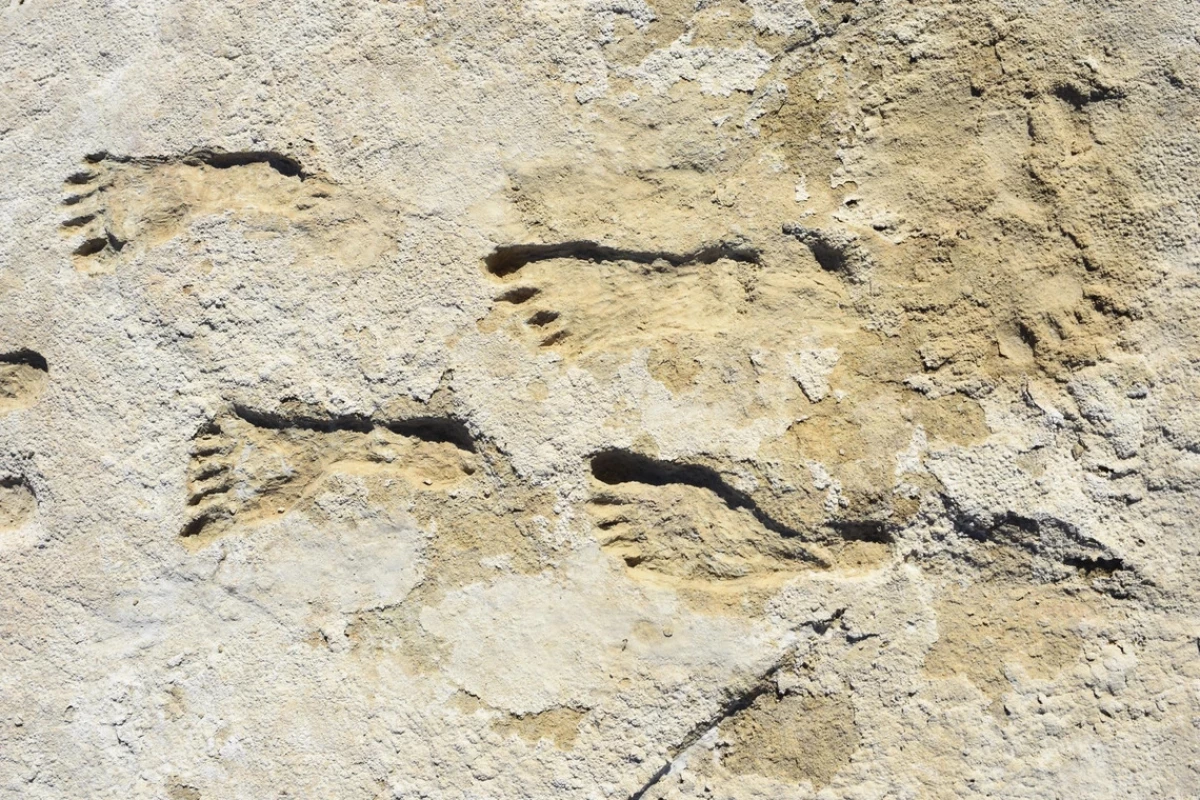
Courtesy of David Bustos/White Sands National Park
By applying updated radiocarbon dating techniques to ancient footprints preserved in the gypsum-rich soil of White Sands, researchers have confirmed that humans inhabited North America 23,000 years ago—settling a long-standing debate over their true age.
The question of when humans first reached North America has been a topic of ongoing controversy, largely due to debates over the reliability of fossil dating methods. In 2019, archaeologists uncovered human footprints in the ancient clay of White Sands National Park in New Mexico. Using radiocarbon dating of nearby Ruppia seeds and pollen, researchers initially suggested that the footprints dated back 23,000 years.
Footprints Challenge Timeline of Human Arrival, But Dating Methods Spark Debate
The discovery pushed back the timeline of human presence in the Americas by 10,000 years, indicating that people arrived before the last Ice Age. However, the research faced intense criticism over the reliability of the materials used for radiocarbon dating. Skeptics questioned whether Ruppia seeds and soil pollen were dependable indicators of age.
So, why the doubt? Ruppia, also known as ditch grass, differs from most land plants because it absorbs carbon from water, which can contain ancient, dissolved carbon. This can make the plant—and anything dated from it—appear significantly older than it truly is. As for pollen, it’s extremely light and can be easily reintroduced into the soil by wind, water, or animals, leading to potentially misleading results.
New Dating of Surrounding Sediment Supports Original Age of Ancient Footprints
To address earlier concerns, a new study published in Science Advances avoided the disputed materials and instead radiocarbon-dated the ancient mud surrounding the footprints. This analysis dated the sediment to between 20,700 and 22,400 years ago—closely aligning with the original 21,000 to 23,000-year range based on seeds and pollen.
In total, the team conducted 55 independent radiocarbon tests across the three materials. All results consistently pointed to a time before the Clovis culture, long believed to mark the earliest human presence in the Americas around 13,000 years ago.
“It’s an incredibly consistent dataset,” said lead author Vance Holliday. “At some point, it becomes nearly impossible to dismiss. As I mention in the paper, it would be extraordinarily coincidental for all these dates to align so perfectly if they were wrong.”
Still, the study leaves some questions unanswered—most notably, the absence of tools or settlement traces from the people who made the footprints. Although this issue isn’t explored in the current research, lead author Vance Holliday offers a possible explanation: the hunter-gatherers likely moved on quickly after leaving the footprints, without lingering long enough to leave behind any belongings.
“These people depended heavily on their tools and were far from any source of replacement materials,” Holliday explained. “They wouldn’t have casually discarded anything. To me, it doesn’t make sense to expect a scatter of artifacts in the area.”
Read the original article on: New Atlas
Read more: PHNX Materials Found a Way to Cut Concrete’s Carbon Footprint Using Coal Waste


