

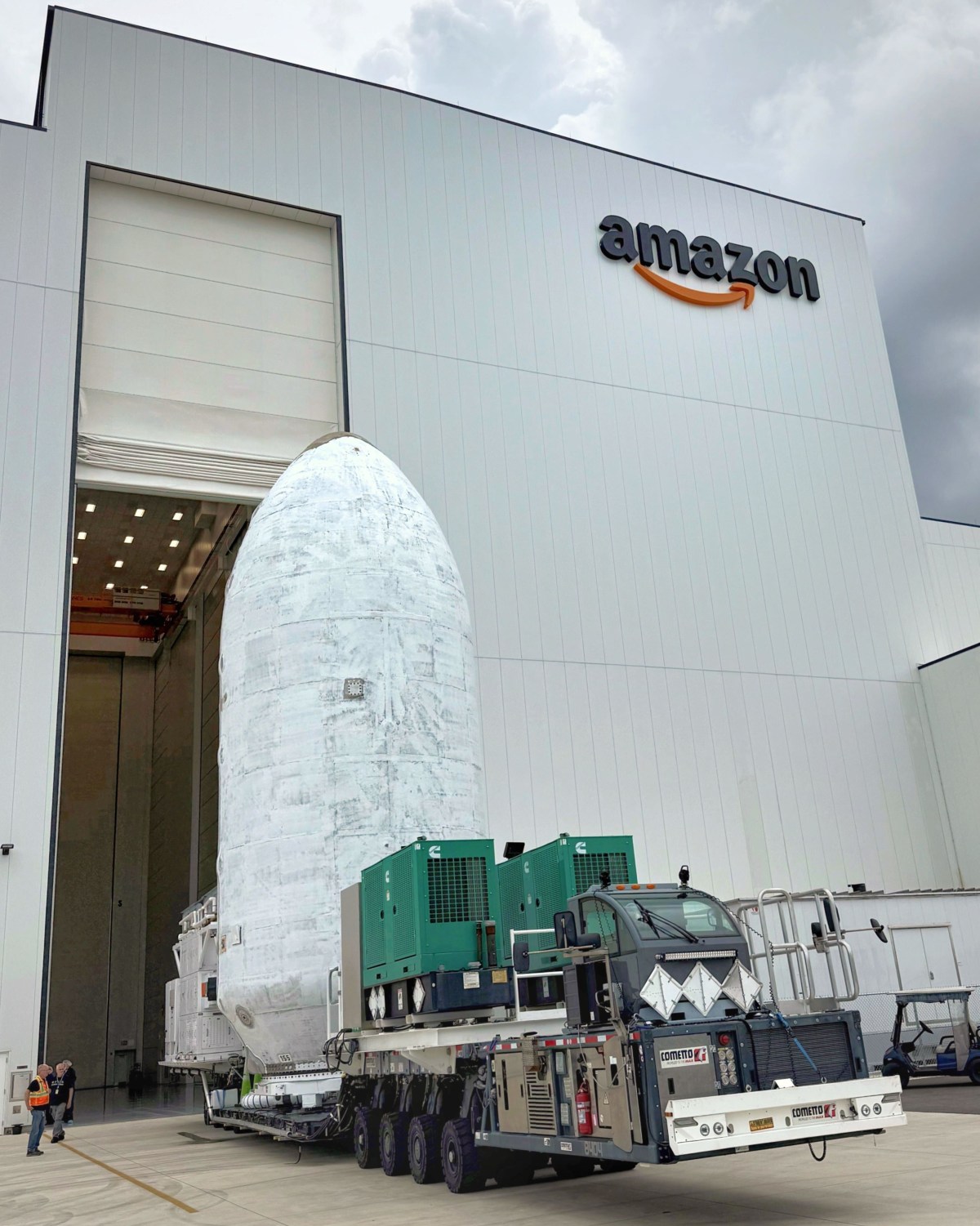
In its push to rival SpaceX in orbit, Amazon is getting a boost from an unexpected partner—SpaceX, which will launch the next batch of Project Kuiper internet satellites on Wednesday.
Amazon’s Next Kuiper Launch Set for Early Morning Liftoff on SpaceX Rocket
Before dawn, 24 Kuiper internet satellites will launch aboard a SpaceX Falcon 9 rocket as part of mission KF-01. The 27-minute launch window opens at 2:18 a.m. ET from Cape Canaveral Space Force Station. Once deployed, the total number of Kuiper satellites in orbit will reach 78. Amazon plans to eventually launch over 3,200 satellites in its first-generation constellation to compete in the satellite internet market, currently led by SpaceX’s Starlink, which has around 8,000 satellites in orbit.
Though Kuiper and SpaceX are direct rivals, Jeff Bezos’ Amazon signed a three-launch agreement with SpaceX in December 2023. The deal came just two months after Amazon faced a shareholder lawsuit for initially excluding SpaceX from its first round of major launch contracts, despite the Falcon 9 being the most reliable rocket currently in operation.
Amazon Races Against 2026 Deadline with Limited Launch Options
The challenge: Amazon must launch at least half of its initial Kuiper satellite constellation by the end of July 2026 to meet its license terms with the U.S. Federal Communications Commission. Federal Communications Commission. Time is running short, and among its chosen launch partners — United Launch Alliance (ULA), Arianespace, and Blue Origin — only ULA currently has a rocket capable of flying. ULA handled the first two Kuiper launches, with the initial batch sent up in April.
Bezos’ other company, Blue Origin, plans to eventually launch Kuiper satellites aboard its massive New Glenn rocket. So far, New Glenn has flown only once and failed to recover its booster. Blue Origin aims to conduct its second launch on August 15.
Read the original article on: Techcrunch
Read more:YouTube Aims To Limit Low-Quality, Repetitive Content Created By AI


