

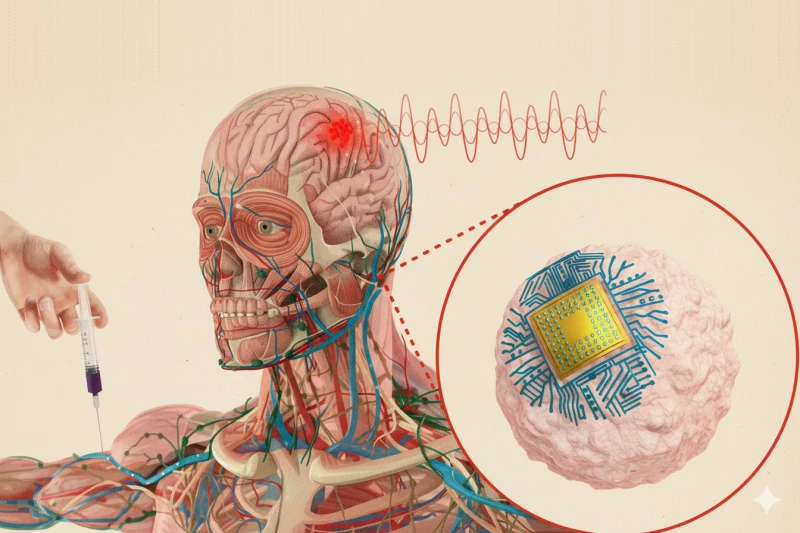
Image generated using Google Gemini, based on an illustration by the researchers
For the past six years, researchers at MIT have been advancing and integrating several cutting-edge technologies to build a breakthrough platform for treating a wide range of neurological disorders and mental health conditions. This approach could be more effective than current treatments and eliminate the need for risky, complex procedures.
How Circulatronics Implants Bioelectronics Without Surgery
The system, called Circulatronics, uses a blend of electronics and the body’s own transport pathways to implant bioelectronic devices without surgery.
Its focus is targeted electrical stimulation of the brain, a method already explored for treating conditions such as depression, Alzheimer’s disease, multiple sclerosis, and brain tumors.
In fact, today, this type of therapy requires invasive brain surgery to place electrodes—a process that carries risks like infection, tissue damage, and high medical costs, making it inaccessible to many of the three billion people living with neurological disorders.
Injectable SWEDs Deliver Targeted Brain Stimulation Without Surgery
However, circulatronics replaces surgery with sub-cellular wireless electronic devices (SWEDs) that are injected through a simple shot. After entering the bloodstream, these tiny chips travel to the brain, attach themselves to specific regions, power up on their own, and deliver electrical stimulation directly where it’s needed.
The team detailed Circulatronics in a recent Nature Biotechnology paper. The project was led by senior author Deblina Sarkar, who heads MIT’s Nano-Cybernetic Biotrek Lab, with collaborators from MIT, Wellesley College, and Harvard University. She also breaks down the technology in the video above.
The system has two standout features: the SWEDs themselves and the way they travel to the brain.
Tiny, Light-Powered Chips Built to Travel Through the Bloodstream
In fact, each SWED is incredibly small—about a billionth the length of a grain of rice. These chips are built from organic semiconducting polymers layered between thin metals, making them small enough to ride on blood cells. They generate power wirelessly using a photovoltaic mechanism, meaning they can convert external light into electricity, such as near-infrared laser light that passes through the skull.
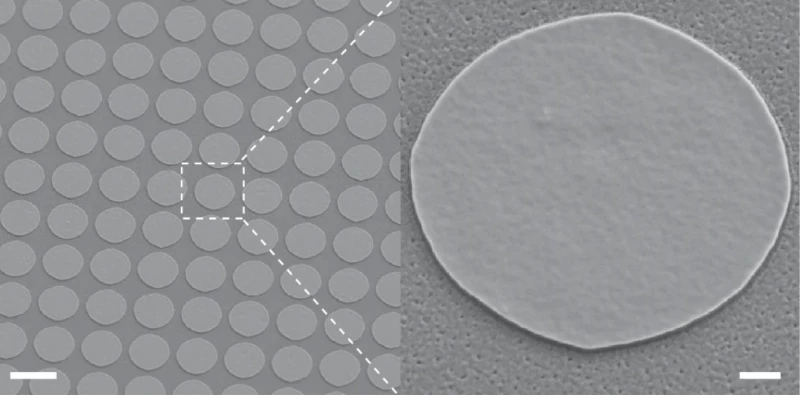
Image courtesy of the researchers
These tiny devices deliver extremely precise stimulation to deep brain regions, and despite their microscopic size, they can still produce enough nanowatt-level power to deliver small electrical pulses.
Cell–Electronics Hybrids Guide SWEDs to Inflamed Brain Regions
In fact, to reach the brain, each SWED is paired with a living immune cell called a monocyte, forming a cell–electronics hybrid. Monocytes can cross the blood–brain barrier and naturally migrate toward inflamed tissue. Because inflammation is a key feature of many neurological disorders, these hybrids travel directly to those affected brain areas and implant themselves there.
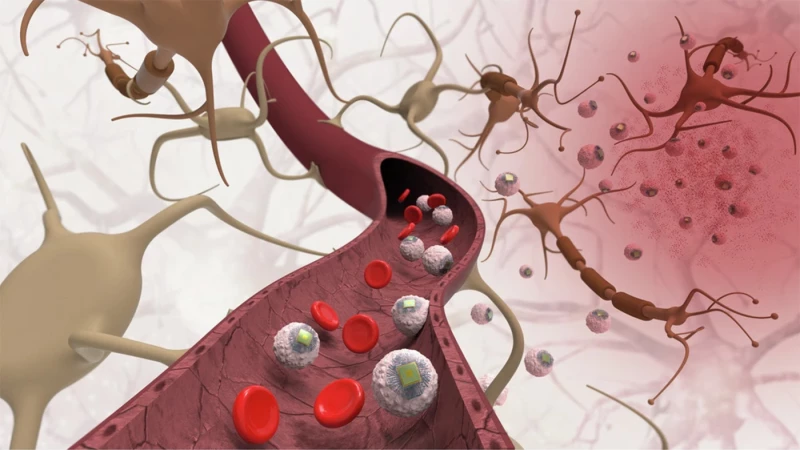
Image courtesy of the researchers
Once the hybrid reaches its target, the SWED can be activated wirelessly with a laser, triggering precise electrical stimulation in a tiny area of the brain.
Mouse Trials Confirm Safe, Targeted Delivery and Brain Stimulation
However, researchers tested the system in mice to prove that cells can safely deliver and operate implants without surgery. The hybrids successfully traveled to an inflamed brain region within 72 hours, and laser activation produced strong, focused c-Fos activity—showing the stimulation worked.
This method could greatly expand access to neurological treatments, especially where brain surgery is limited. The team is now adapting Circulatronics for conditions like brain cancer, Alzheimer’s, and chronic pain, and exploring added sensing and synthetic neuron capabilities.
Sarkar says the technology may also target other organs or power devices like wireless pacemakers. Through MIT spin-off Cahira Technologies, clinical trials could begin within three years, followed by additional regulatory steps before it becomes available.
Read the original article on: New Atlas
Read more: Why Your Brain Struggles to Concentrate When you’re Sleep-Deprived


