

Science
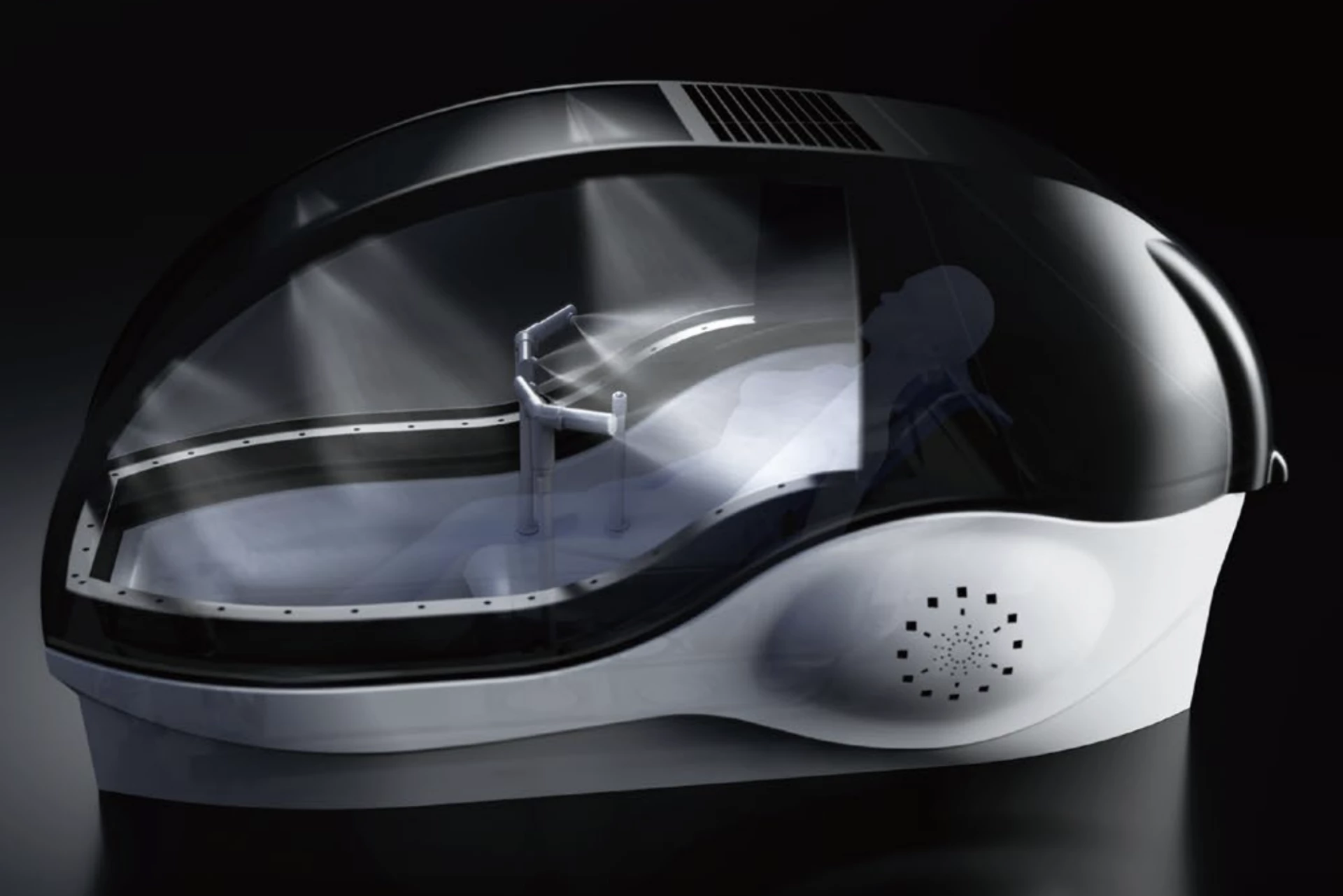
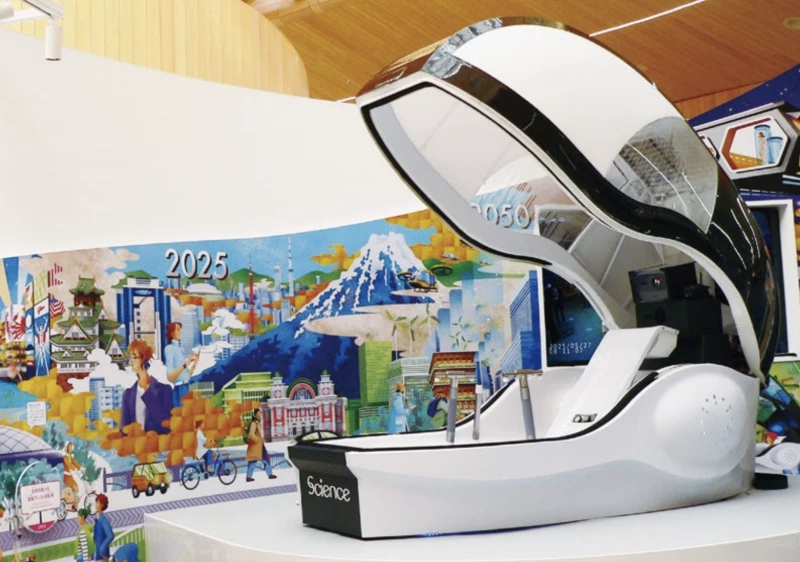
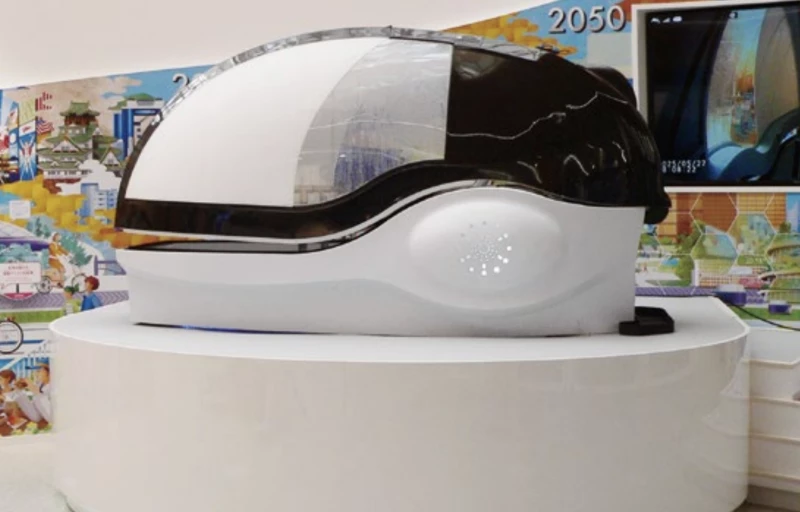
Japanese company Science is advancing commercial production of its Mirai Ningen Sentakuki, the “Human Washing Machine of the Future,” after strong interest at this year’s Osaka–Kansai Expo. Only 50 units will be available, each priced at about US$385,000.
Developed over six years, the pod will sell in Japan for ¥60 million, highlighting its luxury beyond an ordinary bath. A sensor on the user’s back collects biometric data to customize the experience for both relaxation and hygiene. Inside, personalized visuals are projected on the walls, while the water adjusts in real time to match the user’s mood.
A High-Tech Spa for Body and Mind
The brochure describes the “Future Human Washing Machine” as a high-tech, modern update of the 1970 Osaka Expo original. A back sensor monitors biometrics like heart rate to adjust bathing conditions in real time for deep relaxation. It projects visuals and adjusts water pressure based on the user’s state for a more comfortable, restorative experience.
The company added that, through this device, Science aims to promote a society where both body and mind can be cleansed.
Science
The Ultrasonic Bath’s Journey
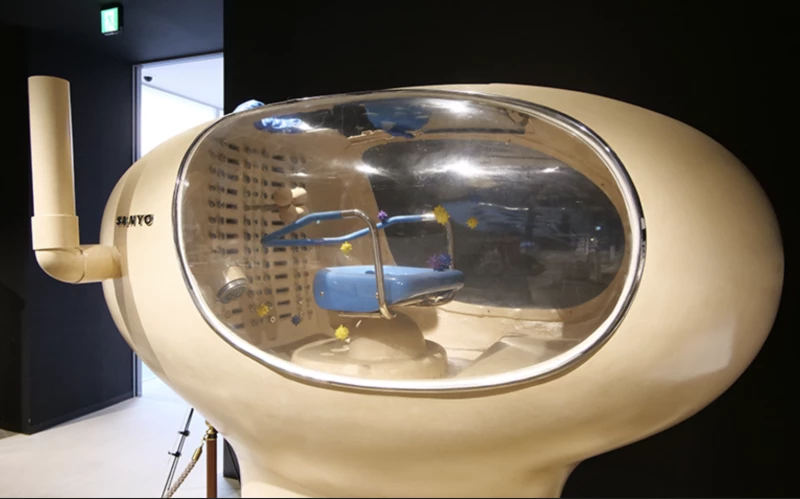
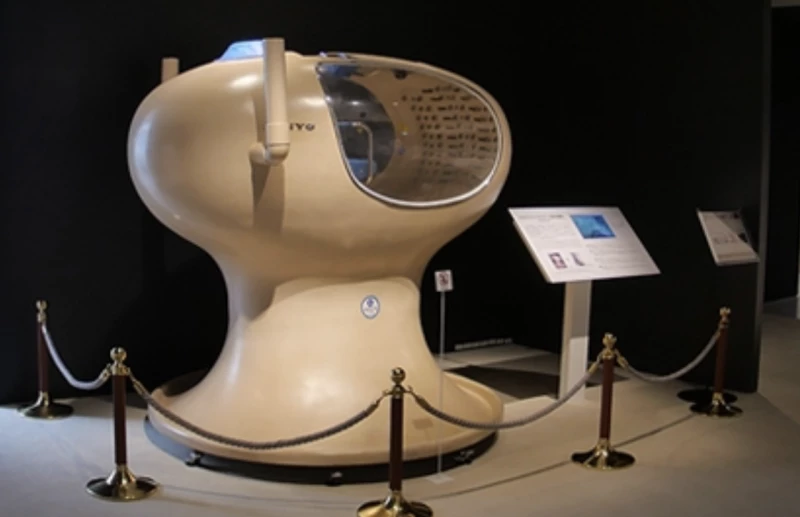
The 1970s Ultrasonic Bath, nicknamed the “human washing machine,” was a major draw at Sanyo’s Expo debut. Today, however, it remains a preserved relic, housed at Osaka’s Panasonic Museum. Panasonic purchased the famed Japanese tech firm Sanyo roughly 15 years ago.
According to the museum, the bath used cutting-edge technology and, with its bold design, evoked an imaginative vision of the future.
Panasonic Museum
Panasonic Museum
The 2025 human-wash machine barely resembles Sanyo’s original and uses cutting-edge technology. Its centerpiece is a microbubble system that the company has spent considerable time refining.
Microbubble Technology
Microbubble technology uses tiny bubbles to clean efficiently while saving water and time. The company says the invisible bubbles penetrate pores, refreshing the skin like exfoliation.
“Microbubbles rise through water very slowly—only a few centimeters per minute,” the company noted. “Our research has confirmed that many of these bubbles carry a negative charge. Organic matter is positively charged, so the bubbles cling to and lift it to the surface. This property is especially useful in bathing applications.”
Users enter the pod—measuring roughly 2.5 m (8.2 ft) long, 2.6 m (8.5 ft) tall, and 1 m (3.3 ft) wide—settle into the reclining seat, and close the lid. From there, the music, visuals, and microbubble wash cycle begin. If they choose, the pod can also run a drying phase, allowing someone to step out fully ready to get dressed in about 15 minutes. According to the company, the aim isn’t only quickness but also the overall experience, offering something akin to a private spa session at home.
Limited-Edition Ultrasonic Baths
Originally, the company hadn’t intended to sell the machine, but the enthusiastic public reaction changed that—reportedly 40,000 Expo attendees applied to try it. After a U.S. resort owner reached out about purchasing one, the company decided to release a limited run of 50 units. So far, an Osaka hotel has ordered one for guest use, and consumer-electronics retailer Yamada Denki has purchased another to feature at its Tokyo flagship store.
“Our president was inspired by it when he saw it as a 10-year-old,” spokeswoman Sachiko Maekura told AFP. “Given that part of its charm lies in its exclusivity, we plan to manufacture only about 50 units.”
Science
Even if the price is beyond your budget—and even if it isn’t, since the company confirmed this model won’t be sold for personal use—you can check it out at Yamada Denki’s LABI1 LIFE SELECT Ikebukuro store in Tokyo starting December 25. Trial sessions will be offered, although specific details have not yet been released.
A Science spokesperson told South Korea’s The ChoSun Daily that “if the technology advances and large-scale production becomes feasible, a more affordable version for home use could potentially be developed in the future.”
Read the original article on: New Atlas
Read more: CMU Researchers Caution that Common AI Models Are Not Yet Reliable for Robot Use


