
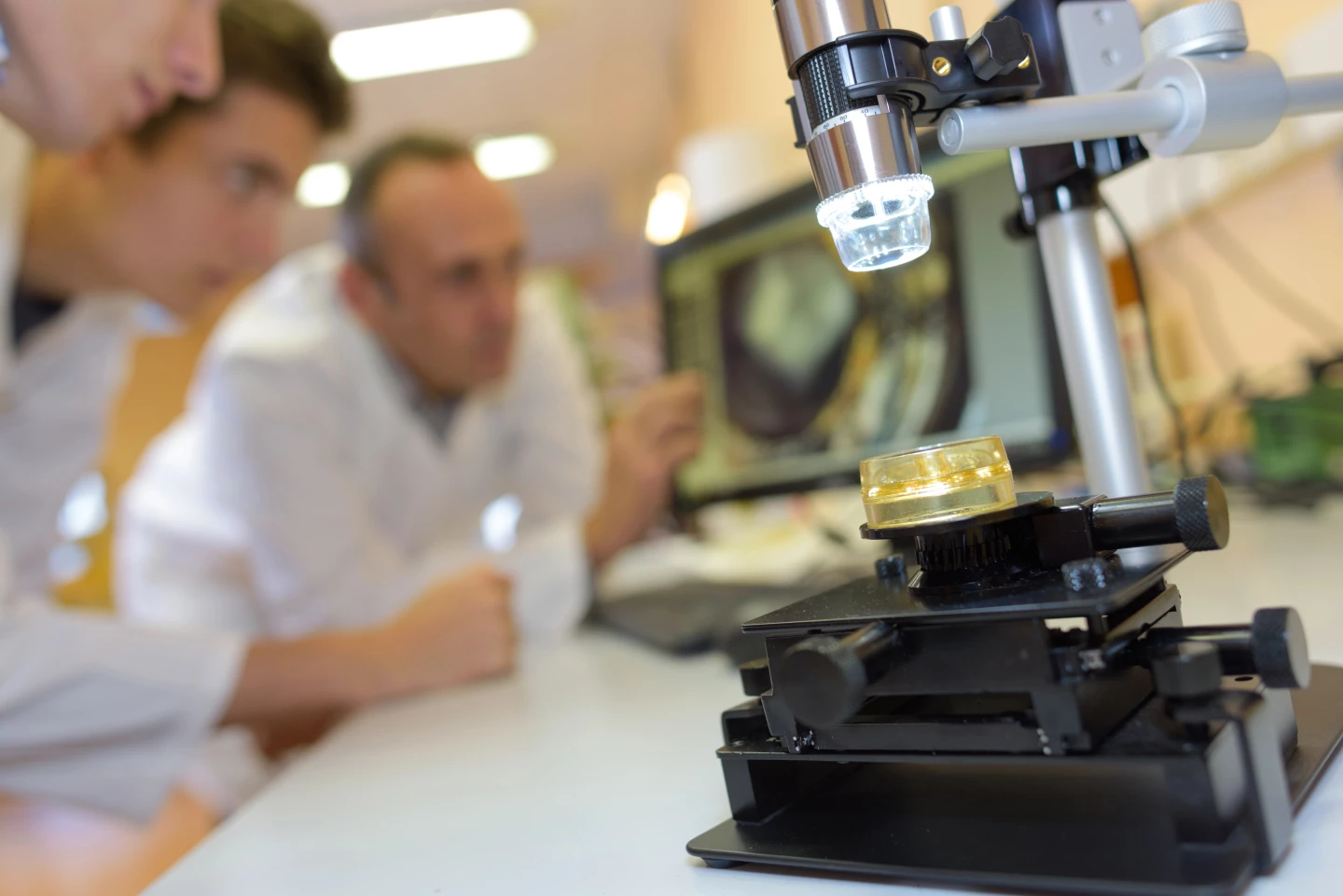
Image Credits: Depositphotos
Neural tissue engineering aims to replicate the brain’s extracellular matrix, supporting neuron growth and connectivity. This environment is precisely organized and conveys signals that direct how cells behave and interact.
3D tissue-engineered models hold great promise for reproducing the brain’s complex structure and functions. Replicating the brain’s fine features in the lab remains difficult, as current methods often miss subtle details that guide cell behavior.
UC Riverside Creates Synthetic Brain Tissue
Researchers at the University of California, Riverside have now created functional brain-like tissue entirely without animal-derived materials or biological coatings. Their breakthrough, called the Bijel-Integrated PORous Engineered System (BIPORES), provides a fully synthetic platform for advancing neural tissue engineering.
This advancement could greatly reduce—or even eliminate—the reliance on animal brains for research and aligns with the US FDA’s ongoing efforts to phase out animal testing in drug development.
The new material is primarily composed of polyethylene glycol (PEG), a chemically inert polymer.PEG alone is non-adhesive, so cells usually need proteins like laminin or fibrin to stick.
BIPORES Overcomes Size Limits of Previous STrIPS Materials
Previously, researchers developed a method called STrIPS to continuously create tiny particles, fibers, and films with sponge-like internal structures. However, these materials could only be produced up to about 200 micrometers thick, limited by molecular transport during their formation.
To address this limitation, researchers created the BIPORES system. It integrates large fibrous structures with complex pore patterns modeled on bicontinuous interfacially jammed emulsion gels (bijels), which are soft materials featuring smooth, saddle-shaped internal surfaces. The BIPORES fibers are formed from a gel-like PEG solution that is converted into a porous network and reinforced with silica nanoparticles.
Using a custom microfluidic system and a bioprinter, the researchers created 3D structures featuring layered, interconnected pores. These pores allow nutrients and waste to circulate freely, supporting cell growth deep within the scaffold. Tests with neural stem cells showed that the material promoted strong cell attachment, proliferation, and even the formation of functional neural connections.
“Because the engineered scaffold is stable, it enables longer-term studies,” said Prince David Okoro, the study’s lead author. “This is particularly valuable since mature brain cells better reflect real tissue function when studying relevant diseases or injuries.”
Fabricating Porous Scaffolds with Light-Activated PEG Mixtures
To fabricate the scaffold, the team used a specialized liquid mixture of PEG, ethanol, and water. PEG is immiscible with water, acting like oil, while ethanol helps the components mix smoothly. This solution was then flowed through tiny glass tubes.
When the mixture encountered a stream of water, its components began to separate. A rapid flash of light then “froze” this moment, forming a sponge-like structure filled with tiny pores. These pores allow oxygen and nutrients to circulate freely, nourishing the stem cells within.
“The material provides cells with the resources they need to grow, organize, and communicate in brain-like clusters,” said Iman Noshadi, a UCR associate professor of bioengineering. “By more closely mimicking natural tissue, we can design models that offer much finer control over cell behavior.”
Scaling Up Synthetic Tissue for Interconnected Mini-Organs
Currently, the scaffold measures just two millimeters in width, but the team is working on scaling it up and has submitted a new study exploring how the same technique could be applied to liver tissue.
Their goal is to build interconnected lab-grown mini-organs that mimic real organ communication. They aim to create models that are both stable and functionally similar to their brain tissue breakthrough.
“An interconnected system would allow us to observe how different tissues respond to the same treatment and how an issue in one organ might affect another,” Noshadi explained. “It’s a step toward studying human biology and disease in a more integrated way.”
From a biomimicry perspective, this layered fabrication method more accurately replicates the behavior of real brain tissue, making it a valuable tool for investigating diseases, testing new drugs, and developing future therapies to repair or replace damaged neural tissue.
Read the original article on: New Atlas
Read more: A Brain Circuit Linked to Compulsive Behaviors Has Now Been Identified and Mapped

