
Roscosmos
Russia faces a major setback after its Soyuz MS-28 mission to the ISS caused serious damage to the country’s only launch pad for crewed spacecraft.
Space launches have become so routine that they’re almost as mundane as a transatlantic flight taking off. Yet, accidents do occur, and some can have serious consequences.
MS-28 Launches Routine Crew Mission to the ISS
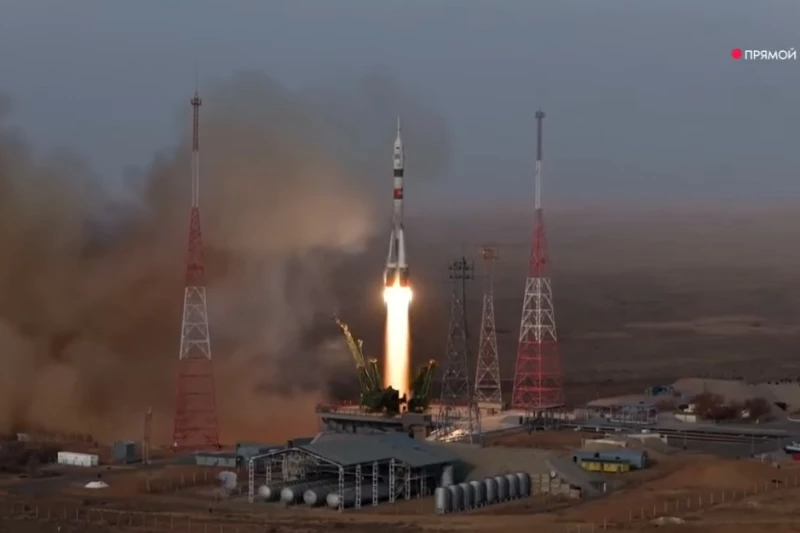
Launched on November 27, 2025, MS-28 carried two Roscosmos cosmonauts and a NASA astronaut to the ISS aboard a Soyuz 2.1a rocket.
The launch went smoothly—until the issue with the launch pad. Site 31/6 at Baikonur, built in the 1960s, hosts the 8U216 Maintenance Cabin, a mobile platform that technicians use to access the rocket’s lower stages before storing it in a protected blast pit.
Normally, with the cabin securely stowed, rocket exhaust passes by without causing harm. During the recent launch, the unsecured cabin was blasted 20 m into the pit, destroying the 144-tonne structure.
Russia’s Sole Crewed Launch Pad Rendered Inoperable
Site 31/6, Russia’s only crewed launch pad, is offline, with repairs expected to take from weeks to possibly two years.
The timing is ironic. After the Space Shuttle retired in 2011, Soyuz was the only way to reach the ISS until SpaceX’s Crew Dragon debuted. Now, Russia is sidelined, leaving the U.S. with a near-monopoly on crewed launches. The incident underscores the importance of redundancy for maintaining a permanent human presence in orbit.
Read the original article on: Newatlas
Read more: Chinese Robot Breaks 106 km World Record in Tech race

