Author: cumbonguala

  • ARM Institute Is Looking For Developers To Support RoboticsCareer.Org

    ARM Institute Is Looking For Developers To Support RoboticsCareer.Org

    The Advanced Robotics for Manufacturing (ARM) Institute recently issued a request for proposals to enhance the functionality of its website, RoboticsCareer.org. This national platform hosts a comprehensive database of robotics-related training and education programs across the U.S., aligned with the institute’s Robotics Competency Framework.
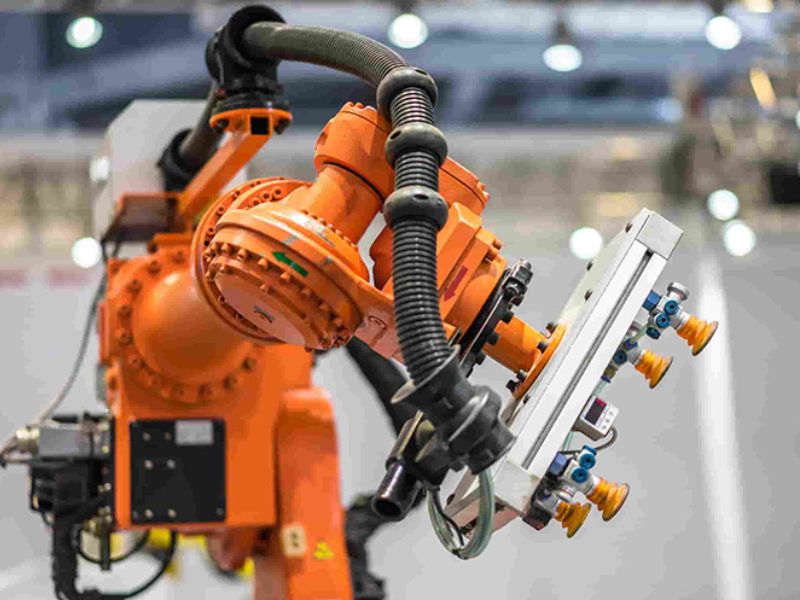
    Image Credits: The ARM Institute provides RoboticsCareer.org as a national resource for robotics training. Source: Adobe Stock

    The Advanced Robotics for Manufacturing (ARM) Institute recently issued a request for proposals to enhance the functionality of its website, RoboticsCareer.org. This national platform hosts a comprehensive database of robotics-related training and education programs across the U.S., aligned with the institute’s Robotics Competency Framework.

    Launched in 2021, RoboticsCareer.org aims to connect job seekers and employers in the robotics field. The platform currently features nearly 17,000 program listings from over 2,400 training providers, all maintained manually.

    In March, the ARM Institute expanded the site’s capabilities for employers, incorporating feedback from more than 450 industry partners to improve talent search tools, automate email notifications, and highlight graduates from endorsed programs. The updated also introduced features for job seekers and students, including profile previews and endorsement badges. The most recent update to the platform occurred in March 2024.

    RoboticsCareer.org’s Database Requires Automated Management

    The ARM Institute seeks a provider to build an automated system to collect, verify, and manage its education program database. This system should be capable of identifying and updating key details such as the type of credential offered and whether the program is delivered online or in a hybrid format.

    According to the nonprofit, the collected data must be easily accessible for analytics and reporting purposes.

    Proposals will be judged on several criteria, including technical approach, methodology, relevant experience, accuracy in classification, cost-effectiveness, and the system’s scalability and ease of maintenance.

    This is a work-for-hire project, with the ARM Institute retaining ownership of all developed source code. However, the institute plans to collaborate with the chosen provider on future improvements.

    Interested parties must submit proposals by August 15. For more information, contact John Zappa, senior director of product management, at [email protected].

    Image Credits: The RoboticsCareer.org framework lists the required competencies for robotics technicians. (Click here to enlarge.) Source: ARM Institute

    Overview of the ARM Institute

    The ARM Institute is a Manufacturing Innovation Institute (MII) funded by the Office of the Secretary of Defense under Agreement Number W911NF-17-3-0004. Established in 2017, it is part of the Manufacturing USA network, which, under the proposed federal budget, would see its funding remain at $18 million.

    Headquartered in Pittsburgh, the ARM Institute brings together over 450 members from industry, academia, and government. In May, the organization named seasoned industry leader Jorgen Pedersen as its new CEO.

    The institute’s mission is to broaden access to robotics, autonomy, and artificial intelligence technologies for U.S. manufacturers of all sizes, support workforce development, boost economic strength and global competitiveness, and enhance national security and resilience.

    According to the ARM Institute, it is “paving the way for a future where humans and robots collaborate to meet the nation’s most pressing challenges and create the world’s most sought-after products.”


    Read the original article on: The Robot Report

    Read more: Humanoid Robot Replaces Its Own Batteries for Continuous 24/7 Operation

  • Google Photos Blends Search And AI For Faster Results

    Google Photos Blends Search And AI For Faster Results

    Image Credits:Jaap Arriens/NurPhoto / Getty Images

    After briefly halting the rollout of its glitchy AI-driven “Ask Photos” feature, Google has now announced enhancements that improve the tool’s speed in delivering search results.

    AI-Powered Photo Search Unveiled at Google I/O

    Initially unveiled at last year’s Google I/O developer conference, the AI feature enables users to search their photo libraries using natural language. Powered by Google’s Gemini, Ask Photos can interpret both the visual content and metadata of images to provide more relevant responses.

    Users, however, reported that the AI feature was unreliable and frequently lagged while processing queries.

    Responding to the feedback, Google Photos product manager Jamie Aspinall acknowledged on X earlier in June that “Ask Photos isn’t where it needs to be, in terms of latency, quality and UX.” He added that the rollout would be paused for a few weeks as the team worked to restore the “speed and recall of the original search.”

    Image Credits:Google

    Faster, Simpler Searches Return with Ask Photos Integration

    In a short blog post  on Thursday, Google announced it’s integrating the strengths of Photos’ traditional search into Ask Photos—especially for straightforward queries like “beach” or “dogs.” This change enables faster initial results, similar to the classic experience.

    Meanwhile, the AI will continue working in the background to handle more complex searches and surface the most relevant images.

    For example, if you search for a “white dog,” you’ll first see instant results. Once the AI completes its analysis, it will add enhanced results below—potentially including the dog’s name (if saved) and when it first appeared in your photo library.

    The interface still gives users the option to switch back to classic search if they prefer. With these updates, Google has restarted the rollout of Ask Photos to more users across the U.S.

    To access Ask Photos, users must be at least 18 years old, have their account language set to English, and have Face Groups enabled—a feature that tags people and pets in their Google Photos library.


    Read the original article on: TechCrunch

    Read more: Google’s AI Mode Now Supports Interactive Voice Conversations

  • OpenAI Is Reportedly Planning To Utilize Google’s Cloud Services

    OpenAI Is Reportedly Planning To Utilize Google’s Cloud Services

    According to a Reuters report, OpenAI has signed an agreement with Google to start using Google's cloud services to support its expanding computing demands. This move comes as a surprise, considering that the two companies compete in the AI industry.
    Image Credits: Unsplash/caufeux

    According to a Reuters report, OpenAI has signed an agreement with Google to start using Google’s cloud services to support its expanding computing demands. This move comes as a surprise, considering that the two companies compete in the AI industry.

    OpenAI Expands Cloud Strategy Amid Shifting Partnerships and Soaring Compute Demands

    The parties have not disclosed the details of the agreement, but reports suggest they have been negotiating it for several months. This development represents OpenAI’s most recent effort to broaden its computing infrastructure beyond Microsoft Azure.

    Until January, Microsoft served as OpenAI’s sole data center provider. However, after CEO Sam Altman attributed delays in several product launches to limited computing resources, the company reached an agreement with CoreWeave in March to boost its cloud computing capacity. Analysts valued that deal at nearly $12 billion.

    While Microsoft Azure might no longer be OpenAI’s exclusive cloud provider, the two companies continue to maintain a close relationship. OpenAI still significantly depends on Azure, and the firms are currently in discussions to update the terms of their partnership—talks that will likely involve changes to Microsoft’s equity stake in OpenAI.

    Nevertheless, this development is undoubtedly a victory for Google Cloud. ChatGPT has emerged as one of the most significant challenges to Google’s search dominance in years, and this agreement could signal a potential thaw in relations between the two firms. Regardless, analysts expect it to bring substantial revenue to Google Cloud, which generated $43 billion last year and accounted for 12 percent of Alphabet’s total revenue. Adding OpenAI as a client is likely to significantly boost those figures.

    Google’s Cloud Capacity Questioned as OpenAI Deal Raises Concerns Over Resource Allocation

    One obvious concern stands out: Google has long struggled to keep up with demand for its cloud services—even before adding OpenAI to the mix. The bottom line is that it needs more data centers. This raises the question: will OpenAI receive priority access over existing customers? Engadget has contacted Google for comment and will update the story if a response is received.

    OpenAI is clearly flourishing. The company recently revealed that, based on current software adoption rates, it is on track to generate $10 billion in annual revenue as of June. It also informed investors of a yearly revenue target of approximately $12 billion—a goal it is expected to reach comfortably with the addition of new subscribers.


    Read the original article on: Engadget

    Read more: Google’s SynthID Detects AI Content—But What Is AI ‘Watermarking’ and Does It Work?

  • Transforming Waste Into Value: The Way Microwaves Are Changing The Game In E-Waste Recycling

    Transforming Waste Into Value: The Way Microwaves Are Changing The Game In E-Waste Recycling

    You might not be familiar with tantalum, but you're probably holding it in your hand. It's a crucial material used in smartphones and laptops, and at the moment, there's no reliable alternative. Even if you intend to recycle your old electronics, the tantalum they contain often ends up in landfills or is sent abroad—effectively gone for good.
    Image Credits: Pixabay

    You might not be familiar with tantalum, but you’re probably holding it in your hand. It’s a crucial material used in smartphones and laptops, and at the moment, there’s no reliable alternative. Even if you intend to recycle your old electronics, the tantalum they contain often ends up in landfills or is sent abroad—effectively gone for good.

    As a researcher specializing in recovering critical materials, I’ve spent years exploring electronic waste, viewing it not as trash but as an urban mine rich in valuable resources such as tantalum.

    The Importance Of Tantalum

    Tantalum is a rare, heat-resistant metal crucial for electronic capacitors—tiny components that store and release energy efficiently in nearly all the devices you use. Manufacturers use about 24% of the world’s tantalum production to make capacitors for sensitive, high-tech products like smartphones, laptops, medical equipment, and aerospace electronics. Manufacturers produce around 80% of these capacitors as surface-mounted devices. Without tantalum, many of our key technologies would not work as effectively.

    However, this essential metal comes with a steep cost. In 2024, suppliers priced tantalum at about $170 US per kilogram—significantly higher than the price of common metals like copper, which sold for around $9.50 per kilogram. Despite its high value, recycling tantalum is surprisingly inefficient. Conventional recycling methods often overlook tantalum capacitors because recovering small amounts is expensive, energy-intensive, and poses environmental challenges.

    The Unseen Consequences Of Neglecting Electronic Waste

    The reality of electronic waste is alarming. In 2022 alone, over 62 million metric tons of discarded electronics were generated worldwide. Much of this e-waste ends up in landfills or is sent abroad, where unsafe recycling practices—such as burning circuit boards or using harsh chemicals to extract metals—create serious health and environmental risks.

    Experts classify critical materials like tantalum as ‘high-risk’ due to their scarcity and geopolitical challenges. Failing to recover these materials worsens economic and strategic vulnerabilities. The U.S., for example, depends heavily on tantalum imports from countries like China, and any disruption in supply can have a major impact on industries from consumer electronics to defense technologies.

    An Innovative Recycling Method Driven By Microwave Technology

    At West Virginia University, within the Department of Mechanical, Materials & Aerospace Engineering, my team and I set out to tackle a straightforward question: could we create a cleaner, safer, and more cost-effective way to recycle tantalum from discarded capacitors?

    The answer came in the form of microwaves—similar to those in your kitchen but much more powerful and precisely controlled. Here’s how our method works:

    First, we shred the used tantalum capacitors and combine the resulting powder with a carbon-based material. Unlike water, carbon quickly absorbs microwaves, allowing us to apply intense, focused heating directly to the tantalum particles. This selective heating triggers a reaction called “carbothermal reduction.”

    This process converts tantalum compounds into pure tantalum carbide, which we easily recover and verify to have purity levels over 97%, as confirmed by our recent study published in Scientific Reports.

    By using microwaves, we avoid harsh chemical treatments and cut energy use drastically compared to traditional recycling methods, while also greatly reducing harmful waste by-products.

    Moving From Laboratory Breakthroughs To Real-World Industry Applications

    Although our initial tests confirmed the effectiveness of our approach, the next critical phase is to scale the method beyond the lab. We are currently conducting pilot projects with larger quantities of e-waste, including smartphone circuit boards and server equipment from data centers, to demonstrate the technology’s ability to operate at scale.

    Our early funding was provided by DARPA’s Recycling at the Point of Disposal (RPOD) program, highlighting the strategic value the U.S. military places on domestic recycling of critical materials. Because technology and resource independence directly support national security, strengthening tantalum recycling could play a crucial role—not just economically, but also strategically.

    A Sustainable Future: Advantages For Both The Economy And The Environment

    So, how can we turn widespread recycling of tantalum and other critical metals into a reality? A major part of the solution comes down to economics. When recycling facilities see that they can efficiently recover metals valued at hundreds of dollars per kilogram using cost-effective and environmentally friendly methods, the financial motivation becomes too strong to ignore.


    Read the original article on: Tech Xplore

    Read more: Quantum “Tornadoes” in Semimetal Could Revolutionize Electronics

  • Circle’s IPO Jumps, Raising Hopes For Other Startups Aiming To Enter The Public Market

    Circle’s IPO Jumps, Raising Hopes For Other Startups Aiming To Enter The Public Market

    Circle, a leading issuer of USDC—a stablecoin tied to the U.S. dollar—closed its first day of public trading at $83.23 per share, marking a 168% increase over its IPO price of $31 set just a day earlier.
    Image Credits: Pixabay

    Circle, a leading issuer of USDC—a stablecoin tied to the U.S. dollar—closed its first day of public trading at $83.23 per share, marking a 168% increase over its IPO price of $31 set just a day earlier.

    The strong debut highlights growing investor enthusiasm for cryptocurrencies, especially stablecoins, fueled in part by the Trump administration’s favorable outlook on digital assets.

    First-Day Surge in Circle’s Stock Could Boost Valuations for Upcoming IPOs

    The sharp rise in Circle’s stock on its first day of trading may encourage institutional investors to assign higher valuations to upcoming IPOs. Notable forthcoming listings include Omada Health, set to price on Thursday, and fintech firm Klarna, which is expected to go public next week.

    Circle’s IPO price gave the company an initial market capitalization of $6.1 billion—below its $7.7 billion private valuation from 2021, when it secured a $400 million Series F round, according to PitchBook.

    However, the strong first-day rally more than made up for the lower initial valuation. By the end of trading, Circle’s market cap (excluding employee stock options) had reached $16.7 billion, and the company raised approximately $1.1 billion through the IPO.

    Circle Joins Growing Trend of IPOs Priced Below Private Market Valuations

    Circle now joins a broader trend of companies going public at valuations below their previous private market peaks—a pattern seen with recent down-round IPOs from health tech firm Hinge, contractor platform ServiceTitan, and social media company Reddit. Still, startups looking for signs that the timing is right for a public debut will likely continue undeterred.

    Circle’s successful IPO comes three years after its earlier bid to go public. In 2022, the stablecoin issuer had planned to merge with a SPAC in a deal that valued the company at $9 billion.

    The company’s biggest external shareholders are General Catalyst, which owned about 8.9% of the total shares prior to the offering, and IDG Capital, holding 8.8%. Other notable venture investors include Accel, Breyer Capital, and Oak Investment Partners, as detailed in the  S-1filing.


    Read the original article on: TechCrunch

    Read more: Crypto Platforms Feel Like Gambling Due To High-Risk Users

  • Scalable Method Supports The Creation Of Self-Healing, Flexible Transistors And Circuits

    Scalable Method Supports The Creation Of Self-Healing, Flexible Transistors And Circuits

    Image Credits: Pixabay

    Recent technological progress has led to the creation of a diverse array of increasingly advanced wearable and implantable devices, capable of monitoring physiological signals or delivering precise therapeutic interventions to specific areas of the body. Since these devices—especially implantables—are meant to function in dynamic biological environments over extended periods, they must be biocompatible and able to self-repair when damaged.

    Innovative Scalable Method Developed for Self-Healing, Stretchable Electronics Integration

    Researchers from Sungkyunkwan University, the Institute for Basic Science (IBS), and other South Korean institutions have recently developed a novel method for producing self-healing, stretchable electronic components suitable for integration into advanced devices. Detailed in a Nature Electronics publication, their method supports scalable and reconfigurable assembly of these components into high-performance integrated systems.

    “Since the mid-2000s, flexible and stretchable electronics have transformed areas like artificial electronic skin and soft implantable bioelectronics,” said Donghee Son, senior author of the study, in an interview with Tech Xplore.

    “However, maintaining reliable performance over time remains difficult, as devices face mechanical wear and damage from repeated motion and external forces. Moreover, it has traditionally been impossible to reconfigure pre-fabricated flexible electronics to adapt to specific user needs.”

    Another major hurdle in developing implantable electronics is preserving their electrical performance over time, especially in moist and dynamic biological environments. To address this, Son and his team designed self-healing, stretchable materials with favorable electronic properties and developed a method to incorporate them into functional circuits.

    “Human skin naturally heals itself after injury, restoring both its structure and ability to sense and relay information,” Son explained. “Inspired by this, our research embeds self-healing and stretchable capabilities into all three essential layers of a transistor—the dielectric insulator, semiconductor, and electrodes (gate, source, and drain). This enables users to reconfigure logic gates, active matrices, and display arrays to meet specific needs.”

    Scalable Fabrication Method Promises Breakthroughs in Advanced Implantable Medical Devices

    The scalable fabrication method introduced by the team could pave the way for advanced implantable devices capable of recording electrophysiological signals from the brain, vagus nerve, spinal cord, peripheral nerves, and even heart tissue. Such devices hold promise for improving diagnosis and treatment across a variety of medical conditions.

    “To build fully self-healing, stretchable systems, key materials include self-repairing polymers, conductive nanomaterials, and organic semiconductors,” Son said.

    Self-Healing Semiconductor Layer Boosts Durability

    The transistor’s semiconductor layer is made by mixing a self-healing polymer with an organic semiconductor and spin-coating it. This process causes spontaneous vertical phase separation, which helps prevent performance loss under external stress. Even when damaged, the polymer chains reconnect, preserving electrical and mechanical functions.

    Son and his team proposed using transfer-printing to fabricate each device layer—insulators, electrodes, and semiconductors—over large areas. This scalable method enables large-area stretchable systems integrated with touch sensors, matrices, and displays.

    This printing method lets stretchable, self-healing transistors be reassembled like LEGO blocks for custom systems. Early tests showed the transistors, on self-healing, biocompatible substrates, maintained stable performance long after implantation in animals.

    “No bioelectronic system has yet combined self-healing, stretchability, and in vivo implantability—this study is the first,” said Son.

    Next-Gen Neuroprosthetics

    Next-gen neuroprosthetics for human enhancement must capture neural signals via high-density implants, process them, and deliver stimulation through closed-loop feedback. A key requirement for these systems is long-term stable performance without degradation.

    An additional benefit of devices made with the team’s method is their modular and reconfigurable design. This enables customization for user preferences and easy plug-and-play replacement if performance drops.

    Son and his team’s scalable method for stretchable, self-healing circuits could advance implantable and wearable biomedical devices. Ultimately, systems built using their approach could undergo pre-clinical and clinical trials to verify safety and assess practical effectiveness.

    “These breakthroughs are expected to become a foundation for the advancing field of human augmentation technologies,” Son added. In our future research, we will concentrate on enhancing the electrical performance of self-healing, stretchable modular integrated systems.

    Specifically, we intend to optimize critical factors like semiconductor mobility and electrode conductivity to achieve high-speed circuit operation. We also plan to create circuits capable of capturing high-quality electrophysiological signals in living organisms. Building on these improvements, our long-term objective is to develop personalized systems for diagnosing and treating brain and heart diseases.


    Read the original article on: Tech Xplore

    Read more: How reliable Is AI?

  • Apple May Update Its OS Naming Scheme To Correspond With The Release Year, Potentially Rebranding iOS 19 as iOS 26

    Apple May Update Its OS Naming Scheme To Correspond With The Release Year, Potentially Rebranding iOS 19 as iOS 26

    Apple appears to be making major changes to its operating systems this year, extending beyond just design and user experience. Traditionally, the next versions of iOS and iPadOS were anticipated to be labeled as version 19, with macOS progressing to version 15, maintaining the long-standing numbering system.
    Image Credits: Pixabay

    Apple appears to be making major changes to its operating systems this year, extending beyond just design and user experience. Traditionally, the next versions of iOS and iPadOS were anticipated to be labeled as version 19, with macOS progressing to version 15, maintaining the long-standing numbering system.

    Apple May Switch to Year-Based Naming for Future OS Versions, Moving Away from Sequential Numbers

    According to Bloomberg, Apple may be moving away from its long-standing numbering tradition for its operating systems. Insider sources indicate that future OS versions might adopt the release year as their version number instead of the current sequential system. This means that instead of following the usual incremental numbers—like iOS 19 or macOS 15—Apple could introduce versions labeled with the year they launch.

    For example, the next updates could be branded as iOS 26, iPadOS 26, macOS 26, watchOS 26, tvOS 26, and visionOS 26, reflecting a unified naming strategy across all platforms. This shift would mark a significant change in how Apple communicates software updates, potentially making it easier for users to identify the release year of each system at a glance. It also suggests Apple is aiming for a more cohesive and streamlined branding approach across its ecosystem, aligning all device software under a consistent and easily understandable versioning scheme.

    Apple’s New OS Version Numbers Could Reflect the Year of Fall Releases, Starting with 2026

    The version numbers would correspond to the year following each major OS release, as Apple usually launches these updates in the fall. This means Apple could name the upcoming iOS, iPadOS, and other platforms released in September or October after the year 2026.

    We’ll find out for certain on June 9 during Apple’s Worldwide Developers Conference keynote. Many people widely anticipate that Apple will introduce a major user interface redesign to create a more consistent experience across its devices.

    Aligning the branding across all Apple operating systems appears to be a smart decision. Currently, Apple Watch runs watchOS 11, while Apple Vision Pro uses visionOS 2, which can be a bit confusing. Using a consistent numbering system tied to the release year for all OS versions would simplify things and make it easier for users to follow.


    Read the original article on: Engadget

    Read more: With iOS 19 Approaching, Apple is Focusing On Mobile Gaming

  • Fujifilm’s X Half is An $850 Digital Camera With a Vintage Film Look

    Fujifilm’s X Half is An $850 Digital Camera With a Vintage Film Look

    Fujifilm’s latest release, the $850 X Half, is a quirky 18MP compact camera that captures vertical 3:4 images using half of a 1-inch sensor. With a retro design, it features a rear screen showcasing 13 film simulation modes and supports only JPEG, with no RAW option.
    Image Credit: Pixabay

    Fujifilm’s latest release, the $850 X Half, is a quirky 18MP compact camera that captures vertical 3:4 images using half of a 1-inch sensor. With a retro design, it features a rear screen showcasing 13 film simulation modes and supports only JPEG, with no RAW option.

    A Modern Take on a Vintage Format

    The  X Half  name is inspired by 1960s half-frame cameras like theOlympus Pen F, which used a 35mm film frame split in half (18mm x 24mm).

    Fujifilm’s X Half has a backside-illuminated sensor half the size of a traditional half-frame (8.8mm x 13.3mm), covering just a quarter of its area.

    The X Half has the smallest sensor in recent Fujifilm cameras, with the X-series using APS-C and the GFX line using medium format. It shares the 3:4 ratio of Fujifilm’s Instax Mini cameras for direct printing via an Instax Mini printer and the new X Half app.

    Image Credit: Fujifilm

    The X Half makes full use of Fujifilm’s signature film simulation and grain effect modes. New additions include “light leak,” mimicking accidental overexposure, “expired film,” and “halation,” a glow from light reflecting within film layers.

    Film Camera Mode enhances the vintage feel with an optical viewfinder, manual frame advance, and photo “development” in the X Half app. It even generates a classic contact sheet layout with 36, 54, or 72 images.

    Retro Creativity Meets Modern Sharing

    The X Half’s 2-in-1 feature lets users merge two stills or clips into one, with the film advance lever adding a retro touch.

    The camera captures photos and videos in vertical or square formats (up to 2160×2160), perfect for social media with Fujifilm’s film simulations. The “Date Stamp” adds to the vintage feel with a classic Kodak-style timestamp in the bottom-right corner.

    The X Half has a 2.4-inch 3:4 LCD, an optical viewfinder with parallax distortion, and weighs just 210 grams (7.4 ounces). It also includes a built-in flash, an impressive 880-frame battery life, and an SD UHS-I card slot.

    The X Half could appeal to social media enthusiasts or anyone seeking a fun camera for parties or vacations. It’s pricey, especially compared to an Instax or regular film camera with plenty of film for less. Fujifilm’s X100 VI was a hit, so the X Half’s popularity wouldn’t be surprising. It’s now available for preorder at $850 (black, charcoal silver, silver), shipping June 12.


    Read the original article on: Engadget

    Read more: Social Robots Learning On Their Own? New Study Skips Human Involvement In Early Testing

  • Solar Outranks Nuclear in Energy Investment Risk

    Solar Outranks Nuclear in Energy Investment Risk

    From now until 2050, the International Energy Agency estimates that over $100 trillion will be invested in developing net-zero energy infrastructure worldwide. However, each of these projects carries the potential for unexpected cost overruns or construction delays. Emerging technologies like hydrogen and geothermal, introduced in the past decade, present even greater challenges in assessment, as governments, energy developers, utilities, investors, and other stakeholders work to determine the most viable sustainable energy solutions for the future.
    Credit: Pixabay

    From now until 2050, the International Energy Agency estimates that over $100 trillion will be invested in developing net-zero energy infrastructure worldwide. However, each of these projects carries the potential for unexpected cost overruns or construction delays. Emerging technologies like hydrogen and geothermal, introduced in the past decade, present even greater challenges in assessment, as governments, energy developers, utilities, investors, and other stakeholders work to determine the most viable sustainable energy solutions for the future.

    Study Reveals Soaring Costs and Delays in Energy Projects, With Nuclear Plants Facing the Worst Overruns

    A cutting-edge study published in the journal Energy Research & Social Science by researchers at Boston University’s Institute for Global Sustainability (IGS) reveals that soaring construction costs and extended timelines hinder many energy projects. On average, projects run 40% over budget and are delayed by nearly two years, according to the findings.

    Nuclear power plants are the most problematic, with construction costs averaging more than double initial estimates and experiencing the longest delays. Specifically, the typical nuclear project exceeds its budget by 102.5%, resulting in an additional $1.56 billion in costs.

    Examining newer net-zero technologies also highlights considerable risks. Hydrogen infrastructure and carbon capture and storage projects, along with natural gas-based thermal power plants, show substantial average cost and schedule overruns. These challenges raise concerns about their ability to scale rapidly enough to meet climate mitigation and emissions reduction targets.

    “These results raise serious concerns about the viability of rapidly advancing a hydrogen economy,” says Benjamin Sovacool, the study’s lead author, director of IGS, and professor of Earth and Environment.

    In contrast, solar energy and electricity grid transmission projects demonstrate the most reliable construction performance, frequently finishing ahead of schedule or under budget. Wind farms also showed strong results in terms of financial risk.

    Wind and Solar Offer Underrated Financial and Social Benefits, Study Finds

    For Sovacool, the evidence is undeniable: “Low-carbon energy sources like wind and solar offer not only substantial climate and energy security benefits but also financial advantages due to lower construction risks and fewer delays,” he states. “This further highlights the often overlooked social and economic value of these technologies.”

    The study, based on an original dataset much larger and more thorough than previous ones, offers the most detailed comparative analysis of construction cost overruns and time delays in global energy infrastructure projects.

    The researchers gathered data from 662 energy infrastructure projects, spanning a wide range of technologies and capacities, completed between 1936 and 2024 across 83 countries, amounting to $1.358 trillion in investment. This includes emerging technologies like geothermal and bioenergy, providing new insights into the cost factors of these recently commercialized innovations.

    Comprehensive Study Evaluates Construction Risks Across Ten Major Energy Technologies

    The study analyzed a total of ten types of projects: thermoelectric power plants fueled by coal, oil, or natural gas; nuclear reactors; hydroelectric dams; large-scale wind farms; large-scale solar photovoltaic and concentrated solar power plants; high-voltage transmission lines; bioenergy power plants; geothermal plants; hydrogen production facilities; and carbon capture and storage projects.

    A key insight of this global analysis is understanding the factors that cause energy projects to exceed budgets and experience delays, as well as when these issues tend to arise. The study explored diseconomies of scale, construction setbacks, and governance issues to pinpoint critical points where costs spike, providing valuable information for improving risk management strategies.

    “I’m particularly struck by our findings on diseconomies of scale, where projects exceeding 1,561 megawatts in capacity show a much higher risk of cost overruns,” says Hanee Ryu, the study’s second author and a visiting researcher at IGS. “This indicates that we may need to rethink our approach to large-scale energy infrastructure planning, especially as we invest trillions in global decarbonization efforts.”

    Ryu further explains that this could mean smaller, modular renewable projects not only offer environmental advantages but may also lower financial risks and improve budget predictability.


    Read the original article on: Tech Xplore

    Read more: The Construction of the World’s Largest Solar Energy Plant is Underway in Abu Dhabi

  • Apple’s New Feature May Soon Let You Control Your IPhone With Your Mind

    Apple’s New Feature May Soon Let You Control Your IPhone With Your Mind

    According to a press release from New York-based startup Synchron, Apple is entering the brain-computer interface (BCI) space. The goal is to help individuals with limited mobility control iPhones, iPads, and the Vision Pro headset using thought-based commands.
    Credit: Pixabay

    According to a press release from New York-based startup Synchron, Apple is entering the brain-computer interface (BCI) space. The goal is to help individuals with limited mobility control iPhones, iPads, and the Vision Pro headset using thought-based commands.

    Revolutionizing Brain-Device Connections with Minimal Invasiveness

    Founded in 2016 by neurologist Dr. Tom Oxley, Synchron is a biomedical startup creating a less invasive method to connect devices to the brain, using a proprietary device that detects brain signals through blood vessels, unlike Neuralink, which requires open brain surgery. Bill Gates and Jeff Bezos back the company.

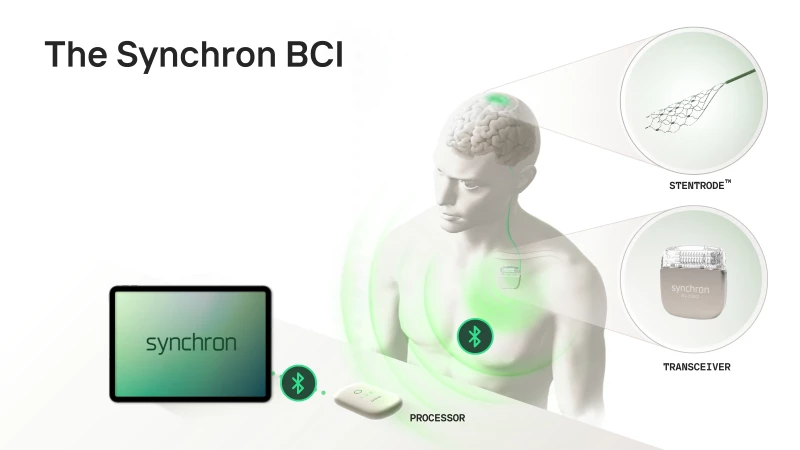
    Synchron embeds electrode sensors in a tube-shaped metal mesh called the ‘Stentrode. It picks up motor signals as it’s inserted through a blood vessel leading to the brain. The system sends signals to a small transmitter, which wirelessly relays them to a smartphone-sized processor. The processor interprets the signals in real time and converts them into commands for devices like an iPhone.

    Credit: The Synchron BCI consisting of a Stentrode threaded through a blood vessel, a wearable transceiver at its other end and a wireless processor to turn brain signals into commands for devices
    Synchron

    Breaking New Ground

    In July, an ALS patient in the U.S. used Synchron’s tech to operate an Apple Vision Pro headset, playing a card game, sending texts, and streaming video. Building on that, Apple now recognizes neural interfaces as a native input method, alongside touch, voice, and typing.

    Founded in 2016 by neurologist Dr. Tom Oxley, Synchron is a biomedical company exploring an endovascular method for linking devices to the human brain. Backed by Bill Gates and Jeff Bezos, the startup uses a proprietary device to detect brain signals without the need for open brain surgery, unlike the approach used by Elon Musk-fronted Neuralink’s.

    Credit: Synchron’s Stentrode hardware can be installed without opening up your skull – but you will still need to pop into an operation theater
    Synchron

    This makes Synchron the first biomedical company to integrate with Apple’s new BCI HID profile. “When we talk to participants in our clinical trials, their top priorities are always communication and creativity,” said CCO Kurt Haggstrom. “For most, that means using Apple products. Apple’s recognition of that need—and their response—shows a strong commitment to accessibility. It’s been a privilege to collaborate with their teams and contribute feedback that helped bring BCI HID to life.”

    Later this year, Synchron will conduct clinical trials with participants with severe disabilities, testing BCI HID features on Apple devices. Oxley estimates that 100 million people worldwide have physical conditions, like paralysis, limiting their use of digital technology. By integrating Synchron’s system with widely used Apple products, there’s potential to significantly reduce that number in the years ahead.


    Read the original article on: New Atlas

    Read more: IPhone 13 gets Satellite Emergency Feature with iOS 18.5