
DALL-E
A team of researchers has introduced a novel approach to stopping bacteria from clinging to surfaces such as those found in medical equipment. The strategy leverages the remarkable characteristics of resilin—a natural protein found in insects that gives fleas their extraordinary jumping ability.
The Unique Properties of Resilin
Resilin is an exceptionally elastic protein that insects produce, enabling movements like wing flapping and powerful jumps. Fleas, for instance, owe their ability to leap hundreds of times their body length to this substance.
In a new study led by scientists from RMIT University in Melbourne, Australia, researchers explored the potential of a synthetic material inspired by resilin. They discovered it could serve as an antibacterial surface coating, completely preventing bacteria from sticking.
“This study highlights how these coatings can be fine-tuned to combat bacteria effectively—not just temporarily, but potentially for extended use,” explained Professor Namita Roy Choudhury from RMIT’s School of Engineering, the study’s lead author.
These synthetic compounds, known as resilin-mimetic polypeptides (RMPs), replicate resilin’s key traits: its stretchability and compatibility with biological systems. Because they are engineered, their properties can be customized for specific uses. In this case, researchers aimed to harness them for creating a new kind of antibacterial barrier.
“The unique mechanical properties and non-toxic behavior of resilin and its synthetic counterparts make them well-suited for a variety of uses—from medical implants to sports gear,” Choudhury added. “This is the first study to investigate its role in preventing bacterial contamination.”
Testing the Effectiveness of Resilin-Based Coatings
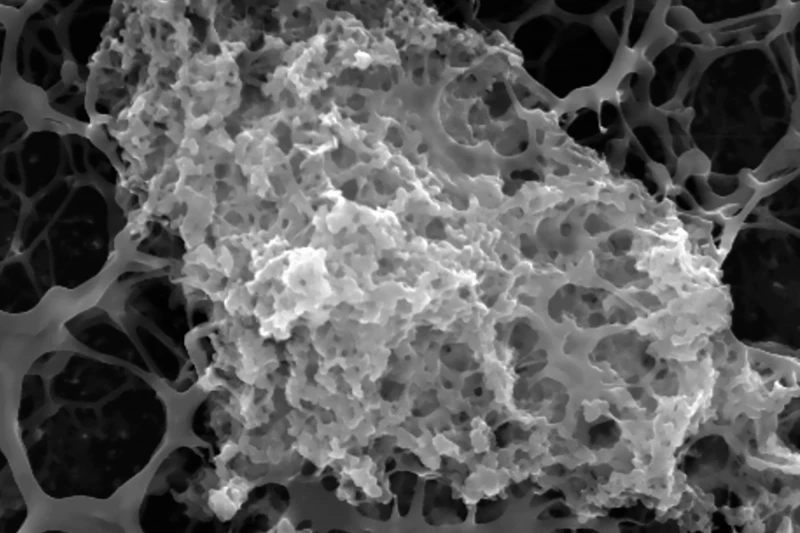
The research team developed four different resilin-inspired coatings and assessed their mechanical performance and antibacterial effectiveness. When exposed to E. coli—a frequent culprit behind hospital infections—and observed over 24 hours, one particular coating, a coacervate, showed outstanding performance by blocking all bacterial attachment.
RMIT University
A coacervate is a soft, nanoscale droplet made from aggregating proteins—in this case, resilin—that separates from water like tiny blobs. These droplets coat surfaces and influence how bacteria and cells interact with them.
A Non-Toxic, Eco-Friendly Alternative to Antibiotics
Unlike antibiotics, which may lead to resistant strains, the way these coatings physically disrupt bacterial settlement could help prevent resistance from forming,” said Dr. Nisal Wanasingha, the study’s first author. “Plus, resilin’s natural origins and biocompatibility lower the risk of side effects, and since it’s protein-based, it’s also more eco-friendly than silver-based antimicrobial agents
The researchers emphasized the benefit of being able to customize RMPs for various needs.
These initial results are encouraging as a potential new method to enhance infection control in healthcare environments,” said Professor Naba Dutta, another author from RMIT.However, researchers need to conduct further studies to test these coatings against a broader spectrum of harmful bacteria.
Next steps include expanding the antimicrobial range of the coating, ensuring its stability and scalability, and eventually conducting clinical trials to evaluate its safety and effectiveness in real-world medical applications.
Read the original article on: New Atlas
Read more: One Type Of Cancer Is Increasing Quickly Among Young People, And Bacteria Might Be The Cause

