Category: Interdisciplinary Science

  • Blood Forensics Challenge Cracked Using Liquid Mechanical Principles

    Blood Forensics Challenge Cracked Using Liquid Mechanical Principles

    Exactly how can the clothing of a close-range shooter stay without bloodstains?

    In 2009, music producer Phil Spector was found guilty of the murder of actress Lana Clarkson in 2003. The starlet was shot in the face from a very short range. He was dressed in white clothes, but no bloodstains were found on his garments, despite considerable backward blood spatter.

    How could his garments remain clean if he was the shooter? This real-life forensic puzzle inspired the University of Illinois at Chicago and Iowa State University scientists to explore the fluid physics involved.

    In Physics of Fluids, from AIP Publishing, the scientist’s current theoretical results reveal a communication of the incoming vortex ring of propellant muzzle gases with backward blood spatters.

    An in-depth analytical theory of such turbulent self-similar vortex rings was given by this group in earlier work and also is connected mathematically to the theory of quantum oscillators.

    Scenarios for the trajectories of droplets at three different inclination angles, where the cases predicted with accounting for the interactions with the vortex ring are shown in red, and those without are shown in blue. Credit: Gen Li, Nathaniel Sliefert, James B. Michael, and Alexander L. Yarin

    “In our previous study, we determined the physical mechanism of backward spatter as an inevitable instability triggered by the acceleration of a denser fluid, blood, toward a lighter fluid, air,” claimed Alexander Yarin, a notable professor at the University of Illinois at Chicago. “This is the supposed Rayleigh-Taylor instability, which is accountable for water leaking from a ceiling.”

    In the backward spatter, beads fly from the victim toward the shooter after being shot by a penetrating bullet. So the scientists zeroed in on exactly how these blood droplets communicate with an unstable vortex ring of muzzle gases relocating from the shooter towards the target.

    They anticipate that backward blood spatter beads can be entrained– bundled and brushed up along within its circulation– by the approaching rough vortex ring, eve being turned around.

    “This suggests that such beads can also land behind the target, together with the forward splatter being brought on by a penetrated bullet,” claimed Yarin. “With a specific position of the shooter in relation to the victim, it is possible for the shooter’s apparel to continue to be virtuallly without bloodstains.”

    The physical understanding reached in this study will be practical in forensic analysis of situations such as that of Clarkson’s murder.

    “Probably, several forensic problems of this kind can be fixed based upon sound fluid mechanical principles,” said Yarin.


    Originally published on Scitechdaily.com. Read the original article.

    Reference: “Blood backspatter interaction with propellant gases” by Gen Li, Nathaniel Sliefert, James B. Michael, and Alexander L. Yarin, 20 April 2021, Physics of Fluids.
    DOI: 10.1063/5.0045214
  • Just a Few Usual Bacteria Account for Most of the Carbon Use in Soil

    Just a Few Usual Bacteria Account for Most of the Carbon Use in Soil

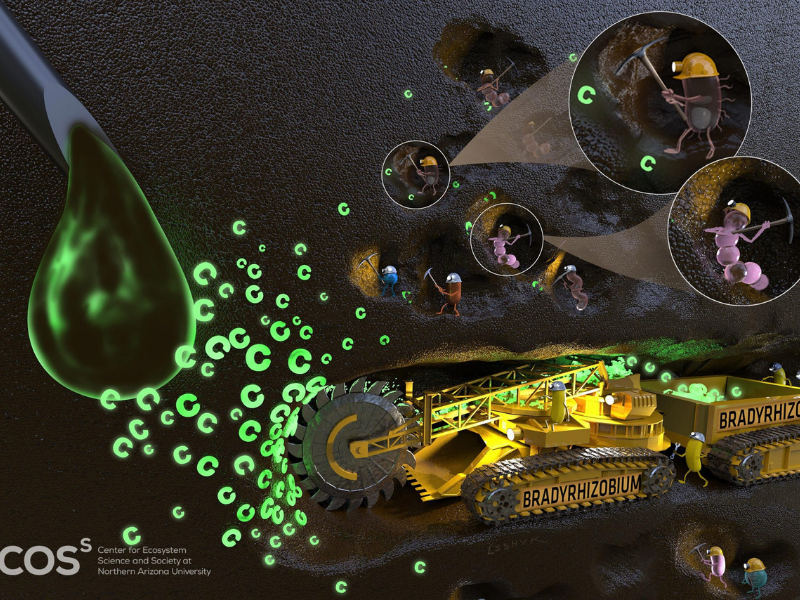
    Bacterial “miners” shown in relief working to process soil nutrients, some more efficiently than others. Bradyrhizobium, one of the three top nutrient processors identified in the study, is shown here consolidating its control of carbon from a glucose addition, processing the nutrients with industrial efficiency (in the form of a bucket wheel excavator). Credit: Victor O. Leshyk, Center for Ecosystem Science and Society, Northern Arizona University

    Simply a few bacterial taxa found in ecological communities on the planet are responsible for the majority of carbon cycling in soils. These new discoveries, made by scientists at Northern Arizona University and published in Nature Communications, imply that despite the diversity of microbial taxa found in wild soil collected from four different ecosystems, only three of six groups of bacteria are responsible for the majority of the occurring carbon use.

    Soil contains double the amount of carbon as all vegetation on earth; therefore, predicting how carbon is stored in the ground and released as CO2 is crucial in comprehending future climate dynamics. The research group, which included researchers from Pacific Northwest National Lab, Lawrence Livermore National Laboratory, University of Massachusetts-Amherst, and West Virginia University, asks exactly how such essential bacterial processes should be represented in the earth system and climate models.

    “We discovered that a few groups of common bacteria control carbon cycling,” stated Bram Stone, a postdoctoral scientist at the Center for Ecosystem Science and Society at Northern Arizona University that led the research study. “The sequencing era has provided unbelievable insight into just how varied the microbial world is,” claimed Stone, who is now at Pacific Northwest National Laboratory. “However, our information suggests that when it comes to crucial functions like soil respiration, there could be much redundancy constructed right into the soil community. It is a few common, plentiful actors who are making the most difference.”

    Those bacteria- Bradyrhizobium, the Acidobacteria RB41, and Streptomyces– were much better than their rarer equivalents at using both existing soil carbon and nutrients combined with the soil. When carbon and also nitrogen were added, these already leading lineages of bacteria settled their control of nutrients, absorbing more and also expanding faster relative to various other taxa present. Though the researchers identified countless unique organisms and thousands of distinct genera, or collections of species (as an example, the genus Canis has wolves, coyotes, and dogs), only six were required to make up more than half of carbon usage. Just three were responsible for over half the carbon usage in the nutrient-boosted soil.

    Utilizing water identified with unique isotopes of oxygen, Rock and his team sequenced DNA located in soil samples, adhering to the oxygen isotopes to see which taxa included it into their DNA, a signal that shows growth. This method, called quantitative stable isotope probing (qSIP), enables researchers to find which bacteria are developing in wild soil at the level of individual taxa. Then the group accounted for each taxon’s abundance and designed just how efficiently bacteria absorb soil carbon. The taxonomic specificity, genome dimension, and growth model forecasted the measured CO2 release much more precisely than models that looked only at how large each bacterial group was. It likewise revealed that simply a few taxa produced the majority of the CO2 that the researchers observed.

    “Much better understanding how individual organisms contribute to carbon cycling has crucial ramifications for handling soil fertility and lowering uncertainty in environment change predictions,” stated Kirsten Hofmockel, Microbiome Science Team Lead at Pacific Northwest National Laboratory and a co-author of the research study. “This research teases apart taxonomic and useful diversity of soil microorganisms and asks us to consider biodiversity in a new way.”

    “The microbial demographic data that this strategy discloses allows us to ask more nuanced inquiries,” stated Rock. “Where we utilized to characterize a microbial community by its leading function, the way an entire state is commonly reported to have voted ‘for’ or ‘against’ a ballot suggestion, currently, with qSIP, we can see that is driving that bigger pattern – the ‘election results,’ if you will certainly – at the degree of individual microbial neighborhoods, city blocks.

    “In this way, we can start to determine which soil organisms are carrying out vital features, like carbon sequestration, and examine them carefully.”


    Originally published on Scitechdaily.com. Read the original article.

    Reference: “Nutrients cause consolidation of soil carbon flux to small proportion of bacterial community” by Bram W. Stone, Junhui Li, Benjamin J. Koch, Steven J. Blazewicz, Paul Dijkstra, Michaela Hayer, Kirsten S. Hofmockel, Xiao-Jun Allen Liu, Rebecca L. Mau, Ember M. Morrissey, Jennifer Pett-Ridge, Egbert Schwartz and Bruce A. Hungate, 7 June 2021, Nature Communications.
    DOI: 10.1038/s41467-021-23676-x

  • Russian Scientists Investigate the Immune Response to COVID Variations (Alpha, Beta, Gamma, Delta, Epsilon, Zeta, Eta, Theta, Trace, Kappa and Lambda)

    Russian Scientists Investigate the Immune Response to COVID Variations (Alpha, Beta, Gamma, Delta, Epsilon, Zeta, Eta, Theta, Trace, Kappa and Lambda)

    The continuing development of new SARS-CoV-2 mutations allows the virus to spread more effectively and also avert antibodies. However, it is unclear whether brand-new strains can escape T-cell immunity – one of the body’s main lines of protection against COVID-19.

    The development of a T-cell immune reaction is significantly governed by genetic factors, consisting of variations in the genes of the significant histocompatibility facility (likewise called HLA). Each HLA gene variant possesses a corresponding molecule that determines a virus’s specific peptides (protein) set. There are a massive number of such genetic variations, and also each person has a particular set of them.

    The efficiency of the growth of T-cell immunity to COVID-19 strains varies from one person to another. Depending on the collection of HLA molecules, some people’s immune systems will detect and destroy a mutated virus with the same effectiveness as they would be the main form of the virus. In others, the action is less effective.

    The research was conducted by a team of scientists from HSE University’s Faculty of Biology and Biotechnology and the Institute of Bioorganic Chemistry of the Russian Academy of Sciences, including Stepan Nersisyan, Anton Zhiyanov, Maxim Shkurnikov, and also Alexander Tonevitsky. They evaluated the hereditary features of the advancement of T-cell immunity to 11 major SARS-CoV-2 variants by assessing the most typical HLA genetics variants. The researchers used their results to create the T-cell COVID-19 Atlas website (T-CoV, https://t-cov.hse.ru).

    The scientists used bioinformatics to analyze the binding affinity of thousands of HLA molecule variations and countless virus peptides of the main SARS-CoV-2 versions (Alpha, Beta, Gamma, Delta, Epsilon, Zeta, Eta, Theta, Scrap, Kappa, and also Lambda). The team determined the HLA alleles that showed the most considerably changed collection of identified virus peptides. According to scientists, mutated variants might present a greater danger to individuals with these alleles.

    ‘ T-cell immunity functions such that the variant in HLA particles and T-cell receptors stops viruses from escaping the immune response. Our study did not discover a single HLA genotype variant adversely influenced by viral mutations in a major way. This implies that even in conditions of decreased antibody efficiency, T-cell immunity remains to run successfully,’ commented Aleksander Tonevitsky, Dean of the Faculty of Biology and Biotechnology at HSE University.


    Originally published on Scitechdaily.com. Read the original article.

    Reference: “T-CoV: a comprehensive portal of HLA-peptide interactions affected by SARS-CoV-2 mutations” by Stepan Nersisyan, Anton Zhiyanov, Maxim Shkurnikov and Alexander Tonevitsky, 16 August 2021, Nucleic Acids Research.
    DOI: 10.1093/nar/gkab701

  • Protein “Big Bang” Reveals Molecular Makeup for Medicine as well as Bioengineering Applications

    Protein “Big Bang” Reveals Molecular Makeup for Medicine as well as Bioengineering Applications

    Research by Gustavo Caetano-Anollés and Fayez Aziz, University of Illinois, reveals a “big bang” during evolution of protein subunits known as domains. The team looked for protein relationships and domain recruitment into proteins over 3.8 billion years across all taxonomic units. Their results could have implications for vaccine development and disease management. Credit: Fred Zwicky, University of Illinois

    Proteins have been silently taking over our lives since the beginning of the COVID-19 pandemic. We have been living at the whim of the virus’s so-called “spike” protein, which has altered dozens of times to develop increasingly fatal variants. However, the reality is, proteins have invariably ruled us. At the cellular degree, they are accountable for virtually everything.

    Healthy proteins are so essential that DNA – the hereditary material that makes each of us unique, is essentially a lengthy sequence of protein plans. That holds for animals, plants, fungi, bacteria, archaea, and also viruses. Moreover, as those groups of organisms evolve and alter over time, so do proteins and their parts.

    A brand-new research study from College of Illinois researchers, published in Scientific Reports, outlines the evolutionary history and interrelationships of healthy protein domains, the subunits of protein molecules, over 3.8 billion years.

    “Understanding just how and why domains integrate into proteins throughout evolution could aid researchers to recognize and also engineer the task of proteins for medicine as well as bioengineering applications. For example, these understandings could direct disease management, such as making better vaccines from the healthy spike protein of COVID-19 viruses,” says Gustavo Caetano Anollés, teacher in the Department of Crop Sciences, affiliate of the Carl R. Woese Institute for Genomic Biology at Illinois, and also senior author on the paper. Caetano-Anollés has researched the development of COVID mutations following the beginning of the pandemic, but that timeline represents a vanishingly tiny portion of what he and also doctoral student Fayez Aziz tackled in their current research.

    The researchers compiled sequences and structures of millions of protein series inscribed in thousands of genomes across taxonomic groups, consisting of higher organisms and microbes. They focused on structural domains rather than whole proteins.

    “The majority of healthy proteins are constructed from more than one domain. These are small structural units, or modules, that nurture specialized features,” Caetano-Anollés says. “Much more notably, they are the units of evolution.”

    After arranging proteins into domains to build evolutionary trees, they are ready to construct a network to understand how domains have been established and shared across healthy proteins throughout billions of years of evolution.

    “We constructed a time series of networks that describe how domain names have gathered and how healthy proteins have reorganized their domain names throughout evolution. This is the first time such a network of ‘domain organization’ has been researched as an evolutionary chronology,” Fayez Aziz claims. “Our study exposed there is a large developing network explaining just how domains combine in healthy proteins.”

    Each network’s link represents a moment when a specific domain was recruited right into a protein, usually to execute a new function.

    “This alone highly implies domain recruitment is a powerful force in nature,” Fayez Aziz claims. The chronology also revealed which domains contributed to crucial protein functions. For example, the scientists were able to map the beginnings of domains in charge of environmental sensing and secondary metabolites or contaminants utilized in bacterial and plant defenses.

    The evaluation revealed domains began to integrate early in protein evolution, but there were also periods of explosive network development. For example, the scientists describe a “large bang” of domain name combinations 1.5 billion years earlier, coinciding with the rise of multicellular organisms and eukaryotes, organisms with membrane-bound nuclei, including humans.

    The presence of organic big bangs is not new. Caetano Anollés’ group previously reported the enormous as well as the very early beginning of metabolism. Also, they just recently found it once more when tracking the background of metabolic networks.

    The historical record of a large bang explaining the transformative patchwork of proteins provides brand-new tools to recognize protein make-up.

    “This might assist in identifying, for instance, why structural variants and also genomic recombination often happen in SARS-CoV-2,” Caetano Anollés states.

    He includes that this new understanding of healthy proteins could help prevent pandemics by dissecting how infectious diseases occur. It can additionally help decrease illness by bettering vaccine design when outbreaks take place.


    Originally published on Sciencedaily.com. Read the original article.

    Reference: “Evolution of networks of protein domain organization” by M. Fayez Aziz and Gustavo Caetano-Anollés, 8 June 2021, Scientific Reports.
    DOI: 10.1038/s41598-021-90498-8

  • Rare Upper Paleolithic Human Remains Found at the Cova Gran de Santa Linya Site

    Rare Upper Paleolithic Human Remains Found at the Cova Gran de Santa Linya Site

    Remains of Linya, recovered in Cova Gran site. Credit: CEPA

    At the Cova Gran de Santa Linya site (La Noguera, Lleida), the remains of a female attributed to H. sapiens were discovered by scientists of the Centro Nacional de Investigación Sobre la Evolución Humana (CENIEH). The carbon-14 record of the sediments in the natural vessel where her remains were discovered shows that she lived in the northeast of the Iberian Peninsula at the end of the Upper Paleolithic, around 14,000 years ago.

    The history of the populations living in the Pre-Pyrenees of Lleida over the last 50,000 years, from Neanderthals to the first Homo sapiens to the earliest farmers, is possible to reconstruct, thanks to the innumerable buried vestiges of the sediments preserved in Cova Gran.

    Previously, material records from between 45,000 and 4000 years ago were found by a team of researchers from the Archaeological Heritage Center at the Universitat Autònoma de Barcelona (CEPARQ-UAB) and the CENIEH, since they began studying Cova Gran upon its discovery in 2002. Until the 2020 excavation campaign, no bone remains of the individuals who inhabited it had been located.

    The CENIEH researcher Alfonso Benito Calvo explains that they recovered bone remains belonging to a human skeleton, still partly connected, two meters beneath the ground of a side zone of the excavation. A location that didn’t foresee the appearance of this kind of remains.

    This week, the initial paleoanthropological characterization of all the remains recovered was announced, suggesting that the pelvic girdle is from an adult woman, probably a small one, and who has been named “Linya, the La Noguera woman.” The remains include two femurs, one still attached to the pelvis, long bones from the upper limbs (humerus, radius/ulna) and lower ones (tibia and fibula), and scattered metapodials and phalanges. Despite being present, the skull and axial skeleton (vertebrae and ribs) are poorly represented.

    Funerary treatment

    In a place considered to be a natural receptacle formed by multiple large blocks which had fallen from the shelter roof, Linya was found. Her entire body was placed in this space, and the arrangement of the femurs suggests it rested directly on the ground in the supine position.

    Presently, the team is investigating elements of possible grave goods, a common practice among H. sapiens burials. Samples of the sediment from the receptacle are collected to determine the processes the body was subjected to and to search for microresidues that could hint whether it was covered with skins or plant fibers, justifying an intention of depositing the cadaver without requiring to excavate a grave.

    Funerary treatment varies among hunter-gatherers, from intentional burial to secondary burial, depositing only part of the body, cannibalism, or accidental death. According to Benito Clavo the results, provided by the excavation of the natural receptacle where the remains appeared will determine these scenarios’ evaluation.

    A key site

    The Cova Gran de Santa Linya site is regarded as the key to investigating human presence in the northeastern Iberian Peninsula. Traces of “transition” moments were identified – such as that of the last Neanderthals (45,000 years ago) and the appearance of the first modern humans (between 37,000 and 30,000 years ago), the continuation of the latter during the Last Glacial Maximum (20,000 to 15,000 years ago) and the rise of the first farmers (7000 and 4000 years ago) – on this site, extending over 2500 m2. This makes it one of the few sites Mediterranean region with these traces.

    Benito Clavo adds that prehistoric remains of modern humans in the Iberian Peninsula are very scarce. The study of Linya will allow us to learn more about the hunter-gatherers of the northeast of the Peninsula and how they lived.


    Originally published on Phys.org. Read the original article