


NASA/JPL Caltech/MSSS
Over four years after landing, NASA’s Perseverance Rover may have made key progress in its search for ancient microbial life.
In July, the rover found an arrowhead-shaped rock called Cheyava Falls, with colorful patches in a valley likely carved by water.
Possible Microbial Traces Spark Debate, NASA Shares Findings for Wider Review
NASA scientists suspect the spots could be remnants of microbial life from billions of years ago. Though hard to confirm and open to other explanations, NASA has shared its findings for review in a Nature paper.
The animation shows how Neretva Vallis may have once looked, with a river flanked by sandy, rocky hills.
The animation below illustrates how the Neretva Vallis valley may have appeared long ago, featuring a flowing river bordered by sandy and rocky hills.
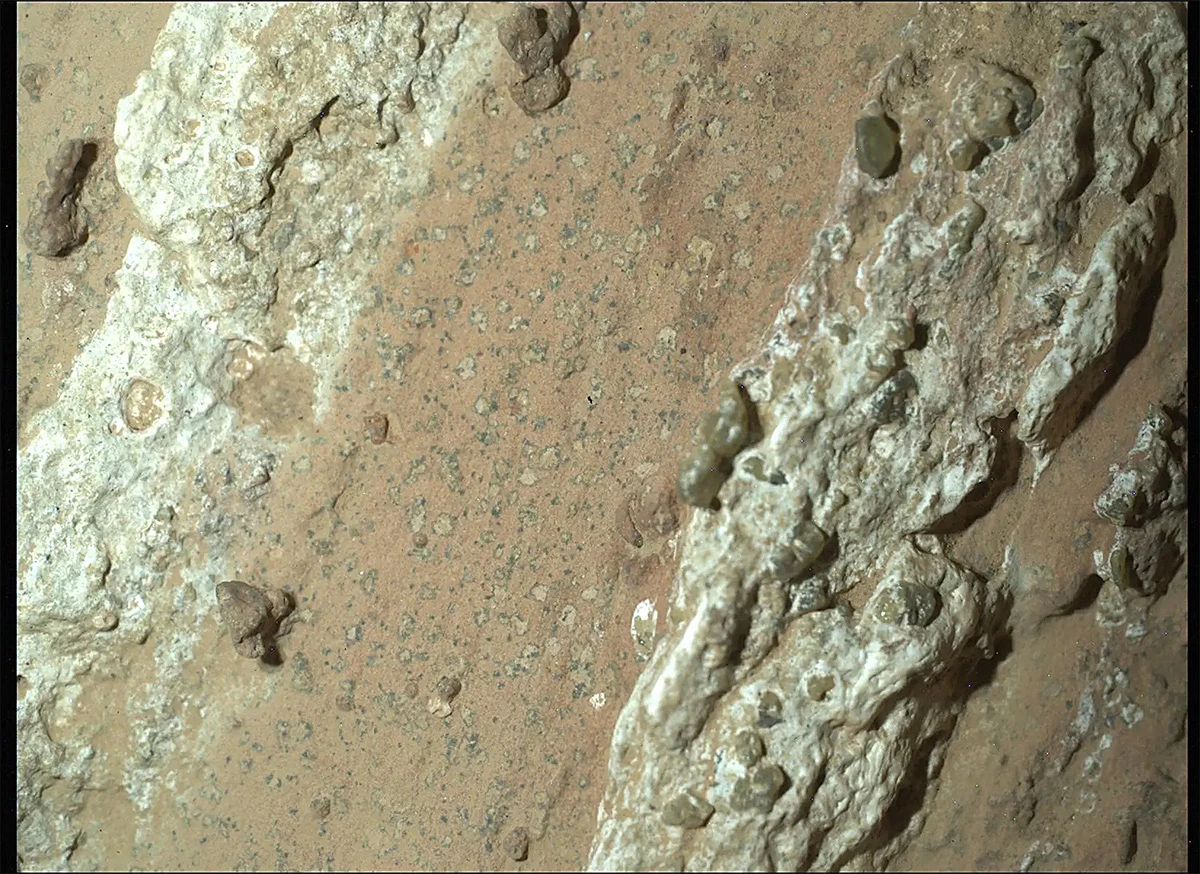
NASA/JPL Caltech/MSSS
Both minerals could indicate ancient microbial life, as their reactions may have produced energy to sustain it.
NASA stresses the findings aren’t proof of past life but point to a possible biosignature, hinting life may once have existed.
Minerals May Hint at Microbial Activity Amid Lack of Harsh Environmental Evidence
NASA notes the minerals could form without life, but lacking signs of extreme conditions, scientists favor a microbial origin. This may offer fresh clues about Mars’ past habitability.
Perseverance landed in Jezero Crater in February 2021 to search for signs of life. The site is thought to have been flooded with water around 3.5 billion years ago. Input from outside researchers may help answer one of humanity’s biggest questions: are we alone?
Read the original article on: New Atlas
Read more: 5 Takeaways From Munich’s Auto Show — Robots to Flying cars


