

Methane is a major environmental concern—it ranks as the second most prevalent greenhouse gas after carbon dioxide and is roughly 28 times more effective at trapping heat in the atmosphere. While it’s commonly linked to coal production and livestock digestion, unexpected sources such as cow burps—and now, as Swedish researchers have discovered, ships traveling through shallow coastal waters—also contribute significantly.
Ships Trigger Sudden Methane Bursts in Shallow Waters
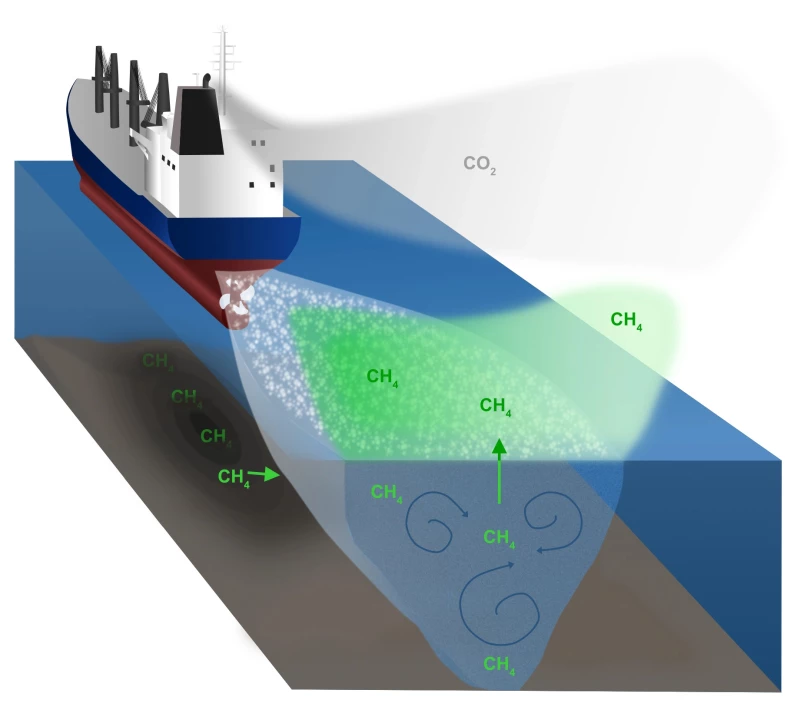
A recent study from Chalmers University of Technology, sparked by a curious observation over a decade ago, demonstrates that ships can cause abrupt and substantial bursts of methane release. “These spikes occur due to changes in pressure and water mixing caused by moving vessels,” explained researcher Amanda Nylund. “Although the bursts are brief, the cumulative daily release is considerable.” In fact, methane levels measured during these events were up to 20 times higher than in adjacent undisturbed zones.
This discovery suggests that methane emissions linked to global maritime traffic may be grossly underestimated, adding another layer of complexity to our understanding of the shipping industry’s environmental footprint.
Amanda Nylund
It also uncovers a previously overlooked source of greenhouse gases tied to maritime activity. This is particularly significant now, as reports show progress in reducing carbon intensity across cargo fleets, even as overall emissions and future projections continue to climb.
Shallow Ports Could Be Methane Hotspots
The previously unknown influence of ships is vital for refining global methane emission estimates, said Johan Mellqvist, a professor at Chalmers. Especially since nine of the world’s ten busiest ports are located in shallow waters similar to those in Neva Bay, where we made our discovery.
But what exactly causes these emissions? In shallow waters rich in organic sediments and low in oxygen, methane is naturally produced and accumulates. When a ship passes through, its propeller stirs the water, and pressure near the seabed fluctuates. These actions force the methane, previously dissolved in the water, to move upward—first into the water column, then into the air.
Researchers from Chalmers first noticed this effect in 2011 while analyzing air pollutants from ship exhaust. They detected unusually high levels of methane that appeared slightly after the visible exhaust clouds. This delay indicated that the gas wasn’t coming from the engine emissions.
Modeling Confirms Methane Release from Ship Wakes
Following additional studies of ship turbulence, Nylund and her colleagues dug deeper into the phenomenon, using modeling tools to trace the source of the methane.The researchers published their findings in Nature Communications Earth & Environment in May.
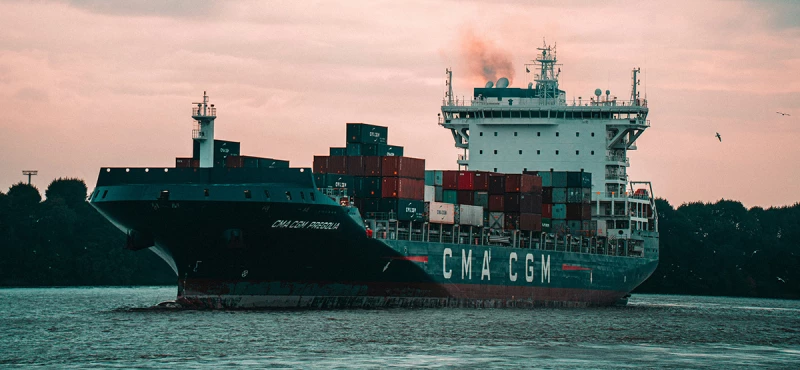
Interestingly, the study found that container ships and cruise liners produced greater methane disturbances than bulk carriers of similar size—likely due to differences in hull shape and propulsion systems.
Mika Baumeister on Unsplash
The researchers emphasize the urgent need to measure and monitor these emissions more precisely in global shipping corridors. However, they also acknowledge that practical challenges make this difficult. Still, without accurate data, mitigating the damage becomes a nearly impossible task.
Read the original article on: New Atlas
Read more: Scientists Reveal: South Africa Is Emerging From The Ocean


