Tag: Alzheimer’s

  • Alzheimer’s Breakthrough: Sleep Medication Reduces Harmful Tau Buildup by Up to 40%

    Alzheimer’s Breakthrough: Sleep Medication Reduces Harmful Tau Buildup by Up to 40%

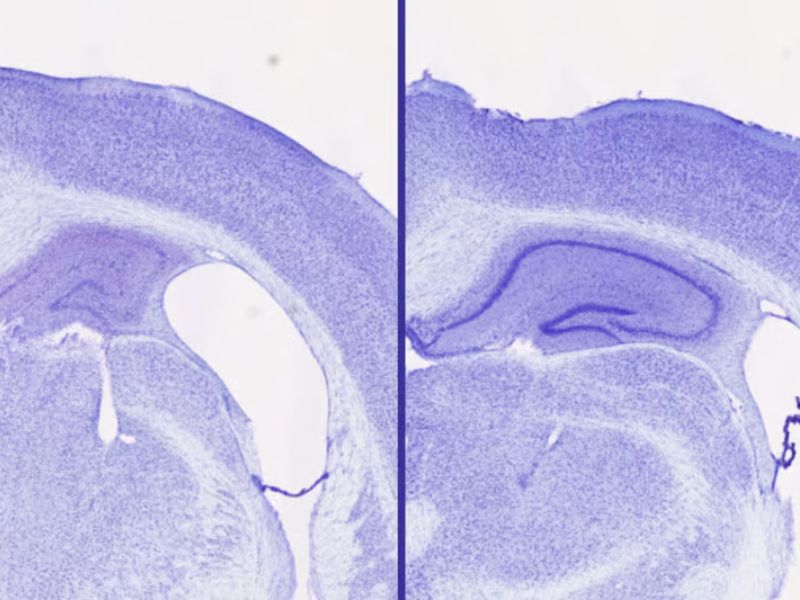
    Treatment with lemborexant (right) resulted in larger volume in the hippocampus (central purple spiral) and a smaller gap in brain tissue (white space) compared with another sleep aid treatment (left)
    Samira Parhizkar/WashU Medicine

    A widely available sleep aid has shown unexpected potential in supporting brain health by significantly reducing the accumulation of tau proteins — a key factor in the progression of neurodegenerative conditions such as Alzheimer’s disease.

    A Cross-Continental Collaboration Aims at Innovation

    This discovery stems from a collaboration between researchers at Washington University School of Medicine in St. Louis (WashU Medicine) and the Japanese pharmaceutical company Eisai. Eisai, which established a dedicated research unit in 2022 focused on Alzheimer’s prevention and treatment, is part of a growing trend that explores new therapeutic uses for existing drugs.

    The team centered their research on lemborexant, a sleep aid sold under the brand name Dayvigo. Unlike traditional sedatives, lemborexant works by inhibiting orexin — a neurotransmitter involved in maintaining wakefulness — through its action as a central nervous system (CNS) depressant. Approved in late 2019 for insomnia, lemborexant belongs to a newer class of drugs called orexin receptor antagonists, which are also being studied for their potential in treating depression.

    “Sleep loss has long been linked to increased risk of Alzheimer’s,” explained Dr. David M. Holtzman, senior author of the study and Professor of Neurology at WashU Medicine. “This study shows that lemborexant not only improves sleep but also reduces abnormal tau levels — a major contributor to the neural damage seen in Alzheimer’s and related disorders. We’re optimistic this could open the door to new treatments, either as standalone solutions or used in combination with other therapies.”

    Brain Volume Preserved in Treated Mice

    In the study, researchers observed genetically modified mice that were prone to developing tau buildup. They administered either lemborexant or zolpidem (brand name Ambien), a sleep aid from a different drug class that interacts with the GABA neurotransmitter rather than orexin. Despite both groups of mice sleeping similar amounts, those treated with lemborexant retained 30% to 40% more brain volume in the hippocampus — a region vital for cognitive function — than those given zolpidem. Brain volume loss is a hallmark of neurodegeneration.

    Holtzman, who previously helped uncover the link between poor sleep and tau and amyloid accumulation, noted that the new findings suggest a more nuanced mechanism is at work. The ability of orexin blockers like lemborexant to reduce toxic protein deposits may offer direct neuroprotective benefits.

    Interestingly, the study found these protective effects only in male mice, raising questions about biological sex differences in response to the treatment. Researchers suspect that female mice may naturally tolerate tau accumulation better, which could make the benefits of the drug harder to detect. Further investigation is needed to understand these differences.

    Next Steps and Future Possibilities

    Although the research is still in the animal-testing phase, the implications are promising. Orexin receptor antagonists may be particularly well-suited for use in neurodegenerative treatment regimens because they do not impair motor coordination — a concern with many traditional sleep aids.

    The anti-amyloid antibody treatments we currently use for early-stage Alzheimer’s patients help, but not to the degree we’d like,” said Holtzman. “To better slow disease progression, we need strategies that also target abnormal tau and the inflammation it triggers. This type of sleep aid could become an important part of that approach.We especially want to explore whether combining therapies that target both amyloid and tau can more effectively halt or even prevent the disease’s progression.


    Read the original article on: New Atlas

    Read more: The US Has Recently Approved The First Blood Test For Alzheimer’s Disease
  • A Man Destined for Alzheimer’s Defied It for Decades—Here’s How

    A Man Destined for Alzheimer’s Defied It for Decades—Here’s How

    Credit:Pixabay

    In a remarkable case, a man with a high genetic risk for Alzheimer’s defied the odds, avoiding the disease for decades despite carrying a mutation that almost always triggers early onset. His case, the only known instance involving the PSEN2 mutation, adds to just two other recorded cases of extreme Alzheimer’s resilience—both linked to a different genetic variant.

    Typically, those with the PSEN2 mutation develop Alzheimer’s around age 50. Yet, despite his brain being packed with amyloid-beta plaques—the sticky protein clusters linked to neurodegeneration—this man showed no cognitive decline. Researchers, who have tracked Alzheimer’s in his family since 2011, found that his mother and 11 of her 13 siblings all carried the same mutation and were diagnosed by 50.

    Determined to uncover what protected him, scientists studied his case in hopes of identifying broader mechanisms behind the disease. In all forms of Alzheimer’s, amyloid plaques gradually accumulate until they trigger widespread tau protein tangles, neuron death, and cognitive decline. However, over a decade of monitoring, led by researchers from the International University of Catalonia and Washington University in St. Louis, the man’s cognitive tests remained normal.

    A Unique Case: Resistance Without Known Protective Mutations

    Unlike previous Alzheimer’s-resistant cases, he lacked protective mutations. Yet, despite heavy amyloid buildup by age 61, his brain showed minimal inflammation, and tau deposits remained confined to the occipital lobe, preserving cognitive function.

    Researchers note that limiting tau spread may be key to delaying symptoms, even with high amyloid levels. His resistance likely stems from genetic and environmental factors—he carried nine unique variants affecting brain inflammation and protein folding. Years of extreme heat exposure as a navy ship mechanic may have also activated protective cellular responses.

    Studying how his brain contained tau spread could reveal new Alzheimer’s treatments.


    Read Original Article: Science Alert

    Read More: Scientists Evaluated AI for Detecting Cognitive Decline. The Findings Were Surprising

  • Could Light Therapy Help Alleviate Alzheimer’s Symptoms?

    Could Light Therapy Help Alleviate Alzheimer’s Symptoms?

    Light therapy shows promise in improving sleep and mood for Alzheimer’s patients, with minimal side effects, but larger studies are needed for confirmation. Credit: SciTechDaily.com

    A new study published in PLOS ONE suggests that light therapy may significantly improve sleep quality, strengthen circadian rhythms, and reduce caregiver burden in Alzheimer’s patients.

    Alzheimer’s not only impairs memory and cognition but also disrupts sleep and triggers behavioral symptoms like agitation, depression, and aggression. Photobiomodulation, a non-drug therapy that stimulates the brain’s sleep-regulating center, has gained interest as a potential solution. However, comprehensive reviews of its effectiveness and safety have been lacking—until now.

    Analyzing Light Therapy’s Impact

    To assess its benefits, researchers analyzed 15 high-quality randomized controlled trials conducted between 2005 and 2022 across seven countries. These studies, involving 598 participants, provided crucial insights into how light therapy affects Alzheimer’s and dementia patients.

    Promising Findings from Meta-Analysis

    Results showed that light therapy enhanced sleep efficiency, reinforced circadian rhythm stability, and reduced daytime restlessness. It also alleviated depression, decreased agitation, and eased caregiver stress.

    Future Research and Considerations

    While findings are encouraging, the researchers highlight the need for larger studies to further evaluate potential risks and long-term effects. They conclude that light therapy offers a promising, low-risk treatment option for managing Alzheimer’s symptoms.

    “Light therapy improves sleep and psycho-behavioral symptoms in Alzheimer’s patients with relatively few side effects, making it a promising therapeutic approach,” the authors state.


    Read Original Article: Scitechdaily

    Read More: Students Punished at School are More Likely to Suffer From Anxiety and Depression

  • Hidden Fat Can Predict Alzheimer’s Up to 20 Years Before Symptoms Appear

    Hidden Fat Can Predict Alzheimer’s Up to 20 Years Before Symptoms Appear

    Researchers have linked a specific type of body fat to the buildup of abnormal brain proteins—hallmarks of Alzheimer’s disease—up to 20 years before the earliest symptoms of dementia appear. This finding, presented at the annual meeting of the Radiological Society of North America (RSNA), highlights the potential for lifestyle changes targeting visceral fat to influence Alzheimer’s development.
    Credit: Pixabay

    Researchers have linked a specific type of body fat to the buildup of abnormal brain proteins—hallmarks of Alzheimer’s disease—up to 20 years before the earliest symptoms of dementia appear. This finding, presented at the annual meeting of the Radiological Society of North America (RSNA), highlights the potential for lifestyle changes targeting visceral fat to influence Alzheimer’s development.

    This discovery is significant because we focused on Alzheimer’s pathology in midlife, during the 40s and 50s, when interventions like weight loss and reducing visceral fat could be more effective in preventing or delaying the disease,” explained lead author Dr. Mahsa Dolatshahi, a postdoctoral research associate at Mallinckrodt Institute of Radiology (MIR), Washington University.

    Alzheimer’s currently affects an estimated 6.9 million Americans aged 65 and older, with numbers projected to rise to 13 million by 2050 without medical breakthroughs. The study focused on how modifiable lifestyle factors, including obesity, fat distribution, and metabolism, relate to Alzheimer’s pathology.

    Eighty cognitively normal middle-aged participants (average age: 49.4 years; 62.5% female) underwent brain PET scans, body MRI, and metabolic assessments. On average, participants had a BMI of 32.31, with 57.5% classified as obese. MRI scans measured subcutaneous fat (under the skin) and visceral fat (around organs), while PET scans detected amyloid plaques and tau tangles, key Alzheimer’s markers.

    We analyzed BMI, visceral fat, subcutaneous fat, liver fat, thigh fat and muscle, insulin resistance, and HDL cholesterol in relation to amyloid and tau deposition,” said Dr. Dolatshahi.

    Visceral Fat Strongly Linked to Amyloid Accumulation, Mitigated by Higher HDL Levels

    The results showed that higher visceral fat correlated with increased amyloid, explaining 77% of the effect of high BMI on amyloid accumulation. No other fat types showed a similar link. Additionally, higher insulin resistance and lower HDL levels were associated with elevated amyloid levels. Notably, participants with higher HDL showed a reduced impact of visceral fat on amyloid pathology.

    Our findings reveal that visceral fat plays a critical role in Alzheimer’s-related brain changes decades before symptoms arise,” Dr. Dolatshahi said. “This emphasizes the need to target metabolic and lipid issues linked to obesity in managing Alzheimer’s risk.”

    The team also presented another study at RSNA 2024, showing that obesity and visceral fat reduce brain blood flow. Using brain and abdominal MRIs, they found that individuals with high visceral fat had lower whole-brain blood flow compared to those with low visceral fat, whereas subcutaneous fat had no significant impact.

    This research could have profound public health implications,” said senior author Dr. Cyrus Raji. “With nearly 75% of Americans classified as overweight or obese, addressing visceral obesity through lifestyle changes or weight-loss medications may improve brain health, increase blood flow, and reduce Alzheimer’s risk.”


    Read Original Article: ScienceDaily

    Read More: Scitke

  • Unraveling the Connection Between Alzheimer’s And Cancer

    Unraveling the Connection Between Alzheimer’s And Cancer

    Research has revealed that individuals with Alzheimer's disease appear to have a lower risk of developing certain cancers, and a recent study involving rodents may provide insight into this phenomenon.
    Credit: Depositphotos

    Alzheimer’s and Reduced Cancer Risk: Unveiling a Mysterious Link

    Research has revealed that individuals with Alzheimer’s disease appear to have a lower risk of developing certain cancers, and a recent study involving rodents may provide insight into this phenomenon.

    In a study conducted in China, scientists observed that mice exhibiting Alzheimer-like symptoms had a notably reduced occurrence of colorectal cancer. However, after receiving a stool transplant from a healthy mouse, the cancer rates in these mice normalized.

    Gut Bacteria and Alzheimer’s: A Significant Relationship

    These findings imply a significant relationship between Alzheimer’s symptoms and the composition of gut bacteria. Current evidence suggests that specific gut microbes can influence the immune system, thereby affecting brain health.

    Previous rodent studies have also established connections between the gut microbiome and Alzheimer’s symptoms. Remarkably, recent experiments have shown that stool transplants can transfer memory impairment from one rodent to another.

    This new research delves deeper into the intricate relationship linking Alzheimer’s, the gut microbiome, and cancer. Retrospective studies have indicated that human patients with Alzheimer’s face about half the cancer risk compared to those without the disease, while individuals with cancer are 35% less likely to develop Alzheimer’s. The reason behind these correlations remains unclear, although colorectal cancer displays the most significant links with Alzheimer’s.

    Researchers at the First Hospital of Hebei Medical University in China conducted experiments demonstrating that mice with Alzheimer-like symptoms showed resistance to artificially induced colon cancer. The researchers reduced intestinal inflammation in the mice, but this suppression was reversed after the mice received a fecal transplant from a healthy, younger mouse.

    To identify the specific gut microbes involved, researchers examined the microbiota of their mouse models and identified several candidates, including a gram-negative bacterium called Prevotella. Treating these mice with Prevotella caused their guts to produce fewer pro-inflammatory immune cells, even when exposed to harmful pathogens.

    The “Leaky Gut” Hypothesis and Its Impact on Health

    This decreased inflammatory response may have been partly due to a “leakier” gut, which allowed certain microbial byproducts to enter the bloodstream more easily. Previous studies have established that lipopolysaccharides (LPS) derived from the Prevotella genus play a role in mucosal barrier inflammatory responses. For example, Prevotella bivia is known to produce high levels of LPS, which could create a toxic environment harmful to dopamine neurons crucial for cognitive and motor functions.

    Illustration showing how the aging-related imbalance of gut microbiota could contribute to the relationship between Alzheimer’s disease and colorectal cancer. (Zhang et al., PNAS, 2024).

    Parkinson’s, Inflammation, and Gut Microbiota

    Recent human clinical trials have shown that stool transplants can improve motor symptoms in Parkinson’s disease, a condition closely tied to the degeneration of dopamine neurons. Since inflammation plays a major role in tumor formation, researchers suggest that the anticancer effects seen in Alzheimer’s mouse models could be related to the gut’s inflammatory tolerance driven by specific bacterial genera.

    While epidemiological data has previously suggested a correlation between cancer and Alzheimer’s, this new research provides concrete biological and experimental evidence supporting an inverse relationship between the two conditions, particularly regarding the incidence of Alzheimer’s disease and colorectal cancer.


    Read the original Article: Science Alert

    Read more: Newly Found Proteins May Explain Alzheimer’s Devastating Effects