Tag: Blood Pressure

  • A Common Blood Pressure Medication Prolongs Lifespan and Delays Aging in Animals

    A Common Blood Pressure Medication Prolongs Lifespan and Delays Aging in Animals

    The blood pressure medication rilmenidine has shown potential to slow aging and extend lifespan in animal studies, raising the possibility of similar benefits for humans. If effective, it could promote longer, healthier lives without the challenges of extreme calorie restriction.
    Credit: Pixabay

    The blood pressure medication rilmenidine has shown potential to slow aging and extend lifespan in animal studies, raising the possibility of similar benefits for humans. If effective, it could promote longer, healthier lives without the challenges of extreme calorie restriction.

    Previous research revealed that rilmenidine mimics the effects of caloric restriction at a cellular level. Caloric restriction, which involves reducing energy intake while maintaining proper nutrition, has been proven to extend lifespans in several animal models. However, translating these findings to humans remains uncertain, as long-term caloric restriction poses health risks such as dizziness, brittle bones, and hair thinning. Researchers hope rilmenidine could offer similar benefits without these drawbacks.

    Study Highlights Rilmenidine’s Potential to Extend Lifespan and Boost Health in Worms

    A 2023 study treated young and old Caenorhabditis elegans worms—a popular research organism due to its genetic similarities to humans—with rilmenidine. The drug extended their lifespan and improved key health markers, much like the effects of caloric restriction. “For the first time, we have been able to show in animals that rilmenidine can increase lifespan,” said molecular biogerontologist João Pedro Magalhães from the University of Birmingham. “We are now keen to explore if rilmenidine may have other clinical applications.”

    Some human cell types and their nuclei on the left, compared to cells from C. elegans on the right. (J.J.Froehlich/CC BY-SA 4.0/Wikimedia Commons)

    Rilmenidine Mimics Caloric Restriction Effects in Mice, Targeting Aging Key Tissues

    Additional tests on mice revealed that rilmenidine induced gene activity associated with caloric restriction, particularly in kidney and liver tissues. This finding suggests the drug might replicate some of the cellular changes that contribute to longer lifespans in calorie-restricted animals.

    A key discovery was the role of the nish-1 receptor in rilmenidine’s effectiveness. When this receptor was deleted in worms, the drug no longer extended their lifespan. However, restoring the receptor reinstated the drug’s benefits, identifying a potential target for future anti-aging interventions.

    Rilmenidine shows strong potential as an anti-aging treatment because people can take it orally, it is widely available, and it rarely causes mild side effects like occasional insomnia or drowsiness. Although researchers must conduct more studies to confirm its effects on human aging, these findings represent significant progress.

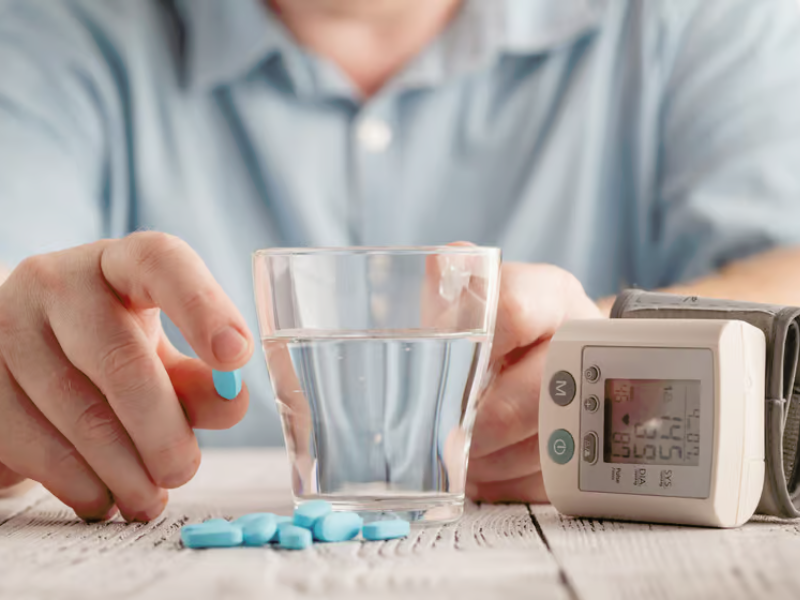
    Rilmenidine is normally used to treat high blood pressure. (Prostock-studio/Canva)

    “With a global aging population, the benefits of delaying aging, even slightly, are immense,” said Magalhães.


    Read Original Article: Science Alert

    Read More: Scitke

  • Study Reveals Weekly Exercise Needed to Manage Blood Pressure

    Study Reveals Weekly Exercise Needed to Manage Blood Pressure

    To maintain heart health and prevent high blood pressure as you age, it's important not to peak too early in life. Recent research suggests that sustaining regular exercise into middle age is key to long-term protection against hypertension.
    Credit: Pixabay

    To maintain heart health and prevent high blood pressure as you age, it’s important not to peak too early in life. Recent research suggests that sustaining regular exercise into middle age is key to long-term protection against hypertension.

    Social factors can make maintaining physical activity more challenging for some individuals, according to a study of over 5,000 people across four U.S. cities.

    “Teenagers and young adults may be physically active, but these habits often change with age,” explained Kirsten Bibbins-Domingo, an epidemiologist from the University of California, San Francisco (UCSF). Her comments came in April 2021, when the study was published in the American Journal of Preventive Medicine.

    While many studies confirm that exercise lowers blood pressure, this research highlights the importance of sustaining physical activity at higher-than-recommended levels during young adulthood to help prevent hypertension.

    Hypertension

    Hypertension, or high blood pressure, is a widespread condition affecting billions globally, increasing the risk of heart attacks, strokes, and even dementia later in life. According to the World Health Organization, about one in four men and one in five women have hypertension. Yet, many are unaware they have it, earning the condition the nickname “silent killer.”

    Fortunately, exercise, the focus of this study, is one effective way to reduce high blood pressure.

    A study of over 5,100 adults tracked their health over three decades through assessments and questionnaires on exercise, smoking, and alcohol use. Blood pressure was measured, and participants were grouped by race and gender.

    The study revealed that physical activity declined between ages 18 and 40, while hypertension rates increased. This underscores the importance of promoting exercise in young adulthood to prevent midlife hypertension.

    Hypertension Risks Linked to Low Activity Levels in Young Adults

    Lead author Jason Nagata emphasized that nearly half of young adults showed low activity levels, linking them to hypertension. Those who maintained five hours of moderate exercise weekly significantly reduced their risk of hypertension, especially if sustained until age 60.

    The researchers emphasized that “achieving at least twice the current minimum adult physical activity guidelines may be more effective for preventing hypertension than merely meeting the minimum.” However, increasing weekly exercise can be difficult due to life changes and responsibilities. Nagata pointed out that this is especially true after high school, when opportunities for physical activity decline as young adults enter college, the workforce, and parenthood.

    The study also revealed significant health disparities, showing that Black men and women experience different health trajectories compared to White individuals.By age 40, physical activity stabilized for White participants but declined for Black individuals. By 45, Black women had higher hypertension rates than White men, with White women having the lowest rates. By 60, 80-90% of Black men and women had hypertension, compared to under 70% of White men and 50% of White women.

    The research team attributed these disparities to various social and economic factors, although the study did not assess them. Nagata noted that while Black male youth may engage in sports, socioeconomic conditions, neighborhood environments, and family responsibilities can hinder ongoing physical activity into adulthood.


    Read the original article on: Science Alert

    Read more: Exercise Study Sets Weekly Blood Pressure Control Requirement

  • Guitar-String-Inspired Tech Enhances Blood Pressure Monitoring

    Guitar-String-Inspired Tech Enhances Blood Pressure Monitoring

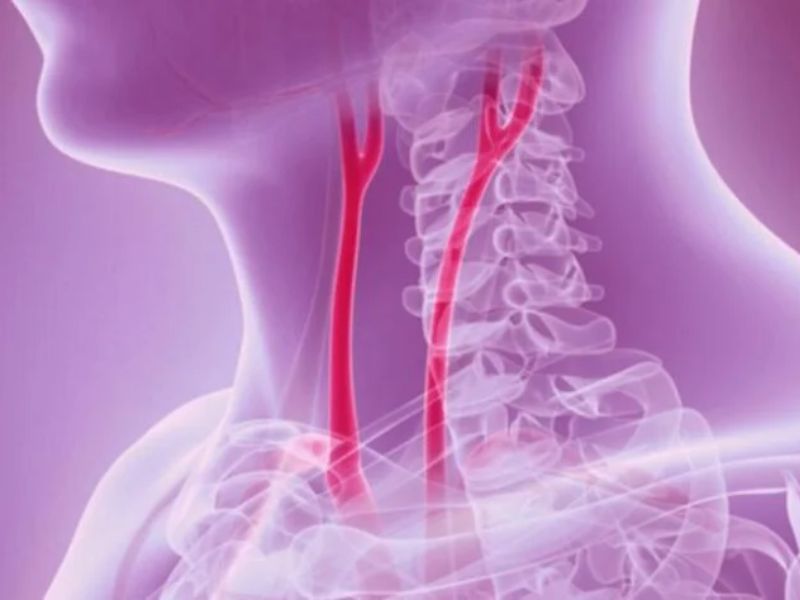
    Blood vessels such as the carotid artery resonate in a distinct manner when excited by ultrasound pulses
    Depositphotos

    Currently, doctors who need to continuously monitor a patient’s blood pressure must surgically insert a catheter into one of the individual’s arteries. However, a safer and much less invasive alternative might be on the horizon, inspired by the tuning of guitar strings.

    Limitations of Arterial Catheterization

    While the existing “arterial catheterization” technique provides accurate, continuous blood pressure readings, it is time-consuming to set up and calibrate. Moreover, since the catheter can remain in the artery for days, patients might experience pain, infections, bleeding, or ischemia (restricted blood flow).

    As a result, doctors typically limit this technique to patients in acute care settings.

    Less critical patients may use devices that repeatedly measure blood pressure with traditional inflatable cuffs. However, these devices might miss fluctuations in blood pressure between readings, and the repeated arm squeezing can become uncomfortable over time.

    Innovative Inspiration from Guitar Strings

    Seeking a better solution, scientists from Caltech and the California-based startup Esperto Medical drew inspiration from guitar strings.

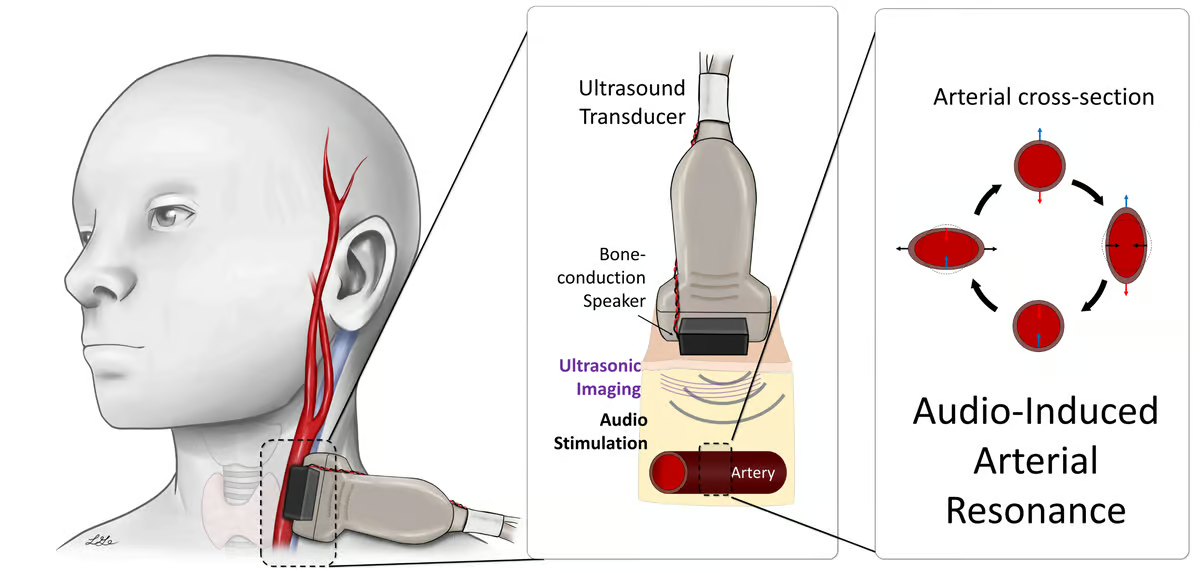
    When tuning a guitar, you adjust the tension of each string until it resonates at the desired tone when plucked. Similarly, the Caltech/Esperto team’s “resonance sonomanometry” system uses this principle in reverse to measure blood pressure.

    This diagram illustrates the underlying principle behind the resonance sonomanometry system
    Jimenez et al

    How the Resonance Sonomanometry System Works

    The system employs an external transducer to send ultrasound pulses through the patient’s skin and tissue to excite an underlying artery. By analyzing the echoes of these pulses, which bounce off the artery and return to the transducer, researchers can observe how the artery’s dimensions subtly change as it vibrates.

    These changes allow for the determination of blood pressure in that artery.

    Unlike other experimental systems that use ultrasound to measure blood pressure, the resonance sonomanometry system does not need recalibration after its initial use.You can apply it to any major artery and use it with a diverse patient population.

    Researchers have tested the technology on the carotid, axillary, brachial, and femoral arteries of human subjects, and the results have matched those of traditional methods. They currently use a handheld ultrasound transducer, but they believe that a much smaller device could eventually replace it and be worn continuously by the patient.


    Read the Original Article on: New Atlas

    Read more: A Genetic Mutation that Can Cause Heart Disease has Been Identified

  • Exercise Study Sets Weekly Blood Pressure Control Requirement

    Exercise Study Sets Weekly Blood Pressure Control Requirement

    To maintain heart health and reduce the risk of high blood pressure later in life, it's essential not to reach peak fitness too soon. Recent studies indicate that maintaining consistent exercise levels throughout middle age is crucial for long-term protection against hypertension.
    Credit: Pixabay

    To maintain heart health and reduce the risk of high blood pressure later in life, it’s essential not to reach peak fitness too soon. Recent studies indicate that maintaining consistent exercise levels throughout middle age is crucial for long-term protection against hypertension.

    However, social factors may present challenges for some individuals in maintaining consistent exercise habits, as indicated by a study involving over 5,000 participants across four US cities.

    Lead author and epidemiologist Kirsten Bibbins-Domingo from the University of California, San Francisco (UCSF), highlighted that while teenagers and young adults may initially engage in physical activity, these patterns often change with age.

    Prioritizing Physical Activity in Young Adulthood

    Published in April 2021 in the American Journal of Preventive Medicine, the study suggests that sustaining physical activity levels during young adulthood, even higher than previously recommended, could be crucial for hypertension prevention.

    Hypertension, or high blood pressure, is a significant global health concern linked to heart attacks, strokes, and increased dementia risk in later life. Despite its prevalence—approximately one in four men and one in five women worldwide—the condition often goes undiagnosed, earning it the moniker “silent killer.”

    However, the study emphasizes exercise as a pivotal factor in addressing high blood pressure. Over a three-decade period, the research tracked the health of over 5,100 adults through physical assessments and questionnaires detailing their exercise routines, smoking habits, and alcohol consumption.

    At each clinical assessment, researchers measured participants’ blood pressure three times, one minute apart, and categorized them into four groups based on race and gender for data analysis.

    Across all demographic categories—men, women, and both racial groups—physical activity levels declined between the ages of 18 and 40, accompanied by an increase in hypertension rates and a decrease in physical activity throughout subsequent decades.

    Leveraging Young Adulthood for Midlife Hypertension Prevention

    This trend underscores the significance of young adulthood as a critical period for intervening to prevent midlife hypertension through health promotion initiatives aimed at increasing exercise.

    Nearly half of our participants in young adulthood exhibited suboptimal levels of physical activity, which was strongly associated with the onset of hypertension, underscoring the need to raise the minimum standard for physical activity,” explained lead author Jason Nagata, an expert in young adult medicine at UCSF.

    Further analysis revealed that individuals who engaged in five hours of moderate exercise per week during early adulthood—twice the current recommended minimum for adults—experienced a significantly reduced risk of hypertension, especially if they maintained this level of activity until age 60.

    The researchers emphasized that exceeding the current minimum guidelines for adult physical activity could provide greater advantages in preventing hypertension.

    However, increasing physical activity levels can be challenging, especially during life transitions such as transitioning from high school to college, work, and parenthood. This transition often leads to reduced leisure time for physical activity, as noted by Nagata.

    Furthermore, the study revealed disparities in health outcomes between Black and White participants. While physical activity levels stabilized among White individuals at age 40, they continued to decline among Black participants.

    Racial Disparities in Midlife Hypertension Rates

    By age 45, Black women surpassed White men in hypertension rates, while White women had the lowest rates during midlife. By age 60, hypertension affected 80 to 90 percent of Black individuals, compared to just under 70 percent of White men and approximately half of White women.

    The researchers attributed these recognized racial disparities to various social and economic factors, although this study did not specifically assess these factors, aside from noting the level of high school education.

    While Black male youth may initially engage in sports at high levels, socioeconomic factors, neighborhood environments, and responsibilities related to work or family may hinder sustained physical activity into adulthood,” Nagata explained.


    Read the original article on: Science Alert

    Read more: The Amazing Health Benefits of Planking

  • Blood Pressure Medications Double the Risk of Bone Fractures in Older Adults

    Blood Pressure Medications Double the Risk of Bone Fractures in Older Adults

    Credit: Depositphotos

    Healthcare professionals are calling for increased caution when prescribing common blood pressure medications to older adults. A recent study indicates that these patients are over twice as likely to suffer from fall-related fractures after starting the medication.

    Many of us have felt lightheaded when standing up quickly, but for seniors on new blood pressure treatments, such dizziness can be deadly if not carefully monitored. Nearly half of hip fractures in older adults lead to a cascade of health complications, often resulting in death within a year.

    Blood Pressure Medications Double Fracture Risk in Elderly Care Residents

    A study involving nearly 30,000 elderly care residents revealed that common blood pressure medications can cause sudden dizziness due to temporary low blood pressure, increasing the risk of serious injuries for those already prone to balance issues.

    “These patients need close monitoring, especially when starting treatment, which isn’t currently happening,” said Chintan Dave. “Caregivers often view blood pressure medications as low-risk, but that’s not accurate for this population.”

    By analyzing data from 29,648 elderly care residents who suffered fractures within 30 days of starting blood pressure medication, researchers found that the 30-day fracture risk was 5.4 per 100 people per year. In contrast, the risk for those not on the medication was significantly lower at 2.2 per 100 people per year.

    The risk was also higher for patients with dementia or high systolic blood pressure, but the worst outcomes were seen in those with no recent history of taking blood pressure medication.

    “Bone fractures can trigger a decline in nursing home patients,” said Dave. “About 40% of those who fracture a hip die within a year, so it’s alarming to discover that medications used by 70% of nursing home residents more than double the risk of bone fractures.”

    Improving Fall Prevention for Elderly on Blood Pressure Medications

    While acknowledging the life-saving benefits of blood pressure medications, researchers stress the need for increased vigilance for patients beginning treatment, especially after a break. Preventing falls could ultimately save lives.

    “Caregivers need accurate data to balance the risks and benefits,” said Dave. “I hope this study provides information to improve patient care.”


    Read the Original Article on: New Atlas

    Read more: Traffic Jams Trigger a 24-Hour Blood Pressure Surge

  • Traffic Jams Trigger a 24-Hour Blood Pressure Surge

    Traffic Jams Trigger a 24-Hour Blood Pressure Surge

    Creeping along in heavy traffic on a highway, especially when headed to an appointment or, worse, the airport, can elevate anyone's blood pressure (BP). However, scientists have discovered that this BP surge occurs irrespective of external stressors and may be attributed to the low-quality air entering the car from surrounding traffic.
    An unpleasant, and also unhealthy, view
    Depositphotos

    Creeping along in heavy traffic on a highway, especially when headed to an appointment or, worse, the airport, can elevate anyone’s blood pressure (BP). However, scientists have discovered that this BP surge occurs irrespective of external stressors and may be attributed to the low-quality air entering the car from surrounding traffic.

    Conducting a randomized crossover trial, researchers at the University of Washington (UW) were astonished to find a connection between sitting in traffic and inhaling unfiltered air, leading to a 4.5 mm Hg increase in blood pressure. This increase peaked at approximately 60 minutes of exposure but persisted for up to 24 hours afterward.

    The body employs a intricate set of systems to maintain consistent blood pressure to the brain,” explained lead researcher Joel Kaufman, a physician and professor at UW. “It’s a highly intricate and tightly regulated system, and it seems that somewhere, within one of those mechanisms, traffic-related air pollution disrupts blood pressure.”

    Controlled Experiments on Commuting Blood Pressure Impact

    In the research, 16 participants aged 22-45 were chauffeured as passengers through peak-hour traffic in Seattle over three days to assess the impact of traffic pollution on blood pressure. For two days, the vehicle’s air circulation functioned normally to replicate typical driving conditions, while on another day, the car was equipped with a high-efficiency particulate air (HEPA) filter, blocking 86% of particulate pollution.

    Blood pressure measurements were collected a day before, during, and after the drive, encompassing 14 three-minute tests. Image-based central retinal arteriolar equivalents (CRAEs) were measured before and after, along with assessments of brachial artery diameter and gene expression.

    The average adjusted systolic blood pressure reading, elevated by 4.5 mm Hg compared to the baseline, is akin to the impact of a high-sodium diet.

    We are aware that modest increases in blood pressure like this, when observed at a population level, correlate with a significant rise in cardiovascular disease,” Kaufman emphasized. “There is a growing understanding that air pollution contributes to heart problems. The revelation that roadway air pollution, even at relatively low levels, can exert such a substantial influence on blood pressure is a crucial element in the puzzle we are working to unravel.”

    Insights into Traffic-Related Air Pollution (TRAP) and Ultrafine Particle Filtration

    Traffic-related air pollution (TRAP) stands as the primary contributor to air quality variations in U.S. metropolitan areas. TRAP is characterized by elevated levels of ultrafine particles, each measuring less than 100 nanometers in diameter, and these particles have frequently been linked to various adverse health outcomes related to air quality. In this context, the ultrafine particle concentration was minimal, equivalent to an Air Quality Index of 36 (a score below 100 is deemed satisfactory). Nonetheless, the filters effectively eliminated nearly all traces before entering the car.

    Ultrafine particles, the pollutant most efficiently filtered in our experiment—where levels are notably high on the road and low in the filtered environment,” Kaufman explained. “Hence, there’s an indication that ultrafines may have particular significance [for blood pressure]. Substantiating this requires further investigation, but this study offers a strong hint about the potential impact.”

    Although the specific mechanism in TRAP triggering blood pressure changes is not yet fully understood, the researchers took precautions to eliminate other potential confounding factors.

    Studies on this topic often struggle to distinguish the effects of pollution from other roadway exposures like stress and noise, but with our approach, the sole distinction between drive days was air pollution concentration,” noted lead author Michael Young, a former UW postdoctoral fellow in the Department of Environmental and Occupational Health Sciences. “The findings are valuable because they can replicate situations that millions of people actually experience every day.”


    Read the original article on: New Atlas

    Read more: Medication Activates Dormant Bone Cells to Ease Lower Back Discomfort

  • Garmin’s First Attempt at a Smart Blood Pressure Monitor

    Garmin’s First Attempt at a Smart Blood Pressure Monitor

    Credit: Garmin

    Garmin currently has an FDA-cleared (not to be confused with FDA-approved) smart blood pressure monitor to join its lineup of health-focused wearables. The Garmin Index BPM Smart Blood Pressure Monitor lets users determine systolic and diastolic blood pressure. The Smart Blood Pressure Monitor will sync your data with the Garmin Connect mobile app that additionally synchronizes with Garmin devices like smartwatches, chest straps, smart scales, and bike computers.

    Garmin vice president of global consumer sales, Dan Bartel, stated, “When using the Index BPM as part of the larger Garmin ecosystem, all of your health and fitness data can be viewed right in Garmin Connect, helping to give you a more complete look at your overall health in one app”.

    Connected health monitoring

    Users can prepare reminders to take their blood pressure, with the option to receive readings in 7-day, 4-week, and 1-year reports. These readings can be exported as a PDF if you need to share them with a healthcare provider. The Index supports up to 16 users allowing them to track their individual results and sync to their own Garmin Connect accounts. The cuff is also adjustable, fitting arm sizes from 23-43 centimeters in circumference. The Index BPM needs four AAA batteries, with a potential battery life of up to 9 months.

    The Index BPM resembles an InReach satellite phone. Not what today we would call compact, as for Garmin’s description, but it is a considerable leap compared to other BPM devices. Unfortunately, we’ll have to deal with that bulk for a while since it’s not yet clear how reliable smartwatches are for blood pressure tracking.

    Credit: Garmin

    The Index BPM is FDA-cleared, indicating that the manufacturer can demonstrate that the product is “substantially equivalent” to a comparable and legal market device that has either FDA clearance or the gold standard FDA approval.

    Contextually, rival health firm Withings revealed its first blood pressure monitor capable of linking to an iPhone back in 2011. Several versions of smart blood pressure monitors have since been launched by Withings, like the also FDA-cleared Withings BPM Connect. So, while this is Garmin’s first effort at a specialized smart BPM device, it won’t spark major attention.

    The Garmin Index BPM Smart Blood Pressure Monitor retails for $149.99 and is available to purchase now straight from the Garmin website or through third-party retailers.


    Originally published by: The Verge