Tag: Genome

  • Evolution’s Surprising Order: Unveiling Less Random Processes

    Evolution’s Surprising Order: Unveiling Less Random Processes

    A new study has offered challenging new insights into evolution and could revolutionize our approach to multiple real-world issues. Credit:Unsplash.

    Recent research challenges the notion that evolution is unpredictable, shedding light on how a genome‘s past influences its future trajectory. With implications ranging from synthetic biology to medicine and environmental science, this discovery offers new possibilities for addressing real-world challenges such as antibiotic resistance, diseases, and climate change.

    The Hidden Influence of Evolutionary History

    Contrary to the longstanding belief in the randomness of evolution, the study suggests that a genome’s evolutionary history plays a crucial role in shaping its path. Professor James McInerney from the University of Nottingham emphasizes the revolutionary nature of these findings, opening doors to innovative applications in various scientific fields.

    Decoding the Pangenome: A Machine Learning Approach

    The research team, led by McInerney and colleagues, utilized a machine learning method called Random Forest to analyze a pangenome – collecting all DNA sequences in a species.

    With a dataset of 2,500 complete genomes from a bacterial species, they conducted extensive computer processing to investigate the influence of evolutionary history on the trajectory of a genome.

    Gene Interactions: Predicting Evolutionary Patterns

    By creating “gene families” and examining their presence or absence in genomes, the researchers uncovered an intricate “invisible ecosystem” of genes cooperating or competing. This discovery allows for predicting certain aspects of evolution, offering a tool to explore gene interactions and dependencies.

    Dr. Alan Beavan emphasizes the practical applications of this research, suggesting that understanding gene dependencies can lead to more effective strategies. This includes targeting the focal gene, such as antibiotic resistance genes and its supporting genes, paving the way for developing new drugs or vaccines.

    Future Possibilities: Synthetic Genomes and Environmental Solutions

    The implications extend to synthetic genomes’ potential design and the predictable manipulation of genetic material. This newfound knowledge could aid in combating antibiotic-resistant organisms and contribute to addressing broader challenges, including capturing carbon and degrading pollution to combat climate change.


    Read the original article on PNAS.

    Read more: Study Reveals New Perspectives on Antibiotic Resistance.
  • Genome Editing Used to Create Disease-Resistant Rice

    Genome Editing Used to Create Disease-Resistant Rice

    A recent study published in the journal Nature on June 14 reports that a group of scientists, including researchers from the University of California, Davis, and an international team, have successfully utilized the genome-editing tool CRISPR-Cas to develop rice plants that are resistant to diseases.
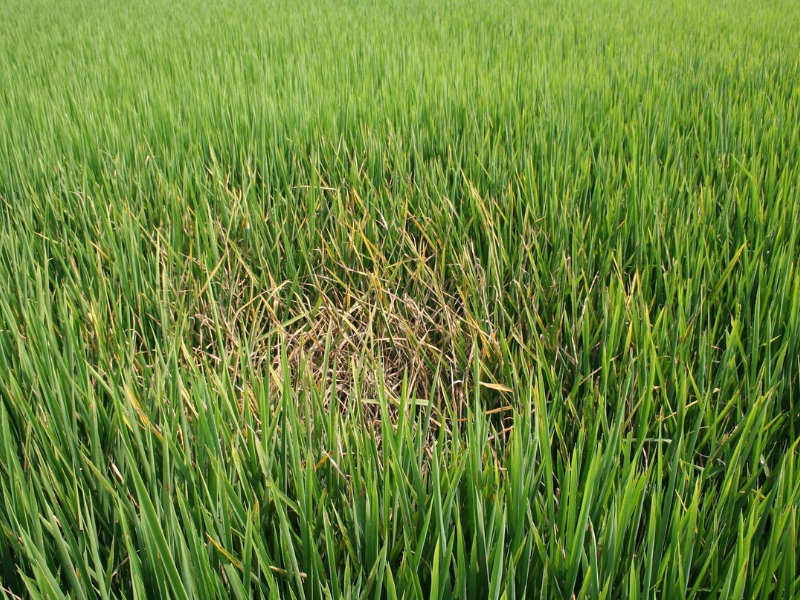
    Rice blast in a California rice crop. US and Chinese researchers used CRISPR genome editing to create a high-yielding rice variety resistant to this major fungal pest. Credit: UCANR.

    A recent study published in the journal Nature on June 14 reports that a group of scientists, including researchers from the University of California, Davis, and an international team, have successfully utilized the genome-editing tool CRISPR-Cas to develop rice plants that are resistant to diseases.

    In a recent study published in Nature, it was revealed that researchers, including those from the University of California, Davis, and an international team, have successfully used genome editing with CRISPR-Cas to create disease-resistant rice plants.

    Unearthing a Promising Leaf Mutant for Agricultural Advancements

    The study’s co-lead author, Guotian Li, made an initial breakthrough while working as a postdoctoral scholar in Pamela Ronald’s lab at UC Davis. During his research, Li came across a mutant strain, referred to as a lesion mimic mutant, which displayed dark patches on its leaves. Ronald, who is also a co-lead author and a Distinguished Professor in the Department of Plant Pathology and the Genome Center, emphasized the importance of Li’s discovery in improving the gene’s potential for practical use by farmers.

    The origins of this breakthrough can be traced back to Ronald’s lab, where a collection of 3,200 distinct rice strains were created and sequenced, each containing various mutations. Among these strains, Guotian identified one that exhibited resistance to bacterial infection, in addition to the dark patches. However, this particular strain had an extremely small size and low yields.

    Ronald explained that while “lesion mimic” mutants have been identified in the past, their practical utility to farmers has been limited due to their low productivity.

    Harnessing CRISPR-Cas for Disease-Resistant Crop Evolution

    The new rice variety, developed by modifying a recently discovered gene, demonstrated both high yields and resistance to the fungal infection responsible for the severe rice disease known as rice blast. This is significant as rice is a vital crop that provides sustenance for approximately half of the global population.

    The study’s co-lead author, Guotian Li, made an initial breakthrough while working as a postdoctoral scholar in Pamela Ronald’s lab at UC Davis. During his research, Li came across a mutant strain, referred to as a lesion mimic mutant, which displayed dark patches on its leaves.


    Read The Original Article on PHYS.

    Read More: The Healthiest Rice! White or Brown? From a Nutrition Scientist Perspective.

  • Doppelgangers Share Similar Genetics and Habits

    Doppelgangers Share Similar Genetics and Habits

    Credit: Joshi et al., Cell Reports, 2022

    A new study by researchers in Spain reveals that human “look-alikes” who have comparable face features also tend to share many genetic resemblances, as well as also share certain lifestyle attributes.

    The research, released in the journal Cell Reports, gives some insight into the molecular genetic mechanisms that add to building of the face. The authors state these findings could become applied to forensics, by enabling predictions of facial structure from DNA.

    The experiment

    Ricky Joshi of the Josep Carreras Leukemia Study Institute in Barcelona as well as his coworkers collected headshots of 32 couples of unconnected look-alikes from the pictures of Canadian artist François Brunelle, who has been collecting photos of lookalikes since 1999.

    Joshi as well as his coworkers used three different face recognition algorithms to evaluate the photos to establish the similarities between each pair. Twenty-five of the pairs were categorized as being “very similar” by a minimum of two of the algorithms, and fifty percent were matched by all three, with scores similar to those of identical twins. They then contacted all of the people in the photographs that they had chosen as well as asked them to complete a questionnaire regarding their lifestyle and to send a sample of saliva.

    The researchers extracted DNA from the saliva examples and examined it in three different methods: They (1) compared each participant’s genome by mapping more than 4.3 million genetic variants called single nucleotide polymorphisms (SNPs); (2) took a look at the participants’ “epigenomes” by comparing over 850,000 DNA alteration sites; as well as (3) utilized RNA sequencing to compare the participants’ microbiomes.

    Look alikes, act alikes

    The analyses revealed that 9 of the 16 very comparable couples shared over 19,200 SNPs in more than 3,700 genes, and that these resemblances were not because of any shared ancestry. By contrast, there was very little similarity in their epigenomes as well as microbiomes. Furthermore, these “ultra look-alikes” also shared physical characteristics such as weight and height, as well as habits and habits like smoking as well as educational level, suggesting that the common genetic variants impact not just physical look however also way of living.

    The research is limited by the small size of the sample, which is also not representative of the world’s population. Thirteen of the look-alike couples were of European descent, and the rest 3 were East Asian, South Asian, and Hispanic. Still, it offers proof that those who look alike also act alike.


    Read the original article on Big Think.

    Read more: Quasicrystal developed during accidental electrical discharge.

  • Genome Study Finds Unexpected Variation in a Fundamental RNA Gene

    Genome Study Finds Unexpected Variation in a Fundamental RNA Gene

    A genome study carried out by Johns Hopkins Kimmel Cancer Center scientists to search for variants in a gene thought about an essential building block for microscopic structures that manufacture proteins took a shocking twist.

    Human ribosomal RNA (rRNA) genes are essential for constructing ribosomes or mechanisms that translate proteins. The study findings, to be released in the Feb. 2 issue of the journal RNA, showed that these genes were thought to be similar among people -; instead differed dramatically based upon an individual’s geographic ancestry. Specifically, high variants were found on a segment called 28S rRNA, a crucial part of the protein-translating ribosome.

    Genome study

    The team, led by Marikki Laiho, M.D., Ph.D., director of molecular radiation sciences in the Department of Radiation Oncology and Molecular Radiation Sciences, veered from their regular research study emphasis on establishing brand-new molecules that could be potentially helpful in the treatment of cancer cells to explore a basic biology concept they wanted to understand much better.

    They had developed cancer drugs that target the synthesis of ribosomal rRNAs, a unique procedure that drives cancer cells development. Without these, cancer cells can not increase. The team questioned if the rRNA gene itself was altered in cancers and how that can affect their targeting approach. Despite the value of this gene, there has been no definitive reference sequence published to date.

    Unexpected heterogeneity of ribosomal RNA genes in human populations revealed by genome studies suggests potential variation in protein translation by the ribosomes.
    Unexpected heterogeneity of ribosomal RNA genes in human populations revealed by genome studies suggests potential variation in protein translation by the ribosomes. Credit: Wenjun Fan, Ph.D.

    How was the study conducted?

    Team members set out to take a bioinformatics approach to rRNA genetics sequences, using high-performance computers at the Maryland Advanced Research Computing Center, a joint venture managed by Johns Hopkins University and the University of Maryland. To start charting cancer cells alterations, they needed to understand whether variants existed in the human populace. The rRNA gene sequence was considered “untouchable,” approximately essential that it appeared unlikely to have many variations.

    “Nevertheless, when we began that analysis, we very promptly understood that the cancer genomes were highly aberrant,” Laiho states. “For us to comprehend whether that aberration is real-; meaning that it changes in certain cancers -; we needed to understand better what a typical human gene looks like.”

    Next off, they utilized whole-genome sequencing data from the 1000 Genomes Project (a worldwide human genetics database) to examine variants in 2,504 individuals from 26 populations. They determined 3,791 variant placements on the rRNA gene. This included 470 alternative positions seen on 28S rRNA. The majority of these variations were situated on lengthy sticking-out folds of the rRNA that vary among types. These stand for positions of diversity and are potentially under continual evolution.

    The study reveals something unexpected

    “The analysis results were beyond our imagination. We saw perfect preservation of sequences over vast swaths of the gene, and after that, very variable sites in the specific locations that we anticipated to be unaltered. This suggests that the manner alternative rRNAs are developed into the ribosomes could bring about possible changes in just how the ribosome work.”, said Marikki Laiho, M.D., Ph.D., supervisor of molecular radiation sciences, Department of Radiation Oncology and Molecular Radiation Sciences

    Most of the variants observed were set apart by population. For example, some variants were much more frequent among African or Asian people versus American or European people, and the other way around. This raises the possibility that a few of the versions are ancient, ancestry-dependent, yet have been kept in modern populations, Laiho says.

    “It’s premature to hypothesize what these variants suggest; however, what is remarkable is that the population conserves them, and this indicates their retention is in some way crucial,” she says.

    The study discoveries suggest a requirement to functionally analyze how the 28S rRNA variants influence ribosome functions, which can consequently aid bring about even more targeted therapies for cancer or various other illnesses, Laiho claims.


    Originaly published in Johns Hopkins Medicine.

    Related “Advanced Cryo-EM Exposes Viral RNA Duplication Complex Structure in “Game-Changing” Detail”