Tag: Portable

  • Samsung’s Portable Smart TV Comes with a Built-In Battery

    Samsung’s Portable Smart TV Comes with a Built-In Battery

    The Moving Style smart TV features a built-in adjustable kickstand, 27-inch QHD screen and battery power for entertainment on the go
    Samsung

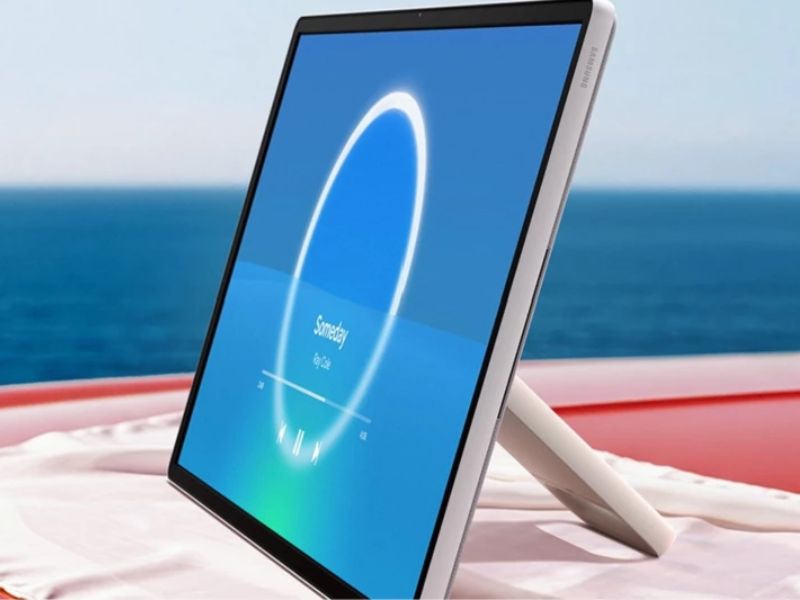
    For viewers who want their TV to follow them around, Samsung has unveiled a new option. The Moving Style model features a 27-inch QHD touchscreen, Dolby audio, a rechargeable battery, a kickstand with a built-in handle, and a full smart entertainment hub.

    Familiar Concept, New Competitor

    Sound familiar? That’s because LG released something similar earlier this year. Much like the StanbyMe 2, Samsung’s version can be wheeled from room to room using its stand or detached and carried by hand for on-the-go entertainment.

    Samsung’s Moving Style smart TV runs on battery power, and can be detached from its wheeled stand and carried by hand
    Samsung

    The 27-inch panel offers the same 2,560 x 1,440 resolution as LG’s model but doubles the refresh rate to 120 Hz, making it far more suitable for fluid mobile gaming. On top of that, Samsung has included AI-driven image optimization, enhanced color technology, automatic HDR remastering, and its Smart TV interface for live channels and streaming services via Wi-Fi 5.

    Smart Features and Creative Options

    Users can mirror content from smartphones using Google Cast or AirPlay, and they can control the TV by voice through Bixby or Google Assistant.The unit also comes with fitness-friendly features. When not streaming shows, users can transform the display into a digital art frame, choosing from more than 3,500 works in Samsung’s online gallery, or let AI generate artwork from a text prompt.

    The TV includes a built-in web browser for casual surfing and a dashboard of useful apps that displays daily information.For kids, there’s even a sketching app, though input is finger-only since stylus support is not provided.

    Samsung’s Moving Style smart TV serving up the latest headlines via the included web browser
    Samsung

    The TV runs on a 69-Wh battery for portable use. Connectivity options include one HDMI 2.1 port with 120-Hz support, two USB slots, and optional webcam compatibility for 1080p video calls. A 10-W two-channel system with Dolby Atmos delivers the sound.

    Portable Entertainment at a Price

    Altogether, the Moving Style serves as a compact, versatile entertainment solution—perfect for moving around a home, fitting into small apartments, or traveling in an RV. Currently, it’s available only in Samsung’s home market at a price of KRW 1,440,000 (about US$1,000), though signs suggest a global launch could follow soon.

    The Movingstyle Teaser | Samsung

    Read the original article on: New Atlas

    Read more: Samsung’s High-End Laser TV Becomes the First 8K Projector to Earn Certification
  • Portable Keyboard with Touchscreen Enables Multitasking on the go

    Portable Keyboard with Touchscreen Enables Multitasking on the go

    I can’t picture my desktop setup without a second monitor — it’s been a game changer for researching and writing, especially when juggling several browser tabs, videos, and a note-taking app at the same time.
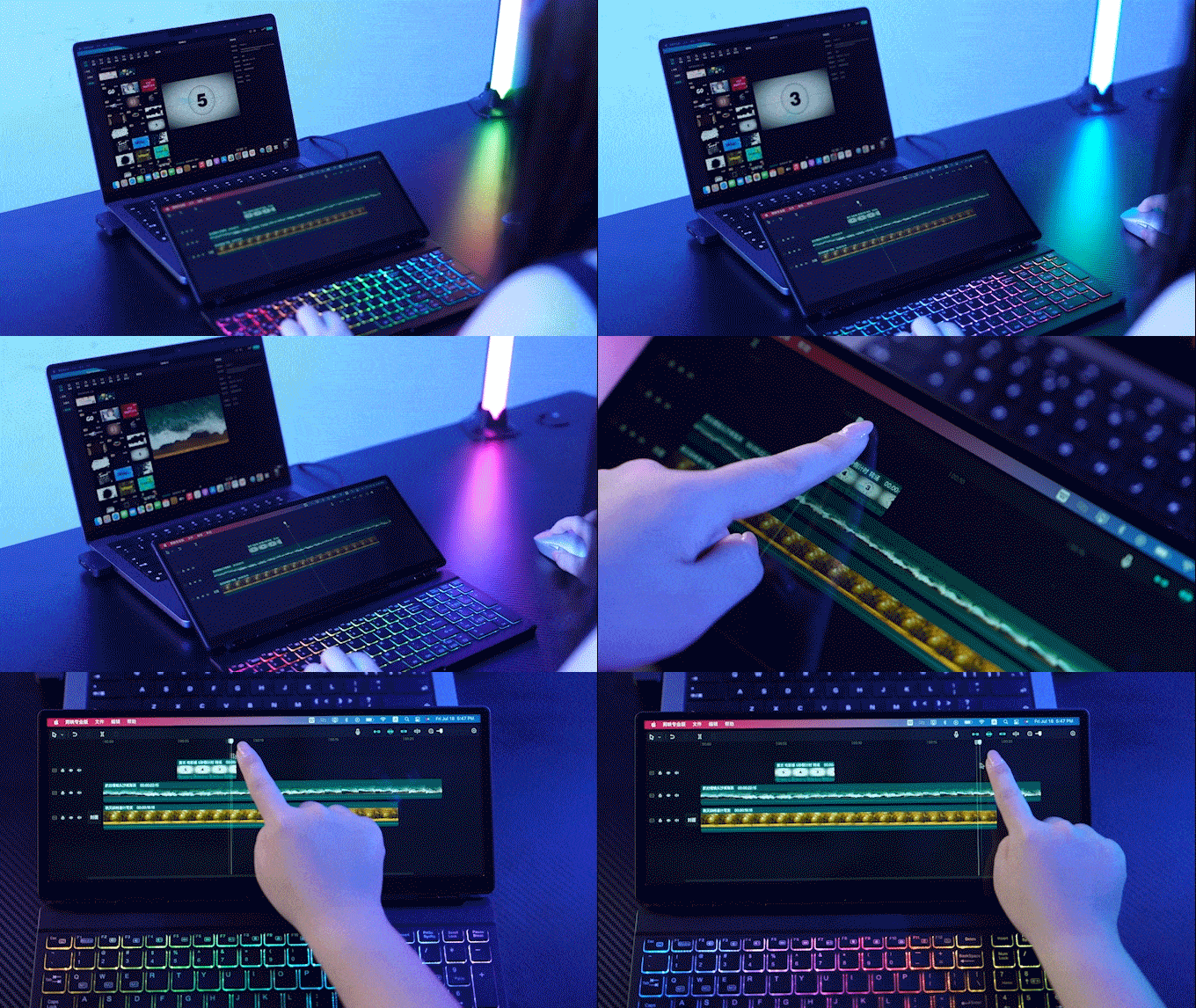
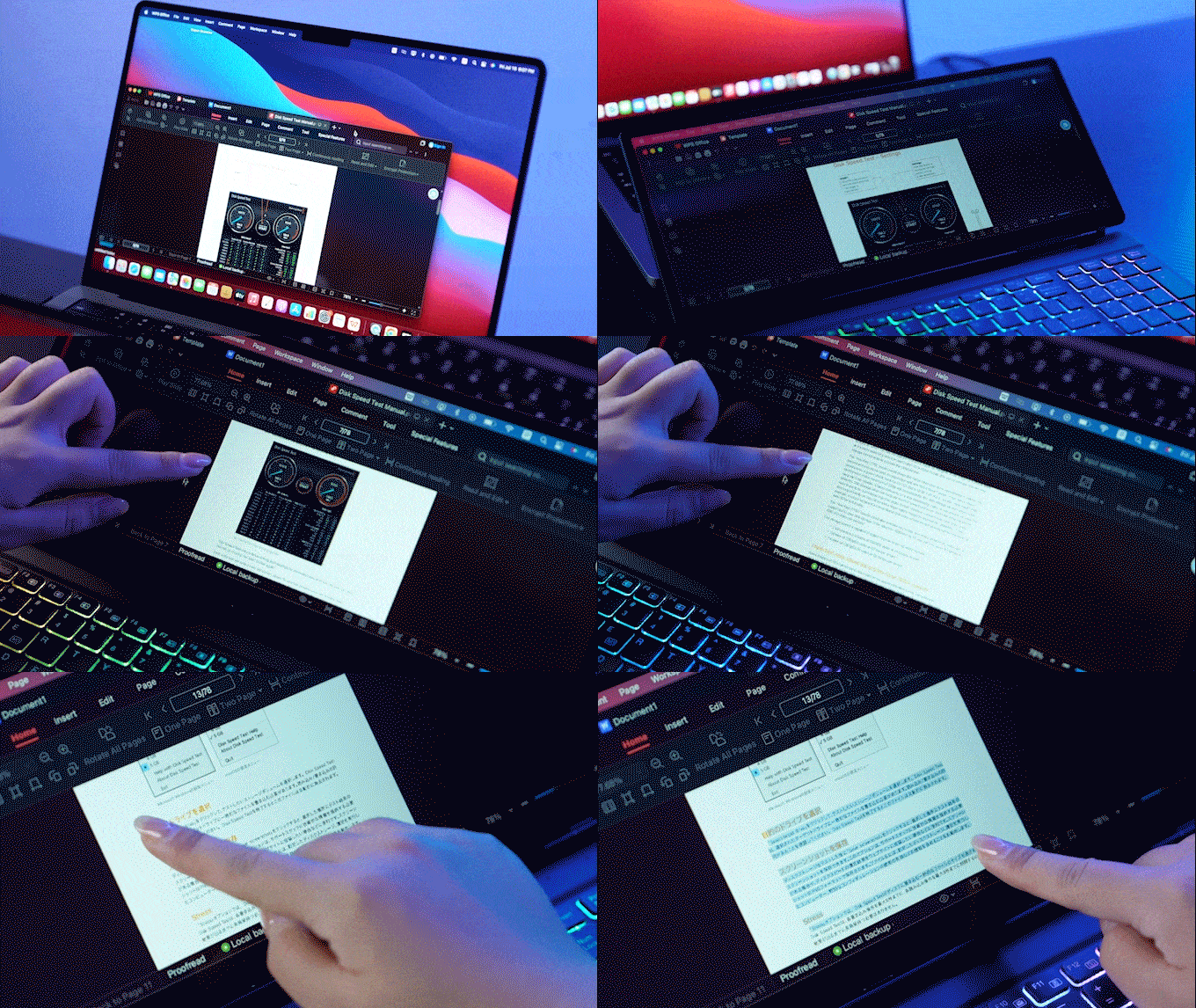
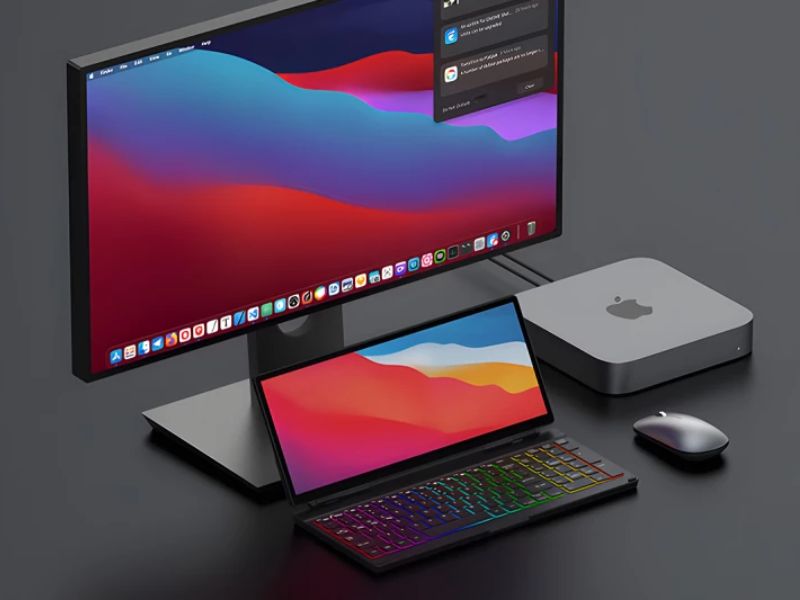
    Image Credits:The KeyGo’s screen can mirror or extend your computer’s display, and accept 10-finger touch input too
    KeyGo

    I can’t picture my desktop setup without a second monitor — it’s been a game changer for researching and writing, especially when juggling several browser tabs, videos, and a note-taking app at the same time.

    A Portable Dual-Screen Solution for Work on the Go

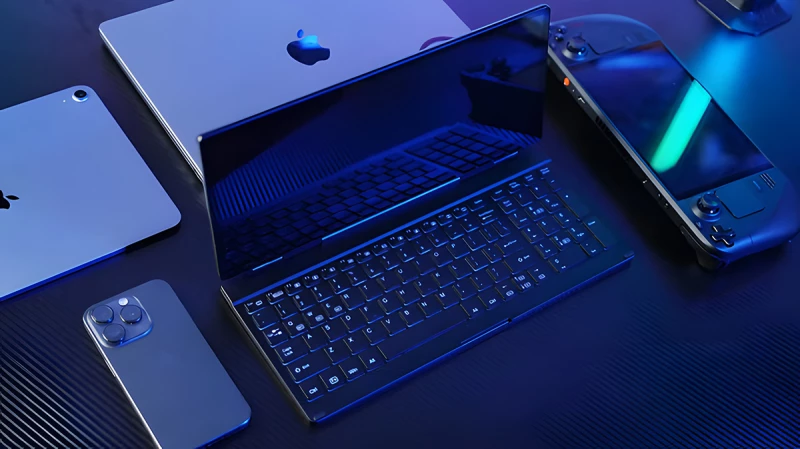
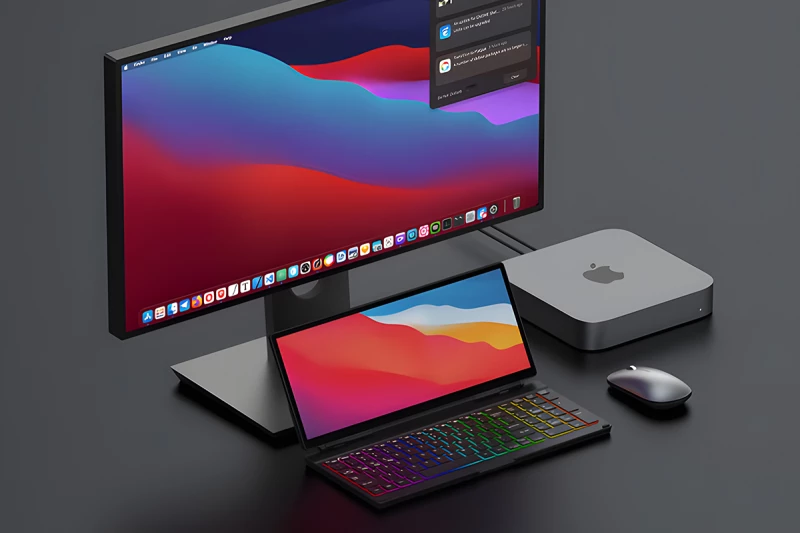
    The new KeyGo could be a great way to bring that same experience on the go. It’s a compact keyboard with a fold-out screen that connects to your laptop, phone, or tablet, serving as a secondary display to expand your workspace.

    The display is also a touchscreen, making it easy to scroll through documents and code, swipe through videos, and navigate media project timelines with ease.

    If I took the KeyGo on the road to write, I’d likely keep my browser open on my laptop and have my notes enlarged on the touchscreen nearby. I can also see myself using the KeyGo screen for audio editing timelines, which would help me fine-tune tracks for music or podcast work more precisely.

    Image Credits:Video editors will appreciate the 12.8-inch horizontal display for scrubbing through project timelines
    KeyGo

    The KeyGo connects to PCs, Macs, and Android or iOS devices via a single USB-C cable. It also includes a second USB-C port for power input, allowing you to use an adaptor for more consistent performance. If you plan to use it with an Android phone, make sure your device supports DisplayPort Alt Mode to ensure the screen functions correctly.

    Full-Featured Keyboard with Touchscreen Display

    The keyboard uses scissor switches for quieter typing, offers customizable RGB backlighting, and includes a number pad on the right. The built-in display is a 12.8-inch 720p IPS touchscreen with a 60Hz refresh rate and 10-point touch support.

    Image Credits:If you’ve ever used an external monitor with your computer, you know how handy it is to be able to move apps between displays
    KeyGo

    Crafted from CNC-machined aluminum alloy, the device folds completely flat to 180 degrees and weighs 28 oz (800 g). When closed, it measures 12.7 inches (324 mm) in length and 0.75 inches (19 mm) in thickness—just slightly bulkier than a 13-inch MacBook Air.

    It’s a convenient tool to keep on hand, whether you’re working at your desk or enjoying a change of scenery. The KeyGo is currently available on Kickstarter, with an expected retail price of US$538, though early backers can get it for as low as $259. Shipping is scheduled for November, with regional shipping costs ranging from $10 to $17 per unit.

    Image Credits:The KeyGo is designed to pair with phones, tablets, and computers
    KeyGo

    As with any crowdfunding effort, there’s some level of risk involved—and this seems to be the debut project from the team behind the KeyGo, so that’s something to consider before backing. That said, the campaign has already surpassed its funding goal, with support from over 500 backers.

    You can check out more details about the KeyGo on its Kickstarter page.


    Read the original article on: New Atlas

    Read more:Scientists Have Built a Naturally Biocompatible Cellulose Transistor

  • Next-Gen Portable Grill Cooks Like a Pro and Packs Down Like a Briefcase

    Next-Gen Portable Grill Cooks Like a Pro and Packs Down Like a Briefcase

    The StoviGo is the creation of camping enthusiasts
    StoviGo

    Heading into the great outdoors no longer means settling for basic meals — thanks to the world’s first foldable top-heating grill, you can now enjoy gourmet cooking on the go. Meet the StoviGo, a compact grill that folds down to the size of a briefcase, making it a game-changer for campers and outdoor cooks alike.

    Smoke-Free Cooking with Plenty of Space

    Developed over two years, the StoviGo is a rugged, gas-powered outdoor oven designed for serious performance. It features an infrared top-heating panel that evenly cooks food from above while also turning the grill’s top surface into a hotplate — ideal for warming sides or searing extras. We got hands-on experience with the unit, and it’s as capable as it is convenient.

    Quick Setup StoviGo in 1 Minute

    Thanks to the infrared heating system, the StoviGo can handle ambitious campsite meals — think full roasts or large pizzas — without the smoke you’d expect from traditional grills. An adjustable tray offers five rack positions inside a roomy 11 x 11 x 8-inch (28 x 28 x 20 cm) oven cavity, spacious enough for a whole chicken or a batch of veggies.

    High Temperatures and Dual Cooking Functionality

    Inside, the oven reaches up to 900 °F (482 °C), while the upper hotplate climbs to around 400 °F (204 °C). Just be cautious with the exterior heat, especially if there are kids around.

    Crafted from durable stainless steel, the StoviGo is designed for easy assembly, disassembly, and cleanup. It’s nearly smoke-free thanks to a clever design that prevents liquids from dripping onto the heat source and burns off leftover gases during cooking, making the whole process cleaner and more efficient.

    Moving campsites? No worries – just pack the grill up and carry it to the next spot
    StoviGo

    Although tailored for campers, this compact grill is equally suited for balconies, backyards, or even indoor use with proper ventilation. A single gas canister can fuel it for roughly four hours at medium heat — more than enough for a weekend’s worth of cooking. That’s enough to grill nearly 50 10-ounce (280-gram) steaks using a 16-ounce (450-gram) propane canister, with butane as a compatible alternative.

    Igniting the grill is easy, and it heats up in just two minutes. Adjustable settings for low, medium, and high temperatures provide full control over your cooking.

    While this is elevated further, the StoviGo has a built-in stand to keep it off the ground and make it more stable on uneven surfaces
    StoviGo

    Lightweight, Compact, and Road-Trip Friendly

    Weighing in at 15.87 pounds (7.2 kg) without fuel, it’s not exactly a backpacking companion, but it fits nicely in the car with the rest of your gear.

    Currently featured on Kickstarter, the StoviGo is available for preorder at US$299, a steep discount from the expected retail price of $599. Each unit comes with a convenient carrying case and a meat thermometer as part of the campaign’s exclusive offer.

    With its funding goal already met, the team plans to begin shipping in October. While some may be cautious about crowdfunding campaigns, the company behind the StoviGo — REVO — has a solid track record in grill design and has spent years perfecting this model.


    Read the original article on: New Atlas

    Read more: Bone conduction Speaker Helps You Fall Asleep Without Disturbing Others

  • Portable Smart Projector Brings Streamed Movies On The Go

    Portable Smart Projector Brings Streamed Movies On The Go

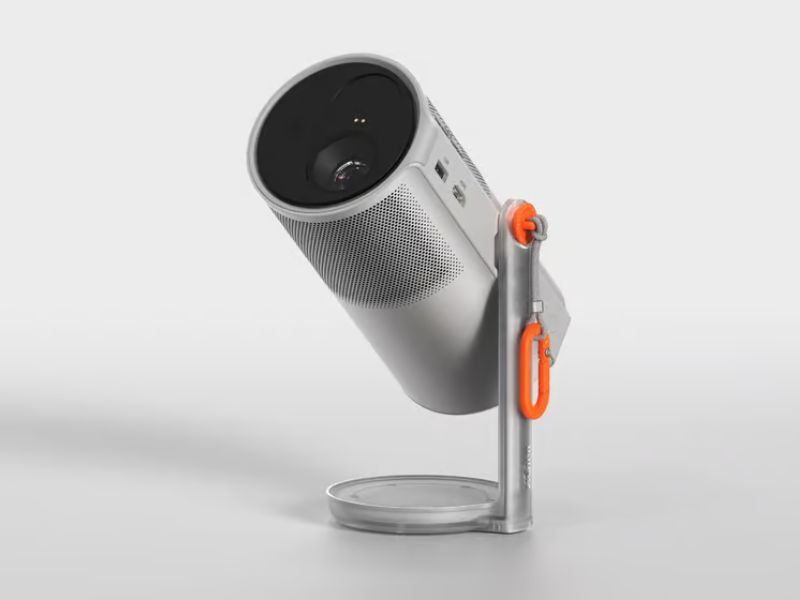
    The integrated gimbal stand allows the Play 6 to move the visuals over 360 degrees for maximum positioning flexibility
    XGIMI/iF Design

    XGIMI, a Chinese projector manufacturer, has unveiled a preview of its new projector, the MoGo 3 Pro’s successor, the Play 6. Building on the tubular design, the Play 6 introduces a larger battery, a new gimbal stand, and a slightly brighter display.

    Impressive Portability and Competitiveness in the Market

    Launched today in China, XGIMI’s latest 1080p projector could potentially adopt the MoGo name for international markets, should it expand globally. With its 20,000-mAh battery offering 2.5 hours of runtime, the Play 6 outshines Samsung’s Freestyle 2 in terms of portability, positioning itself as a competitor to Dangbei’s Freedo model.

    The Play 6 also appears to be the brightest option in this category, delivering 500 ISO lumens. In comparison, the Freestyle offers 230 ANSI lumens, and the Freedo reaches 450 ISO lumens. While this brightness may struggle against direct sunlight or strong overhead lighting, it should perform well in a dark room with its Full HD big-screen visuals.

    The Play 6 portable Full HD smart projector features a 20,000-mAh battery for 2.5 hours of play time away from the wall socket
    XGIMI/iF Design

    If XGIMI releases the Play 6 outside of China, it will likely replace the GMUI 6.0 operating system with Google TV, similar to the MoGo 3 Pro, which runs on Google’s streaming platform. The projector offers connectivity through 802.11ac dual-band Wi-Fi, and users can also connect devices via HDMI 2.1 or USB.

    This DLP projector covers 124% of the Rec.709 color gamut, supports HDR10/HLG content, and includes features like auto keystone correction and autofocus. It is SGS-certified for low blue light. The projector also has two 6-W speakers tuned by Harman Kardon for a mobile movie soundtrack. Additional features include low input lag for gaming, motion compensation for smoother action scenes, and AirPlay for screen sharing.

    Harman Kardon sound in a portable package
    XGIMI/iF Design

    Smart Features and Design for Easy Setup and Use

    XGIMI’s new smart projector comes with a mini Bluetooth remote, featuring AI voice recognition and attached to a lanyard that slots into the integrated stand. The stand provides 360-degree adjustment for flexible setups, and it also has a base with a colorful ring light that reacts to sound.

    The Play 6 measures 96.5 x 96.5 x 207.6 mm (3.8 x 3.8 x 8.2 in) and weighs 1.31 kg (2.8 lb). It also includes a unique lens attachment that can transform the projector into a mood light. Currently, China offers the Play 6 for 2099 yuan (about $290), and experts expect the international price to be higher if the projector is released globally.


    Read the original article on: New Atlas

    Read more: Samsung’s High-End Laser TV Becomes the First 8K Projector to Earn Certification
  • Superman’s X-ray Vision Becomes Portable

    Superman’s X-ray Vision Becomes Portable

    Scientists have developed a miniature chip capable of capturing images of objects through cardboard. This technology, intended for integration into smartphones, moves us closer to emulating Superman's ability to see through solid objects, without the need for X-rays.
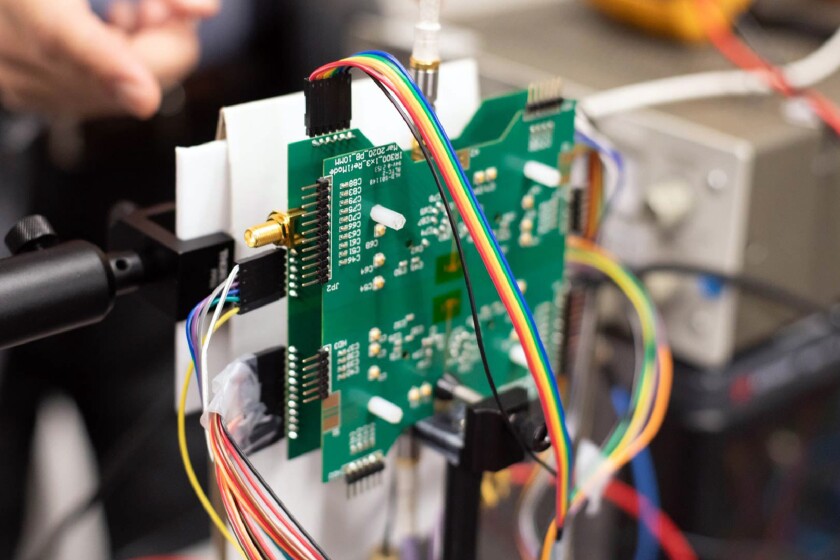
    A miniaturized imager chip inspired by Superman’s X-ray vision can see objects through cardboard
    UTD

    Scientists have developed a miniature chip capable of capturing images of objects through cardboard. This technology, intended for integration into smartphones, moves us closer to emulating Superman’s ability to see through solid objects, without the need for X-rays.

    Drawing inspiration from Superman’s X-ray vision, researchers from the University of Texas at Dallas (UTD) and Seoul National University (SNU) have advanced the ability to peer into packages and through walls. They achieved this by developing an imaging chip small enough to fit inside a smartphone.

    Kenneth O, a co-author of the study and professor of electrical engineering at UTD, as well as director of the Texas Analog Center of Excellence (TxACE), likened this technology to Superman’s X-ray vision. However, they utilize signals ranging from 200 gigahertz to 400 gigahertz instead of X-rays, as the latter can pose potential harm.

    In 2022, the imager microchip technology was unveiled, marking the culmination of over 15 years of research and development by O and his team, which included students, researchers, and collaborators.

    Exploring the Safe and Unseen Frequencies

    This chip emits radiation within the terahertz (THz) range, encompassing electromagnetic frequencies between 0.1 THz (100 GHz) and 10 THz, with corresponding wavelengths ranging from 3 mm down to 0.03 mm.

    These waves, unseen by the human eye and considered safe, possess frequencies higher than radio waves and microwaves but lower than those of infrared light.

    In the 2022 demonstration, O showcased how the microchip’s 430 GHz beams could traverse through fog, dust, and other obstructions that optical light cannot penetrate. Upon encountering objects, the beams reflected back to the microchip, where pixels captured the signals to form an image.

    Unlike traditional methods reliant on external lenses to enhance image clarity and sharpness, this imager utilized complementary metal-oxide semiconductor (CMOS) technology, commonly employed in the production of modern consumer computer processors, memory chips, and digital devices.

    CMOS has emerged as a cost-effective means to generate and detect THz signals, particularly in the frequency range of around 200 GHz and above, offering significantly improved resolution.

    Thus, the researchers focused on refining the image quality of their 2022 model and miniaturizing the technology for handheld use. The new imager chip featured a 1 x 3 array of 296-GHz CMOS pixels and maintained its lens-less design.

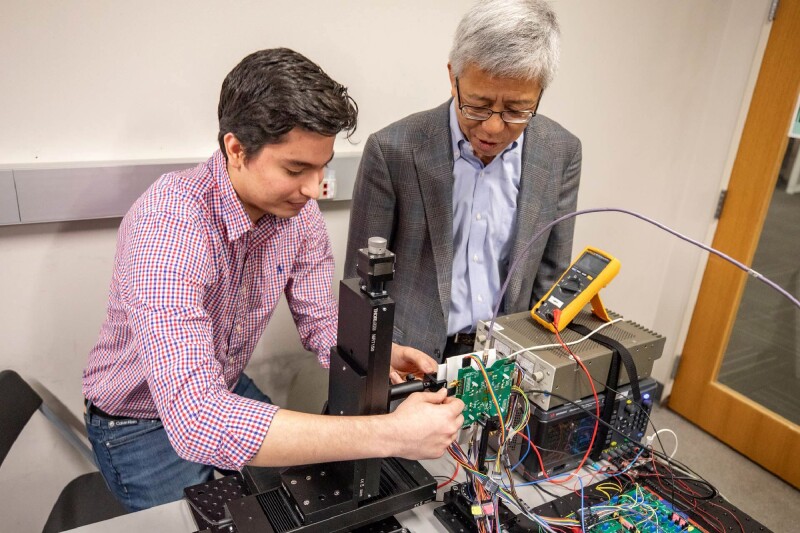
    Electrical engineering student Walter Sosa Portillo (left) and Dr. Kenneth O (right) work on the microchip imager for handheld mobile devices.
    Electrical engineering student Walter Sosa Portillo (left) and Dr. Kenneth O (right) work on the microchip imager for handheld mobile devices
    UTD

    Lens-Free Design for Mobile Compatibility

    Wooyeol Choi, the paper’s corresponding author and assistant professor at SNU’s Department of Electrical and Computer Engineering, highlighted, “We designed the chip to be lens-free and optic-free for mobile device compatibility. The pixels, responsible for creating images by capturing reflected signals from target objects, are shaped like 0.5-mm squares, similar in size to a grain of sand.”

    Safe Testing and Future Enhancements

    The technology was tested successfully, capturing images of objects concealed by cardboard from a distance of about one centimeter (0.4 in). Maintaining this proximity was deliberate to ensure safety and privacy, preventing potential misuse such as scanning bag contents from afar.

    The researchers aim to improve the technology to allow imaging from distances of up to five inches (12.7 cm).

    In fact, Brian Ginsburg, director of radio frequency/millimeter wave and high-speed research at Texas Instruments (TI’s) Kilby Labs, highlighted, “It took 15 years of research to enhance pixel performance by 100 million times, along with digital signal processing techniques, to achieve this imaging breakthrough. This disruptive technology showcases the true potential of THz imaging.”

    The researchers envision integrating their microchip imager into smartphones for various purposes, including detecting studs and wooden beams, identifying pipe cracks, and inspecting envelope and package contents, as well as potential medical applications.

    To conclude, funding for the research came from the Texas Instruments (TI) Foundational Technology Research Program on Millimeter Wave and High-Frequency Microsystems and the Samsung Global Research Outreach Program.


    Read the original article on: New Atlas

    Read more: Development in Science is on The Decadence and We Are Unsure Why

  • Portable Blood Flow-Imaging Watch Observing On the Move

    Portable Blood Flow-Imaging Watch Observing On the Move

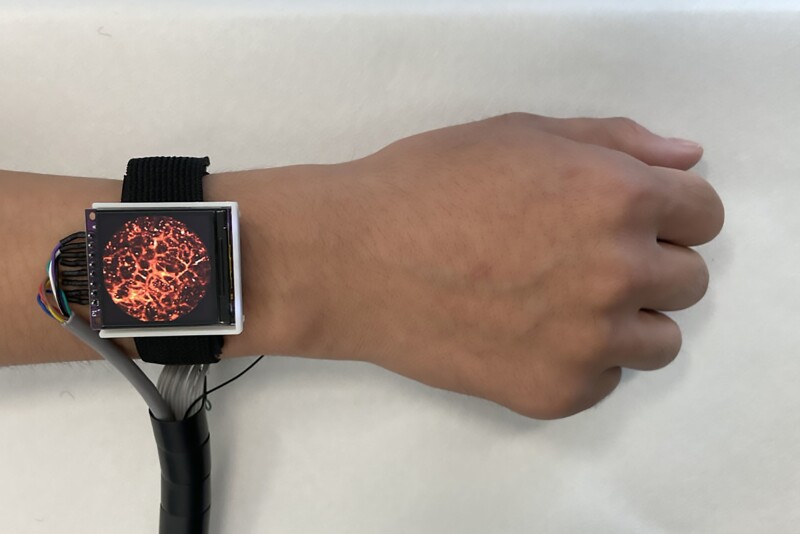
    Researchers have devised a compact version of photoacoustic imaging systems, offering a detailed view into the body, previously hindered by their bulky size. The miniaturized version fits into a watch, with its hardware housed in a backpack of comparable weight to an average five-month-old baby. This non-invasive device provides an effective means of assessing cardiac function.
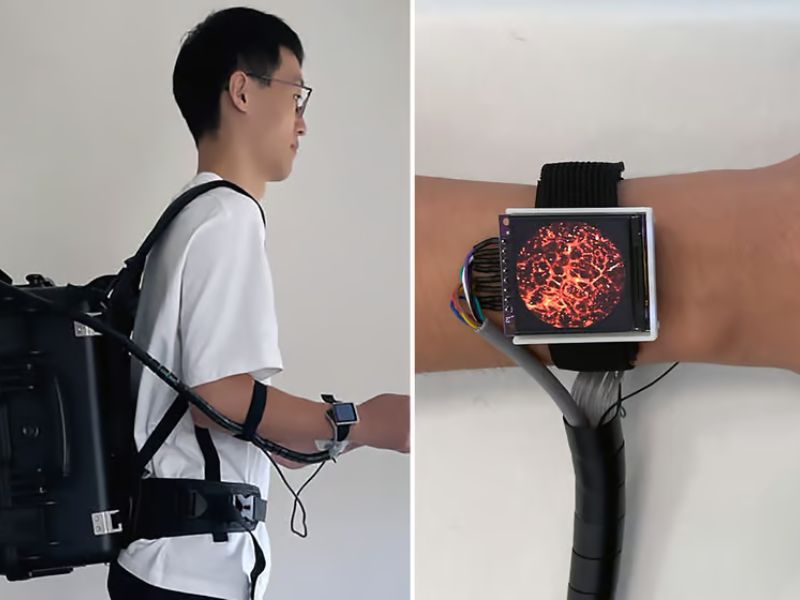
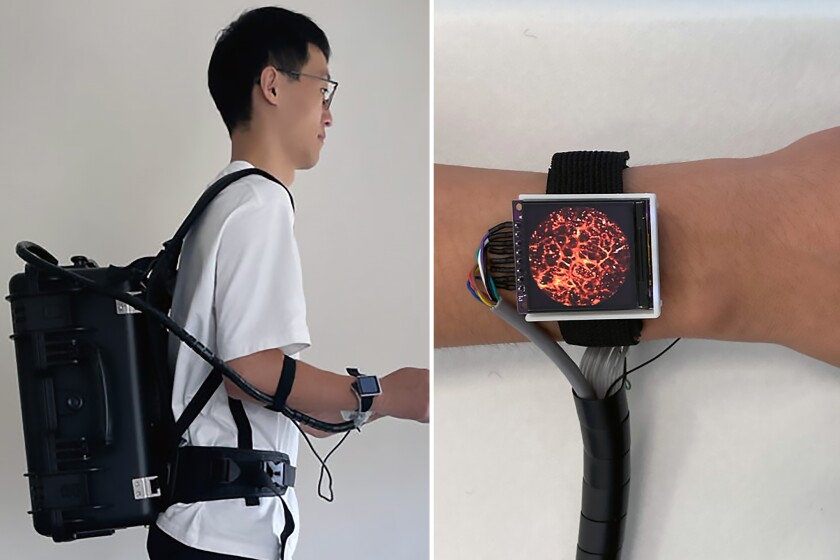
    High-res photoacoustic imaging tech has been shrunk to fit in a watch
    Lei Xi/SUSTech

    Researchers have devised a compact version of photoacoustic imaging systems, offering a detailed view into the body, previously hindered by their bulky size. The miniaturized version fits into a watch, with its hardware housed in a backpack of comparable weight to an average five-month-old baby. This non-invasive device provides an effective means of assessing cardiac function.

    In simple terms, photoacoustic imaging operates as follows: Initially, an object absorbs light, such as laser pulses, converting the absorbed optical energy into heat and causing a temperature increase. Subsequently, thermoelastic expansion leads to the emission of detectable sound waves. Unlike ultrasound imaging, which primarily identifies anatomy, photoacoustic imaging provides higher-resolution functional and structural images.

    Advanced Applications of Photoacoustic Imaging

    Due to its ability to penetrate tissues up to a depth of 2-3 cm (0.8-1.2 in), photoacoustic imaging has been utilized for scanning blood vessels, estimating blood oxygenation levels (oxygen saturation), and diagnosing skin conditions and cancer. Researchers from the Southern University of Science and Technology (SUSTech) in China have developed a compact photoacoustic imaging device that can fit inside a watch.

    Lei Xi, the corresponding author of the study detailing the researchers’ new system, stated, “Although photoacoustic imaging is highly sensitive to changes in hemodynamics, challenges in miniaturizing and optimizing the imaging interface have hindered the advancement of wearable photoacoustic devices. To our knowledge, this is the first wearable photoacoustic device suitable for healthcare applications.”

    The photoacoustic watch can capture high-resolution images of blood vessels in the skin
    Lei Xi/SUSTech

    Hemodynamics refers to the dynamics of blood flow. Monitoring hemodynamic parameters such as heart rate, blood pressure, and oxygen saturation provides insight into the efficiency of cardiac function.

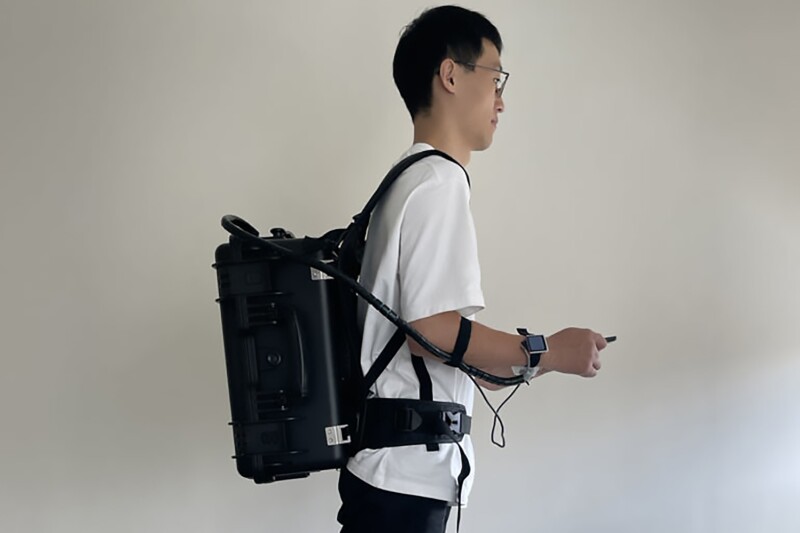
    The device developed by the researchers comprises a watch with an imaging interface, a handheld computer, and a backpack housing the laser and power supply (weighing 7 kg/15 lb). It is designed to allow the wearer unrestricted movement. The device’s adaptable laser focus enables imaging of multilayered structures like the skin, with a resolution of 8.7 µm adequate for imaging most small blood vessels within a maximum field of view of approximately 3 mm in diameter.

    Field Testing of Photoacoustic Device

    Volunteers utilized the photoacoustic device to evaluate its performance under various conditions, including walking and experiencing temporary blood flow blockage to the arm using a cuff. The tests confirmed that the system was functional, compact, and sufficiently stable to enable unrestricted movement.

    The backpack houses the device’s laser supply and power source and weighs 15 lb
    Lei Xi, SUSTech

    Xi highlighted the potential of miniaturized wearable imaging systems, such as the one they’ve developed, for use in community health centers to diagnose diseases initially or continuously monitor blood circulation parameters in hospitals, offering valuable insights for treating various illnesses. Further improvements could enable these systems to aid in early detection of skin conditions like psoriasis and melanoma, as well as in analyzing burns.

    The researchers are working on enhancing the system by creating a smaller laser source with a higher pulse repetition rate, which would improve compactness, reduce weight, and enhance safety and resolution, ultimately eliminating the need for the backpack.

    Xi expressed confidence in the feasibility of developing a more advanced and intelligent photoacoustic watch, leveraging rapid advancements in modern laser diode and electronic information technologies, and eliminating the reliance on a backpack.

    Additionally, the researchers aim to increase the device’s durability for strenuous physical activities like running and jumping. They also plan to incorporate more hemodynamic parameters, including qualitative assessments of blood vessel count and volume, to support early diagnosis of cancer and cardiovascular disease.


    Read the original article on: New Atlas

    Read more: Revolutionary Biorobotic Heart: A Breakthrough in Cardiac Research and Surgery