Tag: Proteins

  • Designed Proteins Allow Efficient, Green, and Biocompatible Energy Storage

    Designed Proteins Allow Efficient, Green, and Biocompatible Energy Storage

    Scientists have successfully altered a class of proteins to enable them to conduct and store electricity. These engineered proteins are stable, easy-to-process, sustainable, and biocompatible conductive materials suitable for industrial use.
    The modified proteins are deposited onto electrodes for their conductivity to be characterized. Image Credits: CIC biomaGUNE

    Scientists have successfully altered a class of proteins to enable them to conduct and store electricity. These engineered proteins are stable, easy-to-process, sustainable, and biocompatible conductive materials suitable for industrial use.

    Modular LEGO Proteins

    The research, led by Aitziber L. Cortajarena, Calvo, and Morant published a paper in Advanced Materials as part of the e-PROT project.

    The study used lab-designed proteins made of small, sequentially assembled units, like LEGO blocks. Each “block” shares the same basic structure, and when combined, they form a larger, ordered, stable, and modular framework. This modularity allows scientists to add specific functions without altering the overall structure, enabling the creation of tailor-made proteins.

    In this work, the researchers aimed to make the protein efficiently conduct electricity. To do so, they genetically modified the DNA encoding the protein’s structure and function.

    Conductive proteins are integrated into an energy storage device. Image Credits: CIC energiGUNE

    The next Generation of Energy Storage Technologies

    The protein modifications enhanced ion movement within the material, enabling the proteins to power a high-performance energy storage device that charges and discharges rapidly.

    Looking ahead, these protein-based conductive materials could replace conventional battery and supercapacitor components, making them far safer for the human body. They are especially promising for bioelectronic applications, including pacemakers, implantable glucose sensors, and brain electrodes used to treat conditions like Parkinson’s disease.

    This study paves the way for a new generation of energy storage devices built from sustainable, safe, and inherently biocompatible materials.

    It’s increasingly easy to envision a future where we store energy sustainably, powering phones, fitness trackers, and other portable devices with biodegradable, eco-friendly, and safe materials. Scientific advances are bringing that vision closer to reality.


    Read the original article on: Tech Xplore

    Read more: Affordable Materials Turn Waste Carbon into High-Energy Compounds
  • Parasite Hides by Stealing Human Cell Proteins

    Parasite Hides by Stealing Human Cell Proteins

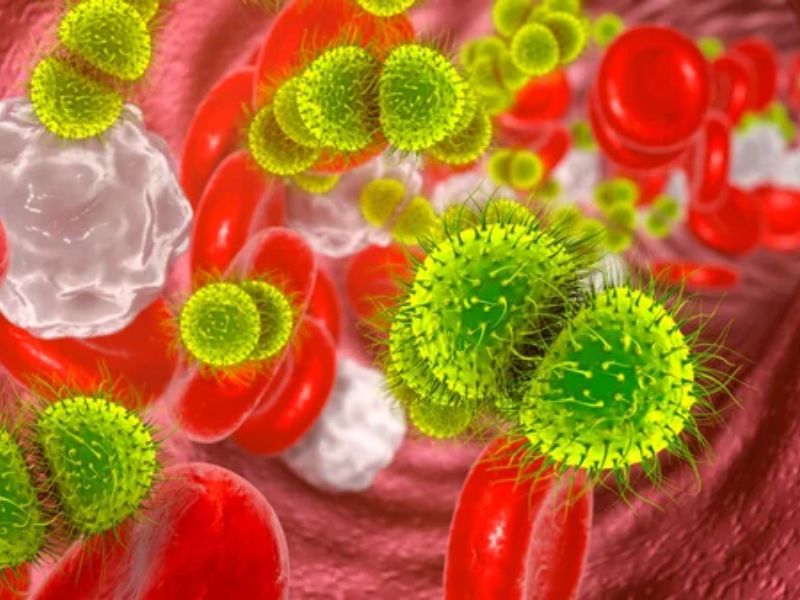
    Credit: Depositphotos

    Parasites are infamous for their resourceful ways of infecting human cells, often developing complex tactics to slip past immune defenses unnoticed. One particularly crafty organism, Entamoeba histolytica, has evolved a remarkable method to stay hidden: it tears off fragments of human cells and uses their proteins to disguise itself.

    Life Cycle of a Deadly Parasite

    E. histolytica is a unicellular parasite responsible for amoebiasis—a serious disease that spreads via contaminated food and water. Its resilient cyst form can survive the acidic environment of the stomach, eventually releasing active amoebic trophozoites in the small intestine. These trophozoites then move to the large intestine, where they reproduce and form new cysts, continuing the infectious cycle when expelled in feces.

    This pathogen infects around 50 million people globally each year and is linked to approximately 70,000 deaths. In many cases, it only causes mild symptoms like diarrhea, but in severe instances, it can destroy liver tissue and spread to the brain or lungs. Despite its widespread impact, E. histolytica remains largely understudied, with many aspects of its biology still not fully understood.

    “All parasites are understudied, but E. histolytica is especially mysterious,” notes Katherine Ralston, an associate professor in microbiology and molecular genetics. “It has the ability to kill virtually any human cell.”

    A New Understanding of Immune Evasion

    While it was previously known that this amoeba could eliminate immune cells to avoid detection, the exact mechanism had remained elusive. Earlier theories suggested the parasite released toxins to kill its targets.

    But Ralston’s research uncovered something far more unusual. Instead of killing cells outright, the parasite nibbles off small portions, leaving the host cell damaged but not entirely destroyed. It doesn’t consume these bits for nourishment—instead, it hijacks surface proteins such as CD46 and CD55, incorporating them into its own outer layer. These proteins normally help human cells avoid immune attacks, so when the parasite wears them, it becomes effectively invisible to the immune system.

    Scientists call this method of stealing and using host proteins for camouflage trogocytosis.

    Trogocytosis of Host Cell

    New Hope for Treatment

    Researchers initially reported the breakthrough in a preprint at the end of 2024. Now, they are actively exploring the parasite’s already-sequenced RNAi library to identify the genes responsible for its protein-stealing behavior. When paired with CRISPR gene-editing tools, it could open the door to treatments that specifically target these molecular interactions and neutralize the parasite.

    We’re finally seeing a promising path forward,” says graduate student Wesley Huang. “And it feels like a real possibility.


    Read the original article on: New Atlas

    Read more: Parasites Unearthed in 500-Year-Old Toilet Expose Surprising Medieval Disease Networks

  • Newly Found Proteins May Explain Alzheimer’s Devastating Effects

    Newly Found Proteins May Explain Alzheimer’s Devastating Effects

    Despite decades of research, pinpointing the exact cause of brain damage in Alzheimer's disease has proven challenging. A team from Emory University in the US may have found a crucial piece of the puzzle.
    Credit: Depositphotos

    Despite decades of research, pinpointing the exact cause of brain damage in Alzheimer’s disease has proven challenging. A team from Emory University in the US may have found a crucial piece of the puzzle.

    Reevaluating Amyloid Beta’s Role in Alzheimer’s

    Much research has investigated amyloid beta plaques in Alzheimer’s, but some now view them as a byproduct rather than a cause of brain damage. Lab studies suggest these plaques don’t directly harm brain cells, and treatments targeting them have fallen short, leaving key aspects of the disease unclear.

    The latest findings suggest other factors may be at play. Emory biochemists Yona Levites, Eric Dammer, and their team found that proteins accumulating with amyloid beta plaques might cause Alzheimer’s symptoms like confusion, communication issues, and memory loss.

    The researchers compared protein combinations in Alzheimer’s mouse models and human subjects—some with Alzheimer’s, others with plaques but no symptoms. They identified over 20 proteins that accumulated with amyloid beta in both. Many are signaling molecules that, when trapped in plaques, may trigger harmful brain processes.

    Emory biochemist Todd Golde suggested that proteins beyond amyloid beta might drive Alzheimer’s brain damage. The team linked amyloid beta plaques to increased levels of midkine and pleiotrophin, which are associated with inflammation. These proteins could be targets for new therapies.

    Inflammatory Proteins in Alzheimer’s Brain Damage

    Amyloid beta’s role as a scaffold for other proteins might explain conflicting study results. The team observed that amyloid naturally supports other mechanisms. Initial lab tests revealed that midkine and pleiotrophin accelerated plaque formation.

    Levites and her team suggest that protein accumulation in plaques may be part of the brain’s response to amyloid beta, potentially helping to clear or neutralize the toxic amyloid structure.

    Protective or Harmful Response?

    This suggests other molecules may affect whether amyloid beta proteins cause neuronal damage. Researchers haven’t ruled out other theories, like Alzheimer’s as an autoimmune disease, and stress that more research is needed to understand Alzheimer’s complex brain changes.


    Read the original article on: Science Alert

    Read more: New Compound Restores Memory Function in Alzheimer’s Cases

  • Using Human Proteins to Assist Potatoes And Rice to Grow 50% Larger

    Using Human Proteins to Assist Potatoes And Rice to Grow 50% Larger

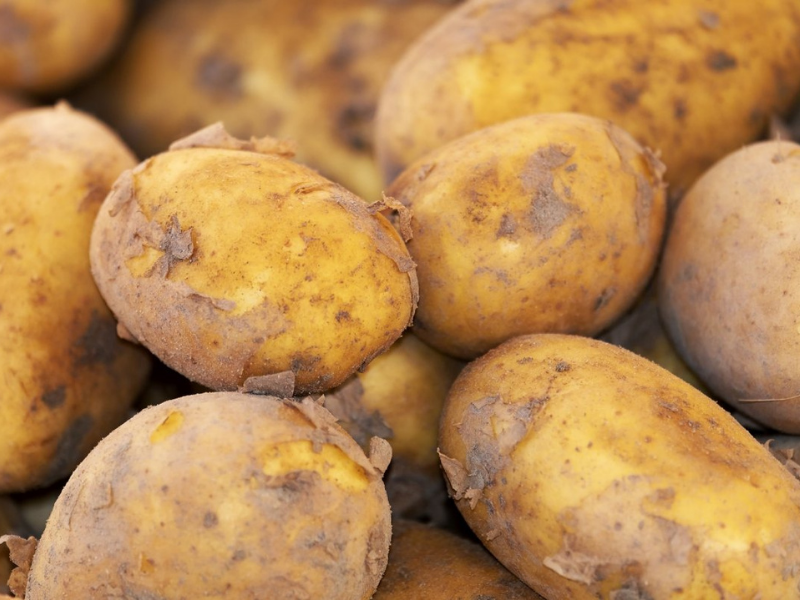
    Normal potato harvest (on the left) next to growth-enhanced potato harvest (on the rigth). Source: Qiong Yu et. al.

    New research from the University of Chicago, Peking University, and Guizhou University reveals that infusing a gene linked to human obesity and fat inside crops might assist them in growing larger and ampler. Adjusting plant RNA is an appealing approach to significantly enhance plant growth and crop yield, the team, explained in the research released in the journal Nature.

    It is understood that RNA reads DNA, which then manages proteins. However, Chuan He, the University of Chicago Professor and lead scientist of the study and his group, learned that RNA does not simply read the DNA: In 2011, the investigation group discovered that the cell could additionally regulate the nature of the system it is in on its own. This suggests that when the RNA is modified, it has the potential to modify which proteins are made and their quantities. After discovering this, the group attempted to use FTO, a protein that affects cell growth in humans and animals.

    He stated that plants do not have an FTO-equivalent protein in an interview with Smithsonian. His group then attempted to examine precisely how plants would respond to a foreign protein. And surprisingly, FTO did not damage the plant. Rather, it pushed the plants to increase in dimension.

    The group initially infused rice and potato plants with a gene filled with the FTO protein, associated with obesity and the hormones that promote human fat mass development. Since the FTO chemically changes the RNA of the plants, they grew 50% larger and stronger than typical, with longer roots and far better drought resistance. The research additionally discovered that the infused plants also had enhanced photosynthesis rates. This could indicate a new horizon for the farming industry.

    In an interview with Phys.org, Chuan He, the University of Chicago Professor and lead scientist of the research stated that the change truly is significant. What’s more, it worked with nearly every kind of plant the team tried it on up until now, and it is an extremely basic adjustment to make.

    He included in the report that this truly offers the opportunity for engineering plants to possibly enhance the ecosystem as global warming proceeds. He also highlighted the way humans count on plants for numerous things– everything from food, wood, and medication, to flowers and oil– and this possibly provides a means to raise the stock material we can obtain from the majority of plants.

    The research marks the start of a lengthy and promising process that might aid in enhancing the harvest of day-to-day farming products we eat. Although the professionals say more research is necessary. In a hunger-stricken and greatly polluted world, with one-third of our greenhouse gas emissions produced in agriculture, we might need to depend on bio-engineering for answers. However, rather than growing more crops, we should possibly concentrate on growing smarter crops. The group’s breakthrough research is just the start of what they expect will certainly help boost international crop systems.


    Originally published by: interestingengineering.com