Tag: Robotic

  • Morocco Celebrates a Breakthrough in Robotic Surgery

    Morocco Celebrates a Breakthrough in Robotic Surgery

    Morocco has completed its first year of robotic surgery, with the Oncorad Group describing the achievement as transformative for the national healthcare system.
    Image Credits:https://surgery.international/

    Morocco has completed its first year of robotic surgery, with the Oncorad Group describing the achievement as transformative for the national healthcare system.

    The group carried out its inaugural robotic procedure on 27 May 2024. Since then, surgeons have performed 178 procedures with the technology, mainly in urology, including more than 100 prostate cancer surgeries.

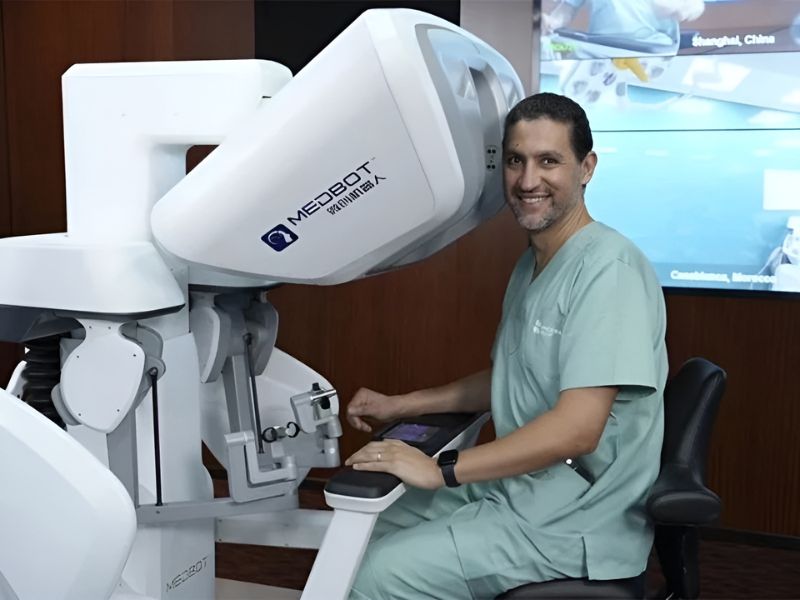
    In November, Dr Youness Ahallal made headlines by conducting a remote operation on a patient in Shanghai, setting a world record for the longest-distance telesurgery at 12,000 kilometres. A second remote procedure was later completed between Casablanca and Tangier.

    Morocco Joins Global Pioneers in Robotic Surgery Within a Year

    Reflecting on the milestone, he noted that in just one year Morocco had joined the ranks of global leaders in robotic surgery — a field once dominated by major technological powers.

    Established in 2000, Oncorad operates facilities in Casablanca, Marrakech, Agadir and Tangier. The group has built a reputation for investing in advanced medical technologies, including AI-supported imaging and precision radiotherapy. It now plans to widen access to robotic surgery nationwide and position Morocco as a regional centre for medical innovation.

    Elsewhere in the country, robotic surgery capabilities are still developing but gaining momentum. A public hospital in Agadir has introduced South Korea’s Revo-I system, while Casablanca’s private AKDITAL network operates several Da Vinci Xi robots. These systems enable minimally invasive procedures in fields such as urology, digestive surgery, gynaecology and ENT.

    Expanding access through funding reform and nationwide hospital rollout

    Given the high costs associated with robotic surgery, officials are exploring reimbursement strategies as part of a broader rollout. The health ministry intends to install robotic systems in each major university hospital, seeing remote surgery as a potential breakthrough for rural healthcare delivery.

    In May 2025, a patient in Laâyoune underwent surgery performed remotely by a specialist in Casablanca, strengthening expectations of improved access for underserved regions.

    Training has become a key priority. Early procedures were supported by international and diaspora experts, but Moroccan teams are quickly gaining expertise, with local surgeons expected to lead independently in the near future.

    Through collaboration between government, private providers and medical institutions, Morocco aims to make robotic surgery commonplace by 2030 — a move that could establish the country as a leading surgical innovation hub in the region.


    Read the original article on:Surgery.international

    Read more:Japanese Researchers have Found a Way to Erase Memories, Offering New Possibilities
  • Soft Robotic Elbow cuts Muscle Activity 22% and Eases lifting Fatigue

    Soft Robotic Elbow cuts Muscle Activity 22% and Eases lifting Fatigue

    Repetitive movements, awkward positioning, and ongoing strain can build up over time, often leading to expensive musculoskeletal injuries that may take weeks to recover from.
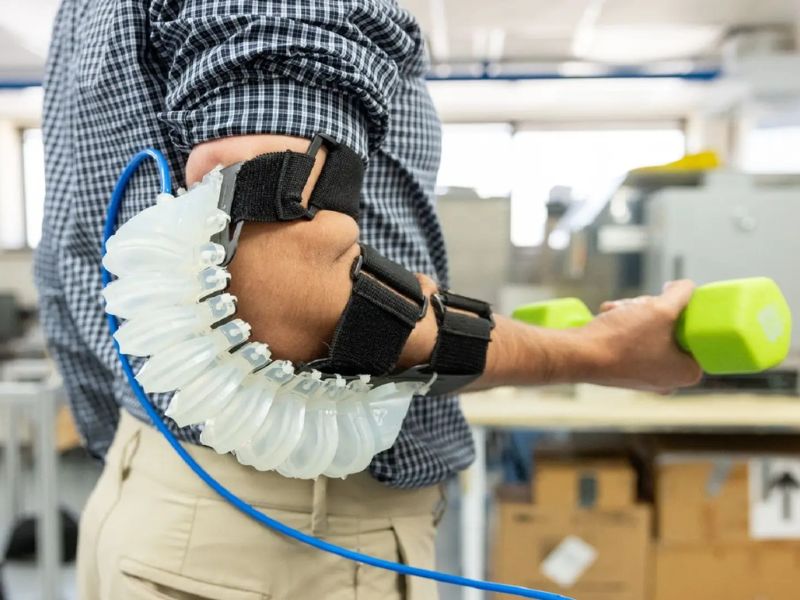
    Image Credits:Soft, air-powered exoskeleton boosts workplace safety

    Repetitive movements, awkward positioning, and ongoing strain can build up over time, often leading to expensive musculoskeletal injuries that may take weeks to recover from.

    To address this, engineers at The University of Texas at Arlington have created a soft robotic exoskeleton designed not only to support movement but to physically reduce the burden on the body.

    Known as the Pneumatically Actuated Soft Elbow Exoskeleton (PASE), the system relies on a silicone pneumatic actuator — a soft, air-powered mechanism — to assist arm movement during common industrial activities such as lifting, assembly, and drilling.

    Lightweight Design Reduces Injury Risk

    Its lightweight, flexible build is intended to lower the risk of musculoskeletal disorders, which make up nearly 30% of workplace injuries in the U.S. and lead to annual costs of $45–54 billion.

    Our goal was to create a device that prevents muscle strain,” said Eshwara Prasad Sridhar, noting it can easily integrate with existing factory pneumatic systems.

    Funded by UTA’s Interdisciplinary Research Program, the project involved Rahman, Wijesundara, Erel, Sridhar, and support from the UTA Research Institute.

    Single-Piece Design Maximizes Comfort and Natural Movement

    PASE’s single-piece silicone design on a carbon-fiber base offers lightweight, comfortable support that moves naturally with the elbow.

    In testing, 19 participants aged 18 to 45 used the device while performing three tasks: manual lifting, basic assembly work, and power drilling.

    When activated, the exoskeleton lowered biceps and triceps muscle activity by as much as 22% during lifting tasks. Participants also reported an 8–10 point drop in both physical and mental effort on the NASA Task Load Index.

    Engineering Solutions That Prevent Injuries and Improve Workplace Safety

    Even preventing or postponing a single workplace injury can make a significant difference,” said Veysel Erel, who heads the soft robotics program at the UTA Research Institute. “Work like this shows how engineering can directly enhance quality of life by easing fatigue, reducing strain, and making workplaces safer.”

    Building on these results, researchers at The University of Texas at Arlington have submitted a proposal to the National Science Foundation to expand the design into a full upper-limb exoskeleton that supports not only the elbow but also the wrist and fingers.

    This kind of interdisciplinary work is central to UTA’s mission,” Erel added. “By bringing together expertise in robotics, mechanical engineering, and human factors, we’re developing solutions that benefit both industry and everyday life.”


    Read the original article on: interestingengineering

    Read more:A large Blimp uses Rotating Blades to Harness Wind Energy from the Sky

  • Scientists Developed a Robotic Hand that Detaches and Walks on its Own

    Scientists Developed a Robotic Hand that Detaches and Walks on its Own

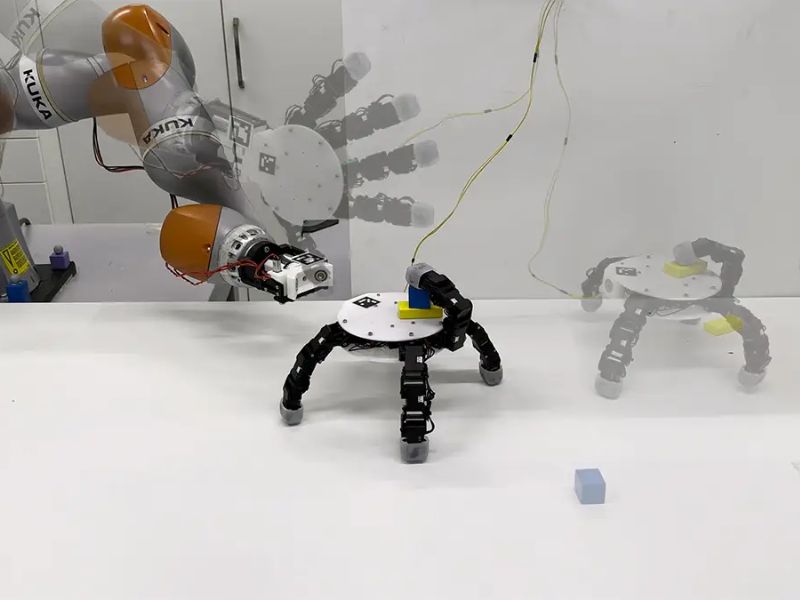
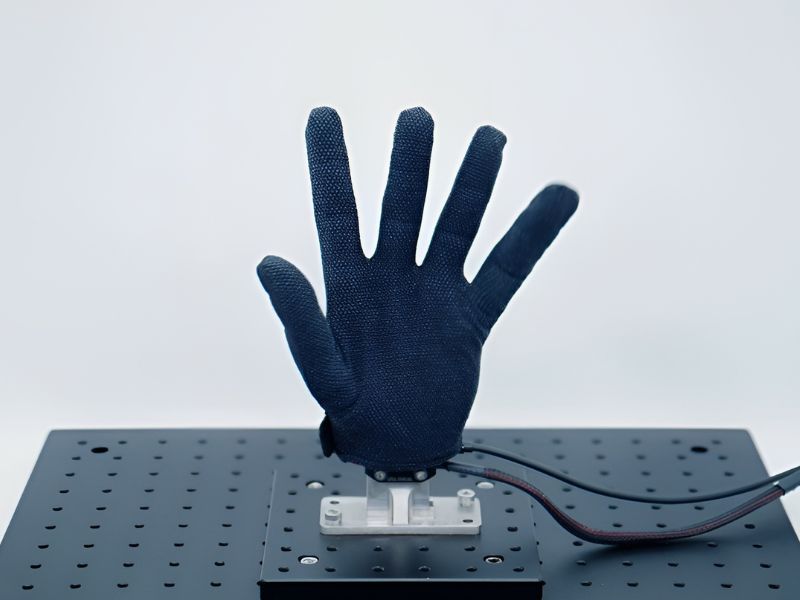
    Researchers have created a robotic hand that can separate from its arm and independently move to access objects beyond the robot’s reach.
    Image Credits: (Xiao Gao/Reprodução)

    Researchers have created a robotic hand that can separate from its arm and independently move to access objects beyond the robot’s reach.

    Unlike traditional human-like hands, the new design uses a symmetrical structure to grip objects from multiple angles.

    The device comes in two variants, with five or six identical fingers evenly arranged around a 16-centimeter circular base. This layout removes the need for…

    Autonomous Movement Inspired by Pop Culture

    The hand can detach from the arm and move on its fingers, like “Thing” from The Addams Family.

    Researchers have shown that the device can replicate 33 different human handprint patterns and securely grasp everyday items like cardboard tubes, balls, pens, and cans of varying weight.

    The study suggests users can apply the technology in situations where standard robotic arms struggle to reach, including tight industrial spaces, confined areas, or complex operations.

    Potential Applications in Service and Exploration Robotics

    The team also notes that the concept could be applied to service robots and exploration platforms that require both movement and object-handling capabilities.


    Read the original article on: Veja.

    Read more:Scientists Predict Earth’s Rotation will Make Days 25 Hours Long

  • Kawasaki’s Four-legged Robotic Horse Vehicle is set to Enter Production

    Kawasaki’s Four-legged Robotic Horse Vehicle is set to Enter Production

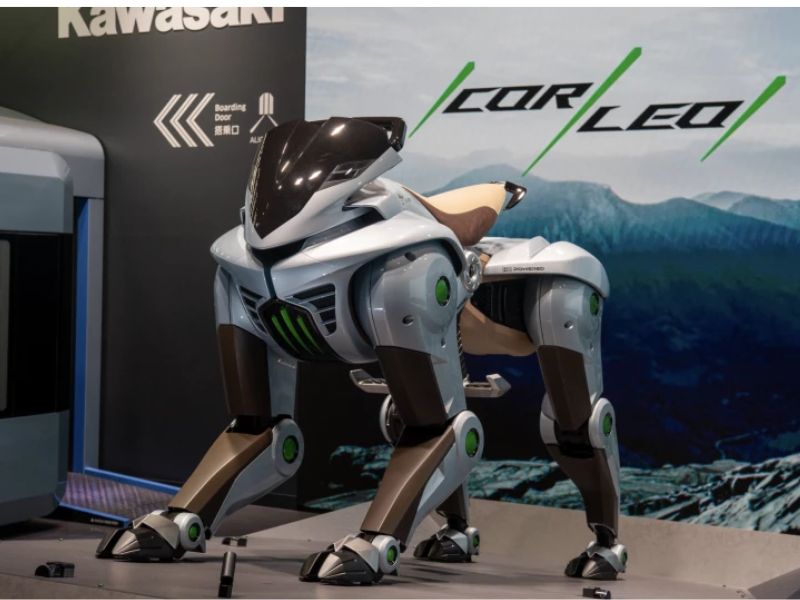
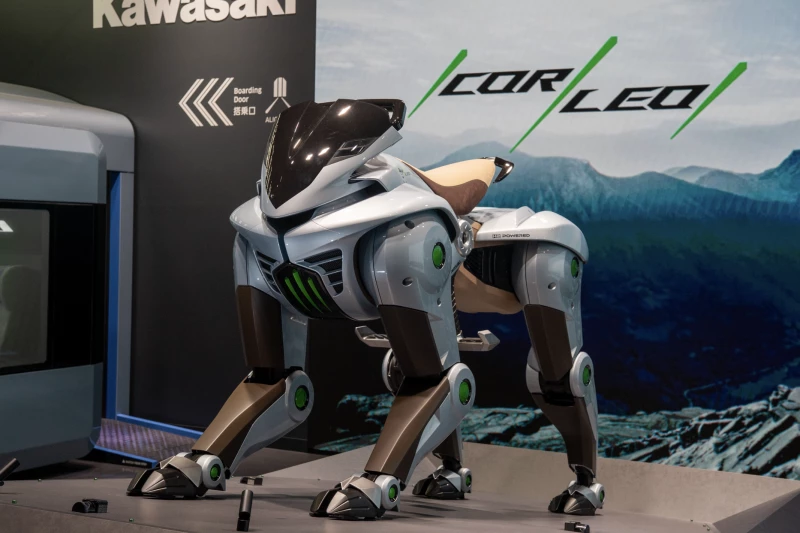
    Kawasaki, which once described Corleo as a distant 2050 vision, has moved the hydrogen-powered, four-hooved robotic horse into production and plans to release the first model in just four years.
    Image Credits:Wheels are so 20th century – Kawasaki says the future is hooves 
    Expo 2025, Osaka-Kansai, Kawasaki

    Kawasaki, which once described Corleo as a distant 2050 vision, has moved the hydrogen-powered, four-hooved robotic horse into production and plans to release the first model in just four years.

    Image Credits:Corleo goes where two wheels most definitely won’t
    Kawasaki

    We first covered the mountain-climbing concept last April, when it was little more than rough CGI. Kawasaki’s Safe Adventure Team plans public rides at Expo 2030, with consumer sales by 2035.

    Kawasaki announced a Corleo virtual simulator, set for release next year.

    Kawasaki will also develop a riding simulator that enables riding experience of the four-legged mobility vehicle,” the company stated. The team aims to complete the simulator by 2027 and roll out the full system to gaming and e-sports.

    Kawasaki sees Corleo as a safe, mountain-ready vehicle blending motorcycle tech with robotics. It uses independent rear legs, rider-weight steering, and AI to handle rugged terrain.

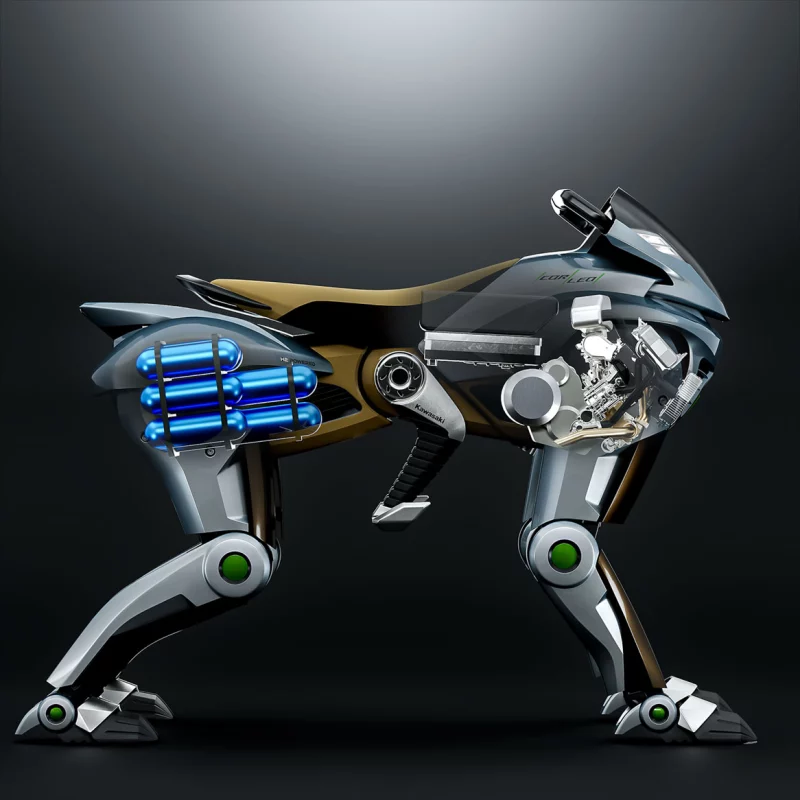
    Image Credits:Kawasaki’s original renders of Corleo
    Kawasaki

    Corleo is expected to use a 150cc hydrogen engine to generate electricity for its legs, with rear-mounted tanks for quiet, low-emission operation, plus a GPS display to map routes and help maintain balance.

    While still years away, the revised timeline is far more ambitious than the original 2050 goal announced at Expo 2025 in Osaka, and the latest updates move Corleo from novelty to a project worth watching.


    Read the original article on: Newatlas

    Read more:M Dwarf Plasma Rings Offer Hints On Planet Habitability

  • Chinese Firm Unveils Highly Agile Life-sized Robotic Hand

    Chinese Firm Unveils Highly Agile Life-sized Robotic Hand

    Wuji Tech has introduced a breakthrough in robotics: a highly agile robotic hand crafted for humanoid applications. The technology aims to broaden the capabilities of robots across multiple fields, from personal assistance to research and development.
    Image Credits:elhombre
    • Wuji Hand delivers enhanced dexterity for humanoid applications.
    • The project aims to improve precision in human-machine interactions.
    • The company is focusing on integration with next-generation robots.

    Wuji Tech has introduced a breakthrough in robotics: a highly agile robotic hand crafted for humanoid applications. The technology aims to broaden the capabilities of robots across multiple fields, from personal assistance to research and development.

    The project mimics human hand movements, enabling tasks from simple to highly precise. This development reflects the growing trend of creating versatile robots designed for seamless interaction in everyday environments.

    Human-Like Dexterity for Precision Tasks

    Wuji Tech engineered its robotic hand to mimic human hand functionality, with joints that enable individual finger movements and a wider range of motion. This design enhances its suitability for tasks requiring fine motor skills, such as handling tools, delicate objects, and collaborating with humans.

    The company notes that the hand is compatible with various humanoid platforms, enabling integration with existing systems. The goal is to create a standardized model adaptable for both research and commercial applications, without reliance on a single robotic framework.

    Lightweight Design Boosts Energy Efficiency and Autonomy

    Another key feature is the use of lightweight materials, which reduce energy consumption during operation—a crucial factor for extending robot autonomy in both workplace and home settings.

    • Offers 20 degrees of freedom.
    • Features a biomimetic five-finger structure, each finger with four degrees of freedom.
    • Weighs under 600 grams.
    • Generates up to 15N of force at the fingertips.
    • Durable, withstanding hundreds of thousands of cycles and reaching up to 1 million in tests.

    Versatile Applications Across Healthcare and Industry

    The technology is designed for applications across multiple sectors. Wuji Hand isn’t just versatile—it adapts to multiple environments. In healthcare, it can assist with surgical instrument handling and support patient rehabilitation. Meanwhile, in industrial settings, its precision makes it ideal for tasks ranging from assembling delicate components to managing sensitive logistics operations.

    In the service sector, Wuji Tech envisions its use in customer-focused robots, performing roles from reception duties to support tasks in commercial environments. In research, universities and innovation centers could leverage the technology to develop new experiments in human-robot interaction.

    The company also highlights educational applications, giving students hands-on experience with a system that realistically mimics human hand movements, thereby accelerating learning in robotics, engineering, and applied sciences.

    Strengthening Wuji Tech’s Presence in Humanoid Robotics

    The launch of the robotic hand underscores Wuji Tech’s commitment to strengthening its position in the humanoid robotics market. The company stated that the technology will go through additional testing and development to enhance its durability and reliability.

    While no commercial release date has been set, Wuji Tech plans to provide prototypes to strategic partners in the coming months to collect feedback and refine the design for specific applications.

    Additionally, the company emphasized ongoing research aimed at integrating the robotic hand with artificial intelligence. This combination could enable humanoid robots not only to execute precise movements but also to make context-aware decisions, advancing automation in complex tasks.


    Read the original article on: Elhombre

    Read more: New AR Technology Can Transform Any Surface into a Keyboard

  • A Robotic Water Strider Glides Using Feather-like Feet

    A Robotic Water Strider Glides Using Feather-like Feet

    While many robotic water striders have been developed over the years, scientists continue to discover ingenious insect traits to mimic. Recently, researchers built a strider-bot that speeds across the water’s surface using foot-mounted fans.
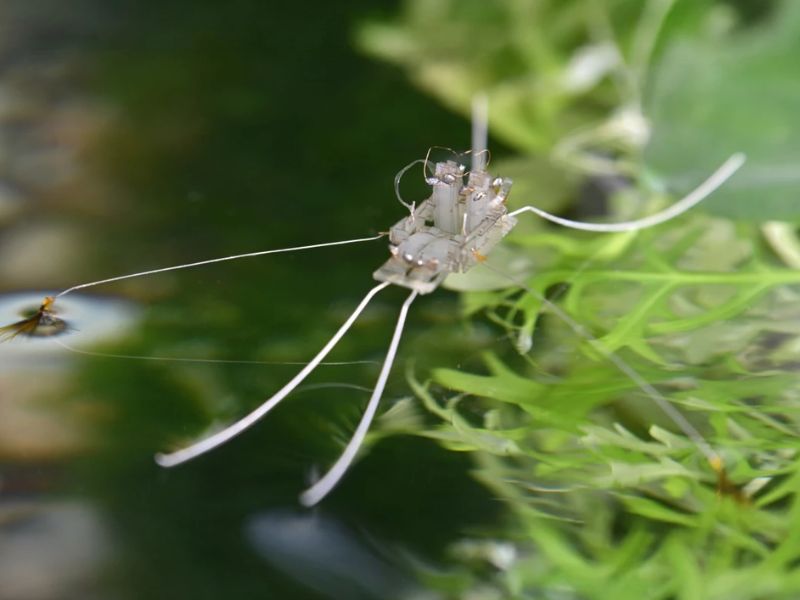
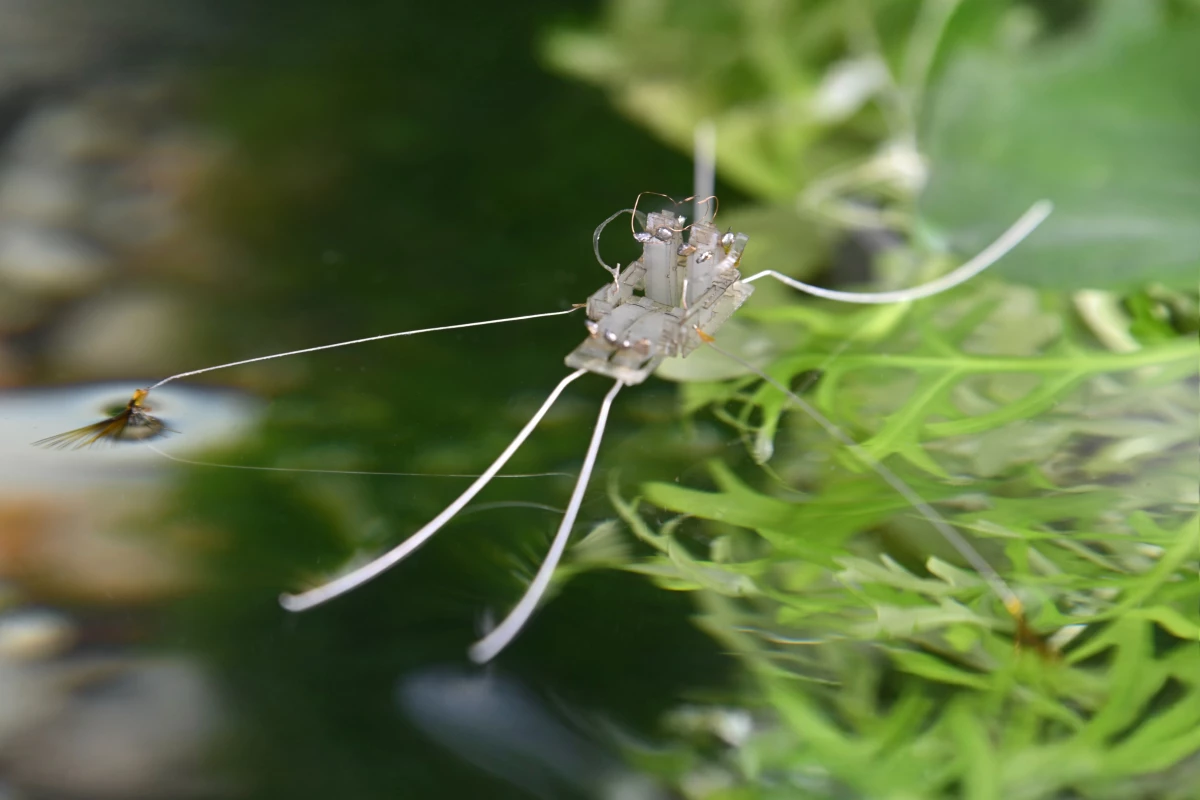
    Image Credits: The bio-inspired Rhagobot robot, with one of its foot-fans visible at left
    Dongjin Kim

    While many robotic water striders have been developed over the years, scientists continue to discover ingenious insect traits to mimic. Recently, researchers built a strider-bot that speeds across the water’s surface using foot-mounted fans.

    At just 3 mm in length, water striders from the genus Rhagovelia are truly remarkable.

    Feathery Leg Fans

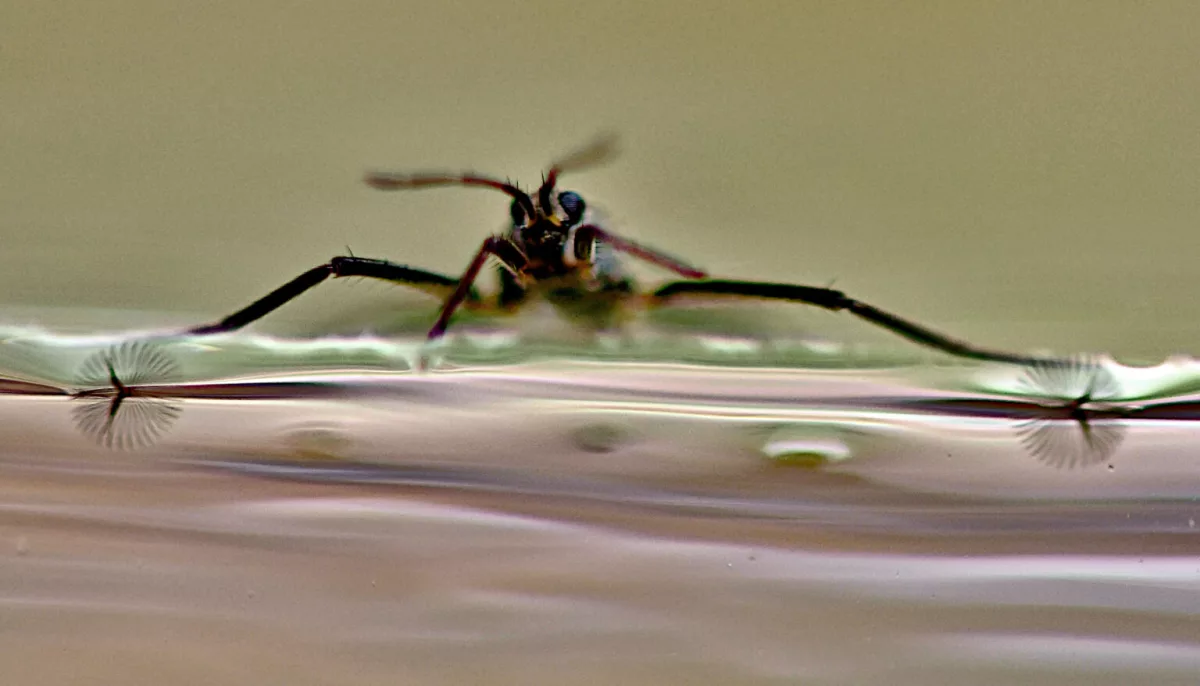
    Feathery extensions on their middle legs spread on contact with water, scooping it like frog webbing to propel the insect forward.

    When lifted, the wet fan strands close into a narrow, paintbrush-like point. This streamlined shape reduces drag as the leg swings forward, ready for the next stroke.

    Image Credits:A fan-packin’ Rhagovelia water strider – in this photo, the fan and claw are pointing downward and are reflected in the water’s surface, which acts like a mirror
    Victor Ortega-Jimenez/UC Berkeley

    These fans let the insects race across the water at around 120 body lengths per second. Even more impressively, by extending a single water-grabbing fan on one side, they can execute sharp 90-degree turns in just 50 milliseconds.

    For engineers designing aquatic robots, such agility would be invaluable. Researchers from UC Berkeley, Ajou University, and Georgia Tech studied Rhagovelia in detail.

    Microscopic Feather-Like Design Revealed

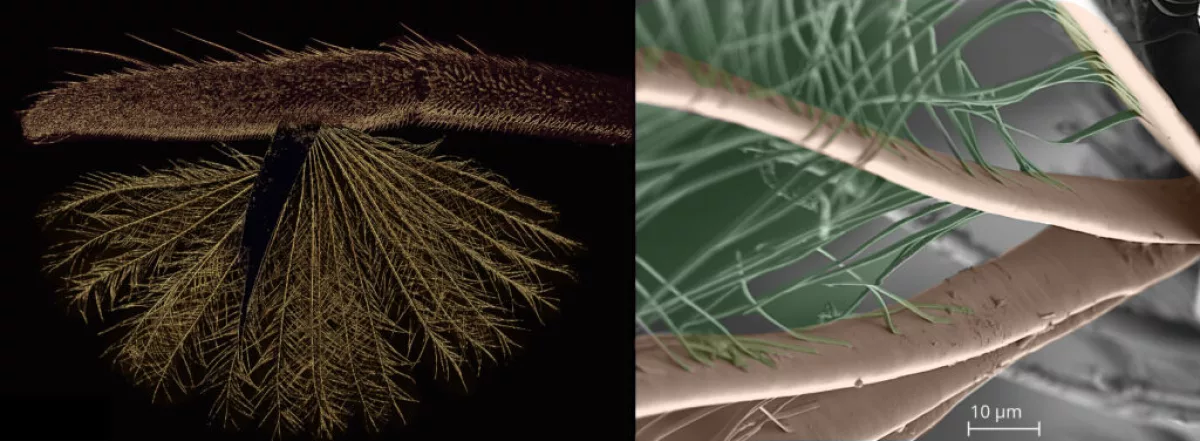
    Electron microscopy revealed each fan is a flat, flexible ribbon with tiny feather-like barbules. This structure enables the appendages to spread out underwater and function like miniature oars.

    Image Credits:At left is a photo of the fan and claw at the end of Rhagovelia’s two oaring legs – at right, a colorized scanning electron microscope image of the fan shows the flat, ribbon-like microstructure of the barbs and the smaller barbules (green) that comprise the fan
    Emma Perry/Univ. of Maine and Victor Ortega-Jimenez/UC Berkeley

    The researchers also found that surface tension alone supplies the elastic force needed for the strands to spread out. Unlike previous assumptions, muscles don’t open the fans—they only keep them tense during the stroke.

    Building on these insights, the team developed a robotic counterpart called Rhagobot.

    Rhagobot’s Feather-Inspired Fans

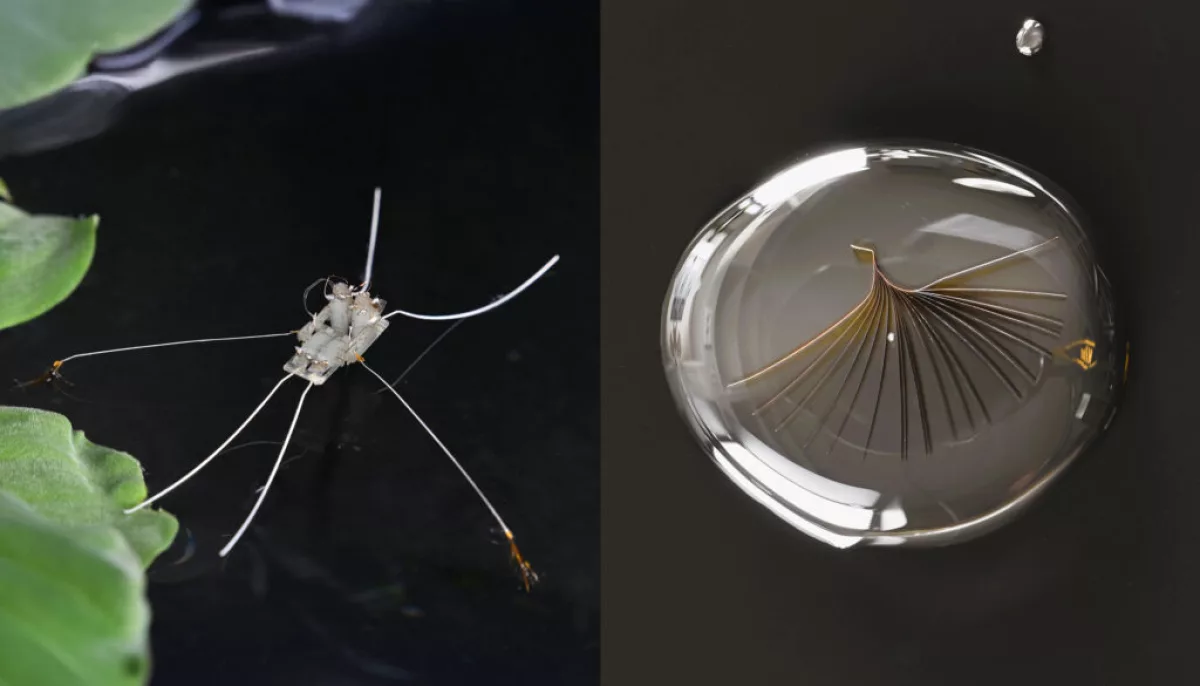
    The robot measures 8 × 10 × 1.5 cm and has 1-mg fans on its middle legs, modeled after Rhagovelia with the same ribbon-like structure, each 10 × 5 mm.

    Image Credits: The semi-aquatic robot Rhagobot (left) alongside a close-up of one its bio-inspired fans, which opens upon contact with water
    Ajou University, South Korea

    The entire robot, tethered to an external power supply, weighs only about one-fifth of a gram. It now moves at twice its body length per second and turns 90 degrees in under half a second, with future versions expected to be faster and useful for rescue or environmental monitoring.

    Mechanical Intelligence Borrowed from Nature

    Our robotic fans self-adjust using water surface forces and flexible geometry, just like in nature,” says Prof. Koh, co-author with Georgia Tech’s Prof. Saad Bhamla. “It’s a form of mechanical intelligence perfected by evolution over millions of years. For small-scale robotics, such efficient and specialized mechanisms could be crucial for pushing beyond the limits of traditional miniaturized designs.

    The research, led by UC Berkeley’s Asst. Prof. Ortega-Jiménez, was recently published in Science. A video demonstration of Rhagobot is available below.


    Read the original article on: New Atlas

    Read more:Google Will Restrict Nudity by Filtering Out Inappropriate Messages

  • Robotic Hand Demonstrates Lifelike Skill in Intricate Laboratory Tasks

    Robotic Hand Demonstrates Lifelike Skill in Intricate Laboratory Tasks

    AgileX Robotics has showcased a new demonstration that pairs its robotic arm with a dexterous hand to perform intricate manipulation tasks with fluid, human-like precision.
    Image Credits:The duo showcases adaptability and precision, excelling in advanced lab automation and performing intricate manipulation tasks.

    AgileX Robotics has showcased a new demonstration that pairs its robotic arm with a dexterous hand to perform intricate manipulation tasks with fluid, human-like precision.

    A new video shows the PiPER arm with the flexible, high-DoF Linkerbot Chius hand operating complex lab tools with exceptional accuracy, highlighting its potential for advancing lab automation.

    This demo showcases PiPER’s exceptional versatility and precision in advanced lab automation,” the company stated on YouTube.

    Recently, students at USC Viterbi created the MOTIF Hand, a robotic hand equipped with sensors that detect force, temperature, and movement, allowing for more natural, human-like interactions.

    Showcasing Advanced Robotic Synergy in the Lab

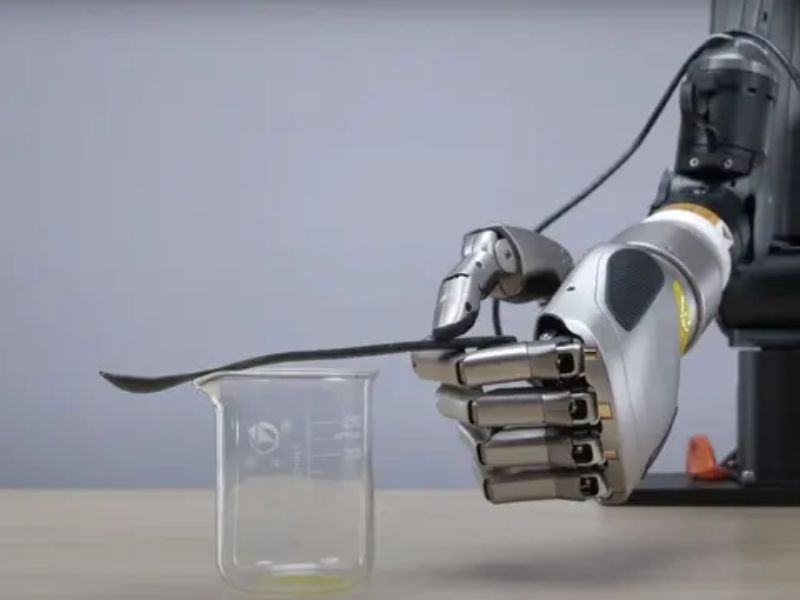
    In a recent demo, AgileX Robotics’ PiPER arm paired with Lingxin Qiaoshou’s Chius hand to demonstrate advanced complex lab-handling capabilities.The integrated system displayed a remarkable array of human-like movements with seamless, coordinated precision.

    The demonstration opened with the arm-hand pair adeptly manipulating a spoon, mimicking natural human gestures. It then moved on to pipetting—a task that demands steady control and precision—illustrating the system’s effectiveness for delicate, repetitive lab procedures.

    The duo also performed bottle capping and decapping with impressive finesse, requiring precise force regulation to prevent damage or spills. The system further demonstrated its versatility by shaking stoppered test tubes, showcasing its adaptability to a range of routine laboratory processes.

    Demonstrating Precision and Versatility in Lab Automation

    These tasks showcased the PiPER–Chius system’s versatility and precision in advanced lab automation. AgileX Robotics noted that the performance reflects its potential to enhance efficiency, safety, and consistency across scientific and industrial settings.

    AgileX Robotics’ PiPER is a fast, lightweight six-jointed robotic arm engineered for smooth, precise motion.

    Weighing 9.26 lbs (4.2 kg), PiPER lifts 3.3 lbs (1.5 kg), reaches 24.6 in (626 mm), offers ±0.1 mm accuracy, and operates reliably from –4 °F to 122 °F (–20 °C to 50 °C).

    Flexible Control and Intelligent Motion Capabilities

    Its integrated joint motors enable fluid movement and intelligent path planning. PiPER supports multiple control methods, including hand-guided drag-teaching, offline programming, Python scripting, PC operation, and ROS1/ROS2 integration. Communication runs via CAN, while a tablet-based interface ensures programming is straightforward and accessible.

    High-Precision Robotic Hands for Diverse Applications

    The Linkerbot Chius Hand is a range of advanced, highly dexterous robotic hands for research, industry, and rehabilitation. Engineered to closely replicate the functions of a human hand, they can execute intricate movements with exceptional precision.

    A key feature is force sensing, enabling gentle handling of fragile items and precise control in complex tasks. They also support wireless master-slave communication for smoother, more responsive operation. With adaptive grasping capabilities, the Chius Hands can effortlessly manage objects of different shapes, sizes, hardness levels, and weights.

    Chius Hands feature adaptive grasping for handling varied objects with ease, smooth coordinated motion, and models like the L20 offer 25 degrees of freedom for highly articulated movement. These features make the Linkerbot Chius Hand well-suited for applications spanning scientific research, medical rehabilitation, and industrial automation.


    Read the original article on: Interesting Engineering

    Read more:Launch of ChatGPT-5 Marks the ‘Start of a New Era for Humanity’

  • A Robotic Drummer Slowly Develops Human-like Behaviors

    A Robotic Drummer Slowly Develops Human-like Behaviors

    Humanoid robots are mostly tested in assistive manual tasks, while their potential for creative, expressive roles like music or performance remains largely unexplored.
    Image Credits:interestingengineering

    Humanoid robots are mostly tested in assistive manual tasks, while their potential for creative, expressive roles like music or performance remains largely unexplored.

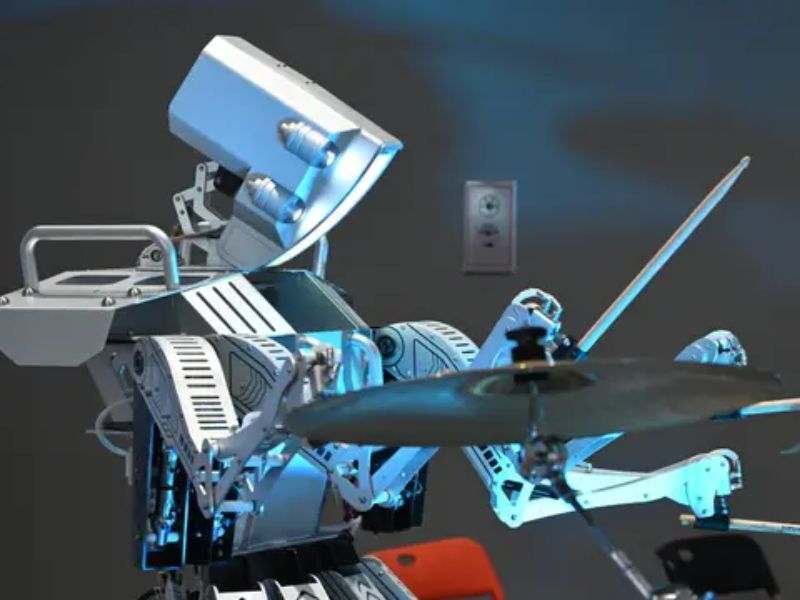
    Researchers from SUPSI, IDSIA, and Politecnico di Milano developed Robot Drummer, a reinforcement learning–powered humanoid that plays drums with precision, expression, and human-like movements.

    From Coffee Conversation to Creative Robotics Challenge

    Lead author Asad Ali Shahid said Robot Drummer originated from a coffee chat about how humanoid robots rarely engage in creative or expressive tasks.” That sparked a question: what if a humanoid robot could take on a creative role, like making music? Drumming felt like the perfect challenge—it’s rhythmic, physical, and demands quick coordination of multiple limbs.

    Shahid’s team developed Robot Drummer, a machine learning system enabling a humanoid to play full songs with human-like rhythm, tested successfully on Unitree’s G1 robot.

    The core concept is to model each song as a sequence of precisely timed contact events—what we call a rhythmic contact chain,” Shahid explained.

    These contact points specify which drums to hit and at what moments. Using this guidance, the robot practices in a simulated environment, refining its technique over time. It develops human-like drumming skills, such as switching sticks, crossing arms, and optimizing movements to the rhythm.

    High-Precision Drumming Across Multiple Music Genres

    The team tested the system on a simulated Unitree G1, performing songs from jazz to rock, including In the End, Take Five, and Livin’ on a Prayer.Results showed the robot could master complex rhythms and play with over 90% rhythmic precision in many cases.

    Image Credits:The humanoid robot prepares to strike a snare drum (green). Credit: Asa

    Shahid noted the robot learned to anticipate strikes, perform cross-arm hits, and switch sticks mid-performance.” These emerged purely from optimizing for rhythmic rewards during training. Robot Drummer could one day perform with live bands and teach precise timing beyond music.

    Potential to Spark Innovation in Robotic Performance Arts

    The study may inspire new ML systems for humanoid robots to play instruments or join performance arts. Such technology could transform the entertainment industry and showcase robotics progress at real-world events.

    Our next goal is to transition Robot Drummer from simulation to physical hardware,” Shahid added. “We aim to teach it to improvise and adapt in real time to musical cues, responding like a human drummer.


    Read the original article on: Techxplore

    Read more:SpaceX to Launch Italian Scientific Research to Mars

  • Robotic Spaceplane Flies to the Edge of Space to Monitor Spy Satellites

    Robotic Spaceplane Flies to the Edge of Space to Monitor Spy Satellites

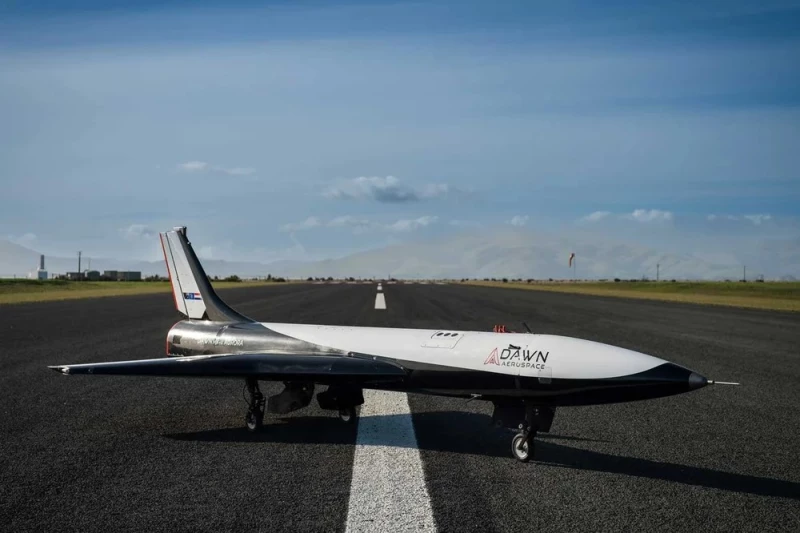
    The Aurora carried the monitoring suite to the edge of space
    Dawn Aerospace

    Who monitors the watchers and spies on the spy satellites? The answer lies in an optical payload called Morning Sparrow, developed by Scout Space. Carried aboard Dawn Aerospace’s Aurora spaceplane, this sensor system traveled to the edge of space to capture imagery of low-orbit reconnaissance satellites.

    From Rare Eyes in the Sky to a Crowded Orbit

    Not long ago, having a single satellite capable of observing Earth was a rare achievement reserved for major space powers. Today, the sky is teeming with orbiting cameras, creating an environment akin to living in a goldfish bowl — minus the decorative castle with bubbling towers.

    The space industry’s growing launch capabilities and the dramatic drop in payload delivery costs have transformed satellite deployment strategies. Instead of relying solely on a few satellites in high, stable orbits, agencies now launch entire constellations of miniature spacecraft into very low Earth orbit (VLEO) on short notice. These agile fleets can provide rapid-response services such as surveillance, communications, remote sensing, and tactical networking, burning up harmlessly in the atmosphere once their orbits decay.

    Morning Sparrow

    While these capabilities benefit the deploying party, they pose a challenge to others: how do you identify and track a sudden influx of satellites launched by someone else?

    On July 17, 2025, a potential solution was put to the test. The uncrewed Aurora spaceplane launched from a conventional runway at New Zealand’s Tāwhaki National Aerospace Centre, powered by a bipropellant rocket engine. Measuring 15.7 ft (4.8 m) in length with a 13-ft (4-m) wingspan, the craft reached Mach 1.03 and climbed to 67,000 ft (20,000 m).

    Morning Sparrow: Eyes at the Edge of Space

    At peak altitude, the Morning Sparrow sensor suite activated. Designed for Space Domain Awareness (SDA), the system can track and image objects in VLEO and suborbital flight paths. It integrates two optical payloads — one with a narrow field-of-view and another with a wide field-of-view — producing stereoscopic panoramas via onboard processing.

    The Aurora spaceplane
    Dawn Aerospace

    According to the project partners, pairing this sensor technology with a platform capable of supersonic speed, high-altitude operation, quick turnaround, and runway-based launch provides a fast and adaptable method for monitoring unexpected low-orbit spacecraft activity.

    A Step Toward Responsive Space Operations

    Stefan Powell, CEO of Dawn Aerospace, said the Aurora provides repeatable, tactical access to near space, supporting payloads that can’t wait months or years for launch. He added that spaceplanes will play a key role in the future of responsive space missions, working alongside traditional SDA assets.


    Read the original article on: New Atlas

    Read more: Hubble Network Plans Satellite Upgrade for Global Bluetooth Coverage

  • PrismaX Unveils a Teleoperation Platform for Robotic Arms

    PrismaX Unveils a Teleoperation Platform for Robotic Arms

    Although full autonomy remains a key objective in robotics, human involvement is still crucial for tasks that demand complex decision-making or for training AI systems. Yesterday, PrismaX introduced its new teleoperation platform for robotic arms.
    Image Credits:PrismaX said it’s building the infrastructure layer to bridge robotics and mainstream adoption. | Source: Adobe Stock

    Although full autonomy remains a key objective in robotics, human involvement is still crucial for tasks that demand complex decision-making or for training AI systems. Yesterday, PrismaX introduced its new teleoperation platform for robotic arms.

    The debut of our tele-op platform marks a significant milestone toward broader adoption,” said Bayley Wang, PrismaX co-founder and CEO. “It showcases our vision of a future where humans and robots collaborate to enhance human potential. This platform is intended to be the foundation of a vast, future labor ecosystem.

    Founders Bring Deep Tech Expertise as PrismaX Emerges from Stealth with $11M Funding

    Wang and fellow co-founder Chyna Qu bring expertise in robotics and decentralized technologies. PrismaX exited stealth mode in June, backed by $11 million in funding. Headquartered in San Francisco, the company is developing scalable foundational models to drive innovation in physical generative AI.

    Wang unveiled the teleoperation system during his keynote at the first-ever PrismaX RoboCon. At launch, the platform enables users to remotely control robotic arms through a secure login.

    PrismaX stated that its development roadmap is designed to evolve alongside the robotics industry. In the near term, the company is concentrating on teleoperation and collecting visual data to train its models.

    PrismaX Highlights Need for Cost-Effective Data Collection Amid Early-Stage Robotics Adoption

    At present, robotics adoption is limited, and many teleoperators are inexperienced, yet robotics companies still require affordable methods for gathering visual data,” the company explained.

    Looking ahead to the medium term, as robotic systems gain greater autonomy, humans will remotely manage fleets of robots to carry out real-world tasks for actual clients. PrismaX noted that early teleoperators will gain valuable experience and become more competitive in emerging labor markets.

    Over the long run, as foundational models mature, robots will reach advanced levels of autonomy. At that point, PrismaX envisions its platform evolving into a large-scale service network, delivering efficient, production-grade support to millions of robots.

    PrismaX explains its data-model flywheel as a self-reinforcing system: deploying more robots generates valuable datasets, which strengthen AI models and, in turn, enhance the robots’ performance and usefulness. This loop, the company claimed, could speed up the path to full automation.

    Platform Launch Includes Support for Diverse Lineup of Robotic Systems

    The company also announced that its platform will support a variety of robots, including the Unitree G1, Ubtech Walker, Pollen Robotics Reachy 2, K-Scale Labs K-Bot, Boardwalk Robotics Alex, Enchanted Tools Mirokai, MIT Mini-Cheetah, and Unitree Go2-W.

    Following the platform’s debut, PrismaX intends to host a teleoperation tournament with rewards for participants. The company will share additional details on its social media channels.

    This year’s RoboBusiness, set for Oct. 15–16 in Santa Clara, will feature the Physical AI Forum, covering topics like AI safety, sim-to-real training, data curation, and AI robot deployment. Speakers include leaders from Dexterity, ABB Robotics, UC Berkeley, Roboto, and more.

    NVIDIA’s Deepu Talla to Deliver Keynote on the Rise of Physical AI in Robotics

    The conference will open with a keynote by Deepu Talla, NVIDIA’s Vice President of Robotics and Edge AI, discussing how physical AI is driving a new era in robotics.

    RoboBusiness is a leading event for professionals involved in developing and supplying commercial robotics solutions. Organized by WTWH Media—the publisher behind The Robot Report, Automated Warehouse, and the Robotics Summit & Expo—the event will feature over 60 expert speakers, a startup workshop, the annual Pitchfire competition, and multiple networking opportunities. More than 100 exhibitors will also be present, showcasing the latest tools, products, and services designed to accelerate robotics innovation.


    Read the original article on: The Robot Report

    Read more:All the Details So Far on Google’s Upcoming Smartphone