Tag: robotic Hand

  • The MOTIF Hand: A Step Forward in Robotic Hand Technology

    The MOTIF Hand: A Step Forward in Robotic Hand Technology

    As we grow up, we learn to apply just the right amount of force to move objects and to avoid touching things like a hot pan with bare hands. Now, engineers have created a robotic hand that can do the same.
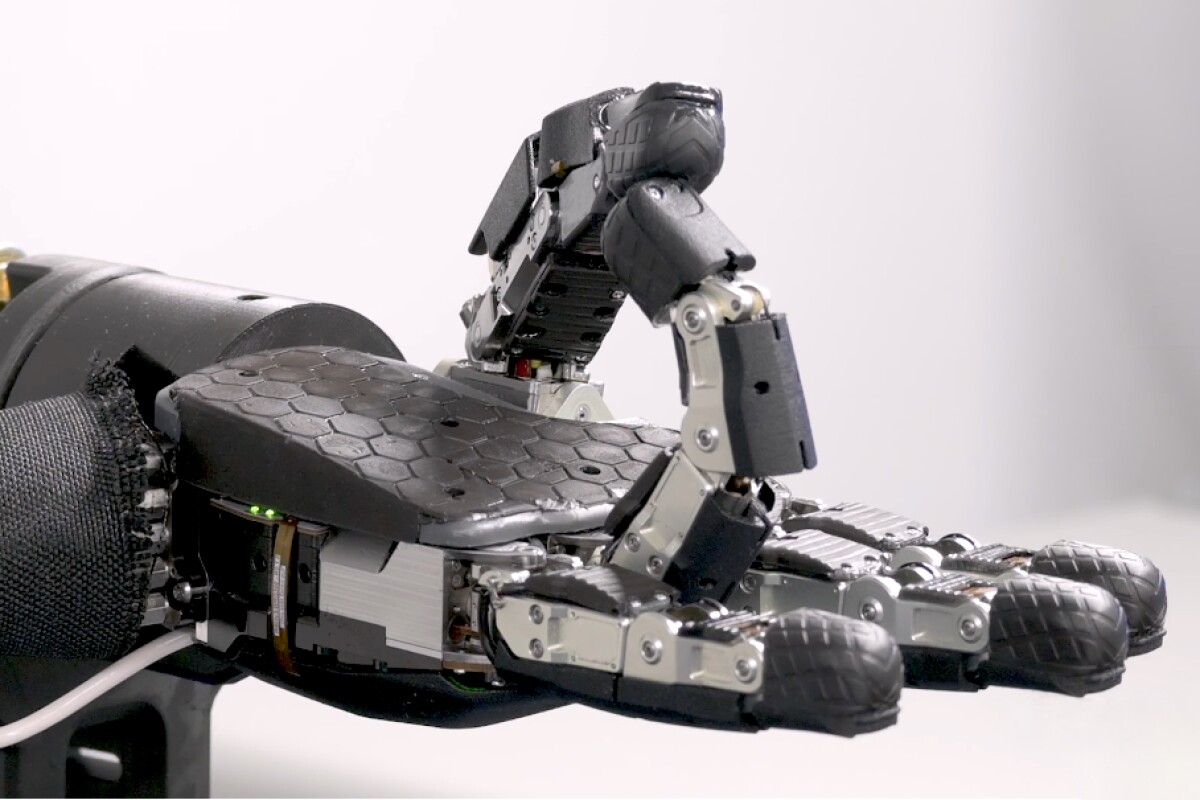
    The MOTIF hand, the robotic hand developed by the researchers. Image Credits: Zhou et al

    As we grow up, we learn to apply just the right amount of force to move objects and to avoid touching things like a hot pan with bare hands. Now, engineers have created a robotic hand that can do the same.

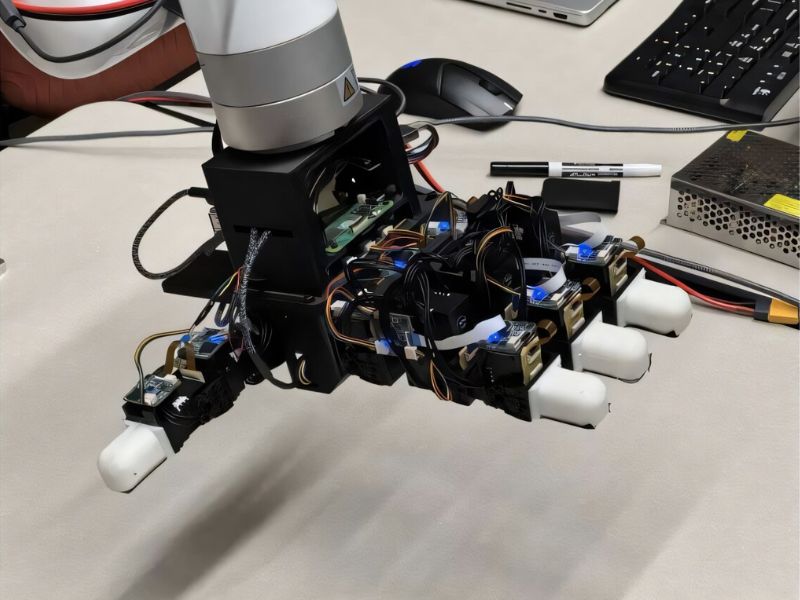
    A student team partnered with USC Viterbi computer science assistant professor Daniel Seita to create the MOTIF Hand, designing it to be multimodal—equipped with multiple sensory functions. It features sensors for depth, force, and temperature, enabling it to detect and respond to changes in these areas.

    These advanced sensing abilities not only improve research possibilities in robotics but also help extend the hand’s durability by preventing heat-related damage. Additionally, its force sensitivity offers practical potential for real-world applications.

    “In settings like factories, robots need to apply force to move objects into place, which means they have to measure how much force they’re using,” Seita explained. “A force sensor like this can be really useful to ensure the robot is applying the correct amount of pressure.”

    “We haven’t seen anyone build a hand quite like this before,” he added.

    Heated Innovation

    The MOTIF Hand is an evolution of the LEAP Hand, developed by a Carnegie Mellon research team in 2023. Its main breakthrough lies in incorporating human-like sensory abilities. According to Seita, the MOTIF Hand’s enhanced, lifelike features and precision could open the door to a wide range of uses—from factory tasks to cooking and welding.

    The robot’s temperature-sensing ability comes from a thermal camera embedded in its palm. Seita and his team of USC Viterbi graduate students set out to design a hand that mimics human awareness of temperature.

    “When we’re cooking, we often hold our hand near a hot pot to gauge its heat before touching it, helping us avoid burns or injury,” Seita explained. “We wanted to give robots that same kind of instinct.”

    Hanyang Zhou, a co-author of the research paper “The MOTIF Hand: A Robotic Hand for Multimodal Observations with Thermal, Inertial, and Force Sensors” and recent Viterbi School computer science master’s graduate, explained that the system detects temperature intuitively by positioning the hand close to the object.

    “We wondered if there was a way to pick up a signal without needing to make contact,” Zhou said. “That’s why we placed an infrared camera directly in the palm.” The paper is currently available on the arXiv preprint server.

    In other words, the MOTIF Hand can sense temperature using its thermal camera without making contact—simply bringing the hand near an object allows the camera to detect its heat.

    The proposed MOTIF hand. Credit: Zhou, Lou, Liu, et al.

    “You Need to Experience it Firsthand”

    Seita, Zhou, and their team aimed to make sensing temperature and force feel more natural—mirroring how humans experience these sensations. For instance, force is invisible to the eye and only understood through touch. The MOTIF Hand is designed to replicate this tactile understanding, enabling more realistic robotic responses to force, such as gauging an object’s weight.

    “We, as humans, can’t see force; we have to feel it. But how can a robot hand do the same?” Zhou wondered. “If I’m unsure whether a water bottle is full, I just flick or shake it to find out.”

    The IMU sensors integrated into the MOTIF Hand enable it to perform this basic test, allowing the robotic hand to flick or shake an object to assess its weight, much like a human would.

    Building on Carnegie Mellon’s open-source LEAP Hand, Seita and his team plan to make the MOTIF Hand open-source as well to further develop this sensory technology.

    “Making research openly available is crucial for progress in the field,” Seita said. “The more people who use our hand, the more it benefits the research community.”

    Zhou referred to the sensory improvements of the MOTIF Hand as a “platform” that he hopes will serve as a foundation for the broader robotics community to develop further.

    “We want to make it simple and accessible for as many research teams as possible, provided they’re interested in this kind of platform,” Zhou said.


    Read the original article on: Tech Xplore

    Read more: Humans See a Collaborating Robot as Part of Themselves
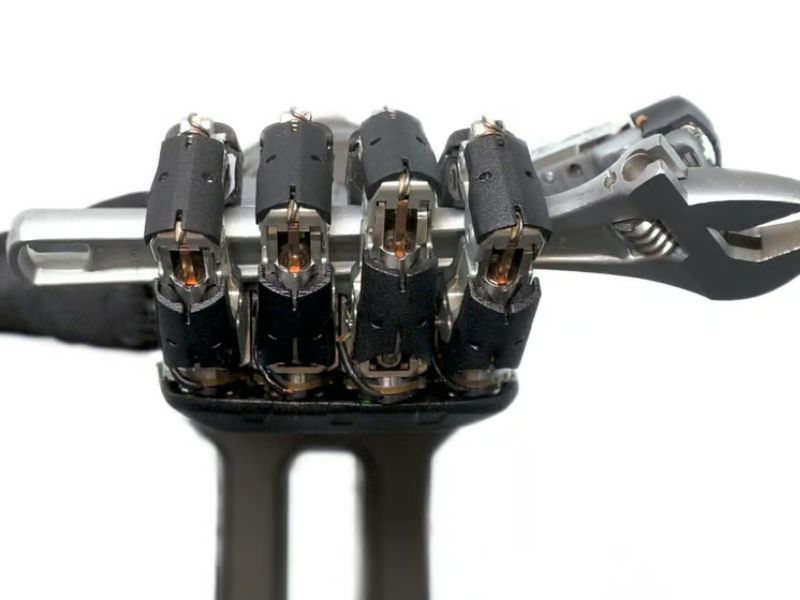
  • An Impressive Robotic Hand Now has the Ability to Manipulate Objects it is Holding

    An Impressive Robotic Hand Now has the Ability to Manipulate Objects it is Holding

    Sanctuary AI's Phoenix robot is undeniably remarkable, featuring hydraulically powered hands with exceptional dexterity. These hands have recently become even more versatile, as each can now simultaneously hold and manipulate an object.
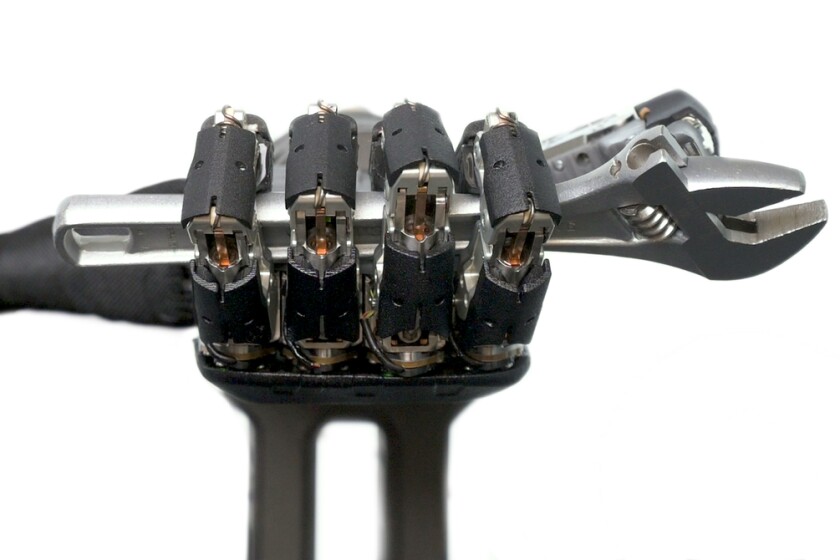
    Sanctuary AI’s robotic hand can now perform tasks such as simultaneously holding and adjusting a wrench
    Sanctuary AI

    Sanctuary AI’s Phoenix robot is undeniably remarkable, featuring hydraulically powered hands with exceptional dexterity. These hands have recently become even more versatile, as each can now simultaneously hold and manipulate an object.

    Typically, robotic fingers are operated using cables connected to electric motors. This setup is relatively straightforward, efficient, and cost-effective, provided the hand is only tasked with specific functions.

    Hydraulic Hands for the Phoenix Robot

    Sanctuary AI aimed to make its Phoenix humanoid robot as versatile as possible. To achieve this, the Canadian company equipped the robot’s hands with miniature hydraulic valve actuators. Former CTO Suzanne Gildert, in an interview with Loz Blain last April, explained that hydraulic technology is the only solution that balances precision, speed, and strength.

    If you see a robot performing a highly dexterous task, like threading a needle or fastening a button, you should ask: could that same hand also lift a 50-pound suitcase? And could it move quickly enough to type on a keyboard?” she pointed out. “Typically, robots demonstrate one of these capabilities, but the ultimate hand must deliver all three. Right now, hydraulic technology is the only way to achieve that balance.”

    The earlier version of the hand(s) can be seen in precise action in the video below.

    Sanctuary AI – Phoenix at Human-Equivalent Speed

    In-Hand Manipulation with 21-DOF Robotic Hand

    Although that footage is undoubtedly impressive, Sanctuary AI revealed last week that its 21-degree-of-freedom (DOF) robotic hand now has the capability for in-hand manipulation. In simple terms, this allows a single hand to simultaneously hold and manipulate an object.

    Along with combining precision, speed and strength, the hand’s hydraulic actuators are also claimed to offer better longevity, impact resistance and heat management than traditional cables and motors
    Sanctuary AI

    Enhanced Dexterity for Complex Tasks

    The video below demonstrates how this enhanced dexterity enables the hand to perform tasks such as flipping a gaming die and adjusting the jaw width of a wrench. This level of precision is achieved in part through a force feedback system integrated into each actuator.

    You control the hydraulic system by adjusting the line pressure of the hydraulic fluid,” explained Gildert. “If a force pushes back on the finger, it alters the control signal corresponding to that line pressure. This means you can detect forces by observing subtle changes in the pressure.”

    Sanctuary AI Achieves In-hand Manipulation

    Notably, the hydraulic valve actuators have undergone over two billion testing cycles without showing signs of wear or leakage—a frequent issue with hydraulic systems. This durability raises hopes that the enhanced functionality will help make robots like Phoenix more practical for widespread real-world applications.

    Achieving in-hand manipulation with a scalable and reliable system is a significant milestone in showcasing the versatility and potential of capable general-purpose robots,” stated James Wells, interim CEO of Sanctuary AI. “The dexterity of a robot is directly tied to the size of the market it can address for general-purpose humanoid applications.”


    Read the original article on: New Atlas

    Read more: A Robotic Model Equipped with Real Pigeon Feathers Mimics Bird Flight

  • A Robotic Hand Employs Touch, Rather Than Vision, to Manipulate and Rotate Objects

    A Robotic Hand Employs Touch, Rather Than Vision, to Manipulate and Rotate Objects

    Scientists at the California's University San Diego have developed a novel approach, inspired by human dexterity, to enable a robotic hand to rotate objects solely through touch, eliminating the need for visual input.
    A robotic hand. Credit: Pixaobay

    Scientists at the California’s University San Diego have developed a novel approach, inspired by human dexterity, to enable a robotic hand to rotate objects solely through touch, eliminating the need for visual input.

    The team equipped a four-fingered robotic hand with 16 touch sensors on its palm and fingers. These low-cost, low-resolution touch sensors, each costing around $12, can detect whether an object is in contact with them or not, providing simple binary signals.

    The robotic hand utilizes this touch-based information to smoothly rotate a wide range of objects, including small toys, cans, fruits, and vegetables, without causing damage.

    Enabling Robots to Manipulate Objects in Low-Light and Vision-Limited Environments

    This innovative technique shows promise in enabling robots to manipulate objects in darkness or environments where visual perception is limited. The team presented their work at the 2023 Robotics: Science and Systems Conference, highlighting the potential applications of their touch-based rotational method.

    In contrast to other approaches that rely on a few high-resolution touch sensors placed at the fingertips, this method disperses many low-cost sensors across a larger area of the robotic hand, offering unique advantages and versatility.

    Xiaolong Wang, a professor specializing in electrical and computer engineering at UC San Diego and the lead researcher of this study, has pointed out several issues with current methods of robotic hand manipulation.

    Challenges in Robotic Hand Sensing and Perception

    Firstly, using a limited number of sensors on the robotic hand reduces the likelihood of contact with objects, thus restricting the system’s ability to sense its surroundings. Secondly, the complexity and cost of simulating high-resolution touch sensors that provide texture information make them impractical for real-world experiments. Lastly, many existing approaches heavily rely on visual feedback.

    To overcome these challenges, Wang and his research team propose a simple solution. They demonstrate that detailed texture information about an object is unnecessary for the task at hand. Instead, they find that binary signals indicating whether the sensors have made contact with the object or not are sufficient and much easier to simulate and implement in real-world scenarios.

    Advantages of a Comprehensive Array of Binary Touch Sensors for Robotic Object Rotation

    The researchers emphasize that using a comprehensive array of binary touch sensors provides enough data about the object’s 3D structure and orientation, enabling the robotic hand to rotate objects effectively without relying on visual cues.

    To train their system, the team utilized simulations of a virtual robotic hand manipulating various objects, including irregularly shaped ones.

    The system tracks which sensors on the hand make contact with the object during rotation, along with the positions and previous movements of the hand’s joints. Using this information, the system guides the robotic hand on the necessary joint movements for the next steps in the rotation process.

    Real-Life Testing and Object Rotation Performance

    After successful simulation training, the researchers tested the system with a physical robotic hand on unfamiliar objects. The robotic hand was able to rotate different objects, such as a tomato, pepper, a can of peanut butter, and a toy rubber duck (the most challenging due to its shape), without stalling or losing its grip. While objects with more complex shapes required more time for rotation, the robotic hand was still able to rotate them around different axes.

    In the future, Wang and his team plan to expand their approach to tackle more intricate manipulation tasks, like enabling robotic hands to catch, throw, and juggle objects. The ultimate objective is to equip robots with in-hand dexterity, a skill that comes naturally to humans but poses significant challenges for robots to master.

    Accomplishing this would greatly enhance the range of tasks that robots can perform. The research paper titled “Rotating without Seeing: Towards In-hand Dexterity through Touch” lists co-authors Binghao Huang, Yuzhe Qin, UC San Diego; and Zhao-Heng Yin and Qifeng Chen, HKUST, with the asterisk denoting equal contributions to the work.


    Read the original article on Science Daily.

    Read more: Enabling Autonomous Exploration for Robots.