Tag: Science

  • Salmon Sperm Facials: Unpacking The Science Of the Latest Anti-Aging Trend

    Salmon Sperm Facials: Unpacking The Science Of the Latest Anti-Aging Trend

    Salmon sperm injections have reportedly become a popular new option in anti-aging and rejuvenating facial treatments. After getting past the initial shock over the unusual ingredient, the key question arises: Is there any scientific evidence supporting this celebrity-endorsed trend?
    Image Credits: Pixabay

    Salmon sperm injections have reportedly become a popular new option in anti-aging and rejuvenating facial treatments. After getting past the initial shock over the unusual ingredient, the key question arises: Is there any scientific evidence supporting this celebrity-endorsed trend?

    Salmon sperm facials attracted significant attention in August 2023 when actress Jennifer Aniston revealed in The Wall Street Journal interview that she had tried the treatment—though she admitted she couldn’t confirm any effects. Over a year later, she confirmed it again on Jimmy Kimmel Live, following Kim Kardashian’s public endorsement of the facial, which seemingly helped propel the trend into the spotlight.

    But first, what exactly is a salmon sperm facial? You’ll be glad to hear it doesn’t involve spreading fish ejaculate on your face. However, if you’re afraid of needles, it might be less comforting to learn that the treatment involves microinjections of polynucleotides (PNs) into the skin. PNs are DNA or RNA fragments, and in this case, they’re derived from salmon sperm cells. Unlike some beauty claims, the regenerative effects attributed to PNs have scientific support.

    Scientific Evidence Supporting PDRN Therapy and Its Skin Benefits

    In 2022, the Chinese Journal of Plastic and Reconstructive Surgery published a review of preclinical and clinical studies on polydeoxyribonucleotide (PDRN), a type of PN mainly extracted from salmon sperm. The research highlighted several benefits of PDRN therapy, including reducing fine lines and wrinkles, boosting skin elasticity and firmness through collagen production, repairing damage from chronic inflammation or sun exposure, reducing scars, improving skin hydration, and enhancing overall skin quality.

    In 2024, the Journal of Dermatological Treatment published a study evaluating Rejuran, the brand name for salmon sperm facials—and its effectiveness in treating burns and scars. The researchers observed significant improvements, including reduced scar visibility. The study featured eight case reports in which patients with various types of scars from trauma, burns, and surgery received Rejuran treatment, demonstrating its versatility in scar healing.

    Research indicates that PDRN works by activating the adenosine A2A receptor, which blocks oxidative stress-related signaling, suppresses pro-inflammatory chemicals, and encourages the release of anti-inflammatory agents. Additionally, this receptor activation promotes collagen production, a key protein for skin structure and tissue repair. It also enhances skin healing by stimulating new blood vessel growth from existing ones.

    Unlike Botox, which works by blocking the neurotransmitter acetylcholine to freeze muscles and reduce wrinkles, salmon sperm injections act at the cellular level through the effects of polynucleotides described above.


    Read the original article on: New Atlas

    Read more: Study Finds Pressure in the Womb May Shape Facial Features
  • A Reliable, Science-Backed Method For Making Flawless Cacio E Pepe

    A Reliable, Science-Backed Method For Making Flawless Cacio E Pepe

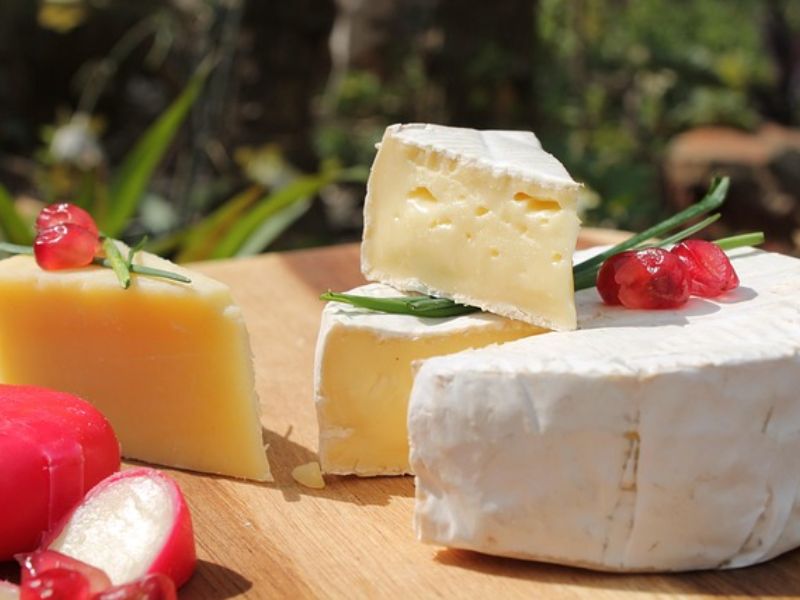
    The cherished Italian dish, cacio e pepe, is famous for two things: its amazing taste and its notoriously tricky preparation. On the surface, it appears to be a straightforward recipe, with just three ingredients: pasta, pecorino romano cheese, and black pepper. However, as anyone who has attempted to cook it can attest, the cheese tends to clump when added to the hot pasta water, transforming what should be a velvety, creamy sauce into a lumpy, sticky disaster.
    Credit: Pixabay

    The cherished Italian dish, cacio e pepe, is famous for two things: its amazing taste and its notoriously tricky preparation. On the surface, it appears to be a straightforward recipe, with just three ingredients: pasta, pecorino romano cheese, and black pepper. However, as anyone who has attempted to cook it can attest, the cheese tends to clump when added to the hot pasta water, transforming what should be a velvety, creamy sauce into a lumpy, sticky disaster.

    Scientists uncover why cheese sauces clump—and reveal a foolproof cacio e pepe recipe

    In the journal Physics of Fluids, researchers from the University of Barcelona, the Max Planck Institute for the Physics of Complex Systems, the University of Padova, and the Institute of Science and Technology Austria explored the science behind mixing cheese in water. They identified the mechanism responsible for turning a smooth cheese sauce into a clumpy one and created a fail-safe recipe for cacio e pepe based on their discoveries.

    Researchers from the University of Barcelona, the Max Planck Institute for the Physics of Complex Systems, the University of Padova, and the Institute of Science and Technology Austria investigated the science of mixing cheese with water in the journal Physics of Fluids. They uncovered the process that causes a smooth cheese sauce to become lumpy and developed a foolproof recipe for cacio e pepe based on their findings.

    For these researchers, their work went beyond mere intellectual curiosity. “We are Italians residing outside of our homeland,” stated author Ivan Di Terlizzi.

    Exploring cacio e pepe as a physical system to prevent waste and savor tradition

    We frequently share meals and appreciate traditional cuisine. One of the dishes we’ve prepared is cacio e pepe, which we found intriguing enough to explore as a physical system. Naturally, we also had the practical motivation of not letting quality pecorino go to waste.

    The team began by examining the starch in pasta water as the crucial component for creating an ideal sauce. Normally, fats like cheese don’t blend well with water, but starch acts as a stabilizer that helps unify the mixture. Through experimentation, the researchers discovered that a starch-to-cheese ratio of 2–3% resulted in the smoothest and most consistent sauce.

    Another crucial factor in achieving the perfect cacio e pepe sauce is controlling the heat—or more specifically, avoiding excessive heat. High temperatures cause the proteins in the cheese to break down and clump together, resulting in an undesirable texture. To prevent this, the researchers recommend allowing the water to cool slightly before adding the cheese and gradually warming the sauce to the desired temperature.

    For home cooks wanting to prepare cacio e pepe, the team shared a science-based recipe developed from their experiments. The process begins with making starchy water, and they suggest using a precise amount of powdered starch, such as potato or cornstarch, instead of depending on the variable starch content found in typical pasta water.

    “Accurate Starch Measurement is Key for Optimal Results, says Di Terlizzi”

    Since starch plays such a crucial role and its quantity can significantly affect the outcome, we recommend using a precisely measured amount,” explained Di Terlizzi. “This level of accuracy is only possible when you use a controlled amount of powdered starch relative to the amount of cheese.”

    After adding the starch to the water, the researchers recommend blending it with the cheese to create a smooth, even mixture. This sauce is then returned to the pan and gently heated to serving temperature. Finally, the pepper and pasta are stirred in—and it’s ready to enjoy.

    Looking ahead, the researchers have a wide array of ideas waiting to be explored.

    There’s a dish called pasta alla gricia, which is essentially cacio e pepe with the addition of guanciale, or cured pork cheek,” said author Daniel Maria Busiello. “It appears to be easier to prepare, though we’re not exactly sure why—that’s something we may look into in future research.”


    Read the original article on: Phys.Org

    Read more: Only 9 Ounces a Week: How Much Meat You Can Eat Sustainably

  • Global Survey Reveals What 68 Countries Think About Science

    Global Survey Reveals What 68 Countries Think About Science

    Credit: Pixabay

    A groundbreaking international study involving over 71,000 participants from 68 countries reveals widespread public trust in scientists. The research also underscores a strong desire for scientists to take on a larger role in policymaking and societal issues. Despite regional variations, the findings emphasize global confidence in science and its potential to shape public policy.

    Broad Trust and Engagement

    Conducted by a global consortium led by Harvard University, the study highlights high trust levels in scientists and a shared belief in their capacity to contribute to society. Most respondents supported greater involvement of scientists in policymaking, with 83% agreeing they should actively communicate science to the public.

    Published on January 20 in Nature Human Behaviour, the research was spearheaded by TISP, a Harvard-based consortium directed by Dr. Viktoria Cologna (Harvard University and ETH Zurich) and Dr. Niels G. Mede (University of Zurich). A team of 241 researchers from 169 institutions, including the University of Bath, contributed to the study, which represents the most comprehensive post-pandemic analysis of public trust in science.

    Key Findings

    1. Global Trust: Across all countries, the average trust level in scientists was high (mean = 3.62 on a 5-point scale). Respondents described scientists as qualified (78%), honest (57%), and concerned about public well-being (56%).
    2. Support for Involvement: A majority (52%) believed scientists should play a more active role in policymaking, while 23% preferred they avoid advocating for specific policies.
    3. Trust Rankings:
      • Top-ranked: Egypt, India, Nigeria, Kenya, and Australia.
      • Middle: The UK ranked 15th, ahead of Canada (17th) and Sweden (20th), but behind the US (12th).
      • Bottom-ranked: Albania, Kazakhstan, Bolivia, Russia, and Ethiopia.

    Regional Insights

    Dr. Eleonora Alabrese from the University of Bath, who analyzed UK responses, noted that trust in scientists was higher among women, older individuals, and those with more education. In North America and Europe, conservative political orientation correlated with lower trust in science, a pattern not observed globally.

    Dr. Viktoria Cologna remarked, “Most people globally trust scientists and want them to actively engage in societal and policy matters.” Dr. Niels G. Mede added, “This study provides a comprehensive snapshot of public trust in science and its evolving role in society post-pandemic.”

    Challenges and Public Priorities

    While trust remains high, only 42% of respondents felt scientists adequately consider public views. Additionally, participants perceived a misalignment between scientific priorities and societal needs. Public health, energy solutions, and poverty reduction ranked as top research priorities, while defense and military technology received the lowest support.

    Recommendations

    The consortium urges scientists to:

    • Strengthen public engagement through dialogue and feedback.
    • Address gaps in trust, particularly among conservative groups in Western nations.
    • Realign research priorities to better reflect public values.

    Dr. Alabrese warned, “Even minor declines in trust could affect the use of scientific evidence in policymaking. Maintaining and building this trust is crucial for science’s societal impact.”


    Read Original Article: Scitechdaily

    Read More: Step Right for a Latte: The Future of App Control May be in Your Feet

  • Development in Science is on The Decadence and We Are Unsure Why

    Development in Science is on The Decadence and We Are Unsure Why

    Science is in decline, there are different opinions about it. One is that the "easier fruits" of science have already been picked. The other is called "the research burden", which suggests that there is now so much that scientists must learn to master a particular field that they have little time to do so, and finally the other reason is "there is increasing pressure in academia to publish because this is the metric by which academics are evaluated.
    Credit: Nattapat Jitrungruengnij/Shutterstock

    Increased knowledge but reduced innovation in science

    According to an analysis published Wednesday of countless analysis papers and patents, the rate of ground-breaking scientific findings and technological innovation is reducing despite an ever-growing quantity of knowledge.

    While the past study has revealed downturns in particular disciplines, the study is the primary that “emphatically, convincingly documents this decrease of disruptiveness across all important areas of science and technology,” lead author Michael Park informed AFP.

    Park, a doctoral student at the College of Minnesota’s Carlson School of Management, named disruptive discoveries those that “break up from existing concepts” and “pressure the whole scientific area into novel territory.”

    The researchers provided a “disruptiveness score” to 45 million scientific documents dating from 1945 to 2010 and 3.9 million US-based patents from 1976 to 2010.

    From the beginning of those time ranges, research documents and patents have been progressively likely to settle or build on former information, according to outcomes posted in the journal Nature.

    What was the ranking based on?

    The ranking was based on how the papers were mentioned in others researches five years later publication, presuming that the more disruptive the study was, the less its precursors would be mentioned.

    The most significant decline in the disruptive study came in physical sciences like chemistry and physics.

    “The essence of research is changing” as incremental innovations become more common, senior research author Russell Funk said.

    Burden of knowledge in science

    One theory for the decrease is that all the “easier fruit” of science has already been gathered.

    If that were the situation, disruptiveness in various scientific fields would have fallen at different velocities, Park mentioned.

    However, instead “the decreases are very consistent in their speeds and timing across all important fields,” Park stated, showing that the easier fruit theory is not likely to be the root cause.

    Instead, the scientists pointed to what has been dubbed “the burden of study,” which suggests there is currently so much that researchers have to learn to dominate a particular area that they have little time left to surpass boundaries.

    This triggers scientists and inventors to “focus on a narrow piece of the existing information, guiding them just to generate something more consolidating rather than disruptive,” Park said.

    Academic evaluation method

    One more reason could be that “there is boosting tension in the academic community to publish, publish, publish because that is the manner that academics are assessed on,” he added.

    The scientists called on universities and funding firms to focus more on quality than amount and consider complete subsidies for year-long sabbaticals to permit academics to read and think more deeply.

    “We are not becoming any less ingenious as a species,” Park highlighted, pointing to current innovations such as the usage of mRNA technology in COVID-19 vaccines or the measurement of gravitational waves in 2015.

    Jerome Lamy, a historian and specialist in the sociology of science at France’s CNRS research firm, who was not engaged in the study, claimed it showed that “ultra-specialization” and the tension to publish had increased throughout the years.

    He criticized a global trend of academics being “forced to slice up their papers” to enhance their number of publications, stating it had resulted in “a dulling of study.”


    Read the original article on Science Alert.

    Read More : If You Want Smarter Kids Teach Them Music, Not Coding, According To MIT.