

Boston Dynamics
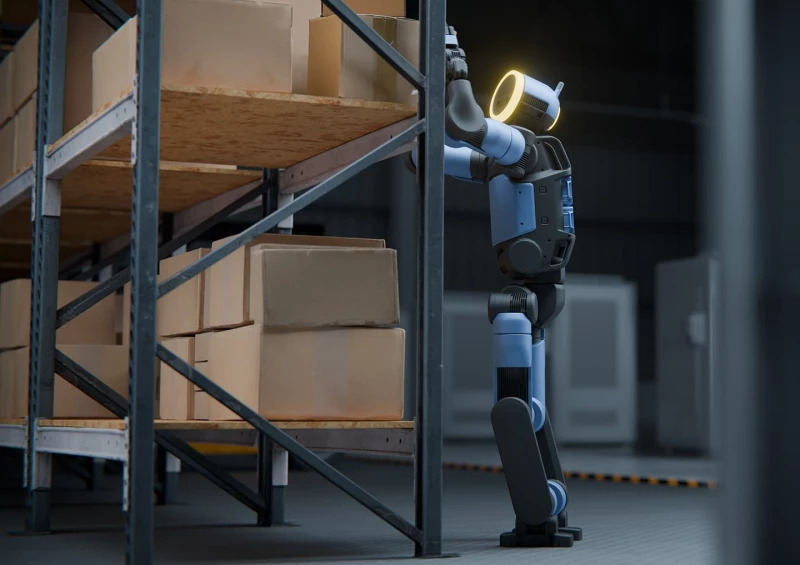
Boston Dynamics has introduced an industry-ready version of Atlas, a humanoid built for real-world use in warehouses and factories. Designed to work nonstop in harsh conditions, Atlas uses AI to adjust to its surroundings, and production is already underway.
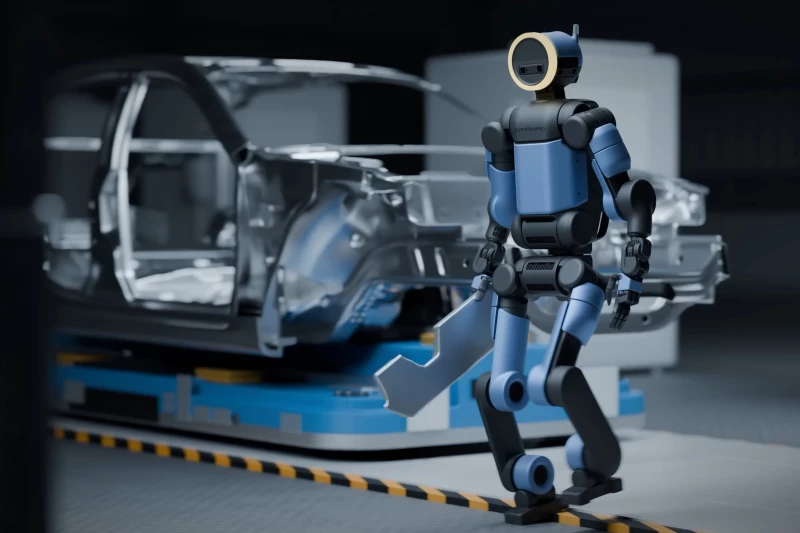
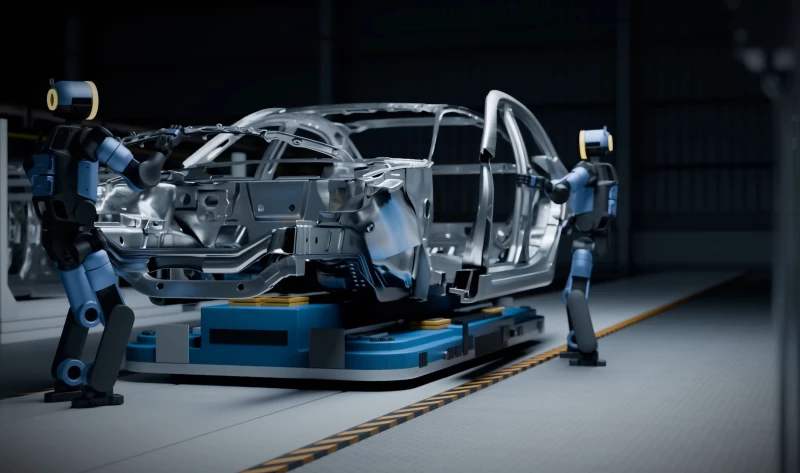
After an attention-grabbing debut filled with eerie visuals, flips, and dance routines, Boston Dynamics is now focusing on practical applications. The company has revealed the production version of Atlas, a humanoid robot designed for demanding industrial tasks. The first units will ship this year, with Atlas taking on its first role at a Hyundai facility—its initial real-world industrial deployment.
Boston Dynamics CEO calls Atlas the company’s most advanced robot
“In over 30 years, Boston Dynamics has built some of the world’s most advanced robots,” said CEO Robert Playter. This is the finest robot we’ve ever made. Atlas aims to revolutionize industry and pave the way for robots that enhance safety, efficiency, and daily life at home.
The newest Atlas measures 6.2 ft (1.9 m) in height and offers 56 degrees of rotational movement throughout its joints. It can rotate its head and hips, move fingers independently, and bend knees and ankles, giving Atlas a 7.5 ft (2.3 m) reach for tight industrial spaces.
Designed to work alongside people, Atlas tackles environments that would quickly exhaust human workers. It endures –4 °F to 104 °F (–20 °C to 40 °C), lifts 66–110 lb (30–55 kg), runs four hours per charge, and swaps its battery in under three minutes on its own.
Atlas offers versatile operation and intelligent adaptability
Atlas supports three modes of operation: fully autonomous, remotely controlled by a human operator, or supervised via a tablet. Powered by AI, it moves smoothly, adapts to its environment, and collects data to boost operational efficiency.
Boston Dynamics
Boston Dynamics has also revealed a collaboration with DeepMind, Alphabet’s British-American AI research lab, aimed at rapidly advancing Atlas’s abilities. The partnership will focus on faster task learning and better understanding of industrial environments. Once a single Atlas masters a skill, it can instantly share that capability across the entire fleet.
This Atlas handles industrial tasks and reconfigures for new roles within 24 hours. Production has begun in Boston, with initial deployments set for 2026 at Google DeepMind and Hyundai.
Hyundai plans large-scale robotics facility with expanded Atlas production
Hyundai, Boston Dynamics’ majority owner, plans a new facility to produce up to 30,000 robots annually, including Spot and other models. Additional Atlas customers will join starting in 2027.
Boston Dynamics
Hyundai will supply Atlas’s actuators, strengthening its hardware-AI integration. “This Atlas is our most production-ready yet,” said GM Zack Jackowski, highlighting its reduced parts and full compatibility with automotive supply chains. With the support of Hyundai Motor Group, we expect to deliver industry-leading reliability and cost efficiency at scale.
The launch of production signals that U.S. industrial humanoid robotics is now catching up with China. Chinese company UBtech recently showcased its Walker S2 robots deployed across automotive, smart factories, logistics, and AI data centers. UBtech says the deployment will proceed in phases, with robots gradually entering active industrial settings.
This timing shows that the push to deploy humanoid robots on factory floors no longer favors a single player, as American and Chinese companies pursue careful, step-by-step strategies for large-scale adoption.
Read the original article on: Newatlas
Read more:Kawasaki’s Four-legged Robotic Horse Vehicle is set to Enter Production


