Category: Chemistry

  • Bamboo, Transparent and Fire/Water-Resistant, Offers Glass Alternative

    Bamboo, Transparent and Fire/Water-Resistant, Offers Glass Alternative

    Researchers have created bamboo that is transparent and resistant to both water and fire
    Researchers have created bamboo that is transparent and resistant to both water and fire. Credit: Depositphotos

    Scientists in China have created a transparent material from old bamboo, which is resistant to fire, water, and smoke suppression. However, silica glass, a sand-based building material, commonly serves as transparent, strong windows, but it lacks sustainability and can be heavy and brittle.

    Exploring Bamboo as an Alternative to Transparent Wood

    Transparent wood has been encroaching on glass’s territory for some years now. Scientists extract lignin chemically from wood fibers, and then treat the remaining material with plexiglass or epoxy. The outcome is a material that is transparent, renewable, and as strong as, if not stronger than, glass, while also being lighter and offering superior thermal insulation.

    However, using wood still presents a few challenges. It is considerably more flammable than glass and is already in high demand, with replenishment taking too long. Thus, for their recent study, researchers at Central South University of Forestry and Technology (CSUFT) in China turned to bamboo.

    “Bamboo, often dubbed ‘the second forest,’ grows rapidly and regenerates quickly, allowing it to mature and be utilized as a building material within four to seven years,” explained Caichao Wan, the study’s corresponding author. “With an output four times higher than wood per acre, bamboo is acknowledged for its remarkable efficiency.”

    Since bamboo’s internal structure and chemical composition closely resemble wood, the team employed the same method to render it transparent. After removing lignin, researchers infuse bamboo with an inorganic liquid sodium silicate, altering the light refraction of the fibers to achieve transparency. Subsequently, they treat the material to impart hydrophobic properties, making it water-repellent.

    A diagram depicting the characteristics of transparent bamboo (Research journal)

    Transparent Bamboo: A Multi-Functional Building Material with Enhanced Solar Cell Efficiency

    The resulting structure consists of three layers: silane on the top, silicon dioxide in the middle, and sodium silicate at the bottom. “This transparent bamboo exhibits a light transmittance of 71.6% and possesses flame-retardant and water-repellent properties, while also blocking smoke and carbon monoxide. Its mechanical properties include a bending modulus of 7.6 GPa and a tensile modulus of 6.7 GPa.”

    Moreover, transparent bamboo can serve not only as a building material but also as a substrate for perovskite solar cells, enhancing their power conversion efficiency by 15.29% as a light management layer.

    “In future research, our focus will be on the large-scale production and multifunctionalization of this transparent bamboo,” stated Wan.


    Read the Original Article on: New Atlas

    Read more: Sea-Bed Air Batteries Offer Affordable, Long-Term Energy Storage

  • Team Develops AI for Chemical Synthesis

    Team Develops AI for Chemical Synthesis

    Developing AI for chemical synthesis is a groundbreaking achievement with profound implications for science and industry. By leveraging AI, researchers can streamline the process of discovering new molecules, accelerating drug development, materials science, and other areas.
    Conceptual art representing ChemCrow. Credit: Ella Maru Studio

    Developing AI for chemical synthesis is a groundbreaking achievement with profound implications for science and industry. By leveraging AI, researchers can streamline the process of discovering new molecules, accelerating drug development, materials science, and other areas.

    This technology promises to enhance efficiency, reduce costs, and unlock new possibilities in chemistry.

    Automating chemistry, with its complex procedures and immense scope for advancement, has historically posed a challenge. Despite the advanced capabilities of traditional computational tools, they are often underutilized due to their complexity and the specialized expertise needed to operate them.

    Researchers led by Philippe Schwaller at EPFL have introduced ChemCrow, an AI system that integrates 18 expert tools to revolutionize chemical research. Published in Nature Machine Intelligence, the project draws inspiration from crows, known for their adept tool usage.

    The Development Team Behind ChemCrow

    Moreover, developed by Ph.D. students Andres Bran and Oliver Schilter from EPFL and NCCR Catalysis, in collaboration with Sam Cox and Professor Andrew White from FutureHouse and the University of Rochester, ChemCrow utilizes a large language model (LLM) like GPT-4, enhanced by LangChain for tool integration, to independently undertake chemical synthesis tasks.

    By integrating various software tools including WebSearch and LitSearch for information retrieval and molecular analysis, ChemCrow autonomously plans and executes chemical syntheses, aiding in the creation of insect repellents, organocatalysts, and the discovery of new chromophores crucial to the dye and pigment industries.

    Unique Features of ChemCrow

    However, ChemCrow stands out for its capacity to apply structured reasoning to chemical tasks, akin to a human expert with access to calculators and databases. According to Andres Camilo Marulanda Bran, the study’s lead author, the system enhances efficiency and accuracy, minimizing errors.

    When prompted, ChemCrow strategizes the task, selects relevant tools, and adjusts its approach based on outcomes, ensuring a practical, step-by-step process.

    This systematic method ensures that ChemCrow is not only theoretically sound but also applicable in real-world laboratory settings.

    By democratizing access to intricate chemical processes, ChemCrow reduces barriers for non-experts while expanding the toolkit for seasoned chemists.

    To conclude, This advancement can expedite research and development in pharmaceuticals, materials science, and other fields, streamlining processes and enhancing safety.


    Read the original article on: Phys Org

    Read more: University of Amsterdam Chemists Develop AI-Driven Autonomous Chemical Synthesis Robot

  • Cracking the Code of the Electron Universe: Researchers Find a Way Around Ohm’s Law

    Cracking the Code of the Electron Universe: Researchers Find a Way Around Ohm’s Law

    Scientists at Tohoku University and the Japan Atomic Energy Agency have created basic experiments and theories to control the shape of the 'electron universe' within a magnetic material under regular conditions.
    Scientists have altered the geometry of the electron universe within a magnetic substance, paving the way for advanced spintronic gadgets that rely on quantum-induced, non-Ohmic conductivity. Credit: SciTechDaily.com

    Scientists at Tohoku University and the Japan Atomic Energy Agency have created basic experiments and theories to control the shape of the ‘electron universe’ within a magnetic material under regular conditions. This ‘electron universe’ refers to the arrangement of electronic quantum states, which resembles the structure of the actual universe in mathematical terms.

    The studied geometric attribute, known as the quantum metric, was identified through an electric signal separate from typical electrical conduction. Moreover, this discovery uncovers the essential quantum science behind electrons. Furthermore, it sets the stage for creating groundbreaking spintronic devices that leverage the unique conduction arising from the quantum metric.

    The researchers’ discovery sheds light on the basic quantum properties of electrons and lays the groundwork for crafting groundbreaking spintronic devices. Credit: Tohoku University

    Exploring the Interplay

    Electric conduction, pivotal for numerous devices, traditionally adheres to Ohm’s law, where current varies proportionately to the applied voltage. However, scientists sought to surpass this law to advance into novel device realms. This is where quantum mechanics enters the scene. A distinctive quantum geometry called the quantum metric can induce non-Ohmic conduction. This metric, inherent to the material, implies it’s a foundational feature of its quantum structure.

    Quantum Metric and Electron Universe

    The term’ quantum metric’ is influenced by the idea of ‘metric’ in general relativity, which describes how the universe’s shape changes due to strong gravitational forces, like those near black holes. Likewise, understanding and using the quantum metric is crucial for creating non-Ohmic conduction in materials. This metric describes the shape of the ‘electron universe,’ similar to the physical universe. The task is to control the quantum-metric structure in a device and see how it affects electrical conduction at average room temperature.

    Left: Light’s trajectory in a potent gravitational field in the cosmos.
    Middle: Non-Ohmic conductivity stemming from a complex quantum-metric arrangement of the “electron universe,” adjustable via Mn3Sn’s magnetic texture, resulting in a second-order Hall effect.
    Right: Traditional Ohmic conductivity with a straightforward quantum-metric configuration. Source: Yasufumi Araki, Jiahao Han, and Shunsuke Fukami

    The researchers worked with a thin-film configuration including a heavy metal, Pt, and a special magnet, Mn3Sn, to modify the quantum-metric structure at ambient temperature. When Mn3Sn is next to Pt, it shows significant changes in its magnetic properties when a magnetic field is applied. They observed and controlled a type of non-Ohmic conduction called the second-order Hall effect, where voltage reacts at a right angle and quadratically to the electric current. Theoretical modeling confirmed that the quantum metric solely explains these findings.

    Breaking the Barrier: Room Temperature Control of Quantum Metrics

    Jiahao Han, the study’s lead author, explained that the second-order Hall effect originates from the quantum-metric structure interacting with the particular magnetic texture at the Mn3Sn/Pt interface. Therefore, he mentioned that they could adjust the quantum metric by altering the material’s magnetic structure using spintronic methods. He further noted that they could confirm such adjustments through magnetic control of the second-order Hall effect.

    In a Hall bar setup featuring Mn3Sn/Pt under a magnetic field H (left), the experiment and theoretical modeling based on the quantum metric yield the second-order Hall effect (right). Source: Yasufumi Araki, Jiahao Han, and Shunsuke Fukami

    Yasufumi Araki, the primary contributor to the theoretical analysis, further explained that theoretical predictions suggest the quantum metric as a fundamental concept linking material properties observed in experiments to the geometric structures investigated in mathematical physics. He noted that confirming its evidence in experiments has posed challenges. Araki hoped their experimental method for accessing the quantum metric would further propel theoretical studies in this field.

    Principal investigator Shunsuke Fukami also contributed, stating that the quantum metric was previously thought to be intrinsic and beyond control, akin to the universe itself. However, he emphasized the need to alter this perception. Fukami highlighted that their discoveries, especially regarding the adaptable control achievable at room temperature, could open up fresh avenues for future development of functional devices like rectifiers and detectors.

    Read the original article on: SciTechDaily

    Also read: Sodium Batteries Sans Lithium Move from Lab to US Manufacturing

  • The Mysterious Dead Sea: A Salty Enigma

    The Mysterious Dead Sea: A Salty Enigma

    Credit: Canvas

    The Dead Sea, nestled between Jordan, Israel, and Palestine, isn’t your average sea. It’s more like a big, salty bathtub with no outlet! Imagine that!

    Why so Salty?

    Well, it’s all about the salt. The Dead Sea slurps up water from the Jordan River but doesn’t let any out. So, when the water evaporates, it leaves behind loads of salt and minerals. That’s why it’s 9.7 times saltier than the ocean – talk about salty!

    Blame it on Humans

    Humans haven’t helped either. We’ve built dams and channels that keep fresh water away from the Dead Sea. Less fresh water means more saltiness. Plus, the hot weather and mineral-rich springs around the Dead Sea add to its saltiness.

    The Saltiest Spot

    The Dead Sea is super salty, but there’s one place saltier – Gaet’ale Pond in Ethiopia. It’s so salty that you can float effortlessly, just like in the Dead Sea. That’s salty with a capital S!

    Shrinking and Salting

    The Dead Sea isn’t just salty; it’s shrinking too! Every year, it loses about 1.2 meters of water because of us humans. As it shrinks, it gets even saltier. Scientists have seen salt building up on the lakebed like a salty snowfall.

    Tiny Life and Red Seas

    Despite its name, the Dead Sea isn’t totally dead. It’s home to microscopic life forms that can handle the salt. Sometimes, after heavy rains, the top layer of water gets less salty, and tiny algae (Dunaliella parva) bloom, turning the sea red with bacteria. So, the Dead Sea might be salty and shrinking, but it’s still full of surprises – like a big, salty puzzle waiting to be solved!


    Read more Sapphire Tower Plant Blooms Once in 20 years.

  • Scientists Created an Odd New Material That Hardens Upon Impact

    Scientists Created an Odd New Material That Hardens Upon Impact

    According to recent research conducted by a group of researchers from the University of California, Merced, electronic devices and sensors may one day be built from a material that toughens up as it is struck or strained.
    The newly developed material. (Yue Wang)

    According to recent research conducted by a group of researchers from the University of California, Merced, electronic devices and sensors may one day be built from a material that toughens up as it is struck or strained.

    The phrase “adaptive durability” refers to this quality, which is significant for materials science. It denotes resilience to stress and defense against harm, even in hostile surroundings.

    Development of the New Material

    Stirred by adding water, the cooking cornstarch served as the model for the new substance. In contrast to wet sand, which remains viscous when mixed or pounded, cornstarch slurry behaves as a solid when punched rapidly and as a liquid when stirred gently.

    When crushed slowly, the tiny cornstarch particles behave like a fluid because they repel one another. However, they contact and cause friction when struck quickly, behaving like a solid. The size of the particles causes this behavioral variation.

    The study examined whether a polymer substance might produce the same outcomes.

    The team began by working with conjugated polymers, which are particular polymers that allow things to transmit electricity while remaining pliable and soft. We can create these materials using a wide variety of molecular combinations.

    Here, they combined poly(2-acrylamido-2-methylpropanesulfonic acid) long molecules, polyaniline short molecules, and poly(3,4-ethylenedioxythiophene) polystyrene sulfonate (PEDOT: PSS), a very effective conductor. If those terms sound unfamiliar, do not fret. All that is important is that the combination produced a film that stretched or distorted when struck by fast blows.

    The material became harder as the impacts occurred. 10% more PEDOT: PSS enhanced the material’s conductivity and adaptive endurance.

    The researchers claim that selecting two negatively and two positively charged polymers produced a material with incredibly minute structures resembling tiny meatballs in a spaghetti-bowl-like mess. These “meatballs” preserve the material’s conductivity by absorbing the impact shock without entirely disintegrating.

    Further studies suggest that the incorporation of positively charged 1,3-propane-diamine nanoparticles further augments toughness, subtly diminishing the resilience of the “meatballs” to enable the material to endure more substantial impacts, while simultaneously reinforcing the “spaghetti strings” encasing them to maintain the material’s structural integrity.

    Potential Applications and Future Implications

    Despite the scientific complexity, large-scale production of this material could unlock real-world applications beyond the lab. The research team offers wearable sensors, smartwatch bands, and health monitors – for glucose levels or cardiovascular health, for instance.

    Another possible application the researchers have previously tested is customized electronic prosthetics. Eventually, this adaptable material has the potential to revolutionize prosthetics by enabling 3D printing of artificial limbs.

    It serves as another reminder of the possibility of discovering new materials and refining existing ones and how this could alter our future in everything, from the gadgets we use to the garments we wear.

    Materials scientist Yue Wang adds, “There are a lot of possible uses, and we have high hopes for where this new, uncommon property will lead us.”

    The study was presented at the American Chemical Society’s spring 2024 meeting.


    Read the original article on: Science Alert

    Read more: Unraveling Earth’s Cleanest Air Mystery

  • Graphite Platform Hovers Without Electricity

    Graphite Platform Hovers Without Electricity

    Scientists in Japan have devised a method to create a floating platform using conventional graphite, eliminating the need for an external power source typically associated with magnetic levitation.
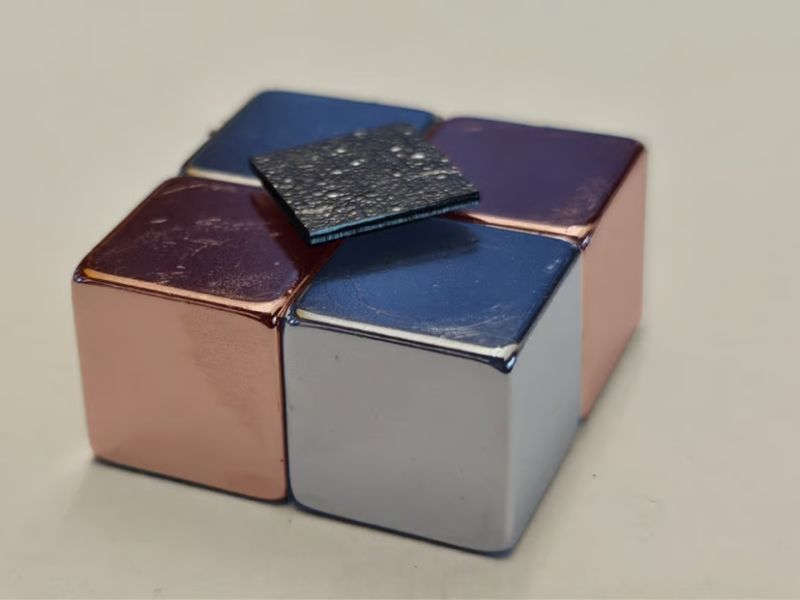
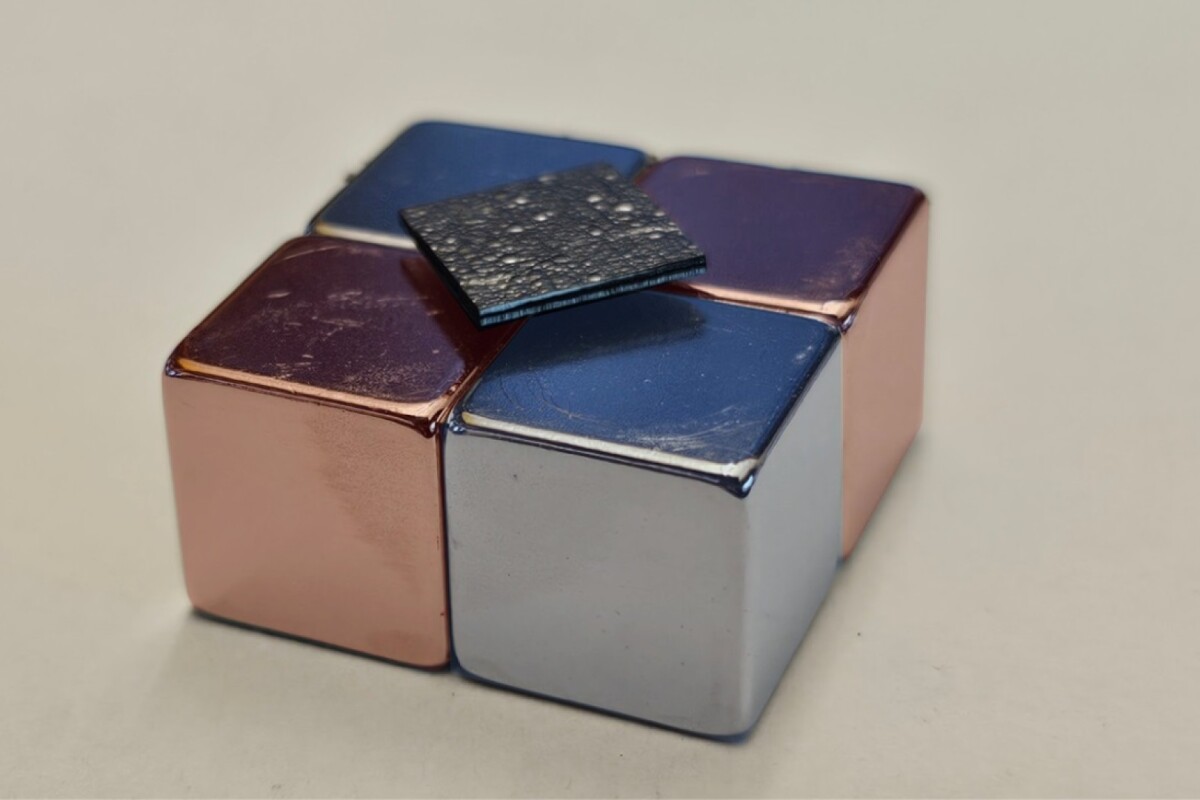
    The silica-coated graphite plate levitates above a magnetic surface, with no need for external power
    OIST

    Scientists in Japan have devised a method to create a floating platform using conventional graphite, eliminating the need for an external power source typically associated with magnetic levitation.

    If you’ve attempted to push together two magnets with the same charge, you’re familiar with the repulsive force they exert. This force can cause objects made of specific materials, termed diamagnetic materials, to levitate above surfaces when subjected to a sufficiently strong magnetic field.

    This phenomenon is often demonstrated in various commercial products, such as clocks, lamps, and speakers. Advanced technology employs superconductors to levitate heavier objects, facilitating the development of high-speed maglev vehicles that experience minimal friction.

    Overcoming Reliance on External Power

    In fact, these existing methods all rely on external power sources, with superconductors even requiring near-cryogenic temperatures. Scientists at the Okinawa Institute of Science and Technology (OIST) developed a low-cost material to address this issue in their recent study.

    Beginning with ordinary graphite, which exhibits high diamagnetism, the material can levitate above magnetic surfaces without requiring any power. However, the flow of electrical currents through the graphite typically causes energy loss, leading to short-lived levitation—a phenomenon known as eddy damping.

    A scanning electron microscope image of the graphite microbeads – green indicates the silica coating
    OIST

    Insulating Graphite for Sustainable Levitation: The Role of Silica Coating

    To address this issue, the team applied a chemical coating of silica onto the graphite particles, which serves as an electrical insulator. These silica-coated graphite particles were then mixed with wax and formed into flat slabs measuring approximately 1 cm^2 (0.2 sq in). By doing so, the graphite retained its diamagnetic properties, while the insulation prevented the energy loss that typically disrupts levitation.

    Remarkably, in experiments, the silica-coated graphite platforms remained levitated above a surface composed of magnets with alternating north and south poles for extended durations.

    According to the team, this levitating platform system has the potential to pave the way for novel sensor technologies capable of measuring force, acceleration, and gravity.

    Additionally, for more precise quantum sensors, an alternative version employs a feedback magnetic force to continually adjust the platform’s vertical movements, thereby cooling it down to reduce its kinetic energy. However, this approach does introduce the requirement for an external power source.


    Read the original article on: New Atlas

    Read more: Graphene is a Nobel Prize-winning “wonder material”

  • Breakthrough Solution for Cold-Resistant, High-Energy-Density Batteries

    Breakthrough Solution for Cold-Resistant, High-Energy-Density Batteries


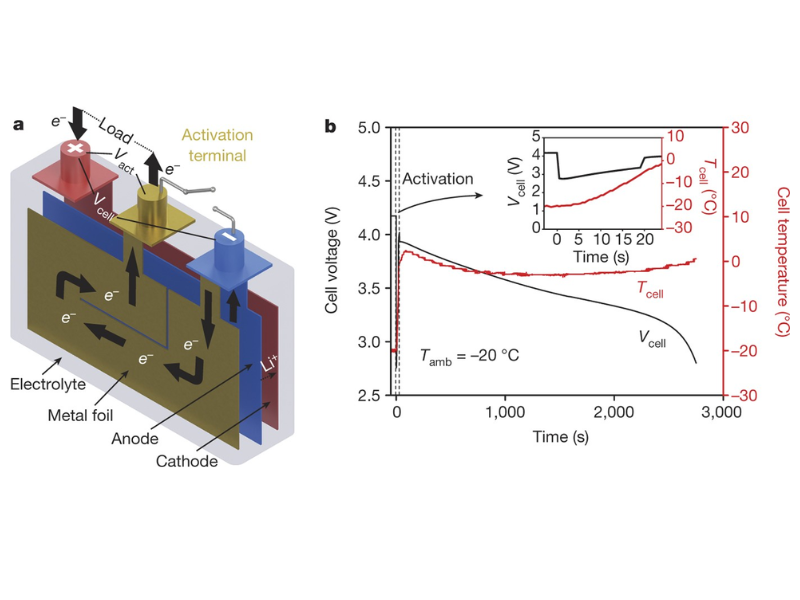
    a) Schematic: Metal foil inserted for internal heating and fast heat transfer to electrodes and electrolyte. Self-heating activated by switching off the connection between activation terminal and negative terminal. b) Evolution of cell voltage and temperature during activation at Vact = 0.4 V (inset) and subsequent 1C discharge at −20 °C. Battery temperature increases from −20 °C to 0 °C in ~20 s, enabling 1C discharge to occur at ~0 °C battery core temperature instead of ambient −20 °C. Credit: Nature

    While ubiquitous in most environments, lithium-ion batteries have long struggled in extreme cold temperatures, hindering their widespread use in applications like electric cars and aviation. However, a recent breakthrough offers promising solutions to this longstanding challenge, potentially revolutionizing various sectors.

    Overcoming Cold Temperature Challenges

    Traditionally, lithium-ion batteries exhibit reduced performance in cold climates due to slower charging rates and diminished energy storage capacity. While manageable in typical cold conditions, these limitations become more pronounced at extreme temperatures, presenting hurdles for applications like aviation, especially at high altitudes where temperatures plummet.

    Electrolytes are the primary culprit behind lithium-ion batteries cold intolerance. They struggle to maintain optimal performance across a wide temperature range. Conventional electrolytes excel in conducting lithium ions and interacting with anodes at moderate temperatures but falter as temperatures drop, compromising overall battery performance.

    The Breakthrough: FAN Electrolyte

    Professor Xiulin Fan of Zhejiang University’s pioneering team has developed a groundbreaking solution using a novel electrolyte composed of “small-sized solvents with low solvation energy.” This innovative electrolyte, dubbed FAN, demonstrates exceptional performance across varying temperatures, addressing the longstanding issue of cold-induced battery degradation.

    Demonstration batteries utilizing the FAN electrolyte exhibit remarkable ionic conductivity and charging/discharging capabilities across a temperature range spanning from -80°C to 60°C (-112°F to 140°F). Notably, at -70°C (-94°F), FAN outperforms alternative electrolytes by approximately 10,000 times, showcasing its superior cold resilience and efficiency.

    Promising Applications and Future Prospects

    The implications of this breakthrough extend beyond aviation, potentially impacting industries reliant on energy-dense batteries. Fan’s team asserts the scalability of their technology, hinting at broader applications across different metal-ion battery electrolytes. This versatility bodes well for grid operators seeking efficient energy storage solutions in colder regions, particularly during winter.

    The development of the FAN electrolyte marks a significant milestone in the pursuit of cold-resistant, high-energy-density batteries. As research progresses and this technology becomes more accessible, it promises to overcome longstanding barriers, facilitating the widespread adoption of electrification in diverse sectors.


    Read the original article on Nature.

    Read more: Engineers Develop Ultra-Fast Charging Lithium Battery.

  • Harvard Engineers Unveil Technique for Tenfold Increase in Rubber’s Resilience

    Harvard Engineers Unveil Technique for Tenfold Increase in Rubber’s Resilience

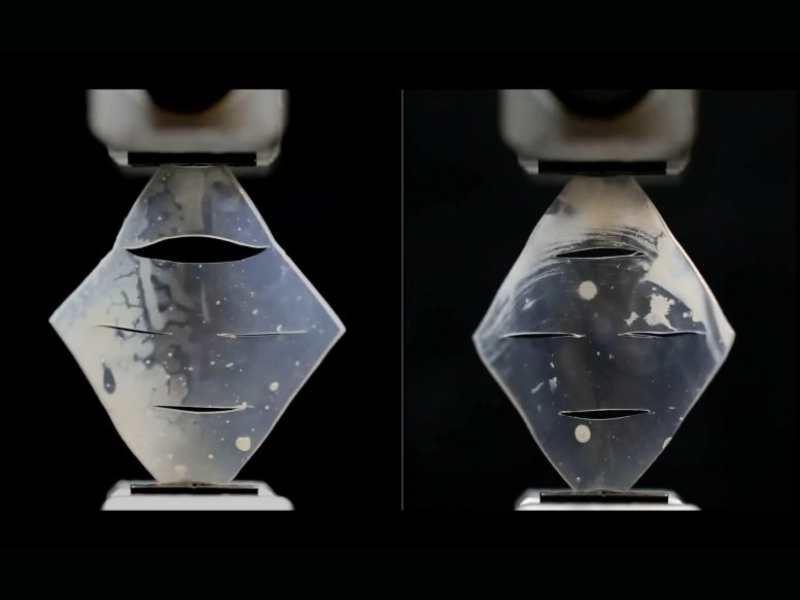
    SEAS researchers have devised a multiscale strategy enabling particle-reinforced rubber to withstand high loads and deter crack propagation over multiple uses. In the image above, cracks expand in the left sample, whereas cracks in the right sample, crafted from the multiscale material, remain unchanged after 350,000 cycles. Credit: Suo Group/Harvard SEAS

    Researchers at the Harvard John A. Paulson School of Engineering and Applied Sciences (SEAS) have significantly enhanced the fatigue threshold of particle-reinforced rubber, introducing a novel multiscale approach that enables the material to withstand high loads and resist crack propagation through repeated usage. This breakthrough promises to extend the lifespan of rubber products like tires and aims to mitigate pollution caused by the shedding of rubber particles during their use.

    Enhancing Particle-Reinforced Rubbers

    Natural rubber latex exhibits softness and elasticity. To enhance its properties for various applications such as tires, hoses, and dampeners, rubbers are reinforced with rigid particles like carbon black and silica. While these particles significantly improve rubber stiffness, they do little to enhance resistance to crack growth under cyclic stretching, known as the fatigue threshold.

    Since the 1950s, the fatigue threshold of particle-reinforced rubbers has seen minimal improvement. This limitation means that despite advancements in tire technology to improve wear resistance and reduce fuel consumption, small cracks can still release substantial amounts of rubber particles into the environment, contributing to air pollution and environmental degradation.

    Novel Discoveries in Rubber Engineering

    In previous research led by Zhigang Suo, Allen E., and Marilyn M. Puckett, Professor of Mechanics and Materials at SEAS, the team successfully increased the fatigue threshold of rubbers by elongating polymer chains and enhancing entanglements. However, the question remained: How would this approach fare with particle-reinforced rubbers?

    Surprisingly, when silica particles were added to the highly entangled rubber, the fatigue threshold increased by a factor of ten, contrary to the expected outcome based on existing literature.

    According to Jason Steck, a graduate student at SEAS and co-first author of the study, this unexpected result was a significant revelation. The material developed by the Harvard team features long and highly entangled polymer chains coupled with clustered silica particles covalently bonded to these chains. This unique combination effectively redistributes stress around cracks across two distinct length scales, preventing propagation within the material.

    Implications and Future Prospects

    The team substantiated their approach by subjecting a material sample with a deliberately introduced crack to tens of thousands of stretches, demonstrating that the crack remained stable without propagating.

    Zhigang Suo emphasized the broader implications of their findings, stating that the multiscale stress deconcentration approach opens avenues for developing high-performance elastomeric materials with applications ranging from reducing polymer pollution to constructing advanced soft machines.

    Yakov Kutsovsky, an Expert in Residence at the Harvard Office of Technology Development and co-author of the paper, highlighted the potential applicability of these design principles across various industries, including tire manufacturing, industrial rubber goods, and emerging fields such as wearable devices.


    Read the original article on Nature.

    Read more: The Era of Polyethylene Waste: A Potential Solution on the Horizon.

  • University of Amsterdam Chemists Develop AI-Driven Autonomous Chemical Synthesis Robot

    University of Amsterdam Chemists Develop AI-Driven Autonomous Chemical Synthesis Robot

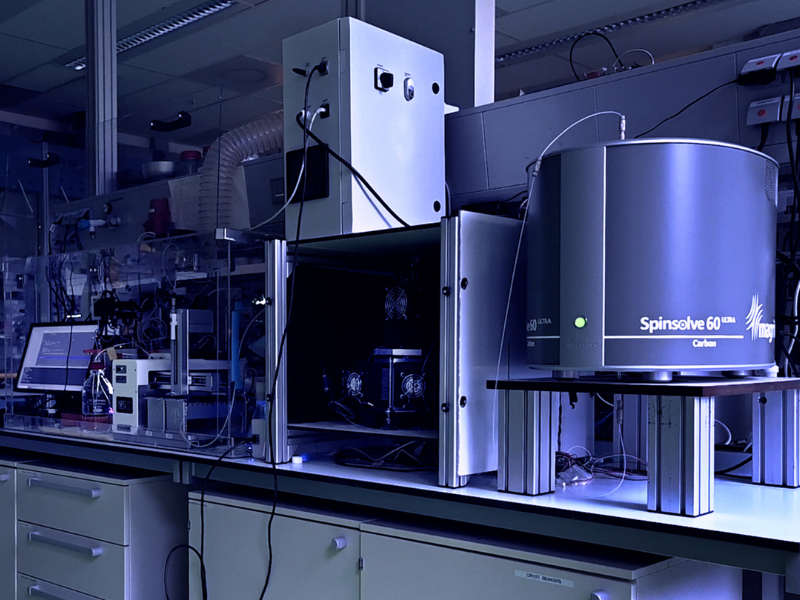
    The University of Amsterdam introduces RoboChem, an autonomous benchtop platform designed for rapid, precise, and continuous chemical synthesis. Credit: University of Amsterdam

    Chemists at the University of Amsterdam (UvA) have introduced an innovative autonomous chemical synthesis robot called “RoboChem,” which is equipped with an integrated AI-driven machine learning unit. Representing a breakthrough in the field, this benchtop device surpasses human chemists in speed and accuracy, showcasing a remarkable level of ingenuity. The initial findings of RoboChem’s capabilities are detailed in the journal Science.

    Accelerating Chemical Discovery

    Developed by Prof. Timothy Noël and his team at the UvA’s Van ‘t Hoff Institute for Molecular Sciences, RoboChem has the potential to significantly expedite the discovery of chemical molecules with applications in pharmaceuticals and various other fields. Its precision and reliability are highlighted in its ability to perform diverse reactions while minimizing waste.

    RoboChem operates autonomously 24/7, delivering rapid and tireless results. Prof. Noël emphasizes the system’s efficiency: “In a week, we can optimize the synthesis of about ten to twenty molecules. This would take a Ph.D. student several months.” The robot identifies optimal reaction conditions and provides scalable production settings directly relevant to industries like pharmaceuticals.

    Time lapse of RoboChem. Credit: University of Amsterdam

    RoboChem’s Innovative Approach

    The robot’s operation relies on “flow chemistry,” a modern technique using a system of small, flexible tubes instead of traditional tools like beakers. The robotic needle collects starting materials, mixes them in small volumes, and channels them through a tubing system to the reactor.

    RoboChem operates on the fundamentals of Flow Chemistry, conducting reactions in volumes of only 650 microliters as they flow through small tubes. Credit: University of Amsterdam

    Powerful LEDs activate a photocatalyst, initiating molecular conversion. Real-time data from an automated NMR spectrometer, coupled with AI processing, enables RoboChem to refine its chemistry understanding continually.

    AI-Driven Ingenuity

    The heart of RoboChem lies in its AI-driven machine-learning algorithm, which autonomously determines reactions for optimal outcomes. Prof. Noël expresses amazement at the system’s ingenuity, citing instances where it identified reactions requiring minimal light, surpassing his predictions.

    The researchers manually validated all molecules in the Science paper, confirming RoboChem’s impressive results.

    Advantages of AI in Chemical Discovery

    The researchers also assessed RoboChem’s ability to replicate results from published papers. In approximately 80% of cases, the system achieved better yields, demonstrating the potential of AI-assisted approaches in chemical discovery.

    Prof. Noël emphasizes the significance of generating high-quality data and the system’s ability to record “negative” data, enhancing insight and promoting breakthroughs in chemistry through AI.


    Read the original article on Science.

    Read more: Innovative Tech Tailoring Air Purification for Toxic Gases.

  • The Era of Polyethylene Waste: A Potential Solution on the Horizon

    The Era of Polyethylene Waste: A Potential Solution on the Horizon

    Credit: Unsplash.

    An international team of experts, led by Professor Shizhang Qiao from the University of Adelaide’s School of Chemical Engineering, has successfully converted polyethylene waste (PE) into valuable chemicals using light-driven photocatalysis.

    This innovative approach provides an eco-friendly solution to address plastic pollution and harnesses renewable solar energy instead of relying on traditional fossil fuel-based industrial processes.

    Green Chemistry: Catalysts and Methodology

    The team employed an oxidation-coupled room-temperature photocatalysis method, utilizing atomically dispersed metal catalysts, to achieve high selectivity in the conversion of PE waste. The resulting products, ethylene, and propionic acid, were obtained with nearly 99% selectivity, streamlining the separation process.

    The use of non-toxic photocatalysts, such as titanium dioxide with isolated palladium atoms, highlights the environmentally friendly nature of this waste-to-value strategy.

    Plastic Waste as a Resource

    Polyethylene, the most widely used plastic globally, often ends up in landfills, contributing to environmental concerns. Professor Qiao emphasizes the untapped potential of plastic waste as a valuable resource that can be recycled and processed into new plastics and commercial products.

    This research offers a promising avenue for catalytic recycling, addressing challenges associated with the chemical inertness of polymers and side reactions.

    Circular Economy Impact

    The breakthrough holds significant promise for a circular economy, as it addresses contemporary environmental and energy challenges. By providing a green and sustainable solution, the research contributes to reducing plastic pollution while simultaneously producing chemicals with industrial applications.

    The findings are expected to influence further scientific study, waste management practices, and advancements in chemical manufacturing.

    Future Implications: Solar-Driven Waste Upcycling

    The team’s work provides a practical solution to the global issue of plastic waste and sets the stage for the rational design of high-performance photocatalysts. This could potentially revolutionize solar-driven waste upcycling technology, paving the way for more efficient and environmentally conscious approaches in the future.


    Read the original on Science Advances.

    Read more: Enhanced Compostability for Sustainable Plastics.