Category: Transportation & Automation

  • Rapid, Accurate Radioactive Material Localization With Drones and Robots

    Rapid, Accurate Radioactive Material Localization With Drones and Robots

    Chemical, biological, radiological, nuclear, and explosive substances (commonly referred to as CBRNE) can endanger both the public and emergency responders. In 2023, a tiny cesium capsule fell from a truck in Australia, sparking a major search. The growing number of hybrid attacks and other destabilizing activities has further intensified the threat landscape.
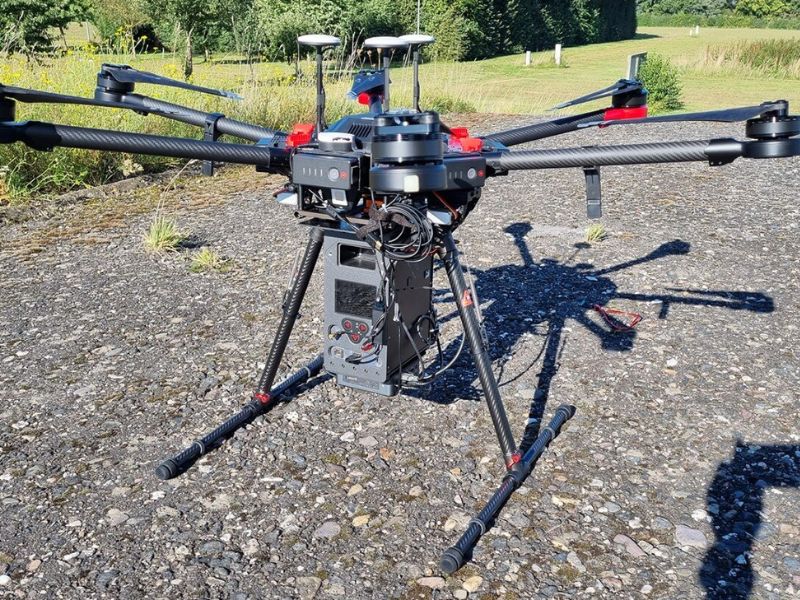
    In addition to a gamma detector, the highly automated UAS also has electro-optical and infrared cameras on board. Image Credits: Fraunhofer FKIE

    Chemical, biological, radiological, nuclear, and explosive substances (commonly referred to as CBRNE) can endanger both the public and emergency responders. In 2023, a tiny cesium capsule fell from a truck in Australia, sparking a major search. The growing number of hybrid attacks and other destabilizing activities has further intensified the threat landscape.

    Two research departments at Fraunhofer FKIE are therefore focusing closely on how drones (unmanned aerial systems, UAS) and robots (unmanned ground vehicles, UGVs) can be used to offer the most effective support to people in such hazardous situations.

    Such systems have been tested for years at EnRicH and ELROB. Both events are organized in alternating years by researchers from the Cognitive Mobile Systems department. They test drones and robots in real-world conditions and guide their development.

    Highly Autonomous UAS for Radioactive Source Detection

    Under a contract with the Bundeswehr Research Institute for Protective Technologies and CBRN Protection (WIS), researchers in the Sensor Data and Information Fusion department are developing a UAS capable of rapidly and accurately detecting and locating radioactive sources. A technology demonstrator has already undergone field trials at the WIS facility in Munster, demonstrating the ability to pinpoint a radioactive source within a few meters in just minutes.

    “The cesium capsule in Australia took days to locate using handheld detectors. “Our UAS could have located it much faster,” says Claudia Bender, who co-designed the demonstrator with Torsten Fiolka.

    The experimental CBRNE robot assists in the detection and recovery of radioactive hazardous materials. Image Credits: Fraunhofer FKIE/Fabian Vogl

    Detection Involves an Exploration Phase and a Targeted Search

    The researchers focus on advanced data processing, sensor fusion, and automation. The system largely automates the detection process and performs it in two stages: an exploration phase and a search phase. In the exploration phase, the UAS surveys the target area, continuously gathering environmental data. When it detects a deviation from background radiation, the system transitions into search mode.

    In search mode, the drone’s flight path adjusts dynamically based on both previously collected data and real-time sensor readings. The system uses stochastic methods to estimate the radioactive source’s probable locations.

    “After the pilot launches the drone, it first follows a predetermined flight path. “Once sufficient data is gathered, the system switches to adaptive search mode to estimate the source’s location,” the researcher explains. “The drone then creates waypoints, continuing until it pinpoints the hazardous material and reports its exact position.”

    A first technology demonstrator has already been successfully tested. It can precisely detect a radioactive source to within a few meters in only a few minutes. Image Credits: Fraunhofer FKIE

    Advanced Sensing and Mapping Capabilities of the Drone

    A spatial heat map shows radiation levels across the scanned areas, while a probability map highlights the cell most likely to contain the radioactive material.

    The drone uses a gamma detector to measure radiation and additional sensors to support detection. It also includes electro-optical and infrared cameras, an Intel NUC, an IMU, and an LTE module for ground monitoring. The cameras capture live video from the drone and identify objects like people, buildings, and vehicles, displaying them on a georeferenced map. The IMU tracks the drone’s 3D position and movement.

    Researchers developed the technology demonstrator through the HUGIYN project (Highly Automated UAS for Detecting and Identifying γ-Emitting Nuclides). In the SLEIPNIR project, researchers aim to boost the UAS’s speed and track multiple moving nuclides simultaneously.


    Read the original article on: Tech Xplore

    Read more: Drone Technology to Reshape Disaster Response, Healthcare, Environment, Farming, and Cybersecurity
  • Drone Technology to Reshape Disaster Response, Healthcare, Environment, Farming, and Cybersecurity

    Drone Technology to Reshape Disaster Response, Healthcare, Environment, Farming, and Cybersecurity
    Scientists report that intelligent drones and unmanned aerial systems (UAS) are quickly advancing from experimental tools into critical infrastructure for disaster response, healthcare delivery, agriculture, logistics, archaeology, environmental monitoring, and many other fields essential to human progress.
    The study lays important groundwork for real-world deployment for future models in domains such as wildlife monitoring, disaster management, and precision agriculture. Image Credits: Pixabay

    Scientists report that intelligent drones and unmanned aerial systems (UAS) are quickly advancing from experimental tools into critical infrastructure for disaster response, healthcare delivery, agriculture, logistics, archaeology, environmental monitoring, and many other fields essential to human progress.

    The study, published in the International Journal of Cognitive Computing in Engineering, highlights that drone technology is on the brink of major advances across many fields, with the potential to greatly enhance quality of life globally.

    The authors explain that next-generation drones will offer significantly improved endurance, including longer flight distances, extended operating times, and greater robustness. These capabilities will allow drones to carry out prolonged missions such as long-range medical or commercial deliveries and large-scale surveillance in both urban areas and forested regions.

    Advances in artificial intelligence and machine learning are speeding up this shift, enabling drones to handle complex tasks with minimal human input. Recent developments allow drones to identify objects, navigate efficiently, and avoid obstacles on their own.

    The researchers add that as sensor technologies like LiDAR, multispectral imaging, and advanced inertial measurement units continue to improve, drones will gain a stronger ability to perceive their environments, making them increasingly valuable for applications such as mapping, surveying, and agriculture.

    List of UAV applications. Image Credits: International Journal of Cognitive Computing in Engineering (2026). DOI: 10.1016/j.ijcce.2025.10.004

    Charting the Future of Autonomous Drone Navigation

    The study uses a three-phase research framework to evaluate the current capabilities of drone technology and outline a roadmap for future advances in a field that has become increasingly vital in the age of digitization, artificial intelligence, and machine learning.

    To bridge theory and practical application, the researchers—based at the University of Sharjah in the United Arab Emirates, Université Constantine 2 in Algeria, and Taylor’s University in Malaysia—concentrate on the mathematical models that support autonomous navigation in unmanned aerial vehicles (UAVs).

    They present optimization-based path-loss models that account for terrain and environmental factors and benchmark these against existing state-of-the-art methods to measure their performance and effectiveness.

    The study also examines the core concepts and mathematical underpinnings of autonomous navigation, introduces an optimization model for predicting path loss, compares leading modern models, and reviews the most advanced algorithms and techniques in UAV research.

    It analyzes a wide range of optimization approaches—such as genetic algorithms, particle swarm optimization, ant colony optimization, and reinforcement learning—that allow drones to calculate efficient flight paths, minimize energy use, and avoid obstacles that could hinder or jeopardize missions.

    The authors emphasize that recent progress in unmanned aerial systems and artificial intelligence has accelerated research across many areas, including human–drone interaction, autonomous navigation, security, object detection, urban air mobility, energy-efficient design, environmental monitoring, archaeology, wildlife conservation, medical deliveries, disaster response, and precision agriculture.

    Push for Stricter Regulations and Ethical Protections

    The authors note that as drone technology rapidly advances, countries will need to update and strengthen regulations governing its use. They highlight that regulatory bodies will address issues such as privacy and airspace management to ensure safe, accountable, and reliable drone operations.

    They predict that future innovation will focus on developing specialized drones tailored to industry needs. Advances in battery life and energy efficiency will increase drone flight frequency and enable longer missions, enhancing their practical utility.

    The researchers also stress that nations must prioritize drone security and counter-drone measures, which are becoming increasingly important as drone use expands and the risk of illegal or harmful activities grows. In densely populated areas, they add, greater attention should be paid to sustainability concerns, including reducing noise and emissions.

    The authors explain that drones are set to play a major role in the global Internet of Things (IoT) ecosystem, leveraging 5G and 6G networks for real-time data transfer and communication. Rising public interest in urban air mobility (UAM), which uses passenger drones for transport, has also driven efforts to create safe and efficient UAM systems.

    At the same time, they caution about the ethical challenges that come with these advances. High-tech drones equipped with sensitive sensors and cameras can capture personal or confidential information without consent, raising serious ethical concerns.

    The researchers also highlight environmental impacts. Drone flights can disturb wildlife, particularly bird habitats, affecting migration and nesting patterns, and contributing to noise pollution. Additionally, large-scale production of lithium batteries for drones generates electronic waste. They emphasize the need to balance technological progress with ecological stewardship to protect biodiversity and ensure environmental sustainability.

    Bridging Theory and Practice

    The study significantly advances drone research by connecting “theoretical path loss models with practical UAV applications,” providing a foundation for real-world deployment in areas like wildlife monitoring, disaster response, and precision agriculture.

    The authors add that “future drones will feature greater range and endurance, broadening their use across multiple industries.”

    The authors contend that ongoing technological advancements will drive the creation of specialized drones tailored to specific industrial requirements, which current models cannot fully meet. Progress is expected across both commercial and industrial drone applications.

    Looking ahead, the study emphasizes the development of energy-efficient drones that extend flight times, alongside enhanced security measures to prevent unauthorized drone use. Quieter, more environmentally friendly drones will see greater adoption, particularly in urban areas. As urban air mobility (UAM) approaches reality, integration with IoT and 5G networks will support real-time data exchange.

    In conclusion, the authors state that the future of drone technology will be defined by automation, versatility, safety, and environmental responsibility. As drones reshape industries and everyday life, their evolution will remain closely linked to technological innovation and societal demands.


    Read the original article on: Tech Xplore

    Read more: Engineers Build Intelligent Robodog Equipped with AI

  • The V4 Drone, Now The Fastest In The World, Hits 656 km/h and Regains The Speed Record

    The V4 Drone, Now The Fastest In The World, Hits 656 km/h and Regains The Speed Record

    Only a month after engineer Benjamin Biggs broke the 626 km/h record, the Bells duo have reclaimed the top spot with their new Peregreen V4 drone.
    Image Credits: Zap.aeiou

    Only a month after engineer Benjamin Biggs broke the 626 km/h record, the Bells duo have reclaimed the top spot with their new Peregreen V4 drone.

    South African duo Luke and Mike Bell have reclaimed the Guinness World Record for the fastest quadcopter. Their 3D-printed Peregreen V4 reached a top speed of 657.59 km/h.

    This new record surpasses the 626 km/h mark set just a month earlier by Australian engineer Benjamin Biggs. The Bells previously set records of 480 km/h with Peregreen 2 in June 2024 and 585 km/h with Peregreen 3 in October 2025. The Peregreen V4, their fourth custom drone, returns the title to the South African duo.

    Pioneering Speed in Drone Design

    Luke Bell, an aerial camera operator from Cape Town, led the design and build of the Peregreen V4, collaborating closely with his father, Mike. The project reflects more than two years of ongoing refinement, testing, and redesign. While the Bells built a solar-powered drone for endless daylight flight, the Peregreen series focused on top speed.

    A key part of the project was leveraging advanced 3D printing. The Peregreen V4 was built on a high-speed, dual-nozzle printer, allowing multiple materials to be combined in a single print. This let the team fine-tune strength, weight, and flexibility across the drone, including the tail and camera mount. The larger print volume also enabled the body to be printed as one continuous piece, boosting both structural integrity and aerodynamics.

    Hardware Upgrades and Record-Setting Flight Tests

    Several hardware upgrades also helped achieve the record. The drone uses high-speed, reliable brushless motors paired with high-power lithium-ion polymer batteries optimized for short bursts. Aerodynamics were enhanced using advanced modeling software to smooth the outer surface and reduce drag, while smaller six-inch propellers were chosen to maximize top speed, according to New Atlas.

    The tests adhered to standard international procedures, with the drone flown in opposite directions to offset wind effects. The official record speed was calculated as the average of the two runs, confirming it as the fastest ground speed ever for a remotely controlled, battery-powered quadcopter.


    Read the original article on: Zap.aeiou

    Read more: A Futuristic Keyboard with Snap-On Modules for Editing, Modeling, and Productivity

  • Safran Sees Hydrogen Aircraft as a 22nd-Century Technology

    Safran Sees Hydrogen Aircraft as a 22nd-Century Technology

    The head of French engine manufacturer Safran stated on Wednesday that hydrogen-powered airplanes, promoted by some as a means to significantly reduce carbon emissions from aviation, are not expected to become a practical technology in the near future.
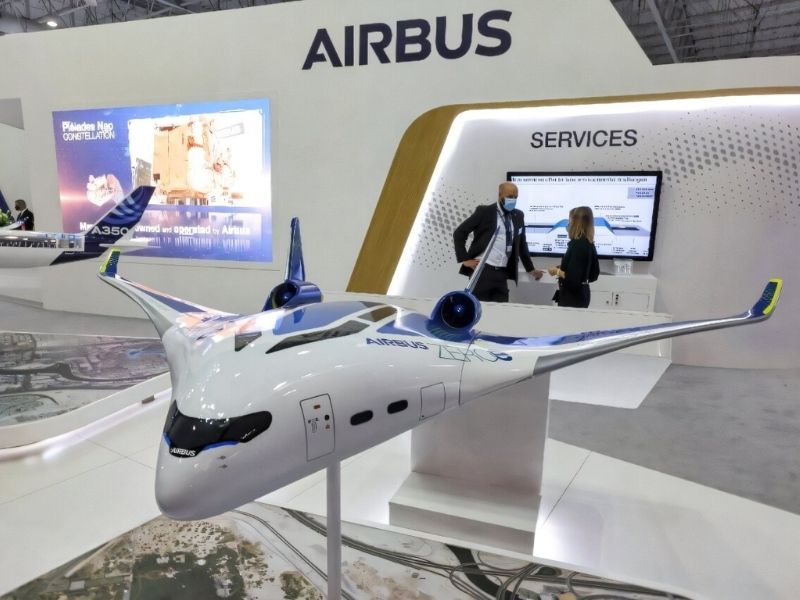
    Image Credits: A model of an Airbus hybrid-hydrogen concept plane from 2021.

    The head of French engine manufacturer Safran stated on Wednesday that hydrogen-powered airplanes, promoted by some as a means to significantly reduce carbon emissions from aviation, are not expected to become a practical technology in the near future.

    Olivier Andries told a French parliamentary committee that “hydrogen in aviation is more suited for the 22nd century.”

    Airbus Targets Hydrogen Planes to Cut Emissions

    Airbus, the pan-European aircraft manufacturer, has been developing hydrogen-powered planes with the goal of entering service in the 2040s, though it admitted last year that progress has been slower than anticipated.

    Because burning hydrogen generates only water, both the aviation and automotive sectors have explored it as a potential way to eliminate greenhouse gas emissions from transportation.

    Olivier Andries noted that Safran, a key engine supplier for both Airbus and Boeing, already produces engines capable of running on hydrogen.

    However, liquid hydrogen, even at -253°C (-423°F), occupies four times the volume of the kerosene currently used in airplanes.

    This makes it incompatible with existing aircraft designs and would demand billions of euros in investment to build hydrogen storage facilities at airports around the world.

    “You can’t just come up with ideas that don’t fit into today’s ecosystem,” Andries told lawmakers.

    He also questioned proposals to restrict flying as a way to reduce emissions, noting that the aviation industry is targeting a 50% cut in 2005-level emissions by 2050.

    Andries pointed out that over five billion people flew last year, and global airline revenue is already 20% above pre-COVID figures.

    “The trend is very strong, whether you like it or not,” he said, highlighting India’s rapidly growing middle class, which “wants to fly.”

    “When it comes to environmental concerns affecting global air traffic growth, I’m not seeing it,” he added.


    Read the original article on: Tech Xplore

    Read more: ISS Crew Safely Returns to Earth after a Medical Evacuation

  • The Idea of an Autonomous RV Appears to be Thrilling People Everywhere

    The Idea of an Autonomous RV Appears to be Thrilling People Everywhere

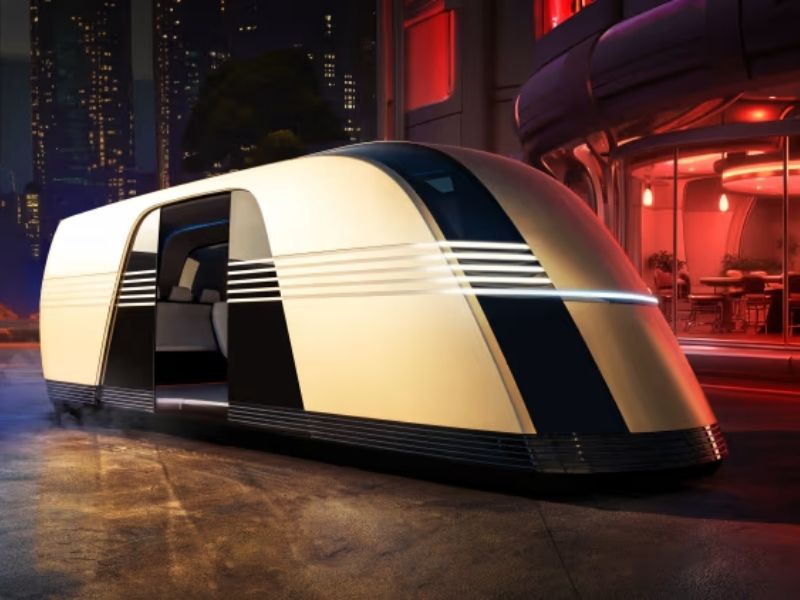
    The Tesla Robovan concept debuted at the company’s “We, Robot” event last October and was met with an enthusiastic response. Interest has surged again after an executive hinted it could evolve into a self-driving RV.
    Image Credits:Tesla

    The Tesla Robovan concept debuted at the company’s “We, Robot” event last October and was met with an enthusiastic response. Interest has surged again after an executive hinted it could evolve into a self-driving RV.

    A Driverless Design Beyond Urban Mobility

    The Tesla Robovan prototype is a modular, fully autonomous vehicle for up to 20 passengers and cargo. Its low-floor design, spacious interior, and panoramic visibility have sparked ideas for uses beyond urban transport.

    Social media has been buzzing that the Robovan could lead to autonomous RVs. Y Combinator CEO Garry Tan suggested it’s time for self-driving RV startups, and Tesla’s VP of Autopilot, Ashok Elluswamy, replied “On it,” fueling speculation about a camper-ready Robovan.

    Why the Robovan Design Fits the RV Lifestyle

    The Robovan concept’s design makes it well suited to discussions around RV use. Its flat, open floor plan, absence of a steering wheel, and Tesla’s load-leveling suspension allow users to configure the platform for sleeping, relaxing, or working. A self-driving electric RV also aligns with the growing “van life” movement, offering the appeal of autonomous, low-stress travel.

    For now, the concept of a Robovan-based RV exists only through hints and speculation on social media. Tesla has yet to confirm any plans for a fully autonomous RV built on the platform, and the Robovan itself remains a prototype without a defined production schedule. Still, online enthusiasm for a self-driving Tesla camper continues to grow, hinting that the Robovan could become more than the urban people mover Tesla initially imagined.


    Read the original article on: Autoblog

    Read more:Battery-Less Drone Engineered to Soar as Long as the Sun is Out


  • Battery-Less Drone Engineered to Soar as Long as the Sun is Out

    Battery-Less Drone Engineered to Soar as Long as the Sun is Out

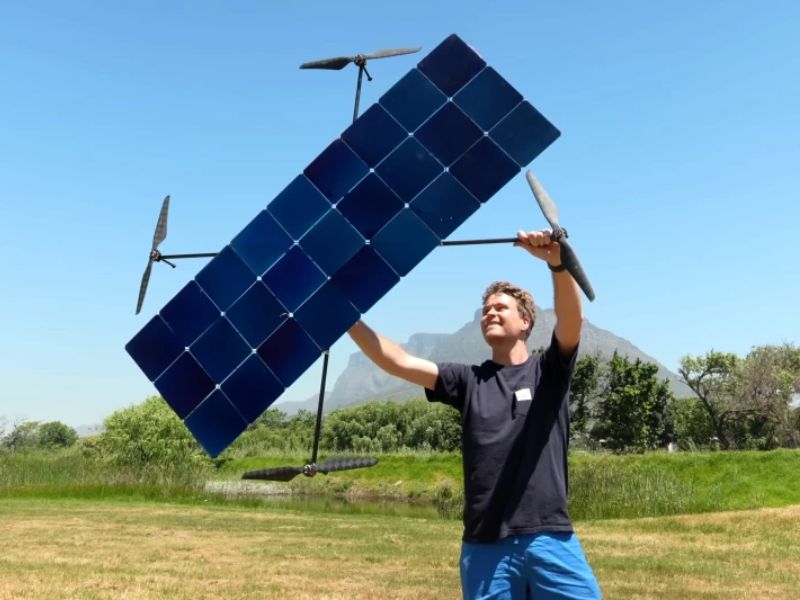
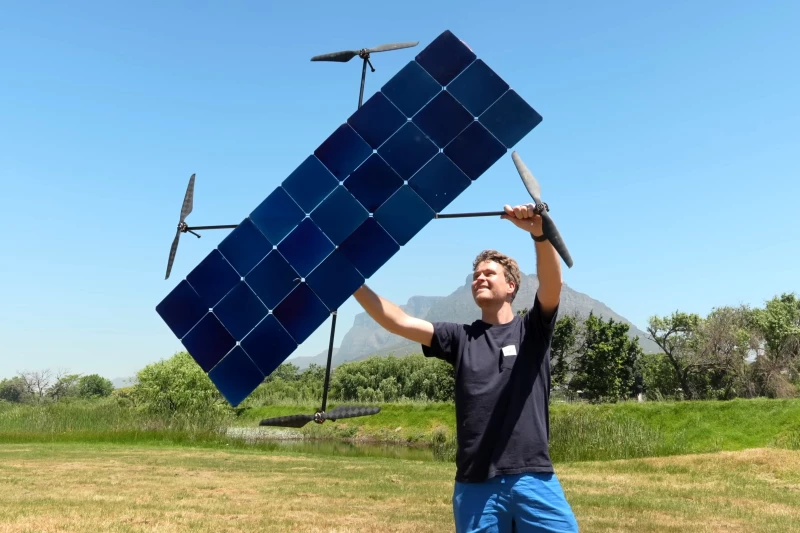
    The father-and-son duo behind last year’s record-breaking quadcopter has now developed a drone that resembles a flying solar panel, aiming for a design powered entirely by sunlight.
    Image Credits:”For years now, I’ve wondered – is it possible for a drone to fly on solar power alone?” says Luke Bell as he introduces a project designed to find that out
    Luke/Mike Bell

    The father-and-son duo behind last year’s record-breaking quadcopter has now developed a drone that resembles a flying solar panel, aiming for a design powered entirely by sunlight.

    This story has two parts. First, an update on the Peregrine project, which previously set the Guinness World Record for the “Fastest ground speed by a battery-powered RC quadcopter” at 480 km/h (just under 300 mph).

    The Bells Gear Up to Reclaim the Speed Crown

    Earlier this year, that title was taken by student Samuele Gobbi and his Fatboy 2 drone, which reached 557.64 km/h (346.5 mph). In response, Luke and Mike Bell began work on the Peregrine 3 to reclaim the record.

    A build video is available below, and while official record attempt footage is still pending, the Peregrine 3 team traveled to Dubai in June and surpassed the Fatboy 2, achieving a top speed of 585 km/h (363 mph), with an official average of 570 km/h. Congratulations to the Bells on their new Guinness World Record.

    Today, we’re focusing on the Bell team’s effort to create a multi-rotor drone that can remain airborne solely under sunlight. While similar research projects exist, they relied on solar cells to charge onboard batteries. The Bells aimed to eliminate batteries entirely.

    The drone itself is the simpler part of the equation: it features an X-frame made of carbon fiber tubing, lightweight Antigravity motors, 18-inch carbon fiber props from T-Motor, a flight controller, 3D-printed mounts, and small cameras feeding a POV VR headset.

    Wiring Solar Panels for Flight

    Twenty-seven delicate solar panels were wired in series, producing roughly 150 watts during ground tests. Some panels broke during gentle handling, and the family cat proved even more destructive. The panels were mounted on a 3-mm carbon fiber support structure, which was then bolted to the drone’s X-frame.

    With the build complete, the Bells carefully loaded the drone into a vehicle and took it to an open field for real-world testing. A detailed video shows the first flight powered entirely by solar energy—no batteries, no capacitors—demonstrating the concept in action.

    Of course, a drone like this isn’t likely to have immediate practical applications. But as a “what if” engineering experiment, it’s incredibly intriguing. Judging by their track record, we can likely expect an upgraded version to take flight sooner rather than later. In the meantime, hats off to the team.


    Read the original article on: Newatlas

    Read more:Atlas Humanoid Robots will be Deployed in Hyundai Factories

  • Hovering Drones Create Coordinated Displays of Light, Water, and Sound

    Hovering Drones Create Coordinated Displays of Light, Water, and Sound

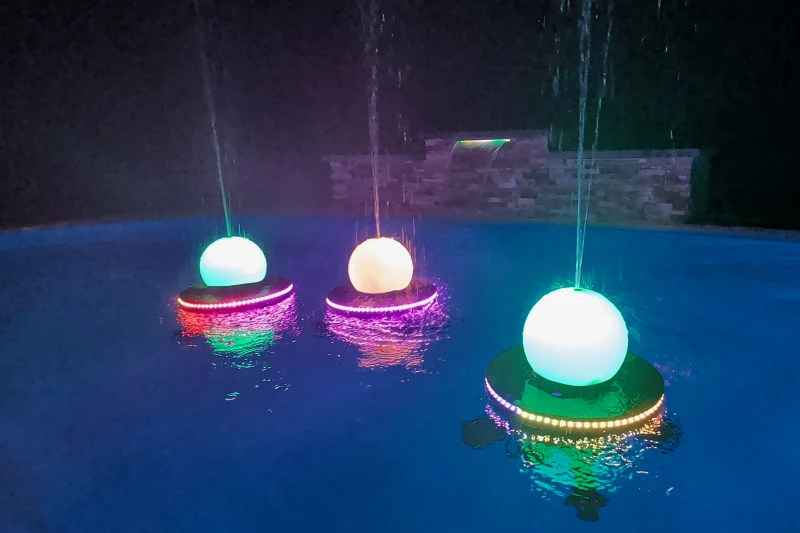
    "Traditional fountains have their charm, but they’re fixed in place and never change. Arivia is shaking things up with fleets of illuminated, synchronized aquatic drones that spray water in time with music."
    Image Credits:An envisioned Arivia aquatic drone show in Dubai
    Arivia

    Traditional fountains have their charm, but they’re fixed in place and never change. Arivia is shaking things up with fleets of illuminated, synchronized aquatic drones that spray water in time with music.”

    Japanese Drone Glides Freely on Water

    Created by the Japanese company Spaceone Fukushima, Arivia recently won the Innovation Award for Drones at CES 2026. Each unit has a spherical top above water, a cylindrical section below, and a disc-shaped flotation ring in between. Four underwater thrusters allow it to glide across the water in any direction.

    Image Credits:A close look at an Arivia prototype
    Arivia

    The drone houses electronics including a fountain pump with an adjustable nozzle, RGB LEDs, an audio player, GPS navigation, a camera, and a Wi-Fi module. With this setup, multiple drones can autonomously coordinate across lakes, harbors, or pools to perform preprogrammed water, light, and music shows. They can also be controlled manually if required.

    Image Credits:Small-scale Arivia prototypes, playin’ in the pool
    Arivia

    An extra benefit is that, being in the water, the drones can also collect environmental data like temperature, turbidity, and oxygen levels using built-in sensors. There’s no word yet on when Arivia drone fleets will appear nearby, but for now, you can see them in the animated video below.


    Read the original article on: Newatlas.

    Read more:LG Presents a New Laundry-Folding Robot at CES 2026

  • A Shape-Shifting Wheel Engineered for Moon Cave Exploration

    A Shape-Shifting Wheel Engineered for Moon Cave Exploration

    Hidden below the Moon’s pockmarked exterior are vast lava tubes and deep shafts—natural caverns that could one day protect lunar habitats from cosmic radiation and extreme temperature changes. These underground formations are among the most scientifically important sites in the solar system, yet reaching them remains a major and difficult obstacle.
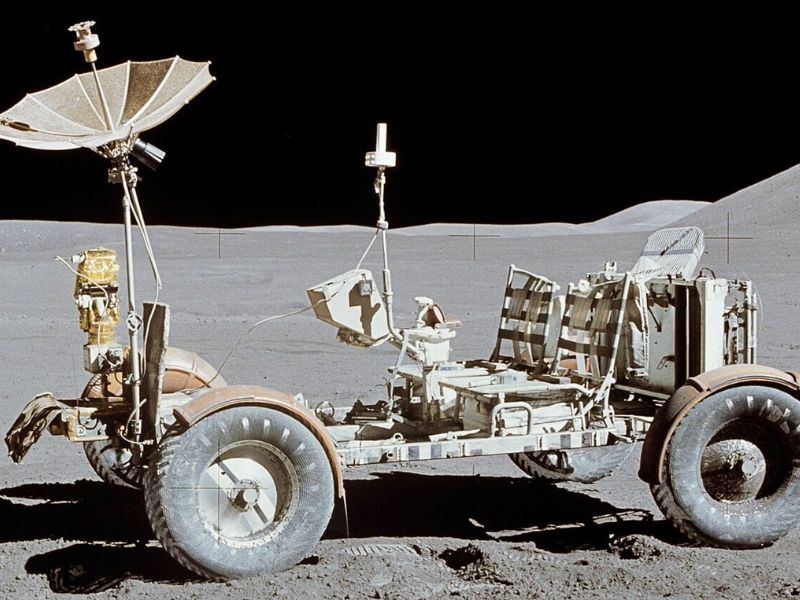
    Expanding wheels may significantly enhance the capability and reach of lunar rovers. Image Credits: NASA/Dave Scott

    Hidden below the Moon’s pockmarked exterior are vast lava tubes and deep shafts—natural caverns that could one day protect lunar habitats from cosmic radiation and extreme temperature changes. These underground formations are among the most scientifically important sites in the solar system, yet reaching them remains a major and difficult obstacle.

    The openings to these caves are surrounded by steep, uneven ground littered with rocks and loose lunar soil. While small rovers are ideal for Moon missions—since deploying many of them reduces overall risk—they have a built-in drawback. Their small wheels can’t roll over obstacles much taller than the wheels themselves. A fleet of small rovers can keep going even if a few fail, but relying on a single large rover means one breakdown could end the entire mission.

    Big Mobility Gains in a Brutal Lunar Environment

    Expandable wheels offer a promising solution. By increasing their diameter to clear obstacles and shrinking again for easier travel, they could greatly improve mobility. However, designing such wheels for the Moon has been extremely difficult. The lunar environment is harsh on machinery: fine, abrasive dust seeps into every gap, and the vacuum causes exposed metal parts to fuse together through cold welding. Under these conditions, conventional hinges and joints wear out quickly.

    To overcome this, a research team led by Professor Dae-Young Lee at the Korea Advanced Institute of Science and Technology turned to ideas from the past. Drawing inspiration from Leonardo da Vinci’s self-supporting bridge and combining it with origami folding techniques, they created a wheel that can change shape without relying on traditional mechanical joints.

    The wheel is built around a flexible metal framework paired with fabric tension elements that bend instead of rotating. This allows it to grow from a compact 230 millimeters to about 500 millimeters in diameter, more than twice its original size. With these wheels, a small rover can stay low and compact during transport, then gain the obstacle-climbing capability of a much larger machine once operating on the Moon.

    Rigorous Testing on Simulated Lunar Terrain

    Researchers subjected the wheel to extensive trials using simulated lunar soil. The design showed excellent grip on loose, sloped terrain and withstood an impact comparable to a 100-meter fall under lunar gravity. The metal structure was supple enough to repeatedly change shape, yet strong enough to carry the rover’s weight over unstable regolith.

    The wheels on lunar rovers need to be the right size for the different lunar terrain. A new extendable wheel could make lunar rovers far more efficient. Image Credits: NASA

    Dr. Chae Kyung Sim of the Korea Astronomy and Space Science Institute highlighted the scientific value of lunar pits, describing them as “natural geological heritage sites” that this new technology could finally make accessible. Meanwhile, Dr. Jongtae Jang from the Korea Aerospace Research Institute explained that the wheel’s design was refined using thermal modeling to survive the Moon’s extreme 300°C temperature swings between day and night.

    Professor Lee shared confidence that, although challenges remain in areas such as communications and power supply, this innovative approach puts the team in a strong position to lead future missions aimed at exploring the Moon’s largely unknown underground regions.


    Read the original article on: Tech Xplore

    Read more: A Backpack using Aerospace Technology Helps Patients Regain Balance

  • A Roadway that Powers your Electric Car as you Drive

    A Roadway that Powers your Electric Car as you Drive

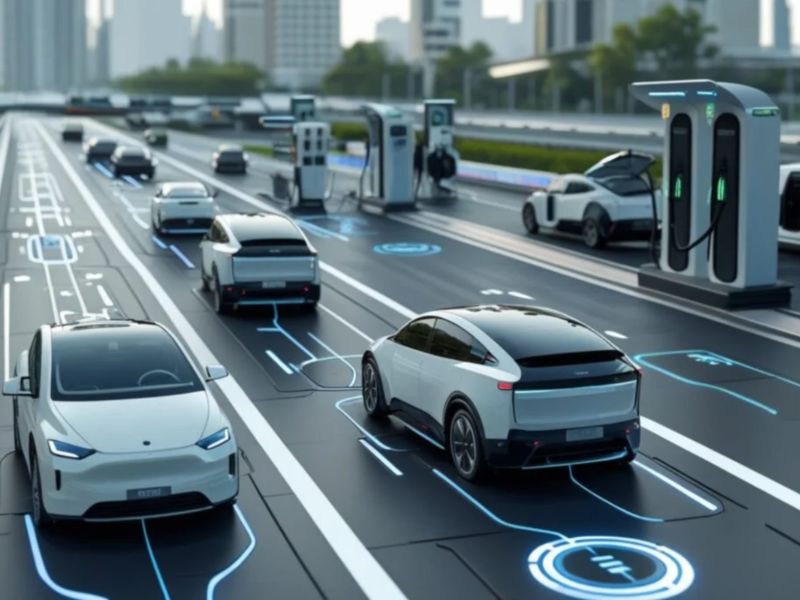
    For a long time, the biggest barrier to making electric cars mainstream wasn’t the motors—it was charging. Long waits, scarce charging stations, and bulky batteries have consistently posed tough challenges. Now, a daring new approach is emerging, already functioning in real-world settings, suggesting that electrified roads may become the next major breakthrough in sustainable transportation.
    Image Credits:gizmodo

    For a long time, the biggest barrier to making electric cars mainstream wasn’t the motors—it was charging. Long waits, scarce charging stations, and bulky batteries have consistently posed tough challenges. Now, a daring new approach is emerging, already functioning in real-world settings, suggesting that electrified roads may become the next major breakthrough in sustainable transportation.

    The setup uses copper coils embedded beneath the pavement, which create a magnetic field that transfers power to vehicles equipped with dedicated receivers. This “Charge as You Drive” system enables cars, buses, and trucks to recharge continuously while moving.

    300 kW On-the-Move Power That Works in Any Weather

    The output reaches 200 kW, with peaks up to 300 kW—comparable to today’s ultra-fast charging stations. A key benefit is that the infrastructure works reliably in rain, ice, or snow, without affecting safety or efficiency. It can also be installed on existing highways, avoiding the need to rebuild entire roads.

    The initial stretch measures just 1.5 kilometers and sits near the A-10 highway on the outskirts of Paris. Although short, it forms part of an ambitious plan to electrify 9,000 kilometers of roads by 2035.

    Early trials used four vehicle types—a truck, van, bus, and passenger car—and each managed to regain energy within minutes of driving, greatly reducing the need for lengthy charging stops. This approach could also allow for smaller batteries, currently one of the most costly and environmentally demanding components of electric vehicles.

    With large-scale adoption, this technology could virtually eliminate one of the major challenges of electric mobility: limited range. Charging would occur seamlessly during travel, removing the need for station lines or meticulous route planning.

    Lighter, Greener Vehicles With Low-Maintenance Infrastructure

    Using smaller batteries would also make vehicles lighter, cheaper to produce, and less dependent on raw materials, while significantly reducing their environmental footprint. Another benefit is the system’s minimal upkeep—its lack of moving parts means it can withstand heavy traffic with high durability.

    France is stepping ahead by developing a fully integrated dynamic charging network, while many other nations remain limited to small, independent pilots. The initiative is about more than advanced engineering—it aims to reshape the act of driving itself, turning charging into an invisible, automatic, and uninterrupted process.

    Rather than simply creating a road that powers vehicles, the project suggests a future in which electric mobility operates smoothly and intuitively, without requiring drivers to change their habits.


    Read the original article on: Gizmodo

    Read more: Scientists Watch Flu Viruses Enter Human Cells Live

  • Bat-Inspired Drones Could Aid Rescues in Storms and Darkness

    Bat-Inspired Drones Could Aid Rescues in Storms and Darkness

    Don’t be misled by the fog, eerie lights, or fake bats—Worcester Polytechnic Institute’s robotics lab isn’t throwing a Halloween party.
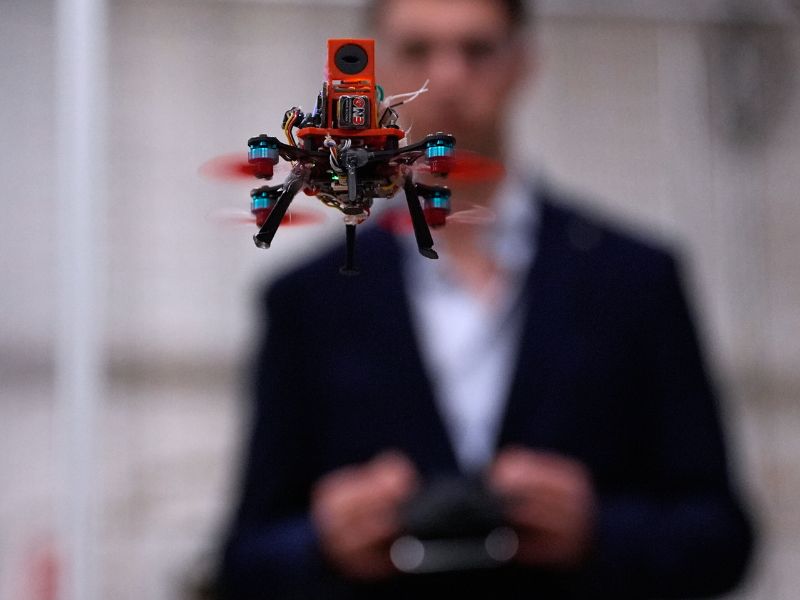
    Colin Balfour, a sophomore studying robotics engineering, flies a small drone at a laboratory at the Worcester Polytechnic Institute, Monday, Oct. 20, 2025, in Worcester, Mass. Image Credits: AP Photo/Charles Krupa

    Don’t be misled by the fog, eerie lights, or fake bats—Worcester Polytechnic Institute’s robotics lab isn’t throwing a Halloween party.

    Instead, the lab serves as a testing site for miniature drones designed to carry out search and rescue operations in dark, smoky, or stormy environments.

    “We know that during earthquakes or tsunamis, power lines often fail—frequently at night—so waiting until morning to rescue survivors isn’t an option,” explained Nitin Sanket, assistant professor of robotics engineering. “That led us to look at nature. Could any creature handle this?”

    Bat-Inspired Drones in Rescue Missions

    Sanket and his students turned to bats, inspired by their remarkable echolocation skills. With funding from the National Science Foundation, they are creating small, cost-effective, and energy-efficient aerial robots capable of operating in conditions where conventional drones cannot.

    Last month, emergency teams in Pakistan deployed drones to locate people stranded on rooftops amid severe flooding. In August, a drone helped rescuers locate a man in California who had been trapped for two days behind a waterfall. Earlier in July, drones assisted in mapping a safe path to reach three miners who had been trapped underground in Canada for over 60 hours.

    Colin Balfour, a sophomore studying robotics engineering, flies a small drone at a simulated night flight at a laboratory at the Worcester Polytechnic Institute, Monday, Oct. 20, 2025, in Worcester, Mass. Image Credits: AP Photo/Charles Krupa

    Although drones are increasingly used in search and rescue, Sanket and other researchers aim to go beyond the current model of manually controlled, single robots. The next major advancement, according to Ryan Williams, an associate professor at Virginia Tech, is creating aerial robots that can operate in swarms and autonomously decide where to search.

    “That kind of deployment—fully autonomous drones—barely exists,” he said.

    Using Data-Driven Drones to Enhance Search and Rescue

    Williams addressed this challenge in a recent project, programming drones to coordinate their search patterns with human rescuers. His team also analyzed historical data from thousands of missing-person cases to build a model predicting how a lost person might behave in the wilderness.

    “We then used that model to guide our drones, focusing their searches on areas with the highest likelihood of finding someone,” he explained.

    Colin Balfour, a sophomore studying robotics engineering, checks the rotors on a small drone at a laboratory at the Worcester Polytechnic Institute, Monday, Oct. 20, 2025, in Worcester, Mass. Image Credits: AP Photo/Charles Krupa

    At WPI, Sanket’s project tackles other drawbacks of current drones, such as their size and sensory limitations.

    “Most existing robots are large, heavy, costly, and can’t function in all environments,” he said.

    In contrast, his drone is small enough to fit in the palm of a hand, built primarily from low-cost hobby materials, and capable of operating in complete darkness. It uses a tiny ultrasonic sensor—similar to those in automatic faucets—to mimic a bat’s echolocation, sending out high-frequency pulses and detecting obstacles through the returning echoes.

    Drone Navigates in Darkness and Obstacles

    In a recent demonstration, a student remotely launched the drone in a brightly lit room and then again with only a dim red light. As it neared a clear Plexiglas wall, the drone consistently stopped and reversed, successfully navigating even in darkness with fog and artificial snow in the air.

    Nitan Sanket, assistant professor of robotics engineering, describes the components on a tiny drone at his lab at Worcester Polytechnic Institute, Monday, Oct. 20, 2025, in Worcester, Mass. Image Credits: AP Photo/Charles Krupa

    “Right now, search and rescue robots mostly work during daylight,” Sanket explained. “The challenge is that these operations are tedious, hazardous, and often take place in the dark.”

    However, the development process wasn’t without hurdles. The team discovered that the noise from the drone’s propellers disrupted the ultrasonic signals, so they designed 3D-printed shells to reduce the interference. They also applied artificial intelligence to help the drone filter and interpret the sound signals effectively.

    Robotics engineering students change out the battery on a tiny drone at a laboratory at Worcester Polytechnic Institute, Monday, Oct. 20, 2025, in Worcester, Mass. Image Credits: AP Photo/Charles Krupa

    Drones Still Far from Matching Bats’ Precision

    There’s still a significant gap between the drones and real bats, which can finely control their muscles to focus on specific echoes and detect objects as tiny as a human hair from several meters away.

    “Bats are incredible,” Sanket said. “We’re far from replicating what nature can do, but the aim is that, eventually, our drones will reach that level and be practical for use in real-world deployments.”


    Read the original article on: Tech Xplore

    Read more: As AI Develops Further, it Could Become More Self-Serving