
Depositphotos
Researchers at Penn State have developed a new breath-based sensor that may soon provide a fast, painless, and simple method for diagnosing diabetes. The researchers made the device by heating a polymer until it transformed into porous graphene.
The Centers for Disease Control (CDC) reports that of the 38 million people living with diabetes, around one in five are unaware they have it. For those with prediabetes—a condition where elevated blood sugar levels have not yet reached the diabetic range—eight out of ten remain unaware they have it. A simple test to detect these conditions early could play a major role in encouraging people to make lifestyle changes to manage or even prevent diabetes.
Breath-Based Testing: A Promising Alternative to Traditional Diabetes Diagnostics
At present, doctors usually diagnose diabetes through blood tests conducted in clinics or laboratories. The most common method involves fasting overnight, though more comprehensive evaluations may take several days. Although researchers have explored non-invasive approaches, such as detecting glucose levels in sweat, these methods aren’t widely available yet—and the need to sweat for a test isn’t always ideal for patients.
Aiming to enhance diabetes testing, researchers at Penn State turned their attention to detecting markers of the disease in a person’s breath—specifically, acetone. The body naturally releases this chemical when it burns fat, but the researchers say that acetone levels above 1.8 parts per million in the breath indicate the presence of diabetes.
“Although there are sensors that can detect glucose in sweat, they typically require sweating to be triggered through exercise, chemicals, or a sauna—methods that aren’t always convenient,” explained lead researcher Huanyu “Larry” Cheng. “With this sensor, all you need to do is breathe into a bag, insert the sensor, and wait a few minutes for the results.”
To develop the sensor, Cheng and his team used a carbon dioxide laser to treat a sheet of polyimide film, transforming it into porous graphene.
“It’s like over-toasting bread until it becomes carbon black,” Cheng said. “By adjusting laser settings like power and speed, we’re able to ‘toast’ the polyimide into a thin, porous form of graphene.”
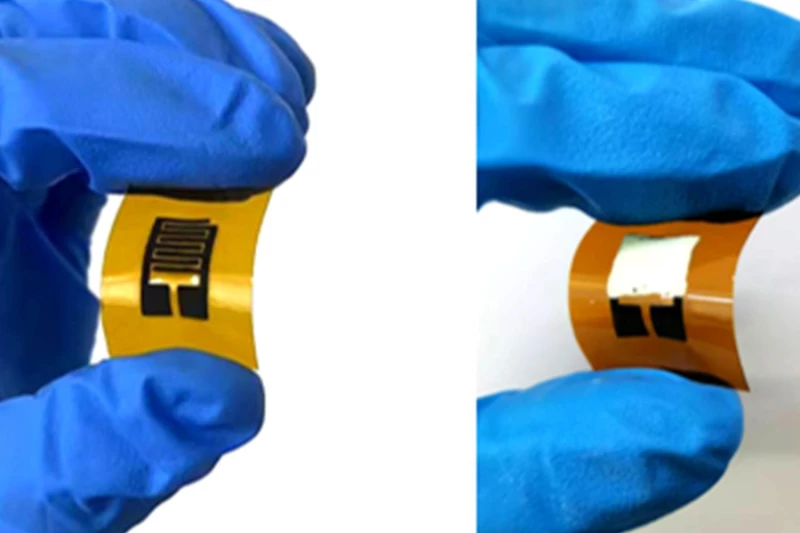
Penn State
Refining the Sensor: Greater Accuracy, Reusability, and Future Applications
The concept behind the sensor is that the tiny pores in the graphene are designed to be just the right size to trap acetone gas molecules. However, the graphene alone wasn’t selective enough. To improve its accuracy, the researchers added a zinc oxide molecular sieve and a membrane that filters out water vapor from breath. The final result is a thin, highly sensitive strip capable of detecting both diabetes and prediabetes—and it’s fully reusable after just a 23-second rest period.
Currently, the device requires users to exhale into a bag, but the team hopes to make it even more user-friendly. They’re exploring options like placing the sensor under the nose or embedding it into a mask to simplify the process. The researchers also believe the sensor could have broader health applications beyond diabetes.
“If we can better track how breath acetone levels respond to things like diet and exercise—similar to how glucose levels fluctuate—we may open up exciting new possibilities for using this technology in other areas of health,” Cheng said.
Read the original article on: New Atlas
Read more: Study Finds Phantom Limbs May Operate in Unexpected Ways

