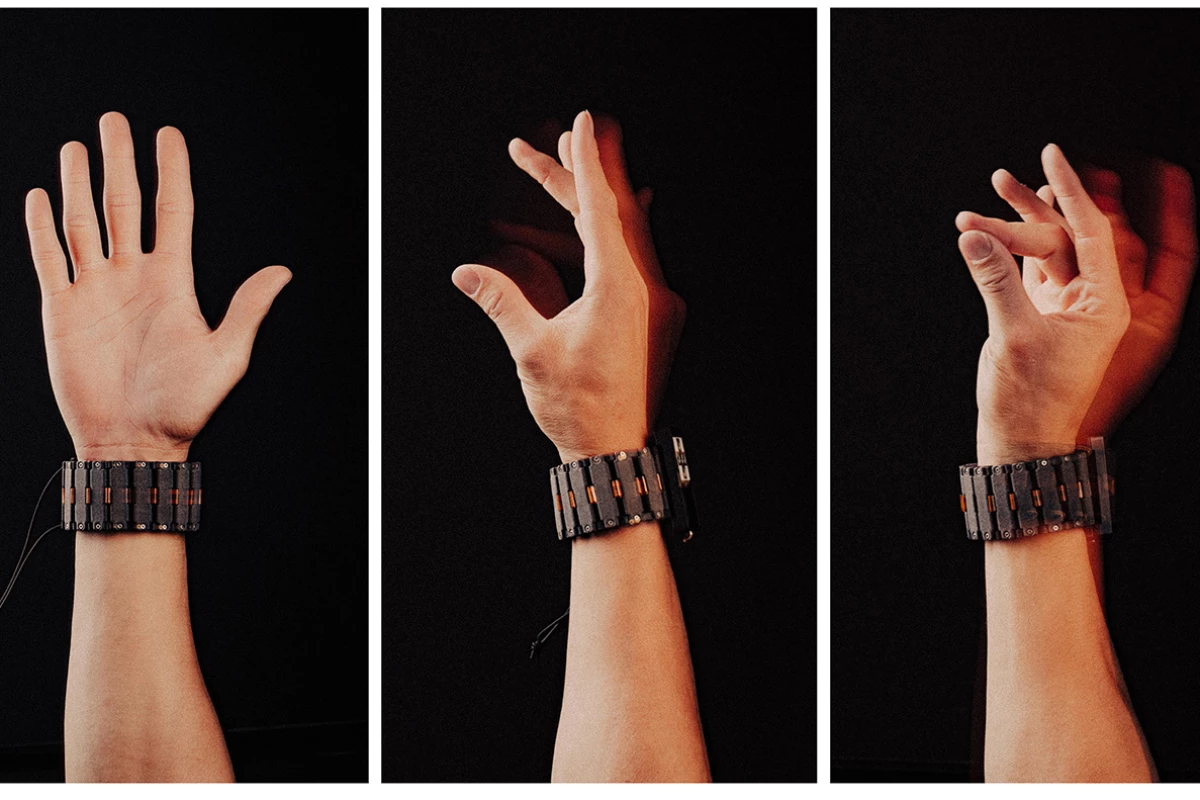
Meta researchers have created a wristband that converts hand gestures into computer commands—like moving a cursor or turning air handwriting into text. This tech could improve device accessibility for people with limited mobility and offer easier, more intuitive control for everyone.
A Wrist-Worn Device That Translates Nerve Signals Into Digital Commands
In a recent Nature paper, Meta’s Reality Labs detailed its sEMG-RD (surface electromyography research device), which uses sensors to convert electrical nerve signals from the wrist to the hand into digital commands for controlling connected devices.
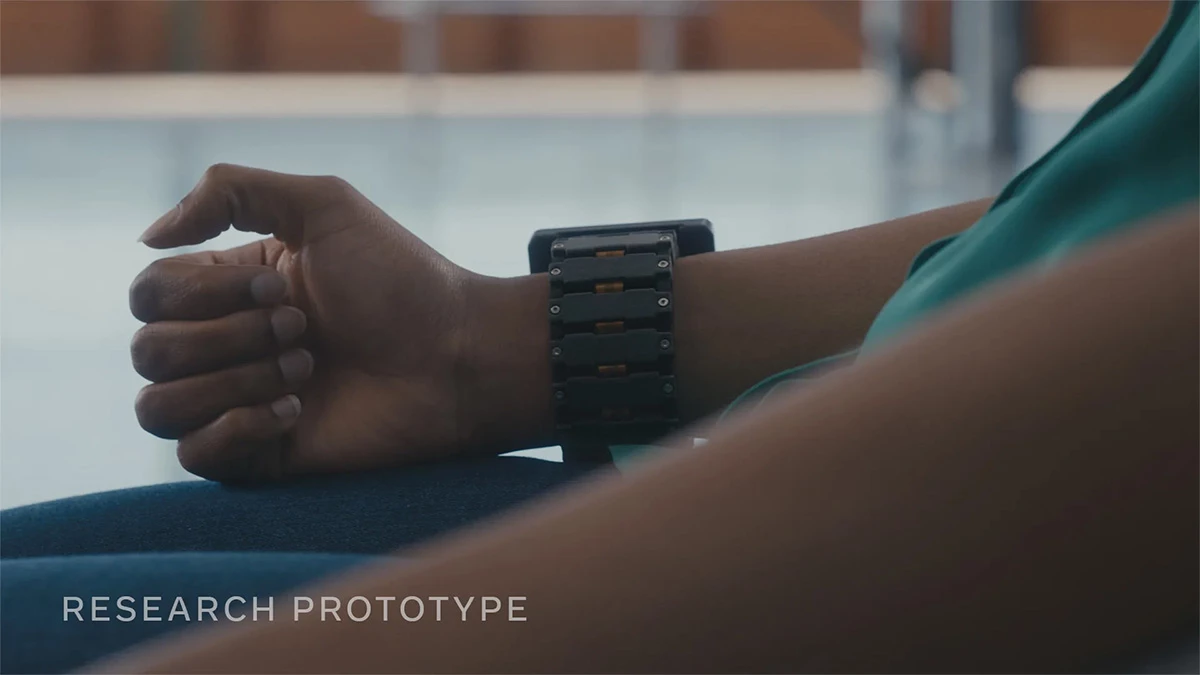
These signals are basically your brain sending instructions to your hand to perform chosen actions—so they can be viewed as deliberate commands. The demo video below shows the device in action.
Meta started developing this technology several years ago. In 2021, Thomas Reardon’s team at Reality Labs developed a prototype gesture control device using electromyography. At the time, Meta focused on improving augmented reality interactions, with early goals like replicating a basic mouse click. Reardon also headed the research featured in the current paper.
Meta
Many other projects have aimed to create similar systems—for example, a 2023 design used barometric-pressure sensors to detect 10 hand gestures, while the Mudra Band claims to control an Apple Watch through Surface Nerve Conductance and simple movements.
Meta’s sEMG-RD Enables Gesture Control and Air Writing at Near-Typing Speeds
Meta’s sEMG-RD tech takes things further. It enables full interface control with gestures like pinches, swipes, and taps—not just basic cursor movement. Users can even write in the air at 20.9 words per minute, close to the 36 WPM smartphone average.
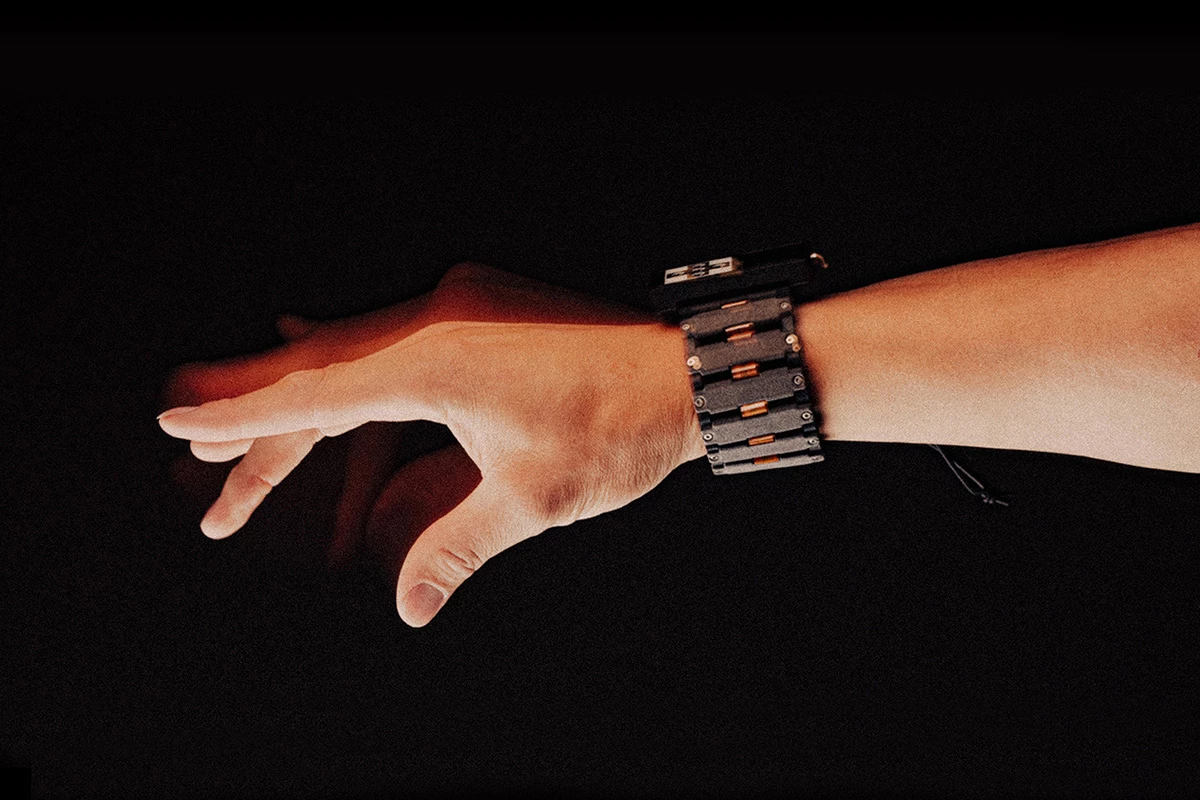
Image courtesy of the researchers
Meta’s Neural Network Adapts sEMG-RD to Any User Instantly
The system works out of the box without calibration, though it can be customized for accuracy. A neural network, trained on large-scale user data, reliably turns raw signals into commands for any wearer.
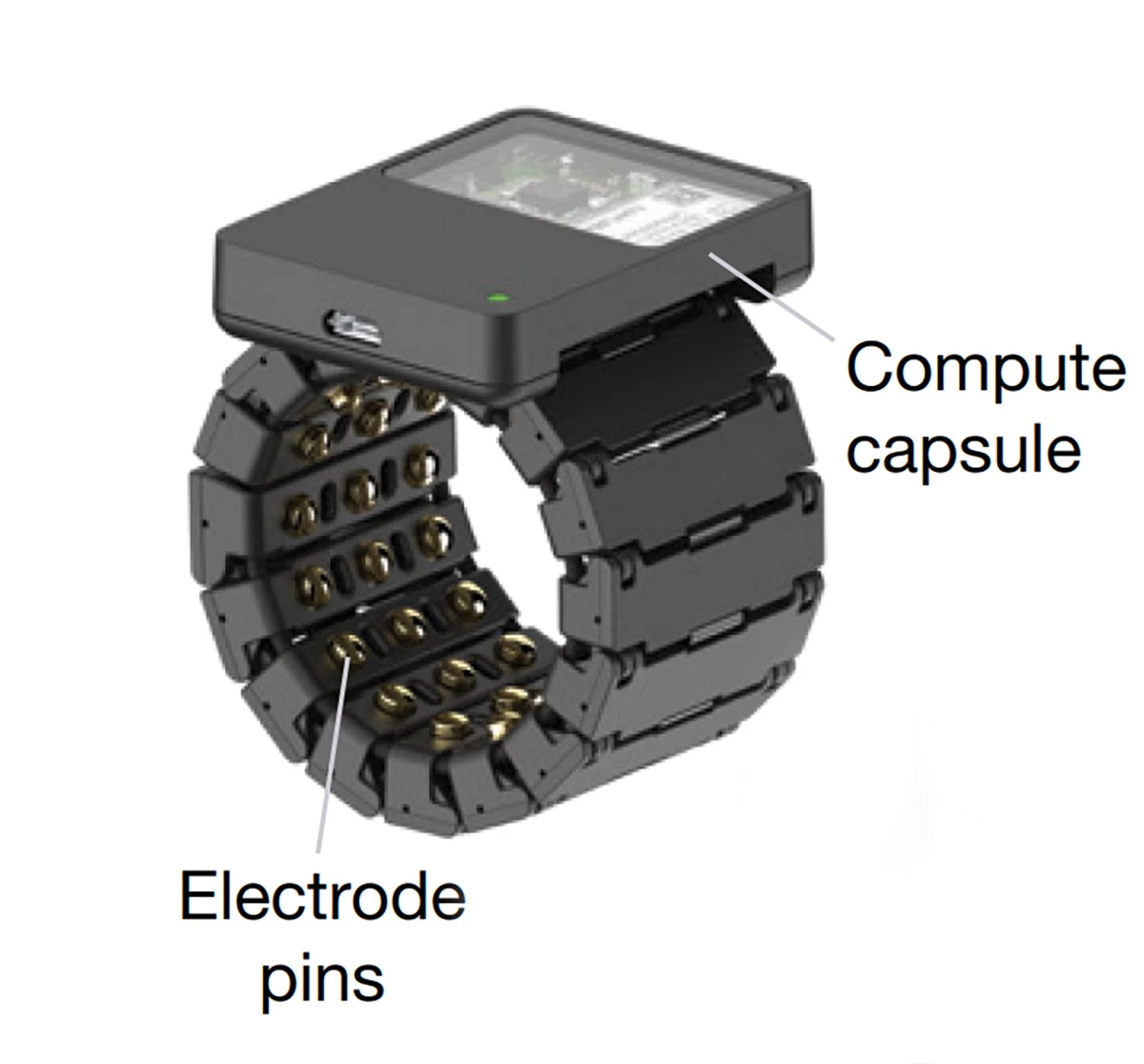
Image courtesy of the researchers
The researchers trained their system on data from thousands to create generalized models that accurately interpret input across users. This eliminates the need to individually adjust the sEMG-RD for each person. As a result, the wearable can be quickly adopted, much like a computer mouse requires no hand calibration.
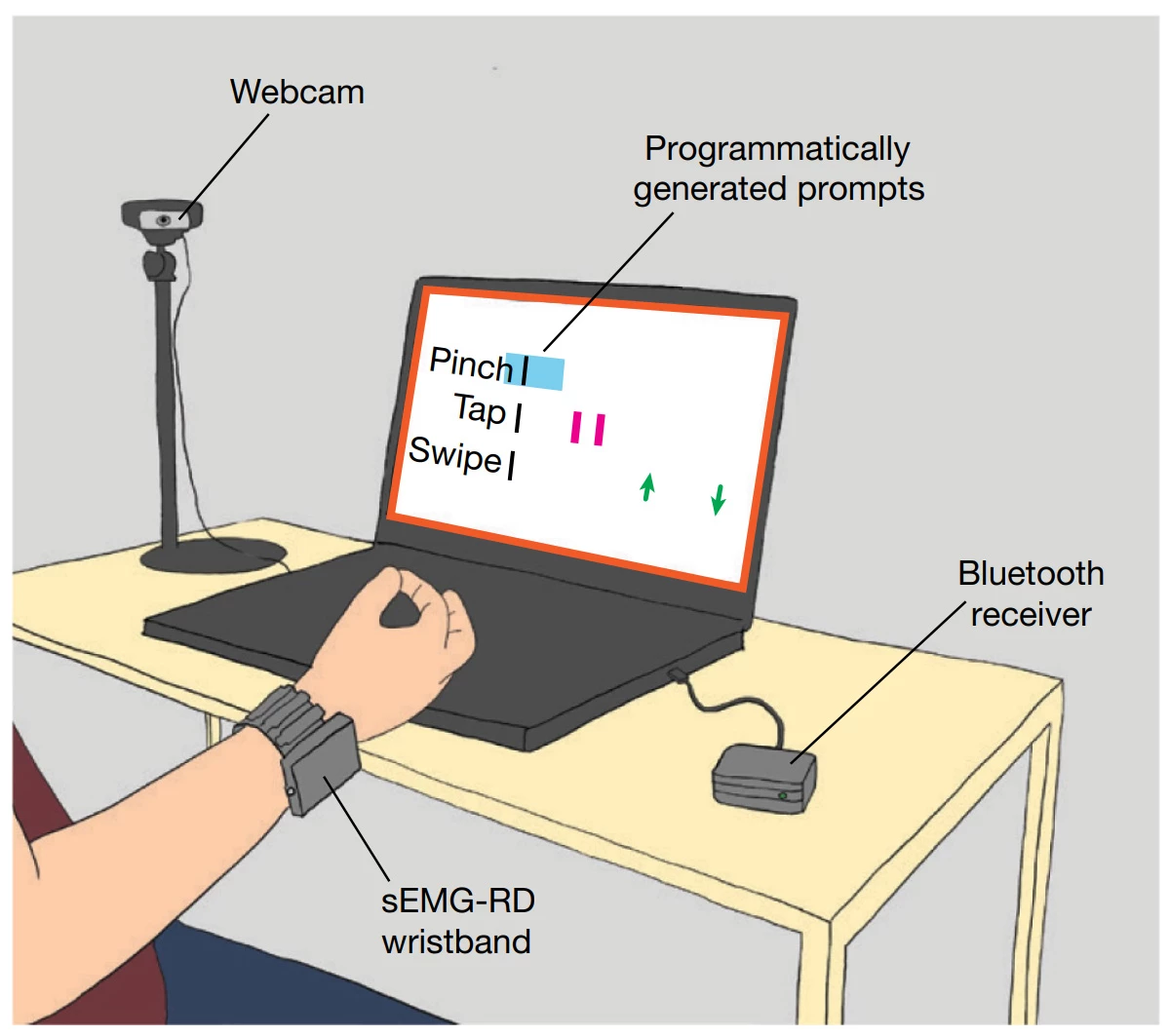
Image courtesy of the researchers
The team aims to advance the tech to detect gesture force, allowing finer control of devices like cameras and joysticks. It could also make using phones and other digital tools even less physically demanding. More intriguingly, it enables entirely new interactions—using unique muscle patterns or signals the wristband could learn to interpret, including gestures we haven’t yet imagined.
Read the original article on: New Atlas
Read more:A new Cleaning Robot May Help Automate Household Chores

