


Xinhua via China Daily
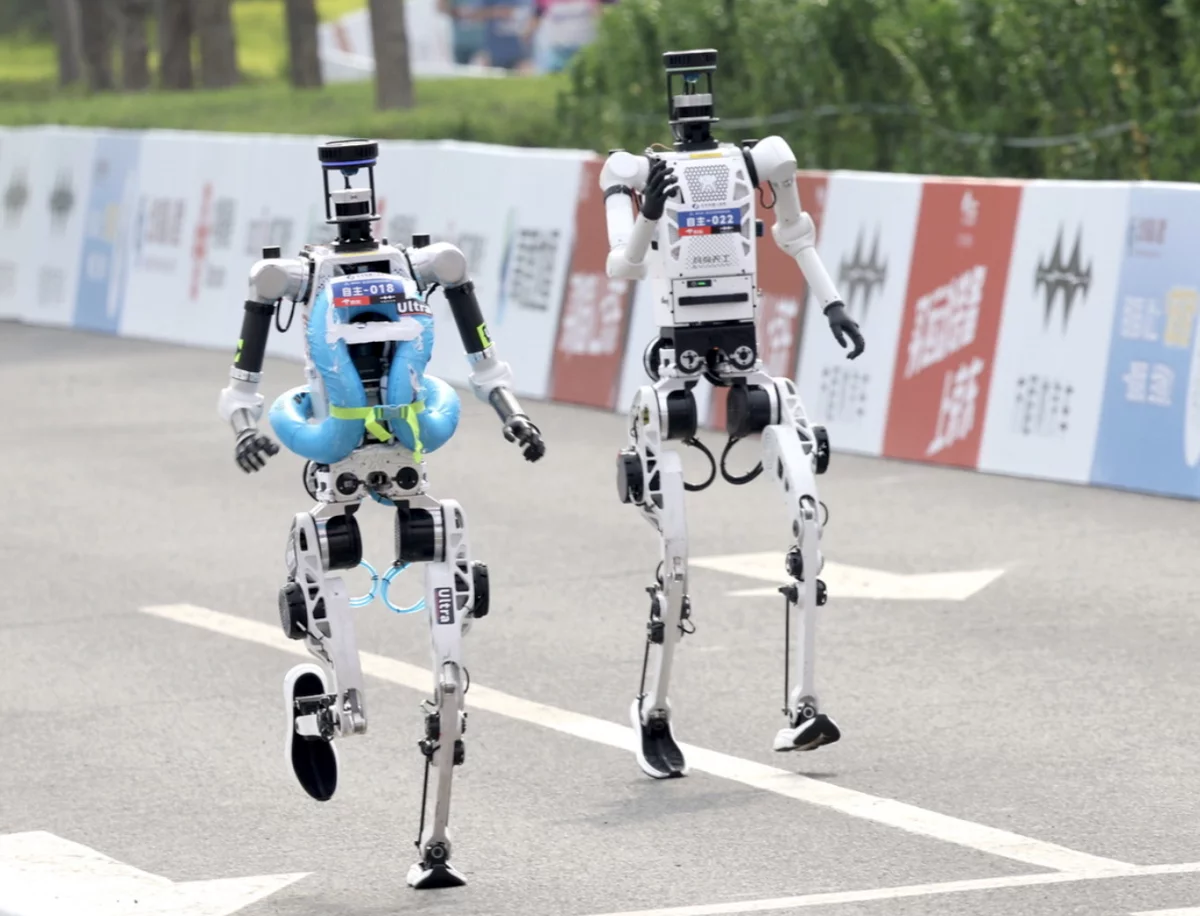
The days of mocking humanoid robots in sports may largely be over, as a group competing in a Beijing half marathon showed just how rapidly the technology has advanced in only a year. Although one robot had a disastrous start—tripping and falling apart right at the line—the record-breaking winner points to what lies ahead.
Lightning Robot Leaves Human Record in the Dust
The winner, a relatively little-known Chinese self-navigating robot called Lightning, was developed by the tech firm Honor, which is better recognized for its phones and laptops. It tore through the course in Beijing’s E-Town tech and economic development zone on Sunday, April 19, finishing in 50 minutes and 26 seconds—well ahead of the fastest human time of 57 minutes and 20 seconds so far.
Footage from China Global Television Network showed Lightning charging across the finish line, breaking the ribbon and appearing capable of running on indefinitely.
Standing 169 cm (5.5 ft) tall, the robot clearly shows how far Chinese humanoid technology has progressed in just a year. As seen at the recent InnoEx expo in Hong Kong, the emphasis now seems to be on improving joint flexibility and overall efficiency. According to China Daily, Lightning delivers a peak torque of 400 Nm and uses a liquid-cooling system with channels running deep into the motor—like capillaries—to disperse heat, supported by a high-power pump that drives over four liters of coolant per minute. In short, it can break a half-marathon record without overheating—at least by robotic standards.
Xinhua via China Daily
It’s important to note that a half marathon—13.1 miles (21.1 km)—is no easy feat. At my best, I could manage a little over six miles (about 10 km) in 50 minutes, which isn’t particularly fast competitively, yet these robots can now quite literally run circles around casual runners like me—and likely recover much faster, too.
Robots Navigate, Compete, and Dominate the Field
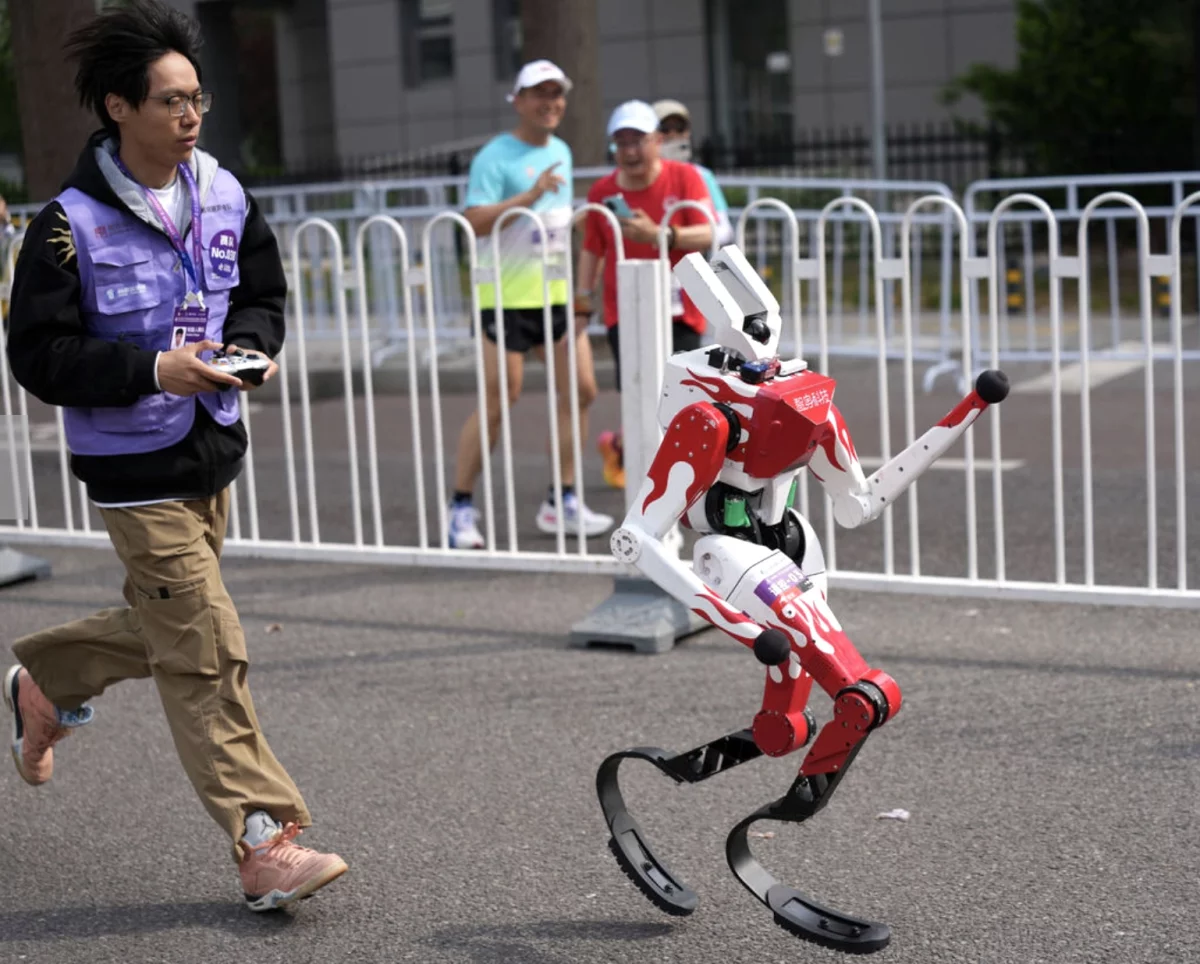
The autonomous entries navigated the course using the BeiDou satellite system alongside real-time 5G data, while partially assisted humanoids were followed by teams controlling them remotely. In total, more than 100 teams entered robotic runners, with machines from Honor taking all three top positions.
Xinhua via China Daily
That said, the race wasn’t without mishaps. Even the eventual winner—despite leading throughout—hit a barricade and toppled near the finish, though staff quickly intervened, allowing it to recover, finish the race, and still secure the record. Another robot fared worse, stumbling right at the start and literally breaking apart.
Its support crew rushed in immediately, bringing a stretcher to collect the scattered pieces of its body and limbs from the course.

Read the original article on:newatlas
Read more:3D-printed brain sensors may enable personalized neural monitoring


