Tag: space

  • An Interstellar Visitor May Have Shaped the Orbits in Our Solar System

    An Interstellar Visitor May Have Shaped the Orbits in Our Solar System

    The orbits of the planets around the Sun have been a subject of intense scientific debate. Scientists understand planetary properties well, but their trajectories have changed significantly since the Solar System's formation.
    Credit: Depositphotos

    The orbits of the planets around the Sun have been a subject of intense scientific debate. Scientists understand planetary properties well, but their trajectories have changed significantly since the Solar System’s formation.

    Planetary Migration

    A widely accepted theory suggests gravitational interactions caused young planets to migrate closer to or farther from their original positions.

    Now, a new theory proposes that an object with a mass between 2 and 50 times that of Jupiter may have passed through the Solar System and triggered these changes.

    The evolution of planetary orbits is a complex process. Initially, planets formed from a rotating disk of gas and dust surrounding the young Sun. The conservation of angular momentum caused this material to organize into a plane, leading to circular and aligned orbits.

    Orbital Migrations and Gravitational Influences

    As planets grew, interactions with the protoplanetary disk led to orbital migrations, shifting the planets closer to or farther from the Sun. Gravitational interactions also altered the eccentricity and inclination of the orbits, occasionally ejecting protoplanets from the Solar System. Tidal forces from the Sun may have further influenced these changes.

    Protoplanet ejections were common during the Solar System’s formation, but interstellar objects rarely visited.These visitors provide a unique opportunity to understand distant planetary systems.

    One notable example is ‘Oumuamua, discovered in 2017 as the first confirmed interstellar object. With its elongated shape and unusual acceleration—likely caused by outgassing or other non-gravitational forces—it offered new insights.

    An artist’s depiction of the interstellar comet Oumuamua. The comet, which is most likely pancake-shaped, is the first known object other than dust grains to visit our Solar System from another star. (NASA, ESA and Joseph Olmsted and Frank Summers of STScI)

    A recent study led by Garett Brown from the University of Toronto suggests that a massive interstellar visitor may have significantly influenced the orbits of the gas giants. The authors argue that current theories do not fully explain the observed eccentricities in these planets.

    The Role of a Massive Intruder

    The study shows that an object with a mass between 2 and 50 times that of Jupiter, passing through the Solar System with a minimum distance of 20 astronomical units from the Sun and a hyperbolic velocity below 6 km/s, could account for these characteristics.

    The team’s calculations indicate a 1 in 100 chance that an interstellar visitor caused the orbits we see today, a probability much higher than other theories offer. Based on simulations and approximate parameters for this object, the researchers concluded that this hypothesis is the most plausible to date.


    Read the original article on: Science Alert

    Read more: Space-Based Solar Power Set to Be Transmitted to Iceland by 2030
  • Space-Based Solar Power Set to Be Transmitted to Iceland by 2030

    Space-Based Solar Power Set to Be Transmitted to Iceland by 2030
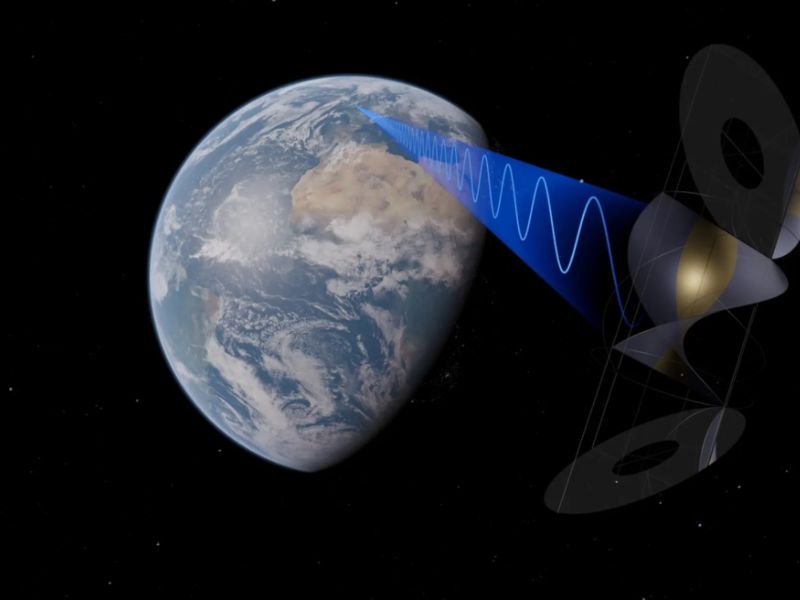
    UK startup Space Solar has signed a deal with Reykjavik Energy that could make Iceland the first country to receive solar power beamed from space, with a 30-MW demonstration set for launch by 2030.
    Artist’s concept of an orbital solar power plant
    Space Solar

    UK startup Space Solar has signed a deal with Reykjavik Energy that could make Iceland the first country to receive solar power beamed from space, with a 30-MW demonstration set for launch by 2030.

    While solar power is a clean energy source, it faces limitations like cloud cover and nighttime, which reduce its availability. Since the 1970s, one solution proposed has been to place solar collectors in geosynchronous orbit, about 22,236 miles above Earth, where they would receive continuous sunlight without atmospheric interference.

    Harnessing Space-Based Solar Power

    In this system, solar panels convert sunlight into electricity, which then converts into microwaves. These microwaves would be beamed to ground-based receivers, converting the power back to electricity for the grid. Theoretically, just three of these stations could meet Earth’s entire energy demand.

    However, this idea comes with engineering challenges. Orbiting collectors would need to be massive, with ground antennas covering vast areas. Even with minimal construction and launch costs, expenses remain high. The technology would also need to operate almost autonomously for decades, adding to its complexity. NASA estimates space-based solar could be 12 to 80 times more costly than Earth-based renewables.

    Despite these challenges, Space Solar, along with Icelandic private climate group Transition Labs, is moving forward. The company aims to scale its 30-MW project to gigawatt capacity by 2036 and is exploring additional receiver sites in Iceland, Canada, and northern Japan.

    Space-based solar power offers unique benefits, including competitive costs and 24/7 availability,” said Martin Soltau, co-CEO of Space Solar. “We’re excited to work with Reykjavik Energy on this project for a sustainable future.”


    Read Original Article: New Atlas

    Read More: Scitke

  • The First Wooden Satellite in the World Has Been Launched Into Space

    The First Wooden Satellite in the World Has Been Launched Into Space

    (JIJI PRESS/AFP/Japan OUT)

    Wooden Satellite Launched into Space

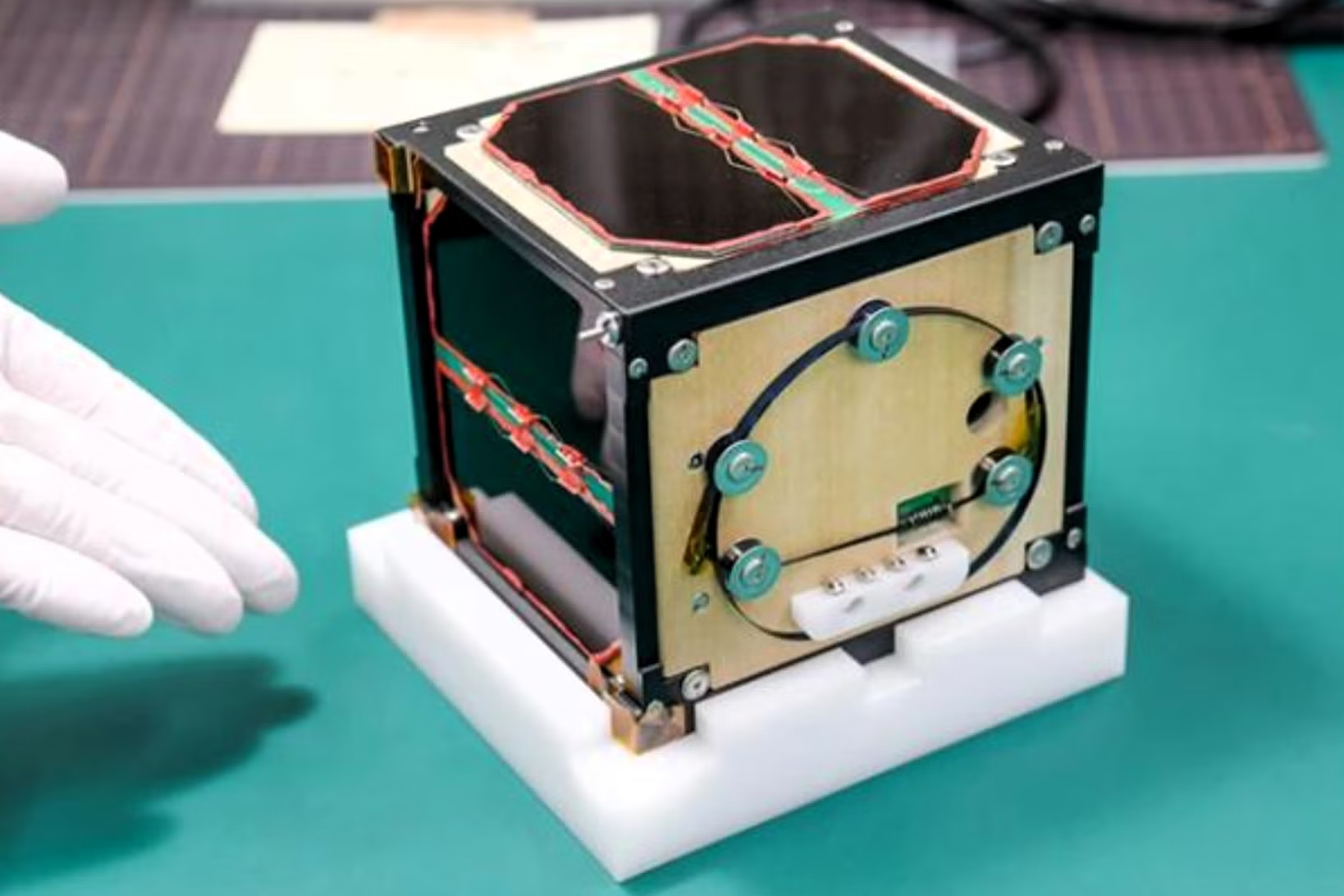
    Its Japanese creators announced on Tuesday that they launched the first-ever wooden satellite into space aboard a SpaceX rocket. This satellite is part of a resupply mission to the International Space Station (ISS).

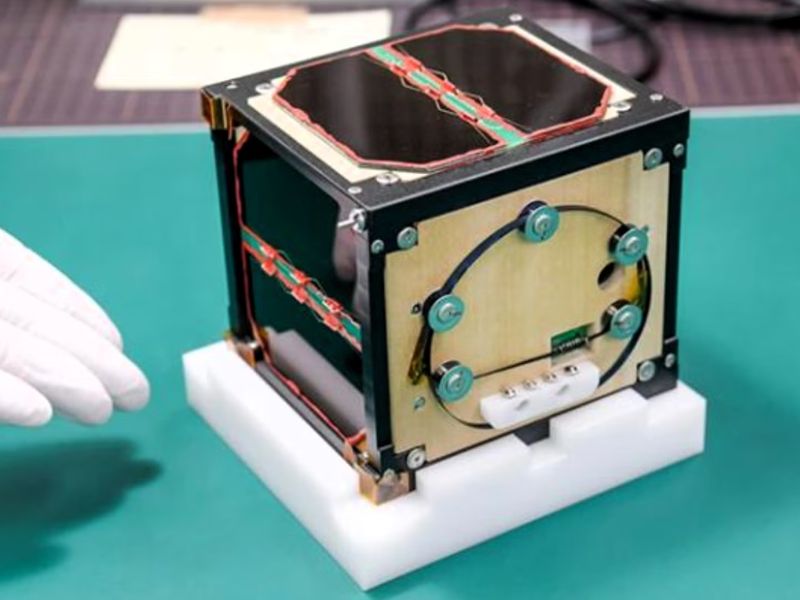
    Scientists at Kyoto University developed the satellite, designing it to burn up entirely upon re-entering Earth’s atmosphere. This design potentially offers a sustainable alternative to prevent metal debris from entering the environment as decommissioned satellites return to Earth.

    LignoSat’s Dimensions and Launch Details

    Named LignoSat, the cube-shaped experimental satellite measures 10 centimeters (4 inches) on each side. Kyoto University’s Human Spaceology Center confirmed that the unmanned rocket launched from NASA’s Kennedy Space Center in Florida, and the satellite safely entered space, as stated in a post on X.

    A spokesperson from Sumitomo Forestry, a co-developer of LignoSat, confirmed that the launch was “successful.” The team expects the satellite to reach the ISS shortly, and about a month later, they will release it into outer space to assess its resilience under extreme temperature fluctuations.

    Data Transmission and Future of Non-Metal Satellites

    Once in orbit, LignoSat will transmit data back to Earth, allowing researchers to examine its structural integrity. “Non-metallic satellites could become the norm,” astronaut and Kyoto University professor Takao Doi suggested at a press conference earlier this year, emphasizing the potential of wood-based materials in space technology.


    Read the original article on: Science Alert

    Read more: A Wooden Miniature Satellite is Set to Launch into Earth’s Orbit

  • NASA Unveils Sinister Eyes in Space, and They Seem to Be Staring Right at You

    NASA Unveils Sinister Eyes in Space, and They Seem to Be Staring Right at You

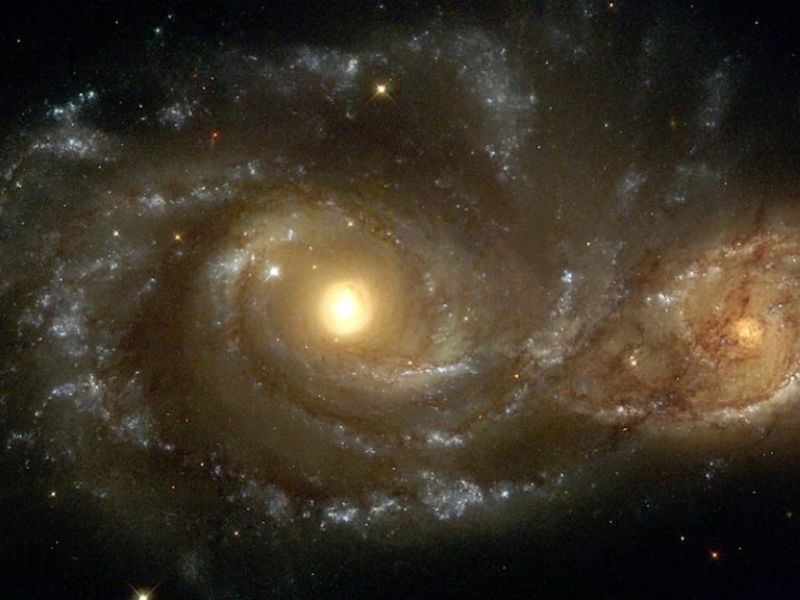
    "The abyss also looks back into you," said German philosopher Friedrich Nietzsche in 1886. His words feel almost prophetic as we gaze, nearly 140 years later, at an image from 80 million light-years away that resembles a pair of piercing eyes, staring back at us.
    Interacting galaxies NGC 2207 and IC 2163, in a composite image combining Hubble and JWST data. (NASA/ESA/CSA/STScI)

    Abyss Gazing Back: Nietzsche’s Prophetic Words in Space

    The abyss also looks back into you,” said German philosopher Friedrich Nietzsche in 1886. His words feel almost prophetic as we gaze, nearly 140 years later, at an image from 80 million light-years away that resembles a pair of piercing eyes, staring back at us.

    In reality, these “eyes” are two colliding galaxies named NGC 2207 and IC 2163, captured by the Hubble and James Webb space telescopes. This cosmic encounter will eventually produce a new giant galaxy with a supermassive black hole at its center.

    The Slow Dance of Galactic Mergers

    A galactic merger is a long and complex process. Rather than a sudden explosion, the galaxies engage in a slow cosmic dance, drawing closer until they finally merge. NGC 2207 and IC 2163 already had a close encounter millions of years ago, and now they orbit each other again.

    The current stage of this merger is far from over, as both galaxies still retain distinct spiral structures. However, their intense gravitational interactions are triggering rapid star formation, causing them to glow.

    This phenomenon happens because the galaxies’ interstellar gas clouds are compressed and heated. When these clouds become dense enough, gravity causes them to collapse, initiating the birth of new stars that grow by absorbing more surrounding gas.

    The Hubble image, with star formation shining brightly in pale blue. (NASA/ESA/CSA/STScI)

    These galaxies generate dozens of solar masses in new stars each year—much more active than the Milky Way, which produces only a few stars of similar size.

    Where there’s star formation, there’s also star death. The giant stars in these regions live short lives and often explode in supernovae, further compressing nearby gas and fueling new star formation.

    The regions where stars are born can be seen in Hubble’s image as a pale blue glow in ultraviolet, while the mid-infrared camera on the James Webb telescope highlights the distribution of dust in intricate filaments.

    Perhaps Nietzsche’s famous saying needs an update: sometimes, when looking into the vast abyss, you end up glimpsing the extraordinary cosmic processes much larger and older than our own existence.


    Read the original article on: Science Alert

    Read more: NASA is Moving Forward with Plans to Establish a Time Zone on the Moon

  • The ISS Successfully Completed the First 3D Metal Printing in Space

    The ISS Successfully Completed the First 3D Metal Printing in Space

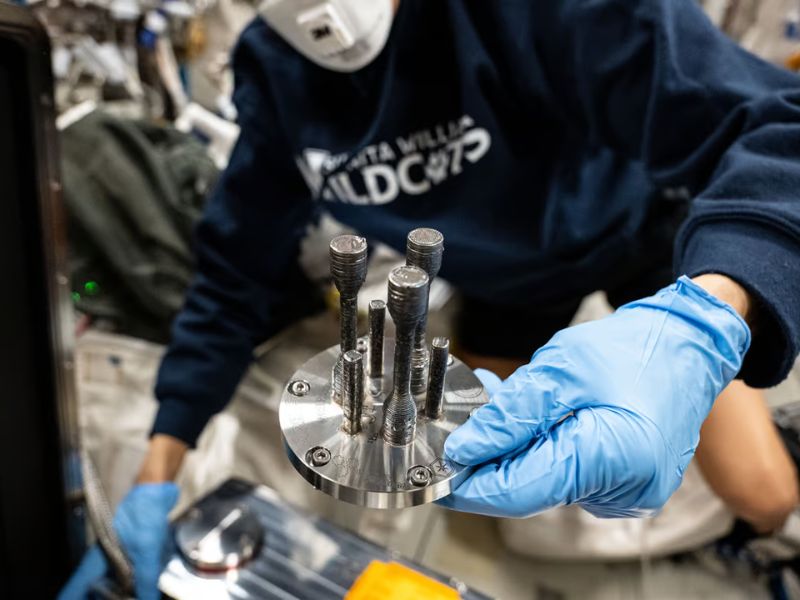
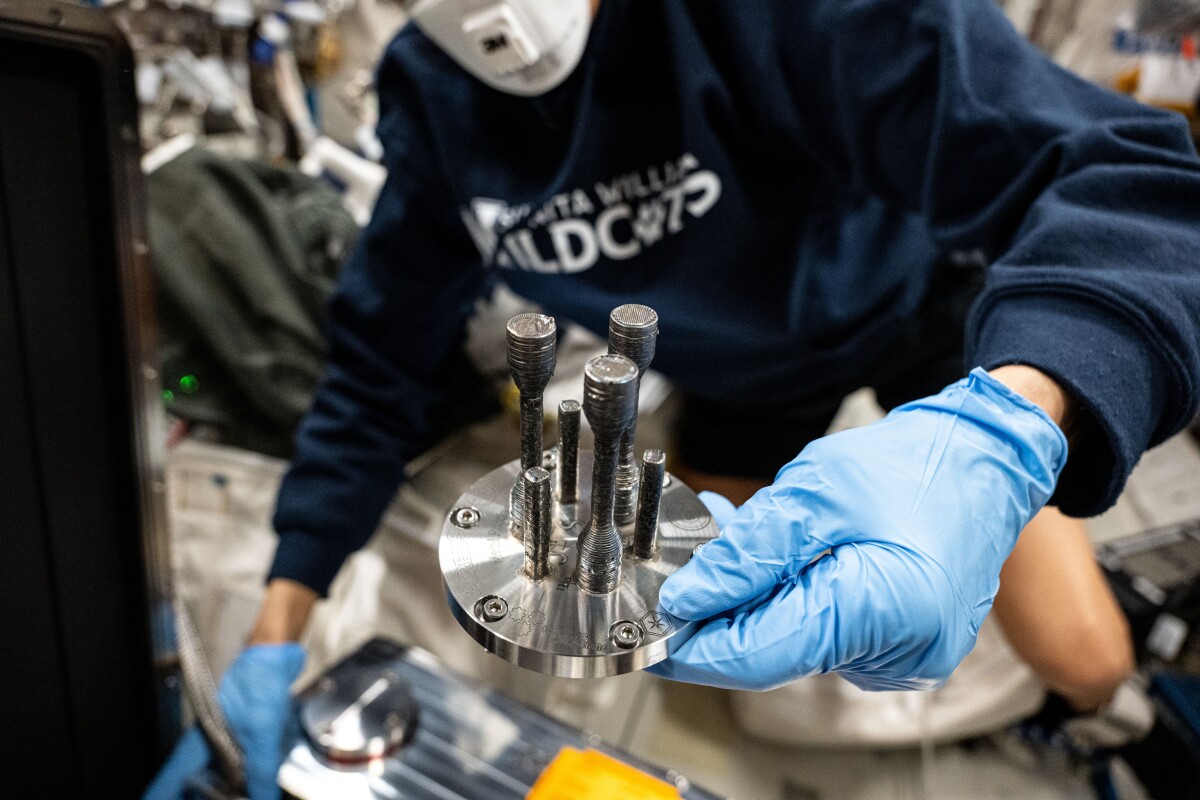
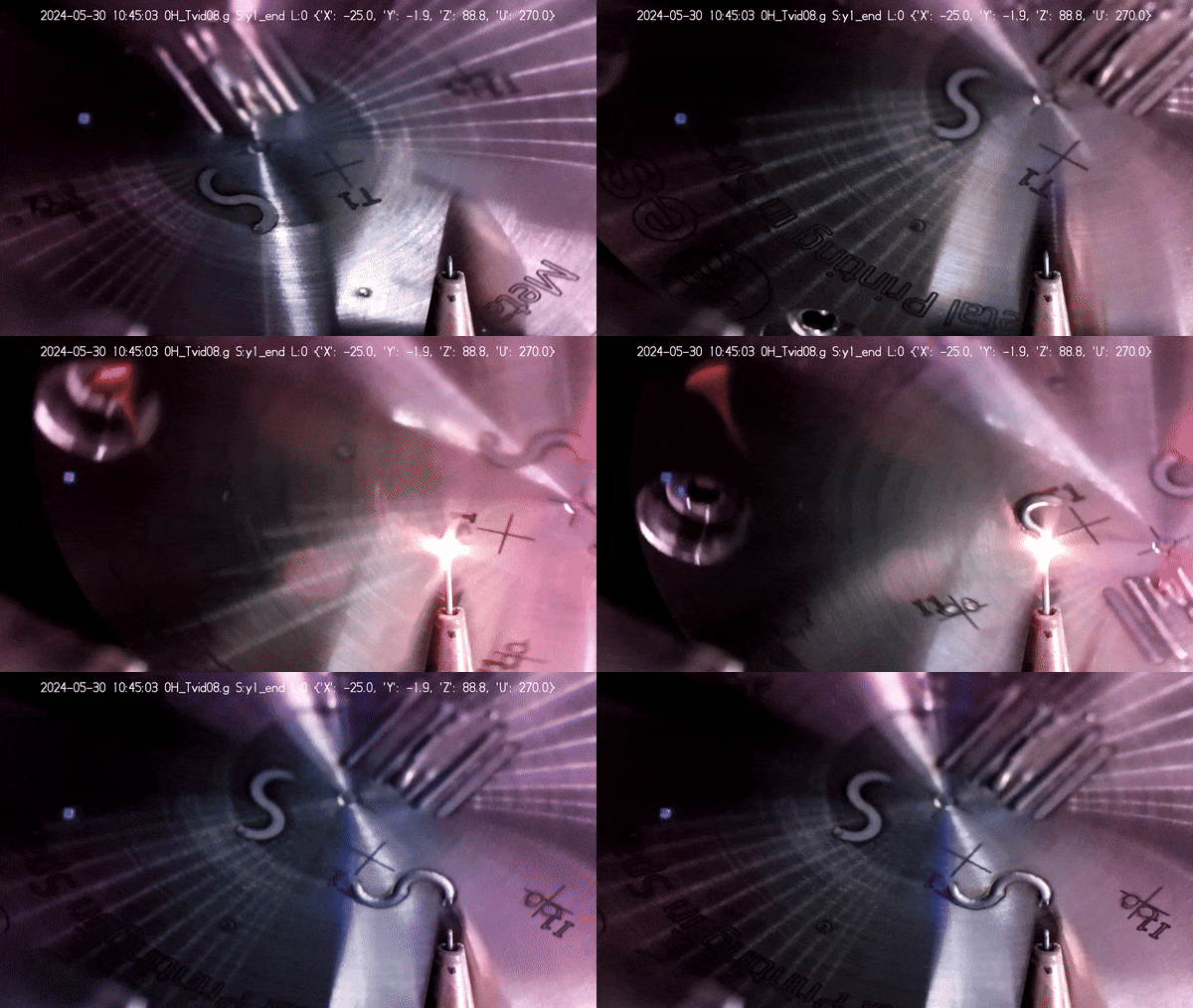
    In an experiment that seems as risky as bobbing for fries, the European Space Agency (ESA) successfully conducted the first 3D metal printing in space aboard the ISS. Developed in collaboration with Airbus, the Metal 3D Printer produced the first of four test shapes.
    The first shape created with the 3D Metal Printer
    ESA/NASA

    In an experiment that seems as risky as bobbing for fries, the European Space Agency (ESA) successfully conducted the first 3D metal printing in space aboard the ISS. Developed in collaboration with Airbus, the Metal 3D Printer produced the first of four test shapes.

    3D printing on the ISS isn’t a new concept, with the first experiments dating back to 2014. However, those early tests used plastic, which was melted and extruded from a workhead guided by a digital file to form complex shapes. Since the plastic doesn’t reach extreme temperatures, it’s easier to manage, even in the zero-gravity environment of space.

    Metal 3D Printing Takes a Giant Leap with Major Safety Modifications

    In contrast, the Metal 3D Printer (seriously, they couldn’t think of a more creative name?) operates on an entirely different level. Significant modifications were needed to the standard metal printing process to make it almost safe for use aboard the ISS.

    Animation showing the first print test
    ESA/NASA

    Typically, 3D metal printers function by spreading a layer of metal alloy powder, which is then sintered with an electron beam or laser according to a digital pattern. Another layer is added automatically, and the process continues. Once finished, the excess powder is removed, and the product is ready for grinding and polishing.

    Innovative Wire-Fed Design Tackles Risks of Metal Printing in Space

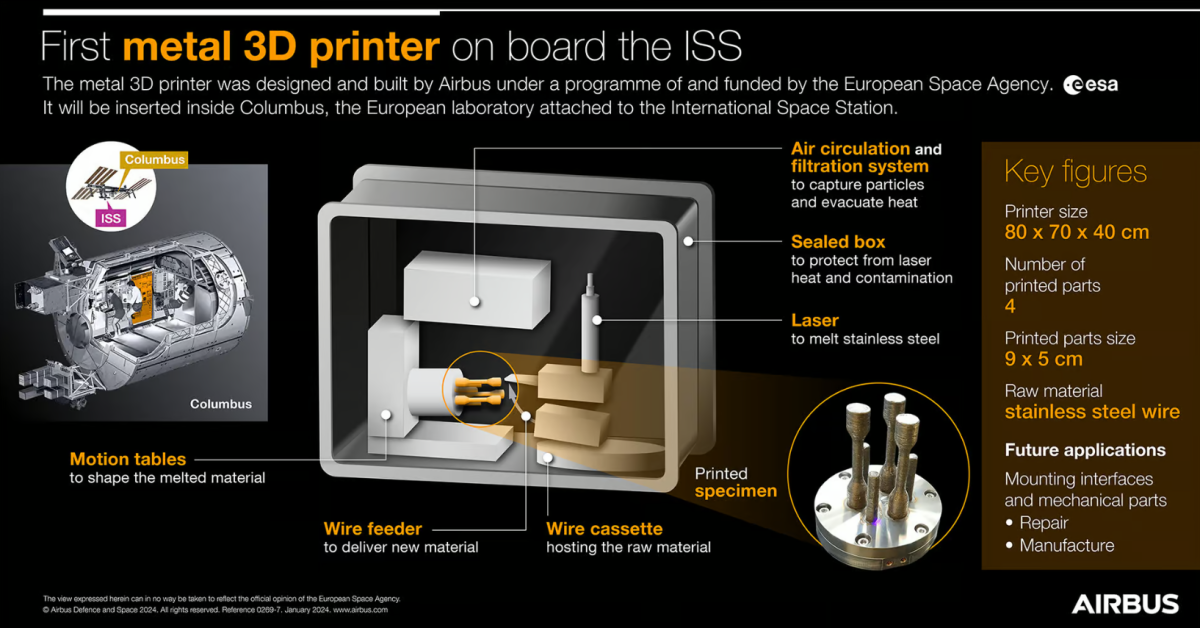
    Melting metal in zero gravity is already risky, but handling metal powder in space is both hazardous and impractical. To overcome this, the Metal 3D Printer, developed by Airbus and Cranfield University in the UK, uses a process similar to plastic 3D printing. A stainless steel wire is fed into the workhead, where a laser melts it on the spot before it cools and solidifies.

    For additional safety, the entire procedure was remotely controlled within a sealed metal box.

    How the 3D Metal Printer works
    Airbus

    First Test Shape Produced by New Printer Marks Key Step Toward Self-Sufficiency in Space

    In August, the printer successfully produced the first of four test shapes, though its appearance was far from impressive. It’s rather basic, but the printer is intended as a technology demonstrator, showing how such a device could enable future missions to become less reliant on Earth by allowing crews to manufacture spare parts or equipment themselves.

    Once all four test shapes are printed, they will be sent back to Earth for analysis.

    With the successful printing of the first metal 3D shape in space, ESA’s Exploration teams have reached a major milestone in developing in-orbit manufacturing capabilities,” said Daniel Neuenschwander, ESA’s Director of Human and Robotic Exploration. “This achievement, thanks to an international and multidisciplinary team, opens doors for long-distance and long-duration missions where on-demand production of spare parts, tools, and construction components will be crucial.”


    Read the original article on: New Atlas

    Read more: How to Watch: Launch of the First Private Spacewalk Mission

  • JWST Takes Detailed Picture of The Horsehead Nebula’s Features

    JWST Takes Detailed Picture of The Horsehead Nebula’s Features

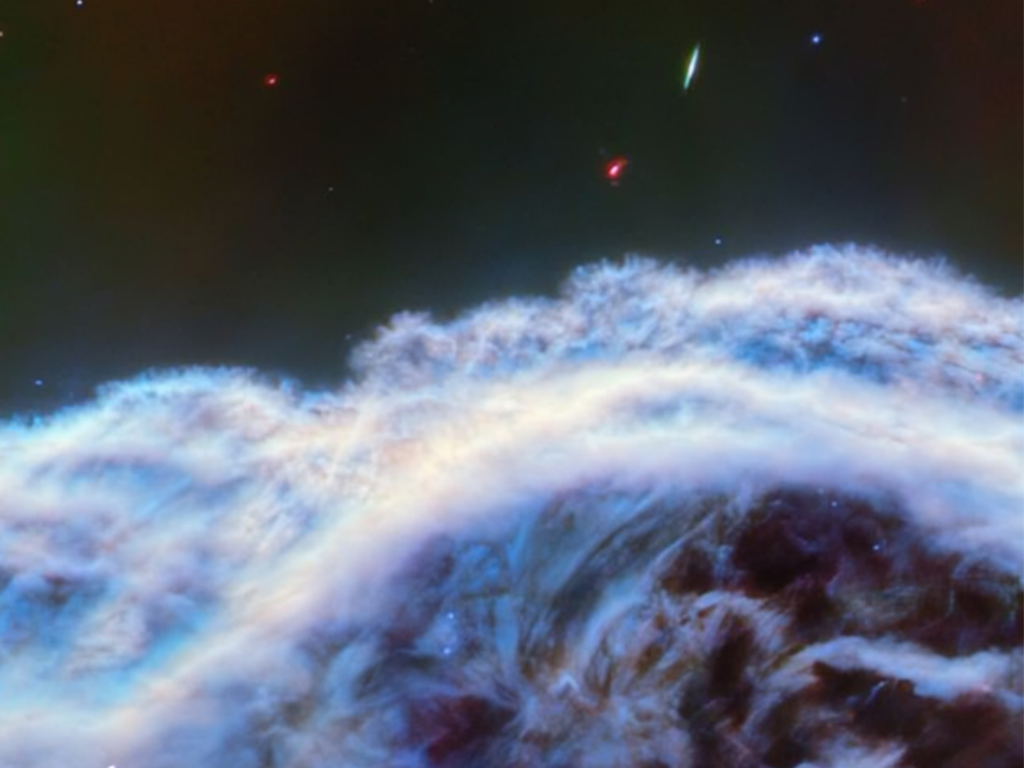
    JWST captured a near-infrared image of the boundary of the Horsehead Nebula.
    JWST captured a near-infrared image of the boundary of the Horsehead Nebula. (Credit: ESA/Webb, NASA, CSA, K. Misselt/University of Arizona, and A. Abergel/IAS/University Paris-Saclay/CNRS)

    A fresh perspective has just unveiled a renowned feature in our planet’s sky.

    Mid- and near-infrared investigations conducted by the James Webb Space Telescope have revealed never-before-seen characteristics in the Horsehead Nebula space cloud. The space telescope focused on the area on top of the “horse’s” head, collecting tendrils and filaments with exceptional resolution, producing an incredibly detailed image.

    Revealed Features and Characteristics

    By employing 23 filters together, a group of astronomers attained remarkable clarity. This allowed them to monitor emissions from particles smaller than 20 nanometers, such as interstellar polycyclic aromatic hydrocarbons. They could also observe the light reflected by larger particles and detect ionized hydrogen within the cloud.

    In near-infrared, the Horsehead Nebula. (Credit: ESA/Webb, NASA, CSA, K. Misselt/University of Arizona, and A. Abergel/IAS/University Paris-Saclay/CNRS)

    Implications for Astrophysical Understanding

    The Horsehead Nebula, a separate cloud located 1,300 light-years away and a component of the Orion molecular cloud complex, got its name from the fact that it resembles a horse’s head. It is so dense with gas and dust that it appears black in optical light, much like shadows. The cloud can be seen as a hole in the surrounding bright gas in several images.

    When you get close up or observe the nebula at wavelengths outside the range of normal human eyesight, it changes from looking like a pitch-black nothingness to a luminous, billowing cloud. The Horsehead Nebula is heated by the neighboring complex known as Sigma Orionis, which comprises a system of very young, massive, hot stars that burn at temperatures of about 34,600 Kelvin. The Horsehead Nebula does not have an internal light source.

    JWST captured an image of the nebula area. (Credit: ESA/Webb, NASA, CSA, K. Misselt/University of Arizona, and A. Abergel/IAS/University Paris-Saclay/CNRS, Mahdi Zamani The Euclid Consortium, Hubble Heritage Project/STScI AURA)

    Because of these characteristics, the Horsehead Nebula is an excellent laboratory for studying star nurseries. The ‘horsehead’ is a compact, gravitationally collapsed mass of material that contains tiny, still-forming stars hidden from the dust.

    Future Directions and Scientific Significance of the JWST Photos

    However, the surrounding material is severely harmed by the powerful radiation from the stars outside the nebula. Molecules breaking apart under the intense rays of far-ultraviolet light, a process known as photodissociation, create a field of mainly neutral interstellar medium. Therefore, the JWST photos will aid in probing the so-called photodissociation region (PDR) surrounding the Horsehead Nebula.

    The mechanism of photoevaporation, in which gas is ionized by intense light and successfully evaporates, can also be better understood with the aid of these new data.

    The nebula as seen by JWST in mid-infrared. (Credit: ESA/Webb, NASA, CSA, K. Misselt/University of Arizona, and A. Abergel/IAS/University Paris-Saclay/CNRS)

    Thus far, the photos have enabled a group of scientists to distinguish between a network of filaments perpendicular to the front of the PDR and the small-scale features that adorn the illuminated border of the Horsehead Nebula. This network contributes to the photoevaporative flow by containing gas and dust.

    Still, this is only the beginning. The next stage is to thoroughly examine the light emitted to determine the chemical makeup of the dust and gas and the size and flow of the dust grains based on light scattering. This will make it possible to create a thorough model of the dust evolution in the PDR and aid in understanding how these clouds evolve and eventually evaporate, releasing the trapped nascent stars.


    Read the original article on: ScienceAlert

    Also read: Sodium Batteries Sans Lithium Move from Lab to US Manufacturing

  • Most Advanced Solar Sail Launched into Space

    Most Advanced Solar Sail Launched into Space

    Despite being the size of a toaster, NASA's Advanced Composite Solar Sail System (ACS3) can deploy an ultra-thin plastic sail in approximately 25 minutes, covering an area of 860 ft² (80 m²) with a boom extending from the size of a hand to 23 ft (7 m) in length.
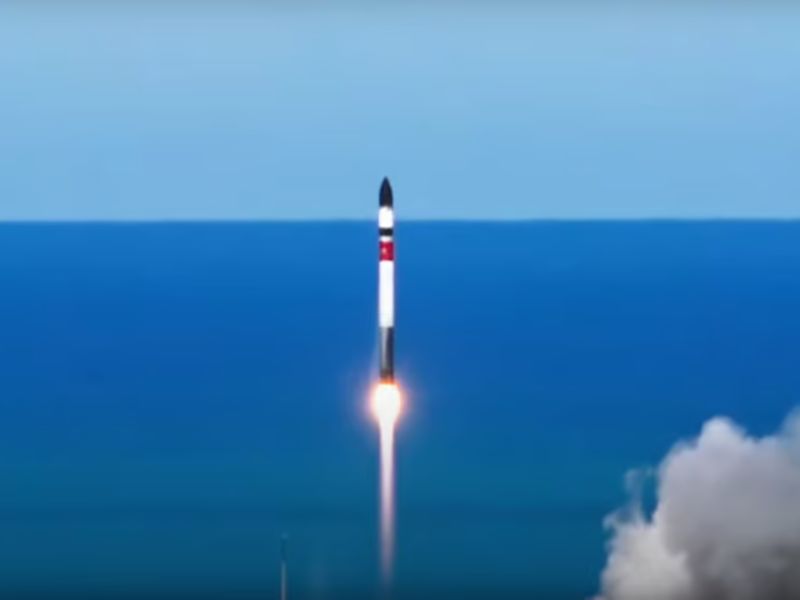
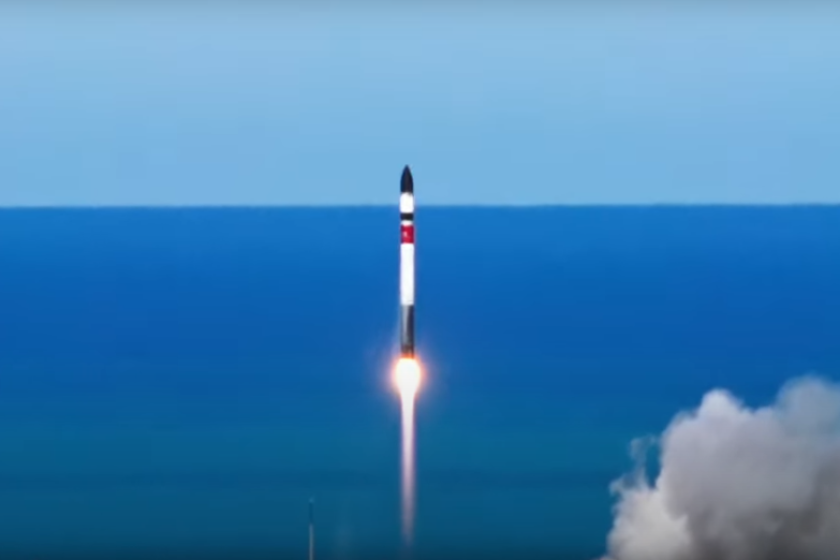
    The Electron rocket lifting off
    Rocket Lab

    Despite being the size of a toaster, NASA’s Advanced Composite Solar Sail System (ACS3) can deploy an ultra-thin plastic sail in approximately 25 minutes, covering an area of 860 ft² (80 m²) with a boom extending from the size of a hand to 23 ft (7 m) in length.

    While it’s not the first solar sail sent into space, its boom, constructed from lightweight polymer composites and designed to stow flat, represents a significant advancement in creating lighter and more stable solar sails.

    Electron Rocket Successfully Deploys ACS3 and KAIST’s NEONSAT-1

    Following a 32-minute delay caused by technical issues, the Electron rocket successfully launched carrying the ACS3 and the Korea Advanced Institute of Science and Technology’s (KAIST) NEONSAT-1, an Earth observation satellite.

    After clearing the launch pad, the rocket surpassed the speed of sound at 55 seconds and experienced maximum dynamic pressure (Max-Q) at one minute and seven seconds.

    The first stage engine shut down two minutes and 24 seconds into the flight, followed by the separation of the second stage four seconds later. The second stage ignited three seconds after separation.

    RL-F47

    At nine minutes and 11 seconds into the flight, the second stage engine turned off, and the Kick Stage separated four seconds later. The first stage then performed an orbital maneuver to ensure it burned up in Earth’s atmosphere, preventing it from becoming space debris.

    NEONSAT-1 Enters Orbit, ACS3 Awaits Sun-Synchronous Deployment

    Fifty minutes after launch, NEONSAT-1 was successfully placed in a 323-mile (520-km) circular orbit around Earth. The ACS3 had to wait until one hour and 45 minutes post-launch to deploy into a Sun-synchronous orbit at an altitude of 600 miles (1,000 km).

    The Kick Stage’s Curie engine enables this flexibility by allowing multiple restarts to position payloads in various orbits without requiring their own onboard propulsion. Once its tasks were complete, the Kick Stage followed its trajectory for atmospheric burnup.

    Data gathered from the NASA solar sail mission will inform the design of sails that can scale up to 21,500 ft² (2,000 m²) – roughly half the size of a soccer field.

    These expansive sails, harnessing solar winds and maneuvering like traditional sailing ships, will enable long-distance missions traveling at impressive speeds without the need for traditional propellants.


    Read the original article on: New Atlas

    Also Read: Spacex Third Flight Test of Starship

  • Space-Produced Drug Safely Returns to Earth

    Space-Produced Drug Safely Returns to Earth

    What does the journey back to Earth from space entail? Varda's space-manufactured medication has now experienced it firsthand.
    What does the journey back to Earth from space entail? Varda’s space-manufactured medication has now experienced it firsthand.
    Image credit: giocalde/Shutterstock.

    Varda Space Industries, a company from California, did something amazing recently. They brought back samples of a medicine they made while in space.

    It wasn’t easy. The capsule carrying the samples had some problems and was stuck in space for a while. But finally, on February 21, it landed safely in the Utah desert.

    A Small Space Factory

    In June 2023, Varda Space Industries announced that they successfully made the medicine in space. They did this using a small space factory, which was the first of its kind in the world. The medicine-making mission was sent into space by a SpaceX Falcon 9 Rocket. It happened on June 12. The medicine was made in a satellite called W-Series 1, which was attached to Rocket Lab’s Photon platform.

    The whole process of making the medicine took about 27 hours and finished on June 30. They managed to create crystals of ritonavir, a medicine used to treat HIV/AIDS.

    Why in the Space?

    Now, why did they bother making medicine in space? Well, it turns out that being in space helps make better quality medicine faster. Without gravity, the crystals form better.

    After finishing their experiment, they sent the data back from the satellite to confirm that it was successful.

    Originally, the capsule was supposed to come back in July 2023. But the US Federal Aviation Administration didn’t allow it to re-enter. So, it stayed in space until this week.

    The capsule that returned to Earth was made by Rocket Lab. It landed at the Utah Test and Training Range (UTTR) at Hill Air Force Base, which is about 80 miles west of Salt Lake City.

    Varda

    After Varda got the capsule back, they sent it to their headquarters in Los Angeles to check it out more.

    The company said they collected more data during the capsule’s flight, including when it went really fast. They’ll share this data with the Air Force and NASA because of a contract they have with them. They explained this in a statement posted on X, which used to be called Twitter.

    CNBC talked to two of these companies: Varda Space Industries in California and Space Forge in the UK. They’re trying to figure out how to make money by making things in space.

    Read the Original Article: IFL SCIENCE

    Read more: Is Kennedy Space Center Ready for Starship’s Force?

  • NASA Unveils Images of Christmas Tree Cluster of Stars

    NASA Unveils Images of Christmas Tree Cluster of Stars

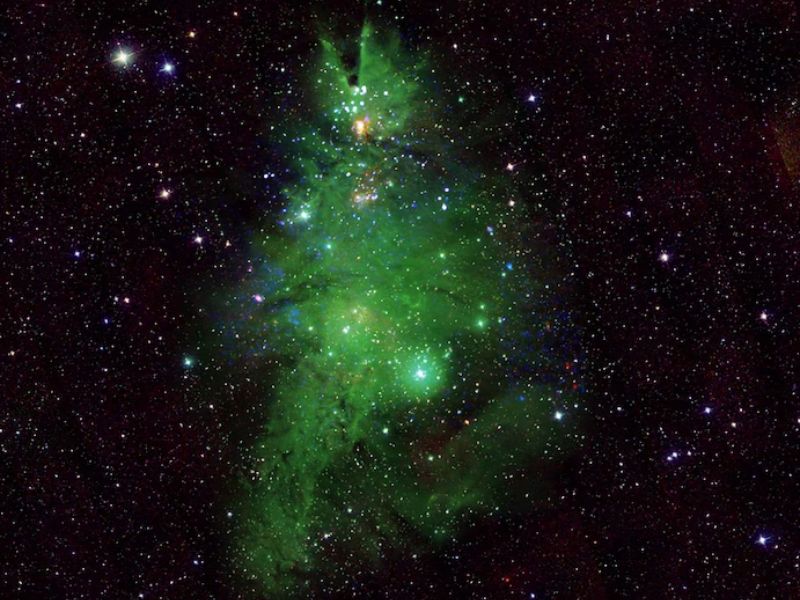
    Thousands of light-years from Earth, a cluster of stars in the NGC 2264 cluster is embracing the festive season, as depicted in recent NASA images. The stars, adorned in vibrant green, blue, and white lights, create a celestial spectacle in the Milky Way skies.
    A rendering of the NGC 2264 as captured by telescopes from NASA and the National Science Foundation. (X-ray: NASA/CXC/SAO; Optical: T.A. Rector (NRAO/AUI/NSF and NOIRLab/NSF/AURA) and B.A. Wolpa (NOIRLab/NSF/AURA); Infrared: NASA/NSF/IPAC/CalTech/Univ. of Massachusetts; Image Processing: NASA/CXC/SAO/L. Frattare & J.Major)

    Thousands of light-years from Earth, a cluster of stars in the NGC 2264 cluster is embracing the festive season, as depicted in recent NASA images. The stars, adorned in vibrant green, blue, and white lights, create a celestial spectacle in the Milky Way skies.

    Known as the “Christmas Tree Cluster,” this arrangement features a subtle triangular base with extending branches on either side, mirroring the structure of the well-known Norway spruce, a holiday favorite and tradition.

    Unveiling the ‘Christmas Tree’ Cluster

    Additionally, NASA researchers have created visuals by combining data from two telescopes, including the Chandra X-Ray Observatory and the Wisconsin-Indiana-Yale-NOAO (WIYN) Observatory. Using the Two Micron All Sky Survey’s infrared data, they animated the stars in the cluster with sparkling blue and white dots. Following a 160-degree rotation from its original northern orientation, the image now enhances its Christmas tree resemblance.

    Furthermore, NASA’s research indicates that the nebula, a space cloud of dust and gas, is approximately 2,500 light-years distant in the Monoceros constellation—a subtle celestial grouping along the equator. Within the NGC 2264 structure, numerous stars vary in size compared to the sun, ranging from smaller to larger, with some being less than a tenth of the sun’s mass.

    Cosmic Marvels

    Moreover, German-British astronomer William Herschel identified the formation in the 1780s, spanning approximately seven light-years. The nearby area is a prolific source of newly formed stars that, over millions of years, have gradually worn away the nebula, according to NASA.

    Numerous nebulas resemble earthly objects or animals, like jellyfish, owls, and even an elephant trunk. The NGC 6302 in Scorpius is known as the Butterfly Nebula due to its gas clouds that mimic fluttering wings.

    Additionally, researchers frequently examine nebulas and their magnetic fields, which may originate from particles within a star’s interior. This analysis helps understand the behaviors of nebulas, particularly the processes occurring when stars conclude their life cycles and transform into cosmic formations.

    Furthermore, NASA’s Chandra X-ray telescopes have contributed to creating comparable image representations through the magnetic fields they generate. As stated in a NASA news release, researchers captured a spooky purple and white hand formation from the nebula of a supergiant star that collapsed into a neutron star 16,000 light-years away from Earth.


    Read the original article on: The Washington Post

    Read more: NASA Shares a Cute Cat Video from Deep Space with Earth

  • SpaceX Starlink Satellites Make 25,000 Quick Moves in 6 Months, and  More Challenges Are Coming!

    SpaceX Starlink Satellites Make 25,000 Quick Moves in 6 Months, and More Challenges Are Coming!

    Starlink Satellites Do Cool Moves Over 50,000 Times to Stay Safe in Space!
    “Starlink Satellites Do Cool Moves Over 50,000 Times to Stay Safe in Space!” credit: Arda Kucukkaya/Anadolu Agency via Getty Images)

    Starlink (SpaceX) Satellites Do Fancy Dance Moves to Stay Safe, But There’s a Worrying Problem!

    SpaceX’s Starlink satellites have been doing impressive maneuvers to avoid bumping into other spacecraft and space junk. In just six months, from December 2022 to May 2023, they had to swerve over 25,000 times! That’s twice as many moves compared to the previous six months. Since the first Spacex Starlink satellite launched in 2019, they have made over 50,000 moves to prevent collisions.

    But here’s the concern: the number of maneuvers is increasing fast, like on a roller coaster going higher and higher. This worries experts because it could become difficult to manage and keep everyone safe in space. Hugh Lewis, a professor who knows a lot about satellites, says the number of moves is growing quickly. It’s doubling every six months, and that’s a problem because big numbers can be hard to handle.

    So, while it’s cool that Starlink satellites can avoid crashes with their cool dance moves, we need to figure out how to keep everything safe up there in space!

    1.000.000 Moves till 2028

    “Starlink Satellites Are Doing More and More Avoidance Moves!”Did you know that Starlink satellites have to do special maneuvers to avoid crashing into other satellites? In the first part of 2021, they did 2,219 of these moves. Then, in the next six months, they did 3,333. After that, it doubled to 6,873 moves! In the second half of 2022, they had to change their paths 13,612 times to stay safe. In the latest report, they did 25,299 moves in just six months, which means each satellite had to move about 6 times on average.

    This is a big problem because the number of moves keeps getting bigger and bigger. Every six months, it doubles! In just two years, it went up by 10 times. If it keeps going like this, in the next six months, they might have to do 50,000 moves, then 100,000, and even more!

    By 2028, they might have to move nearly a million times in just six months! That’s a lot! And this seems to only increase. SpaceX has already put about one-third of its planned satellites in space, and they’re launching more than 800 satellites each year. Other companies like Amazon and China are also trying to send their satellites into space.

    It’s a big challenge to make sure all these satellites can move around without crashing into each other. But people are working on it to keep space safe and make sure everything goes smoothly up there!

    The Projected  Future of Starlink: Avoiding Collisions in Space!
    “The Projected Future of Starlink: Avoiding Collisions in Space!” (Image credit: Hugh Lewis)

    Satellite Traffic and Safety Concerns in Space

    There are a lot of satellites in space—over 1.7 million of them! They are registered with an organization that oversees satellite radio frequencies. But not all of those satellites will actually be launched. Still, the numbers are so high that experts are worried about keeping order in space.

    If there are around 100,000 active satellites by the end of this decade, there will be a huge number of maneuvers needed to avoid collisions. It’s like driving on a highway and constantly swerving to avoid hitting something. That’s not very safe!

    The need to swerve isn’t just because of new satellites. There’s also a lot of space debris, like old satellites and rocket parts, floating around. This makes it even harder for satellite operators to keep their spacecraft safe.

    Elon Musk’s ambitious plan to launch 42,000 Starlink satellites in the coming years aims to bring high-speed internet to every corner of the globe. However, this grand vision raises concerns among experts. The sheer number of satellites could potentially obstruct astronomers’ observations, hindering their understanding of the universe. Moreover, the dense satellite presence may impede future space exploration missions, creating obstacles for spacecraft and posing long-term challenges. While the prospect of global internet access is enticing, it is crucial to carefully consider the potential consequences for scientific research and the exploration of space.

    Experts question if SpaceX, a big satellite company, can keep up with all the alerts for potential collisions. They think the risk of collisions will keep going up, even if SpaceX tries hard to prevent them.

    There’s concern about situations where no maneuvers are made. Even though the chance of a collision is low in each case, there are so many of them that it becomes a big risk. It’s like buying a lot of lottery tickets—you’re more likely to win if you have a million tickets instead of just one.

    Unless regulators limit the number of satellites in space, experts believe collisions will become common. This would create more space debris and lead to even more collisions. It could eventually result in the Kessler Syndrome, where collisions happen so often that parts of space become unusable, like in the movie “Gravity.” So, it’s important to figure out how to manage all these satellites and keep space safe for everyone.


    Read the original article on Space.

    Read more: NASA And SpaceX Explore the Idea of Shifting Hubble to a More Stable Orbit.