

The world’s first fully robot-operated hotel will open in 2027 in China, welcoming guests to a futuristic stay. Developers will build it on West Artificial Island along the Shenzhen–Zhongshan Link in the Pearl River Delta.
Shenzhen-based Pudu Robotics has unveiled plans for what it calls the world’s first “full-scenario robot-serviced hotel.” Robots will handle every aspect of the guest experience, from check-in and room service to housekeeping, meal preparation, and customer assistance.
First Fully Automated Hotel Operation Powered by Pudu Robotics
While Pudu Robotics has already introduced its robots to restaurants, retail stores, and commercial cleaning environments, this project marks the first time its technology will manage an entire hotel operation.
The initiative is a collaboration between Pudu Robotics and Shenzhen Culture & Tourism Industry Development. Together, they aim to turn West Artificial Island, opened in late 2025, into a showcase for robotics and advanced technology—and a destination for tourists and tech enthusiasts.
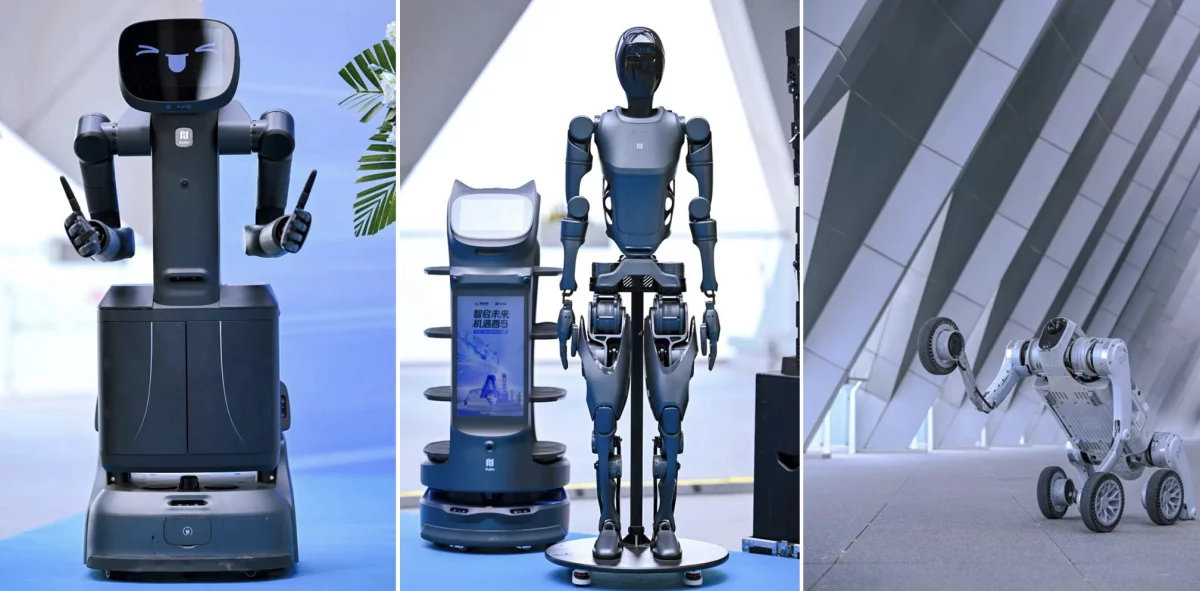
Pudu Robotics
“This collaboration marks a milestone in scaling embodied AI in high-end hospitality,” said Cong Guo, Co-founder and CTO of Pudu Robotics. “It also enables us to build new service models where AI and robotics deliver seamless, end-to-end guest experiences.”
The hotel will roll out in phases, starting with a pilot program in late 2026. During the trial, it will open a limited number of guest rooms and offer select robot-operated services to the public. Early visitors can experience automated reception, check-in, and fully autonomous in-room robot delivery services.
Hotels in many of China’s major cities already rely on room-service robots, particularly in technology centers such as Shenzhen. Recently, Shangri-La Hongqiao Airport Hotel in Shanghai introduced the humanoid XMAN-R1 for front desk assistance, while other robots handle deliveries, luggage transport, and housekeeping.
Pudu Robotics to Power Fully Integrated AI-Driven Hotel Ecosystem
The upcoming island hotel, however, aims to go beyond simply using robots alongside human employees. Developers are building it as a fully integrated robotic hospitality ecosystem, powered entirely by Pudu Robotics’ hardware and software. At the core are PuduFM 1.0 and the PuduAgent platform, which coordinate the hotel’s intelligent operations.
Different robots will handle specialized responsibilities throughout the property. The FlashBot will manage an automated vending service, allowing guests to order beverages through their smartphones. The PUDU T300 delivers luggage to rooms, while the PUDU CC1 Pro and PUDU MT1 handle cleaning with AI waste detection.
According to Pudu Robotics, all of these machines operate within a unified intelligence framework despite their different roles. This shared AI lets reception robots interpret gestures and interact naturally, delivery robots optimize routes autonomously, and cleaning robots adapt to changing environments using the same core intelligence.
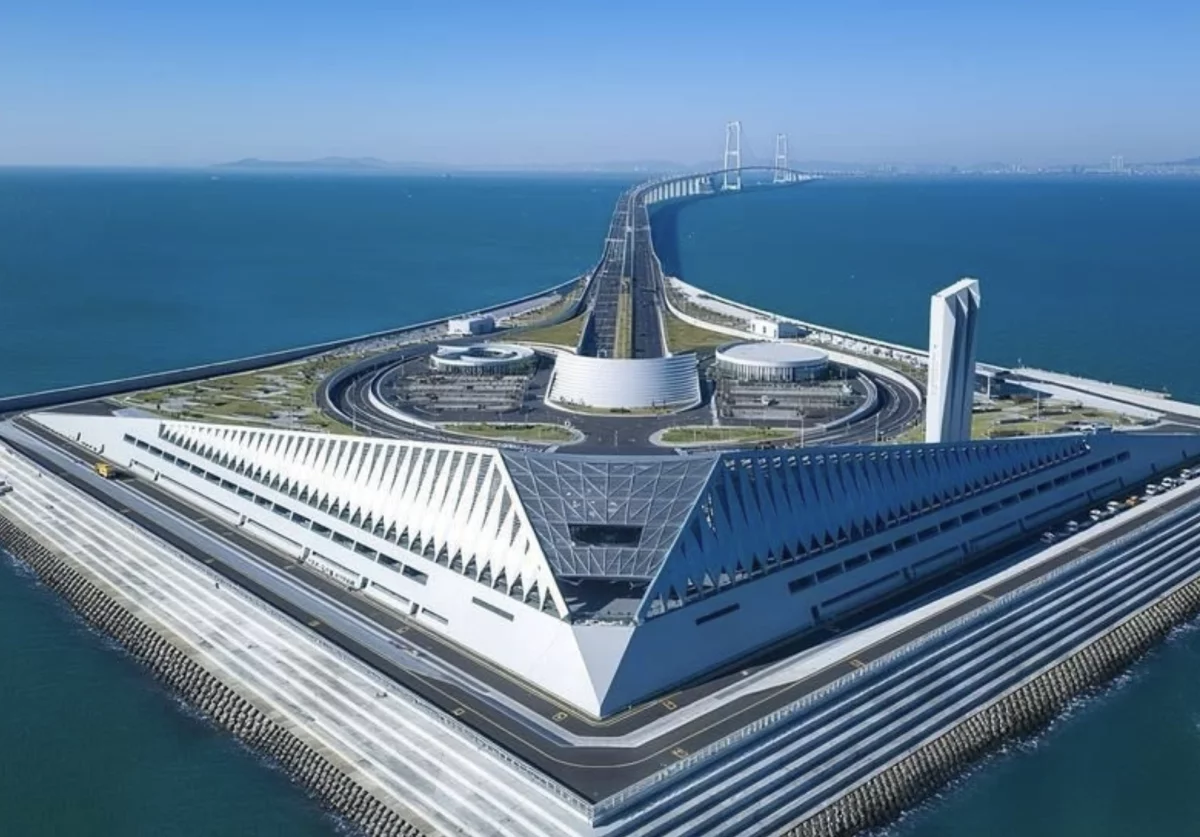
Zhongshan Government
At a Shenzhen hotel launch event, Pudu’s BellaBot Pro served coffee while KettyBot Pro handed out drinks and snacks. Although the demonstration highlighted the robots’ capabilities, such automation is already familiar in Shenzhen. At Shenzhen Talent Park, visitors can get coffee from a robotic barista and order drone-delivered meals via a smartphone app.
West Artificial Island to Expand Autonomous Services Across Tourism Sector Over Four Years
In this context, it is unsurprising that West Artificial Island is set to host even more sophisticated autonomous services. The hotel is part of a broader island plan to gradually introduce robotics into tourism and hospitality over the next four years.
Guo told Xinhua at the launch that the “full-scenario” approach will embed Pudu robots across hotel operations, reducing service gaps and human intervention.
The planned hotel will feature 44 upscale guest rooms, along with a restaurant, fitness center, and other amenities. All facilities will be connected through a closed-loop smart service system that integrates the entire guest experience, from check-in to housekeeping. Over time, the project is also expected to extend beyond the hotel to support broader tourism and hospitality development on the island.

Read the original article on: newatlas


