

Weave Robotics
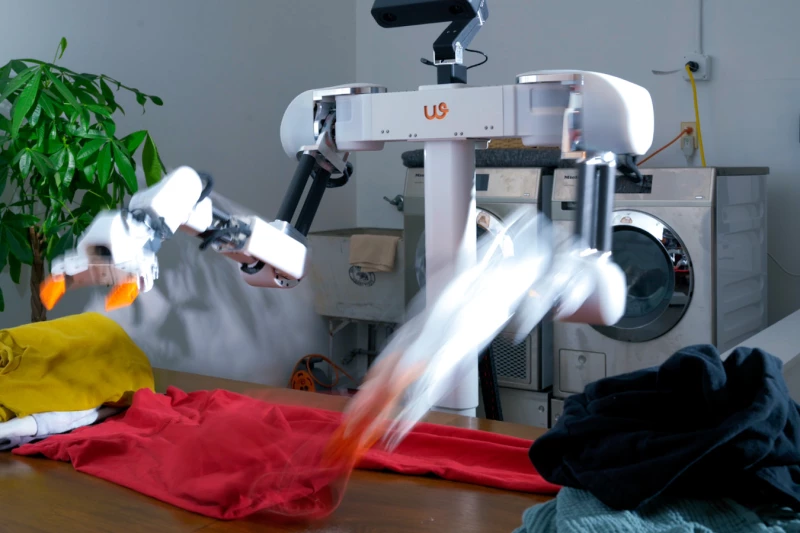
Fewer than two years after its launch, the San Francisco startup Weave Robotics is already taking pre-orders for its debut household robot, built with a single clear purpose: folding laundry efficiently.
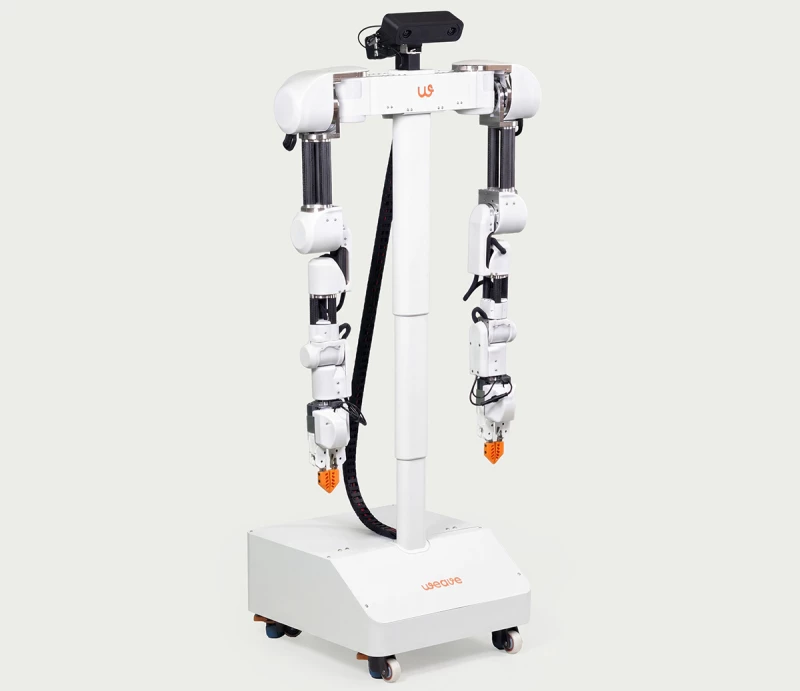
Called the Isaac 0, the machine has a relatively simple look, featuring a fixed base, visible joints and components, and two rotating cameras mounted on its “head.” Place a heap of clean, unsorted clothes on a nearby table within a 6-by-5-foot area, and it will sort and fold everything in about 30 to 90 minutes.
Weave Robotics says the machine relies on “a blend of autonomy and teleoperation,” meaning a remote human operator can view live feeds from its cameras and guide its arms when needed. The Isaac 0 can reportedly fold items like T-shirts, shorts, and long-sleeved tops on its own, but requires assistance with more complex pieces such as pants, underwear, and pillowcases.
Limited Remote Oversight With No Audio Recording
According to the company’s website, remote specialists only access what’s necessary to complete the task — camera views from the robot’s head and wrist, along with diagnostic data — and no audio is recorded. Weave explains that a human may briefly take control of Isaac 0 for a five- to ten-second adjustment to make sure each fold is tidy and properly finished.

Weave Robotics
Although a chore-busting robot sounds appealing, these limitations suggest the technology isn’t fully mature. In fact, the Isaac 0 is marketed as an “early-release prototype.” That means buyers aren’t quite getting a finished home robot, but rather a device that helps Weave Robotics refine its systems, gather user feedback, and deliver a service along the way.
Because it relies partly on teleoperation, the setup also raises familiar privacy and security issues. A remote operator can view your home through the robot’s cameras, and hackers could potentially breach the company’s systems, exposing a live visual feed of your personal space. Since the product is so new, we don’t yet know what safeguards the company should put in place to prevent breaches or how it would protect and compensate users if hackers compromised their privacy.

Weave Robotics
Skeptics Question the True Autonomy of Robots
A wider criticism from skeptics is that some tech firms may exaggerate how independent their robots truly are, whether for marketing appeal, investor confidence, or competitive positioning. In the case of Tesla, demonstrations of its Optimus in 2024 faced scrutiny from journalists and AI experts, who questioned how much of the performance reflected real onboard intelligence versus tightly managed or assisted scenarios.
For its part, Weave Robotics has ambitions that extend well beyond folding clothes. The company is developing Isaac (without the “0”), a more advanced version designed to navigate your home, prepare and serve coffee, and help with general tidying — positioning it as “a second caretaker.” The Isaac 0 FAQ states that customers who buy the laundry-focused model can upgrade to the more capable Isaac when it launches in 2026, at a preferred price.
It’s not surprising that Weave is moving quickly to refine its technology. The startup is competing with deep-pocketed players like LG, Figure AI, and 1X Technologies to bring household robots to market. At the same time, Weave has been transparent about its reliance on teleoperation and has chosen to focus its first product on a single, defined task rather than overpromising broad capabilities from the outset.
The Isaac 0 is now open for pre-orders in the Bay Area, priced at $7,999 upfront or offered through a $450-per-month subscription plan, which requires a $250 refundable deposit.
Weave Robotics
Marketing Hints vs. Actual Autonomy
If there’s a hint of skepticism in my tone, it’s largely because much of the marketing — from calling it a “home robot,” to offering the option to purchase the Isaac 0 outright or subscribe monthly with the promise of a future upgrade — mirrors how a fully autonomous machine would typically be presented. Bringing a truly independent robot into your home isn’t quite the same as signing up to help a company refine and test a system that still depends on human assistance.
That’s not to suggest that Weave Robotics won’t eventually master laundry folding or expand into other household tasks — or that early adopters shouldn’t consider trying it. It simply means that, however polished the product may seem as pre-orders begin, it’s still unclear how near — or far — we are from seeing genuinely autonomous robots become a normal part of everyday life.
Read the original article on: New Atlas
Read more: Morocco Celebrates a Breakthrough in Robotic Surgery


