


Orbit Robotics/YouTube
Orbit Robotics developed Helios based on a simple idea: robots built for space shouldn’t be modeled after systems designed for gravity. The outcome is a striking four-armed machine that may look futuristic, but reflects a highly practical vision for space operations.
The company says Helios divides its four arms into two functional pairs. One pair anchors the robot in place while the other handles tasks like cargo unloading, tool operation, and equipment repositioning, helping it stay stable in microgravity where typical humanoid designs struggle.
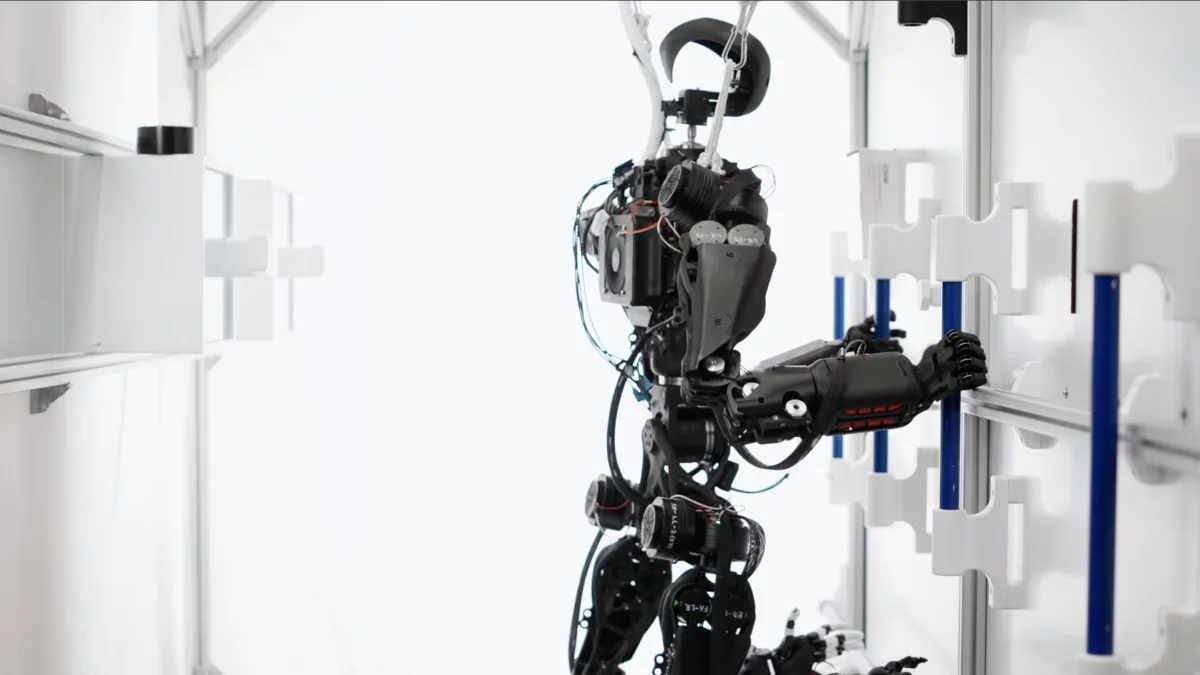
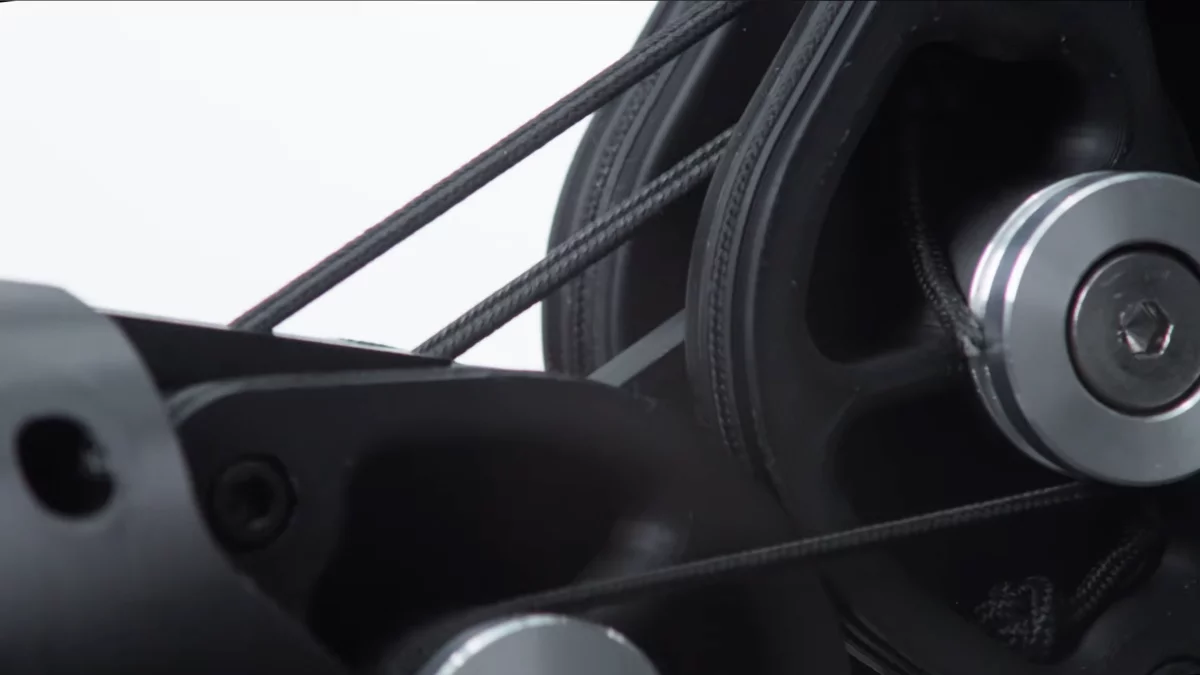
Instead of motors at each joint, Helios uses a tendon-driven system that places most motors at the shoulders and transmits motion via cables and pulleys. This reduces weight at the ends of the limbs while preserving flexibility and movement. The robot uses a rolling-contact elbow joint for precise, fluid motion, helping maintain stability in microgravity where sudden movements can disrupt it and nearby objects.
From IKARUS to Helios: Building on Early Robotics Research
Before developing Helios, the team created IKARUS, an earlier robotic platform used to test teleoperation, imitation learning, and dual-arm coordination. The lessons learned from IKARUS helped shape the engineering principles behind Helios.
According to Orbit Robotics, the goal is not to replace astronauts but to support them by taking over routine work. That would allow humans to concentrate on more valuable scientific activities, such as aging studies, cancer research, and organ bioprinting in microgravity.
Routine maintenance consumes about 35% of crew time on the International Space Station, making simple tasks like organizing supplies or relocating equipment extremely expensive. With astronaut time estimated at roughly US$140,000 per hour, even basic operational work comes at a massive cost.
Helios is designed specifically for those responsibilities. It doesn’t need advanced decision-making capabilities; instead, it must move through tight spacecraft interiors, remain stable in microgravity, and handle objects with precision—exactly the environment it was engineered for.
Expanding Beyond the Spacecraft Interior
Although initially designed for spacecraft interiors, Orbit Robotics envisions future use in satellite servicing and orbital construction. As launch costs fall with systems like SpaceX’s Starship, more stations and commercial habitats will increase demand for maintenance, logistics, and cargo handling. Autonomous spacecraft have already proven viable through missions to Mars, Pluto, and beyond the solar system without human crews.
At the same time, evidence continues to mount regarding the physical toll of long-term spaceflight. Astronauts on long missions face radiation exposure, bone loss, vision issues, and cognitive changes, leading some researchers to question the need for human spaceflight. As robotics and AI advance, many argue machines could more cheaply handle deeper, riskier space missions.
Orbit Robotics presents Helios as a collaborator for astronauts rather than a substitute. The same logic that led engineers to favor arms over legs raises a deeper question: whether the human body is the best design for space exploration.

Read the original article on: newatlas
Read more:Why Excessive Supplement Use May Be Damaging Your Health


